
THE GIRAFFE’S TIPS
Traveling to tropical areas can expose travelers to specific health risks. Despite all the precautions we take while traveling, we experienced this firsthand during our month in Indonesia. We contracted dengue fever, which left us bedridden for about a week, with high fever, joint pain, and extreme fatigue. We even had to revise our itinerary and cancel the week we had planned on the island of Sulawesi, with non-refundable flights…
In short, dengue fever is really no joke, and it can not only affect a traveler’s health but also their travel plans and wallet! So, we’re here to tell you everything about this tropical disease to help you better understand it and, most importantly, avoid catching it!
 We are François and Benjamin, Canadian and French giraffe hairstylists and travel enthusiasts. On this blog, discover our travels, tips, moods, and everything you need to become a giraffe hairstylist and embark on travelling the world. An honest blog with photos guaranteed 100% unfiltered and untouched. |
- Dengue fever, what exactly is it?
It is a viral infection found in many tropical regions. The virus is transmitted through the bite of an infected female tiger mosquito. This mosquito acts as a host for the virus, meaning the virus develops in the mosquito’s gut before being introduced into the human body through the bite.
Transmission primarily occurs in urban areas. Unlike malaria, dengue is transmitted during the day. Therefore, a mosquito bite at night should not infect you with the dengue virus.
- Where is it found?
The disease is found in tropical regions located between the Tropic of Cancer and the Tropic of Capricorne. According to the WHO, more than 100 countries in this zone are affected by dengue. Countries in Southeast Asia and South Asia (such as Malaysia, Indonesia, and Papua New Guinea) account for about 70% of the cases.
- What are the symptoms?
Symptoms appear 4 to 10 days after infection. The symptoms vary depending on the type of dengue. In our case, we experienced a classic form of dengue. Here’s what we went through:
- high fever (close to 39.5°C),
- extreme fatigue,
- body aches, especially in the neck and back,
- headaches,
- joint pain,
- nausea,
- non-itchy skin rashes (that don’t cause itching).
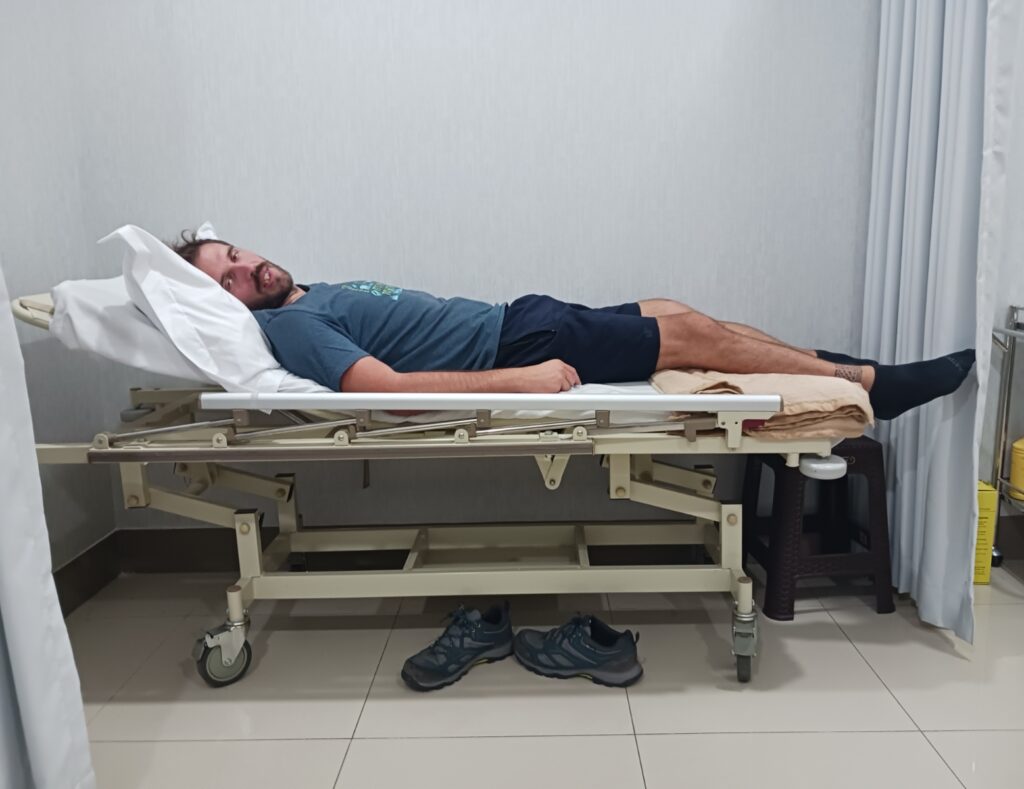

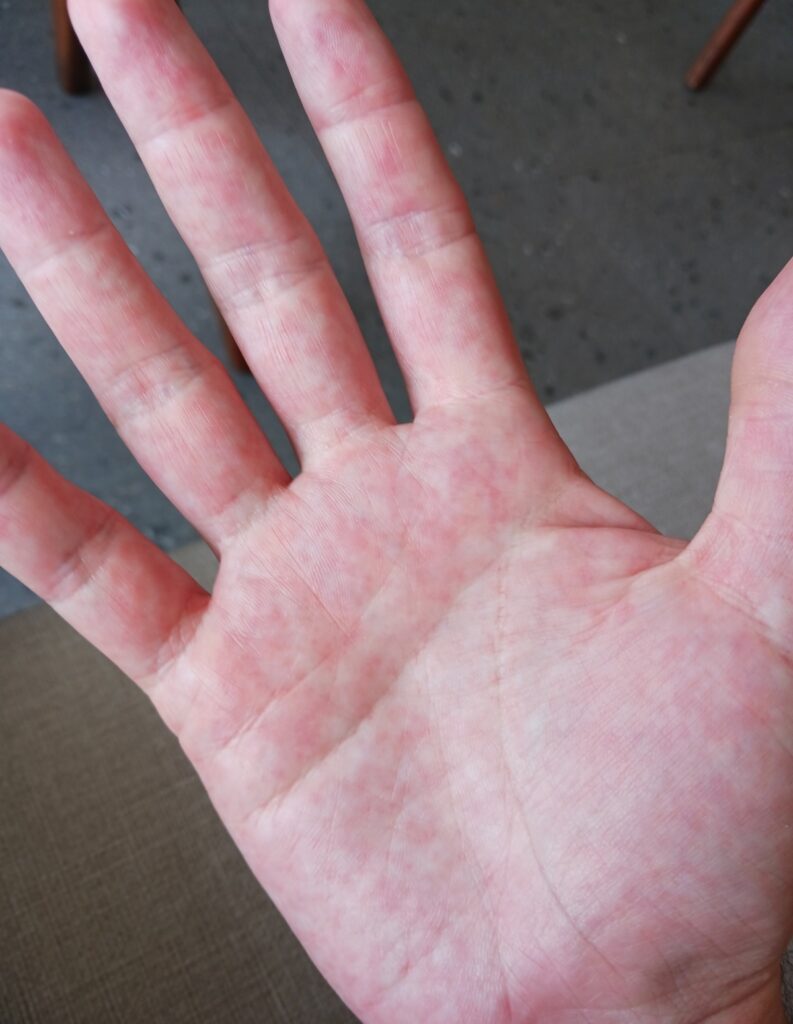
These symptoms also appear suddenly. The day before, we were laughing, walking, and enjoying the pool. The next morning, when we woke up, it felt like a truck had run over our bodies.
- Is it serious?
Dengue wreaks havoc on the blood counts of infected individuals. It notably causes a drop in platelet levels, the blood cells responsible for blood clotting. Therefore, the risk of hemorrhage is very real.
Approximately 1% of infected patients develop a more severe form of dengue, known as dengue hemorrhagic fever. Characterized by digestive bleeding, it can be very dangerous for children.
Because of this, dengue is not a disease to be taken lightly.
- How long does it last?
The symptoms of classic dengue can last about a week. Recovery typically takes around two weeks. However, fatigue can persist for many more weeks. In our case, the fever lasted three days, the body aches five days, and the fatigue more than a week. It’s even possible to experience residual symptoms (such as pain or fever) for up to two years after the infection!
- How is the diagnosis made?
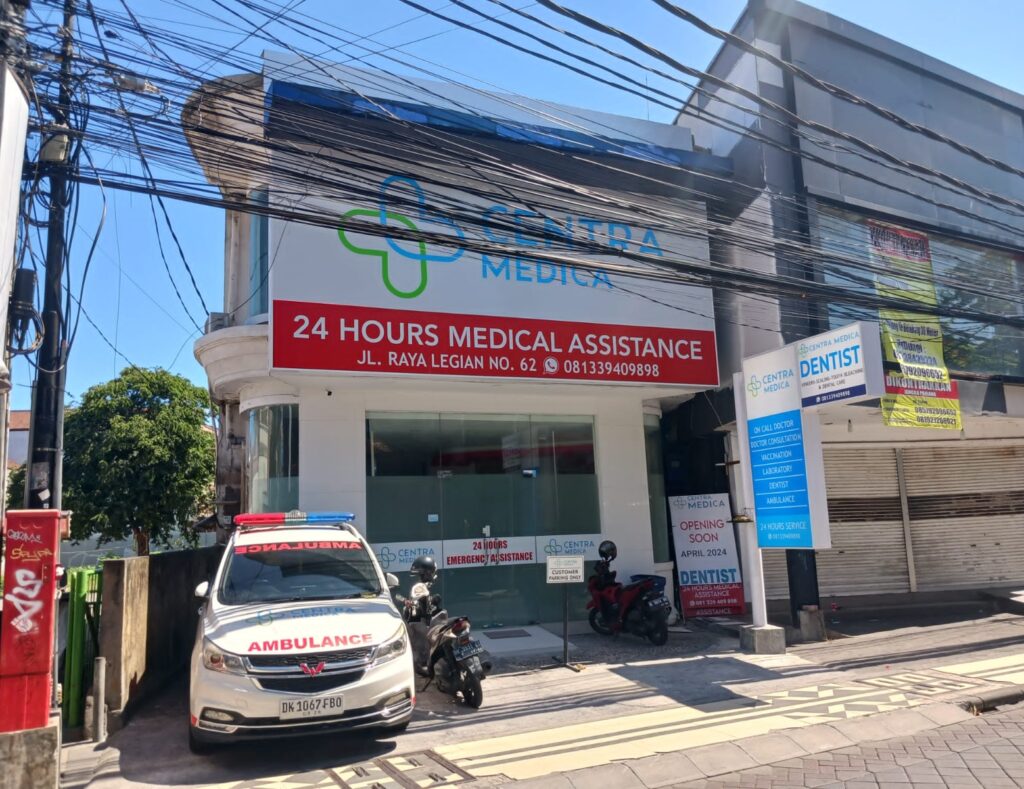
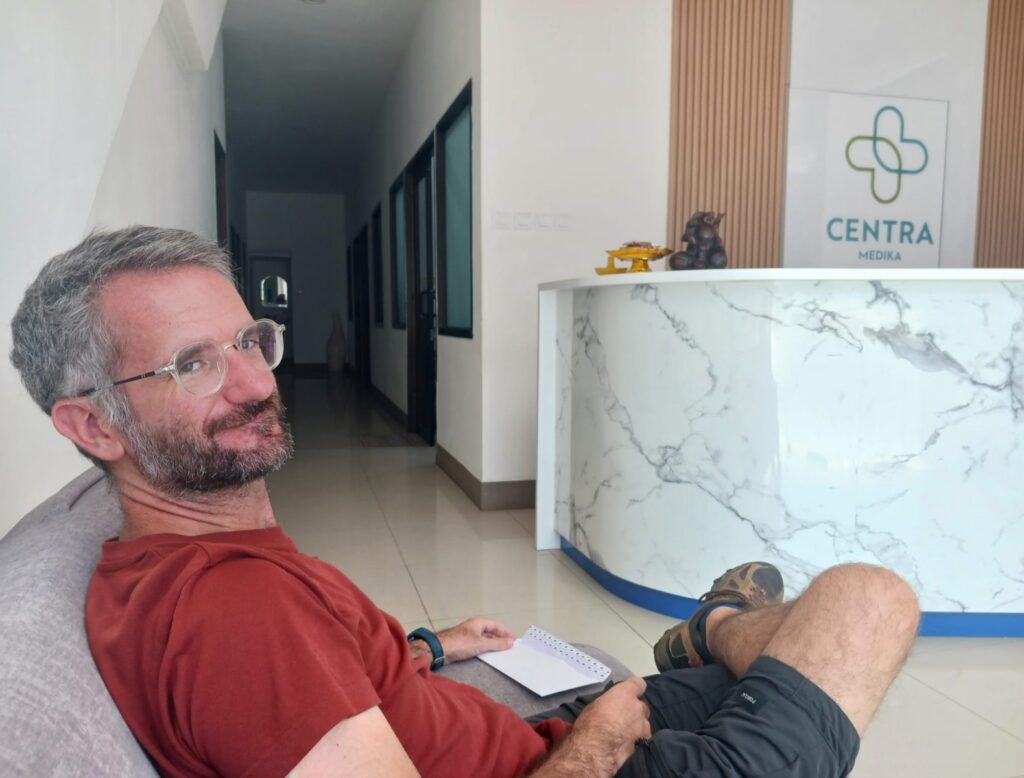
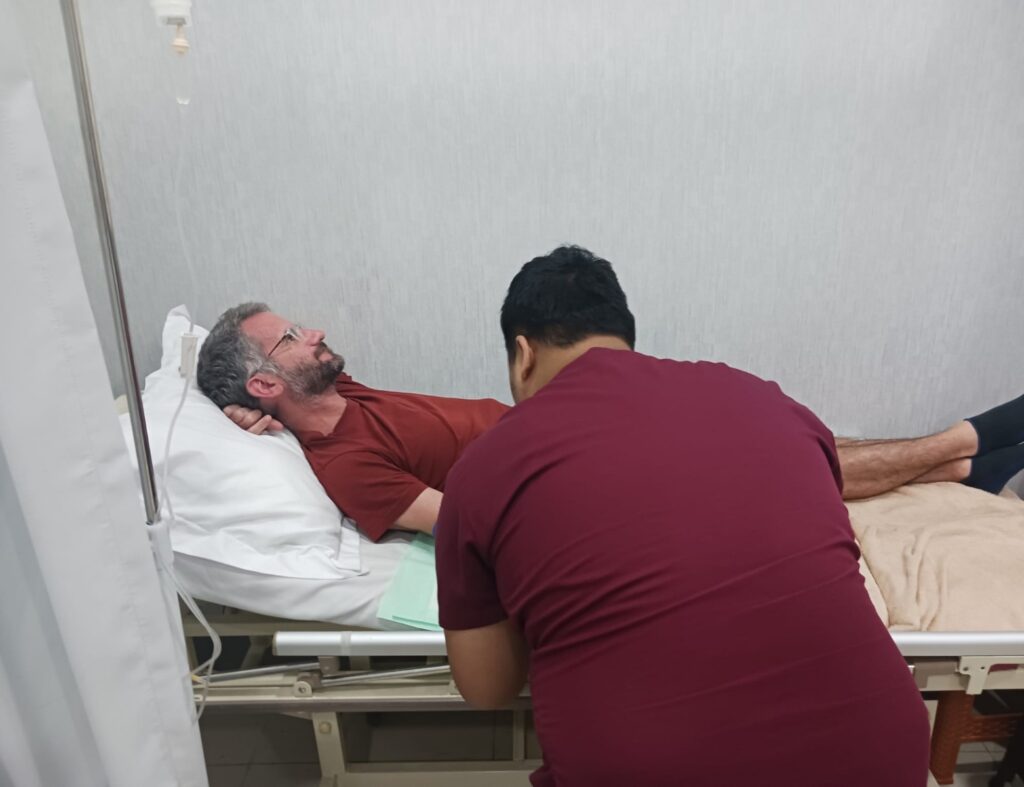
The doctor can diagnose dengue using blood tests. They may choose to detect the virus or antibodies. In our case, in Bali, the doctors diagnosed dengue based solely on the presence of symptoms and platelet count. They are also quite strict about it. The fever must be present for three consecutive days, and platelets must drop below 150. If these conditions are not met, the diagnosis is not made, which can sometimes be quite ridiculous. Benjamin, for example, didn’t “qualify” for a dengue diagnosis because his platelet count at the time of testing was still above 150. Even though he had all the symptoms and showed a significant drop in platelet count, since it was above the magic number, he supposedly didn’t have dengue. One doctor even told him he must have had a respiratory infection instead…

- What are the treatments?
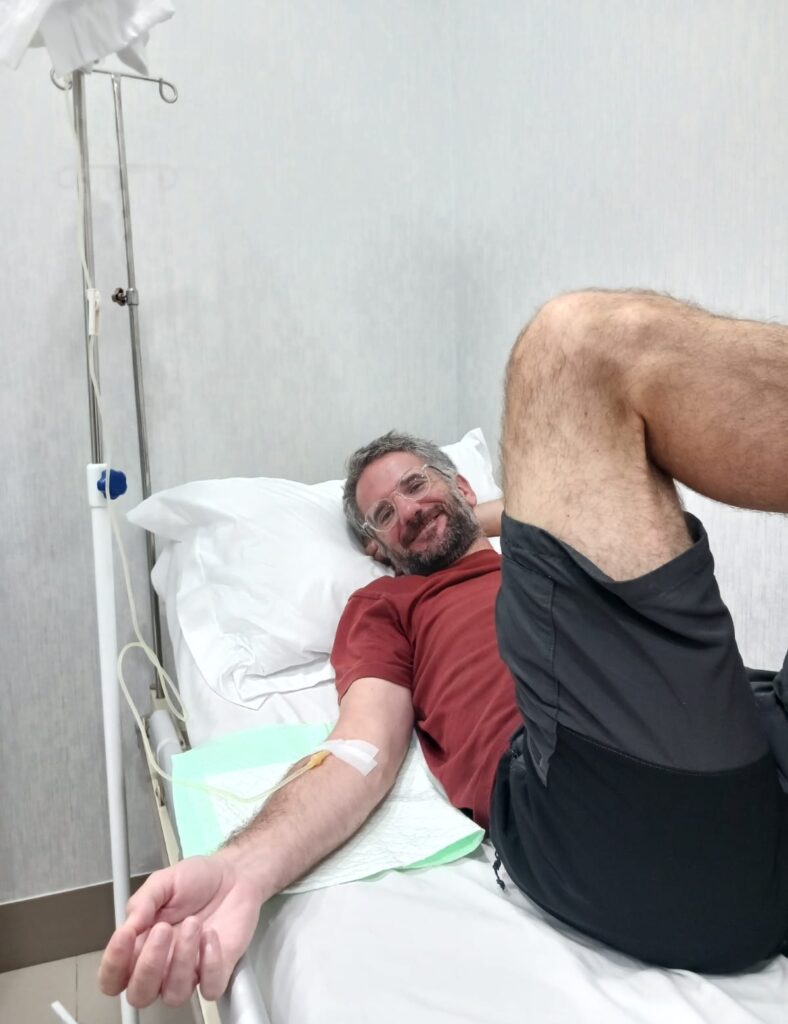
As with any viral infection, time is the best remedy. For classic dengue, the symptoms eventually go away on their own. However, we took paracetamol to reduce the fever and relieve our headaches and pain. In Indonesia, doctors often prescribe intravenous vitamin drips. While this makes complete sense for patients with diarrhea and vomiting, it was less necessary for us since we continued to eat and drink. However, by day 5 of symptoms, the fatigue was overwhelming. We thought a small drip might give us a boost—and it did.

- How to prevent infection?
At first glance, it seems quite simple: avoid getting bitten by mosquitoes. We all know the recommendations. Wear long, loose, and light-colored clothing. Avoid areas with stagnant water. Prefer air-conditioned places with doors and windows fitted with mosquito nets. And don’t forget to use insect repellent.
In reality, it’s quite challenging. In tropical areas, it’s often very hot and humid. The last thing you want is to wear long pants and sleeves. We can only recommend choosing lightweight, breathable clothing to make it more bearable. Also, don’t hesitate to buy your insect repellent in Europe or America before your trip. This way, you can choose one containing 50% DEET, which is very effective at keeping mosquitoes away. Paradoxically, in the countries we visited where dengue is endemic, we were unable to find products with more than 13% DEET—clearly insufficient. Also, remember to reapply regularly: swimming or sweating dilutes the product.
As for mosquito nets, forget about them! They are almost nonexistent in mid-range hotels in endemic countries. So, stay indoors with the air conditioning on, and keep doors and windows closed.
Find all our articles on Indonesia:
Find more tips to help you travel better: