
The Hairy giraffe… ON EASTER ISLAND
We took advantage of our stop in Chile to make a leap to Easter Island. The leap was far from small, taking us right into the middle of the Pacific. Located 3,700 km from Chile, Easter Island is indeed the most remote inhabited island on the planet.
Once discovered by the Polynesians, likely originating from the Marquesas, Easter Island is part of the Polynesian Triangle. This triangle represents the territories explored by the Polynesians, which stretch from New Zealand to Hawaii and Easter Island.
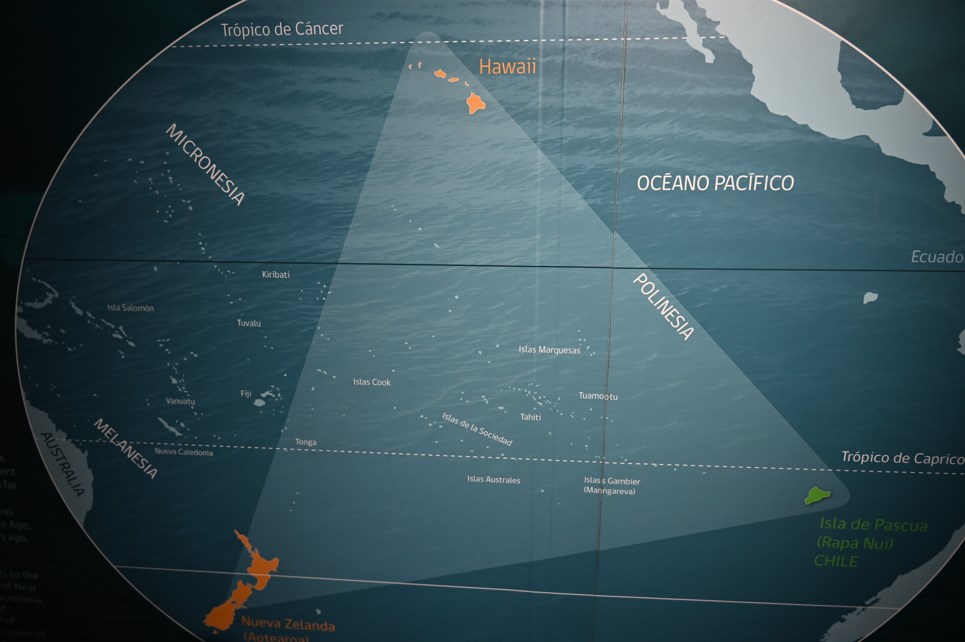
Although it is Polynesian, Easter Island is far from French Polynesia: 4,200 km away. Despite the distance, as you walk around the island and through the streets of Hanga Roa, you can still find Polynesian influences. Colorful flowers, tattoos, deified statues, and a few words of French remind us that we are indeed in Polynesia.
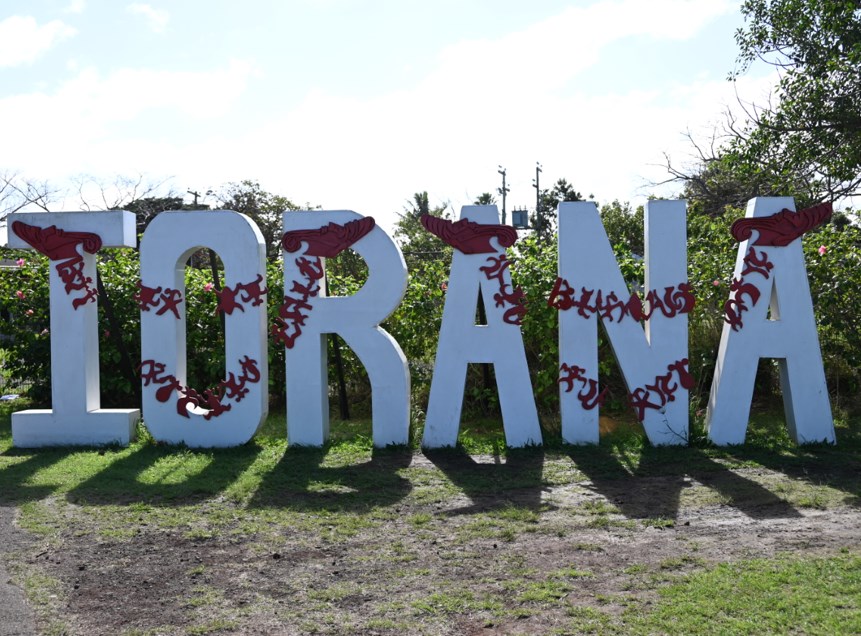
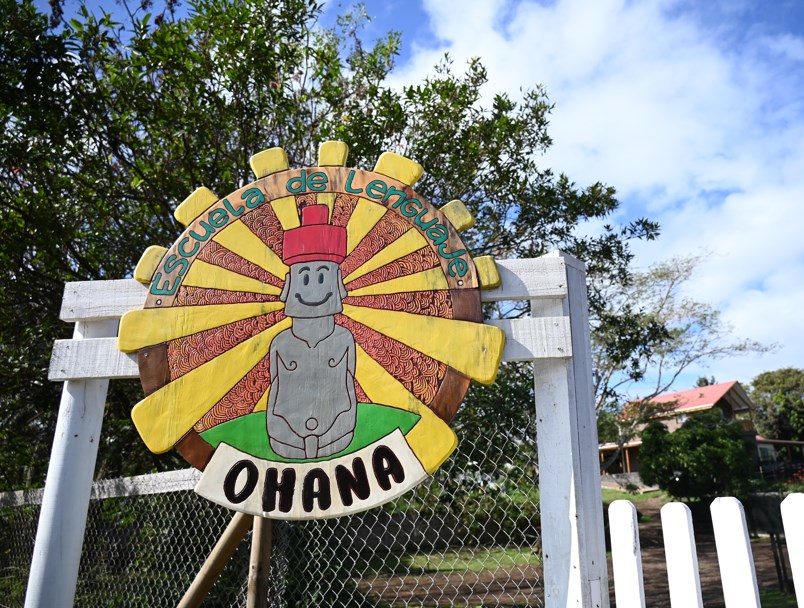
It is precisely to respect its Polynesian origins that we chose to place Easter Island in Oceania on this blog. We intentionally separated it from Chile, in South America, because, aside from the language, it is quite different from the mainland.
We’re telling you everything about this trip!
Before even starting, why is Easter Island called “Easter Island”? The answer is nothing exceptional. Simply because it was discovered by the Dutch on Easter Sunday (1722). After five days of serious and thorough research, we can confirm: there are no rabbits, no bells, and no chocolate eggs. There are also no Milka or Cadbury factories, and the locals are not constantly hunting for eggs.
How long? We spent 5 days on Easter Island. We went there as part of our world tour. During this trip, we generally preferred to spend more time than necessary to avoid exhausting ourselves too much. In reality, two days on the island are enough to see the main sites and enjoy the city center, especially due to the lack of freedom to visit the sites (see below). Plan for three days if you want to visit all the sites.
When? Mid-July. It’s not the tourist season, so there are fewer tourists around. However, it’s winter. July and August are the coldest months. The temperature hovers around 15 degrees (completely manageable). However, the constant wind might make some people shiver.
Additionally, it’s important to remember that we’re on a tropical island. It’s possible to experience all four seasons in a single day (snow excluded) and sometimes even within the same hour.
Getting to Easter Island: Not all roads lead to Easter Island, far from it! To reach Easter Island (or Rapa Nui in Polynesian), there are only two options: by boat (which is not the easiest) or by plane.
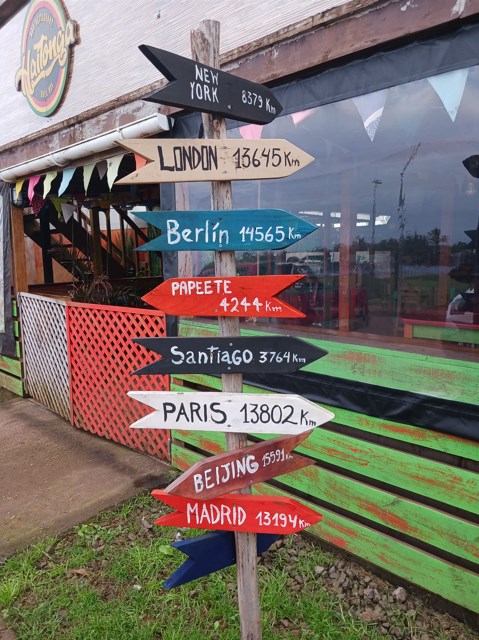
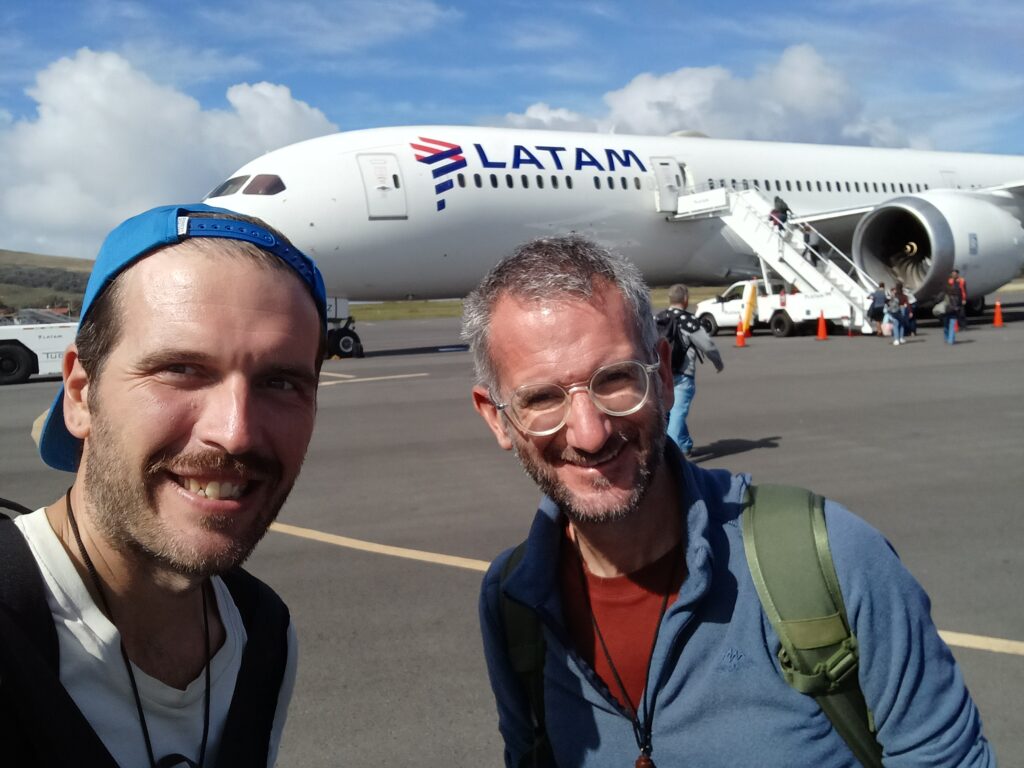
The only existing air connection to date is the one linking Easter Island to Santiago, the capital of Chile (Easter Island is a Chilean territory). Only one airline is responsible for this route: Latam. Since the late 1960s and until before the COVID pandemic, Latam also offered a Tahiti-Easter Island-Santiago route.
This route allowed the Polynesians to move more easily across their ancestral lands (with New Zealand and Tahiti also connected by air), to meet one another, and to have an entry point into South America. Over time, the number of flights decreased, eventually stopping completely when the island reopened after COVID. Now, to reach Easter Island, Polynesians must pass through California and then Santiago, or go through Auckland before reaching Chile.
Given that the direct flight is only 5 hours, all these detours are quite a shame.
Ease of independent travel: 1 giraffe  Guided tours are mandatory to access the archaeological sites (see below). The hiking trail that leads to the northern tip of the island is only accessible with a guide (and an entrance ticket) as it passes through archaeological sites. Only one site is accessible on foot and for free from the town.
Our star goes to the fact that renting a car, quad, two-wheeler, or horse is easy and allows you to explore parts of the island on your own. However, it should be noted that, unlike the Society Islands or the Marquesas, Easter Island does not have majestic volcanoes or lush forests. Massive deforestation (one theory suggests that a phenomenal amount of trees were cut down to move the statues), climate change, and the introduction of invasive species like rats drastically reduced the number of trees. Therefore, the landscape is not extraordinary, and the tour of the island is less interesting.
Costs: 4 giraffes  Everything is incredibly expensive on Easter Island. Restaurants and food are about 1.5 times more expensive than on the mainland. The entry ticket to the sites is very expensive, as are the mandatory guided tours. Ticket prices, tours, and accommodations are often listed in U.S. dollars. However, souvenirs remain affordable. It’s possible to find nice things for just a few euros. The 19% tax that is routinely added to your bill when paying with Chilean pesos on the mainland does not apply here.
Ease of communication: 4 giraffes The official languages are Spanish and Rapa Nui. However, many residents understand and speak English, and some even speak French.
Safety: 4 giraffes We did not feel any sense of insecurity during our stay. The specialized tourist sites on Easter Island warn tourists about the dangers of driving on the island. The roads are often very narrow and winding, which increases the risk of accidents for drivers who are not used to it. We can also add to this the poor condition of the vehicles owned by many locals. The bodywork is often completely eaten away by rust, windows shattered, bumpers missing, side mirrors hanging… Sometimes, we wondered how the car was still able to drive.
Health: 4 giraffes The water is said to be drinkable. However, we didn’t see anyone drinking it. People seem to prefer bottled water. According to some, the tap water doesn’t taste good. Nevertheless, this significantly reduces the risk of food poisoning.
While Easter Island is currently free from tropical diseases like Zika, chikungunya, and yellow fever, cases of dengue have been reported. Two infection peaks in 2016 and 2018 prompted health authorities to address the issue. As a result, large informational signs are now present at the airport and throughout the town to raise awareness among both tourists and locals.
The island does not have any dangerous terrestrial wildlife. There are no scorpions, snakes, or deadly spiders here (we’re not in Australia!). However, there are reportedly over 5,000 free-roaming horses. Although they all belong to someone, they go wherever they please, even in the city. Be cautious though: a horse can bite and kick. Also, watch where you step. A large number of stray dogs roam the streets, and most don’t hesitate to approach humans. Remember, a dog can bite and transmit parasites (skin, intestinal, etc.). The risk of rabies transmission is unlikely, but not impossible. Also, with free-roaming horses and dogs comes animal waste everywhere. The animal doesn’t distinguish between a sidewalk, a lawn, or a dirt path, so it would be unfortunate to step in or, worse, sit in a mess.
As for marine life, no shark attacks have been recorded to date in the waters of Easter Island. Occasionally, jellyfish approach the shores. This should be monitored.
There is only one hospital on the island. It mainly treats minor injuries. Serious wounds must be transferred to Santiago.
Gay friendly: 5 giraffes  The rights of the LGBT community are excellent in Chile, which includes Easter Island. Homosexuals are also generally well integrated into Polynesian culture. One particularity that struck us: the raerae (men who dress and live as women), who are very present in French Polynesia, do not seem to be present here.
Travel ease: 4 giraffes Once in Chile, the journey to Easter Island is straightforward. Traveling on the island is also easy, although constrained by the site’s access policy.
Highlights: The moais, magnificent and as prestigious as we could have imagined, the Rapa Nui museum which allows us to learn more about Polynesian culture, the sites of Rano Raraku and Tongariki, and the Rapa Nui dances.
Letdowns:  The policy of access to archaeological sites, which prevents tourists from exploring independently and feels like a disguised tax, the more challenging immersion in Polynesian culture compared to French Polynesia, the lack of warmth from the locals, the stray dogs, and the ubiquitous roosters.
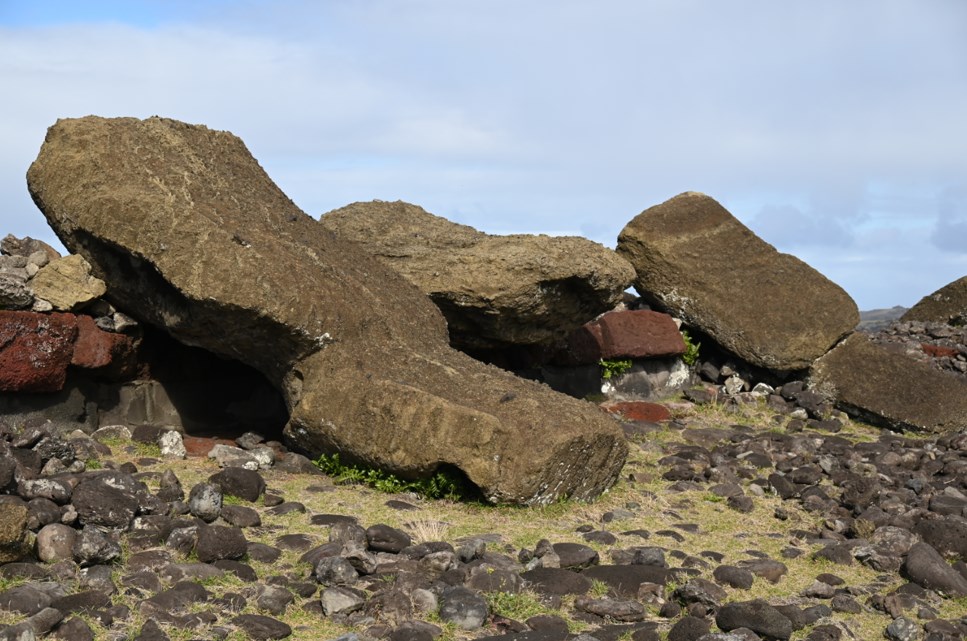
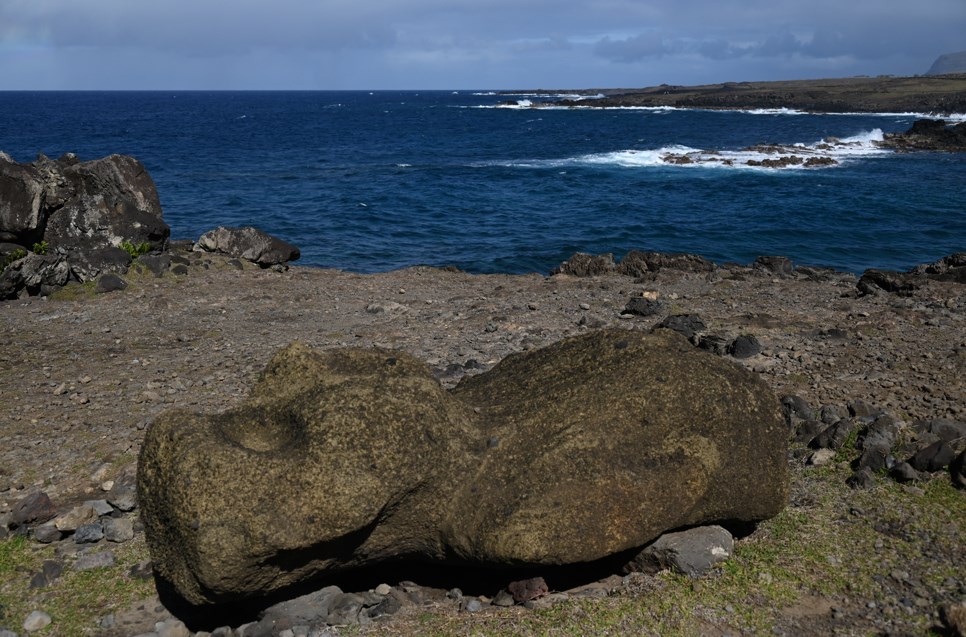
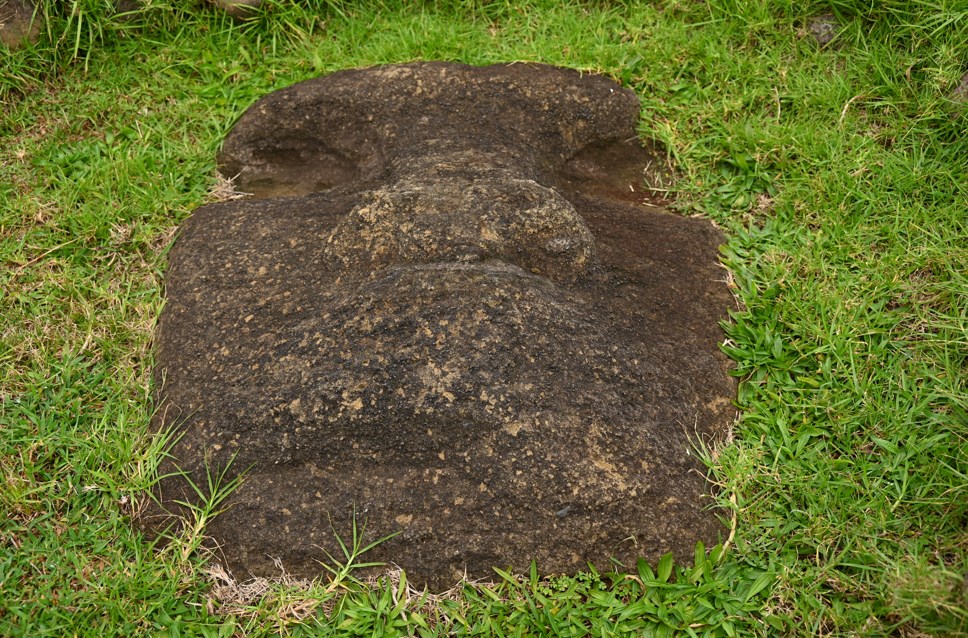
Before presenting the itinerary, it’s important to first explain what a Moai is, a key element of this trip. A Moai is the massive stone statue characteristic of Easter Island. A Moai represents the spirit of a deified ancestor. With one exception, they all face away from the sea in order to be part of the community’s life and protect it. There are believed to be 887 Moais recorded on the island. The majority of them are still lying in the quarry where they were carved or were abandoned during transport to their ahu (the platform on which they are erected). Of the 288 erected, only a small handful remain standing. The others were toppled by storms, natural disasters, or during the civil wars that erupted on the island.
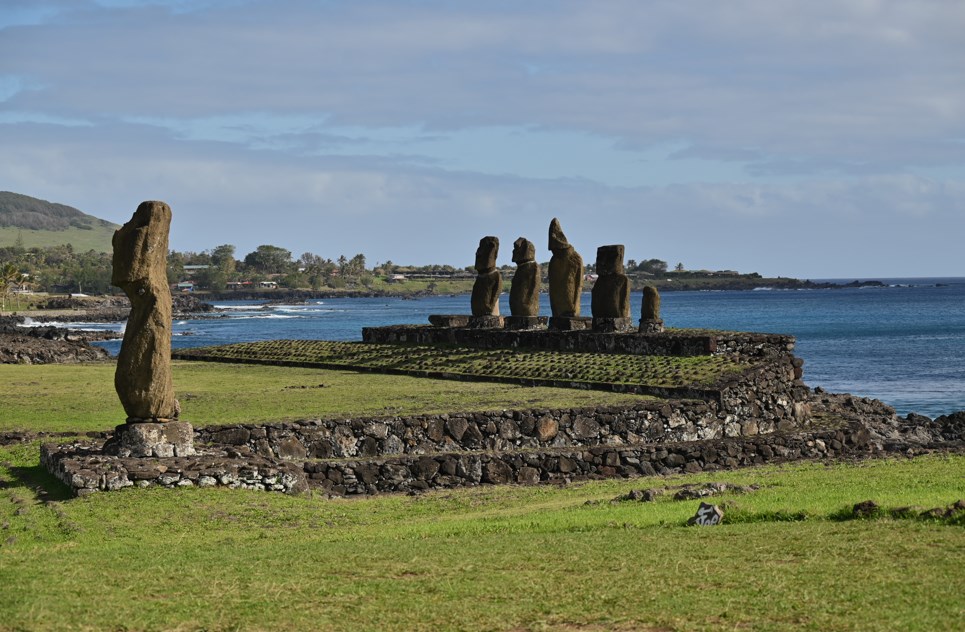
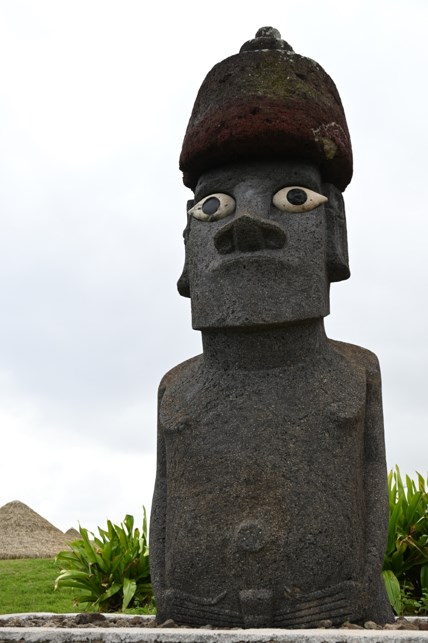
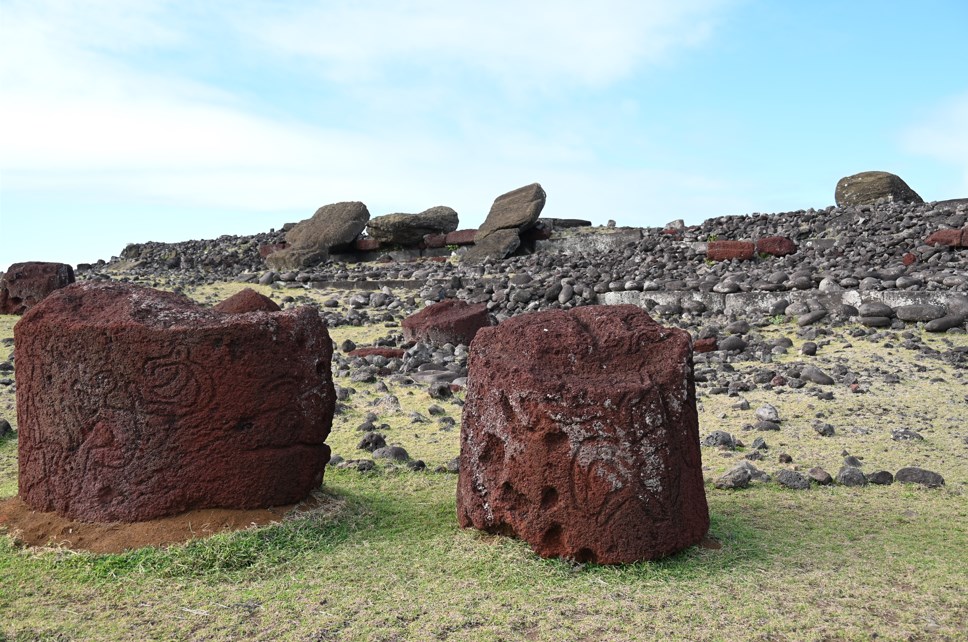
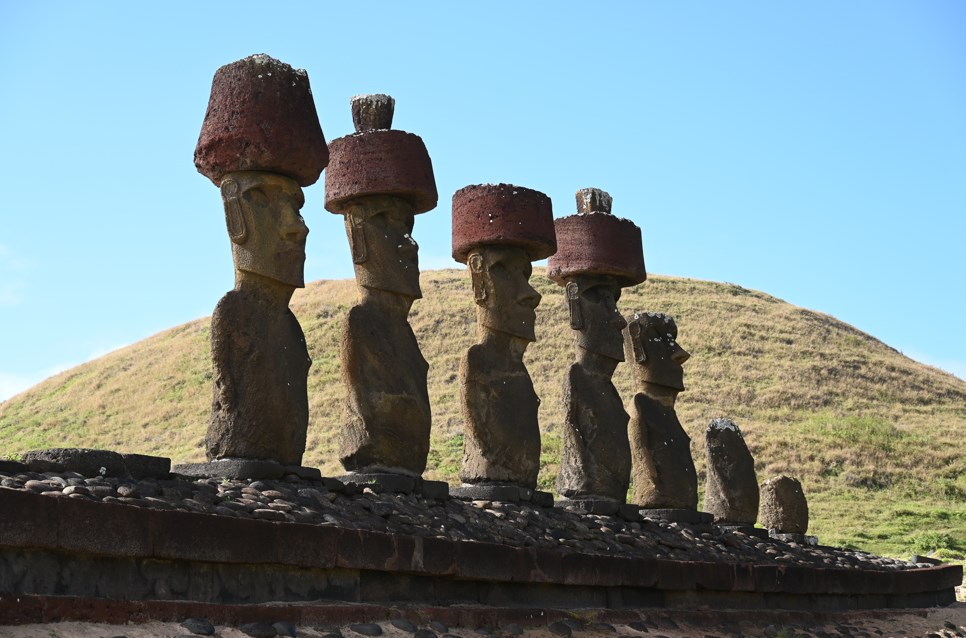
Carved from volcanic stone, they range from 2 to 20 meters in height and can weigh up to 20 tons. The hat they wear is not actually a hat. It is the Moai’s hair, styled into a topknot on its head. This is called the pukao. Lighter than the Moai to avoid breaking it, the pukao was rolled up to the Moai’s head using a ramp. They also had eyes made of white coral and black obsidian irises.
Check out our Travel Reflections articles on Chile:
5-DAY ITINERARY ON EASTER ISLAND
Here is the detailed itinerary of our five days on Easter Island:
Day 1: At Santiago airport, for a flight to Easter Island, we have to go through customs even though it’s a domestic flight. For Chile, Easter Island is considered a ‘special’ territory, which has its own immigration policies. Before our departure, we had to complete an online form where we indicated the dates of our stay and the name of our hotel. This form was printed by the customs officer. Immigration also specifies that proof of our accommodation and our return ticket may be checked by the customs officer (which did not happen). Immigration is indeed restricted on Easter Island.
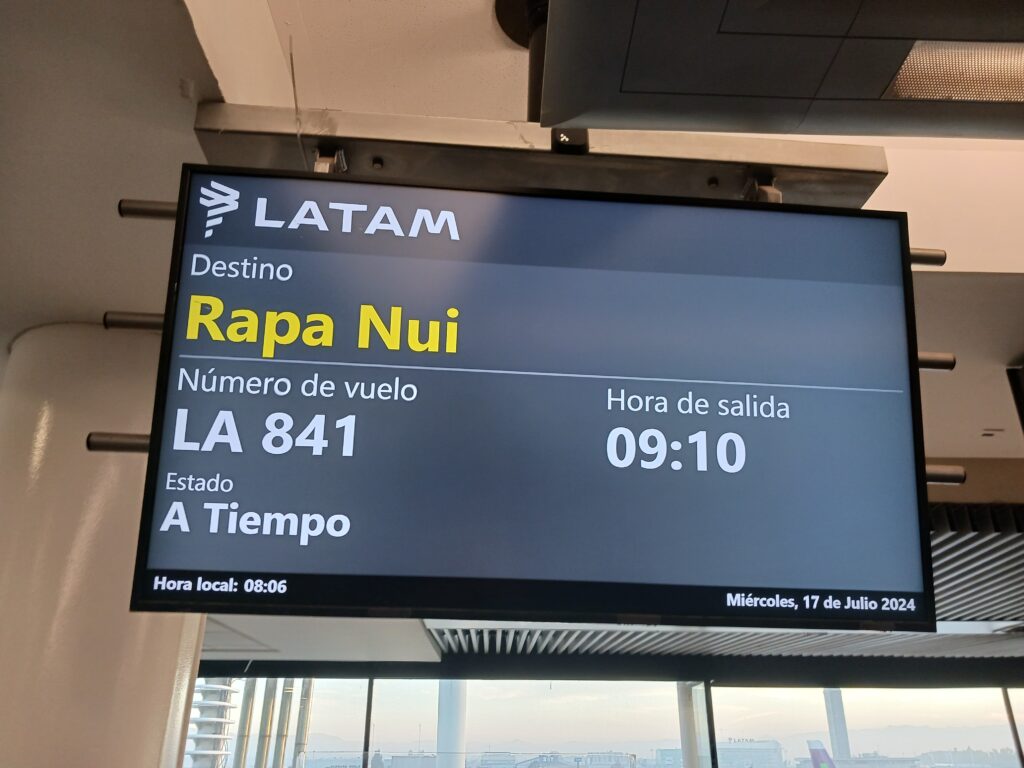
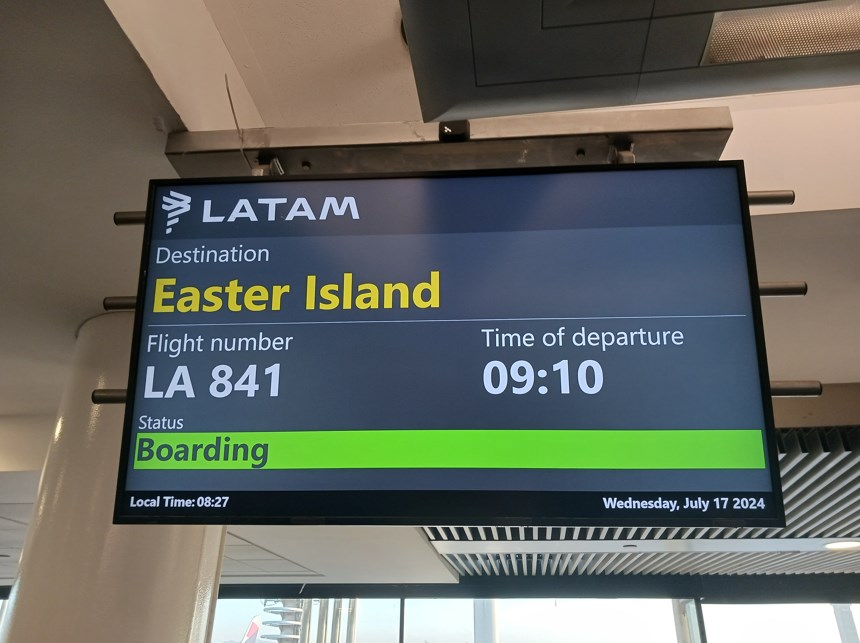
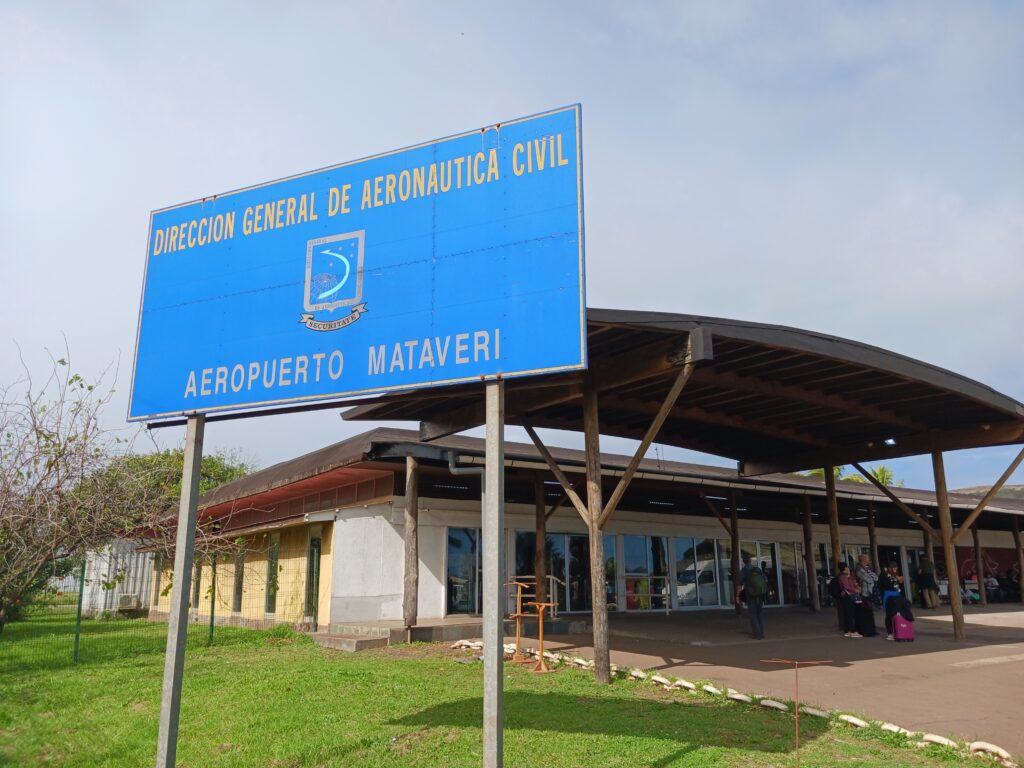
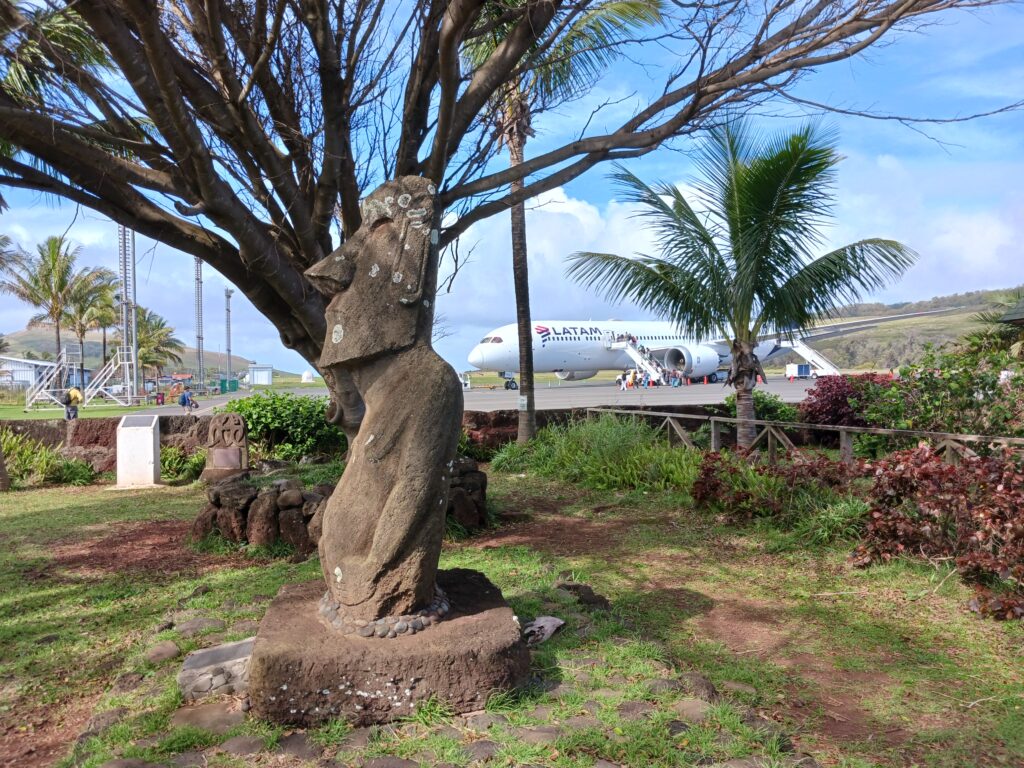
The 5-hour flight was turbulent. There were turbulences for most of the journey, with a peak during the last two hours. (According to various blogs, this seems to be a common occurrence). Arriving on Easter Island was nothing like arriving in Tahiti. Here, there were no traditional musicians, no vahines with flower crowns, or the scent of tiaré flowers. Instead, we were greeted by Chilean tourists pushing and shoving at the baggage carousel, and a dog patrol walking over the carousel, stepping on and sniffing the luggage in search of prohibited items.
At the exit of the airport, the owner of our lodge is waiting for us with flower leis. We can definitely recognize the Polynesian welcome (phew!).
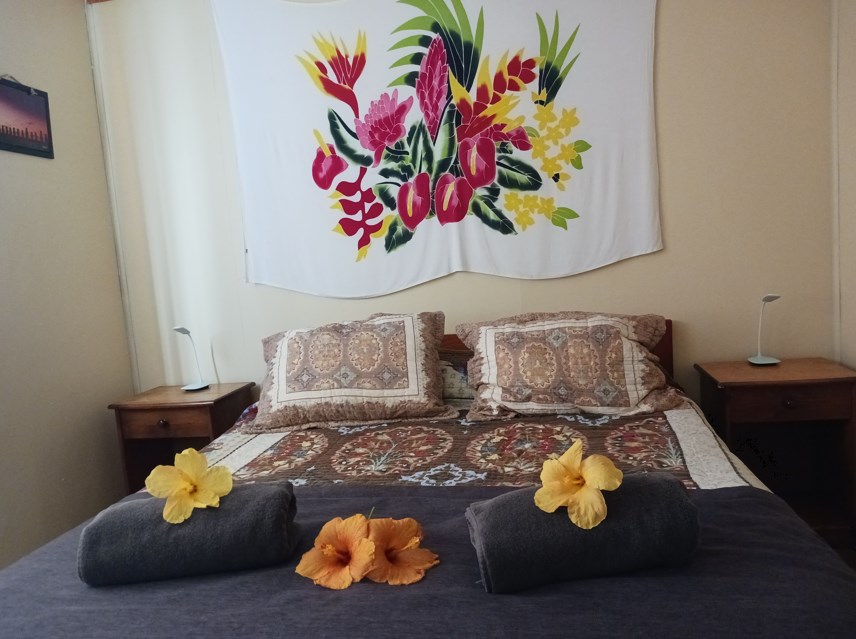
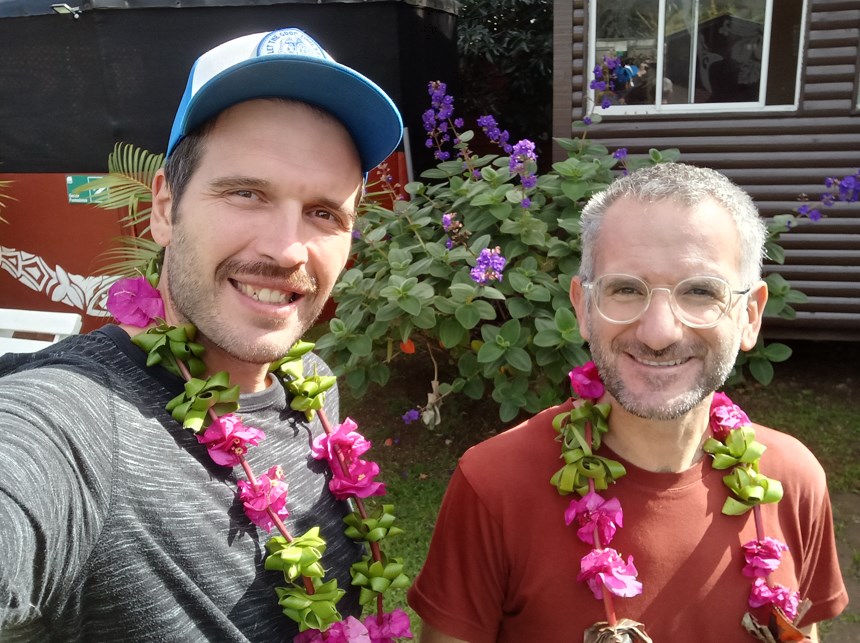
After dropping off our bags in our room, we head out to explore the city, but most importantly, to see the Moai, the famous stone statues.
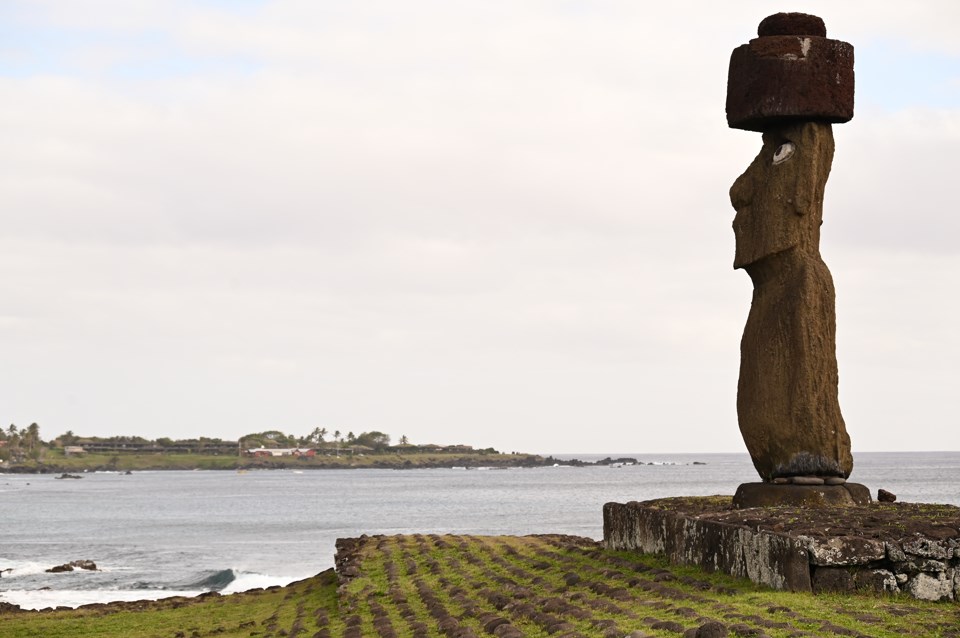
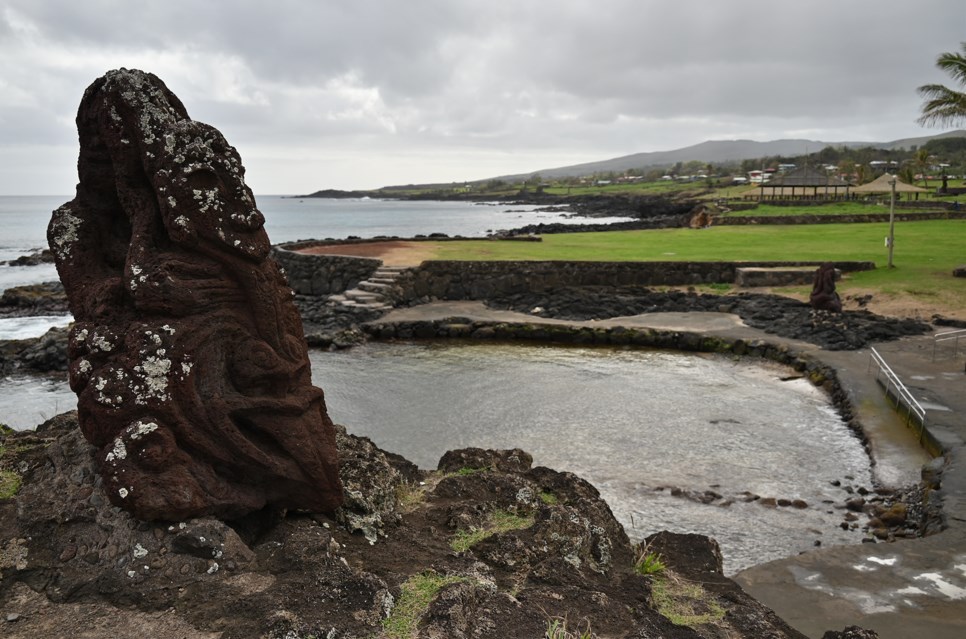
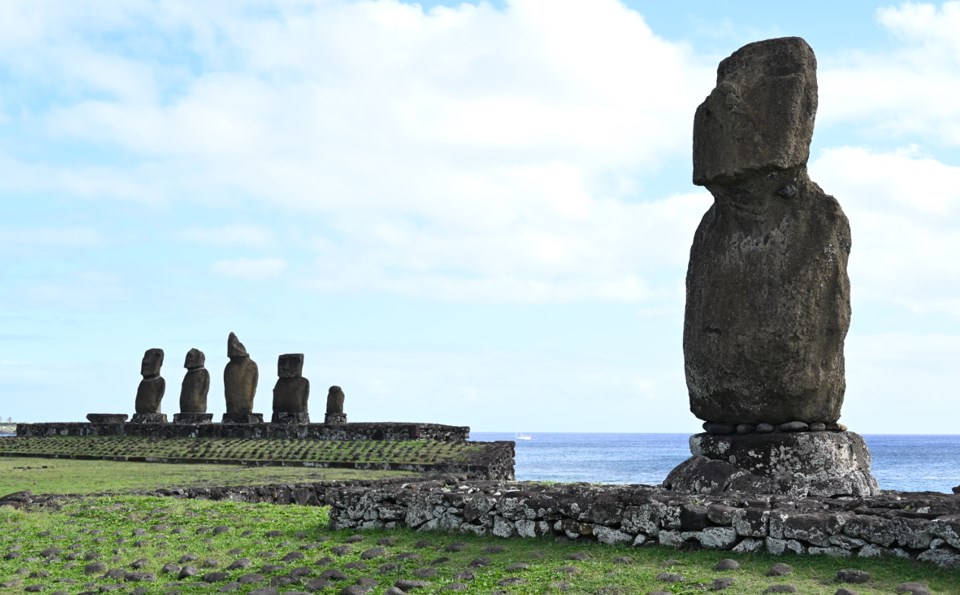
It’s important to know that out of the large number of Moai scattered around the island, only a handful are accessible to the public for free and independently. Indeed, a permit is required to visit the archaeological sites. The ticket is expensive (several dozen euros) and is valid for ten days.
Additionally, since 2020, visiting the sites must be done with a guide. Even with a ticket, it is no longer possible to visit the sites on your own in order to preserve the integrity of the monuments, which were supposedly being desecrated by tourists. This regulation inevitably impacts the tourist’s experience.
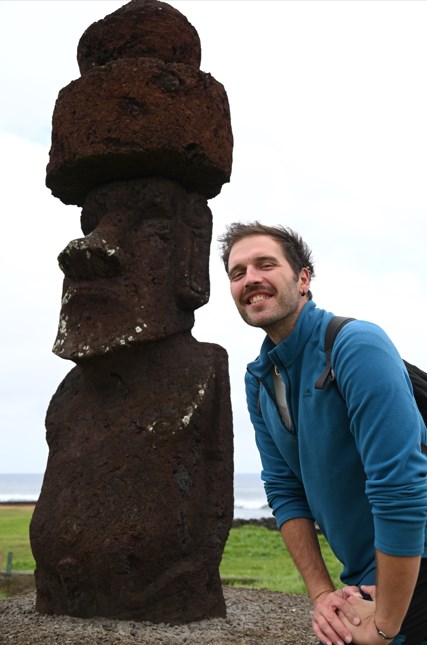
It’s important to know that apart from the historical sites, there isn’t much to do on the island. Hotels and tour operators offer rentals of motorcycles, quads, horses, and cars to tour the island, but again, with no access to the sites. It’s also possible to go diving, but the underwater environment, due in part to overuse, is far from resembling that of Polynesia.
Several tours are available, ranging from shorter to longer and more or less expensive. However, if you hope to see all the sites, you will generally need to pay for two tours. While the costs for two people are already quite high (several dozen euros once again), it quickly becomes exorbitant for a family with children. Easter Island is clearly not a low-cost destination.

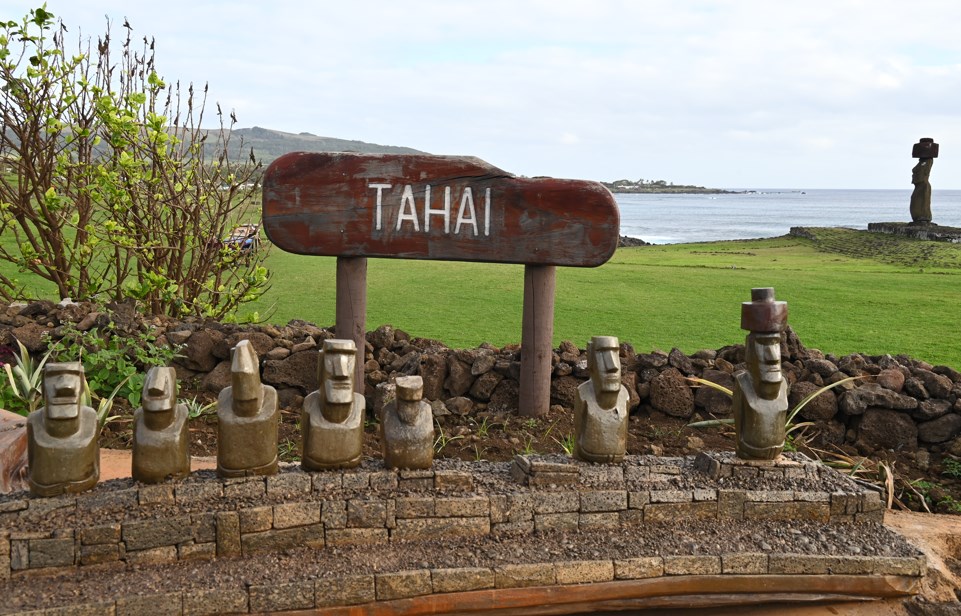
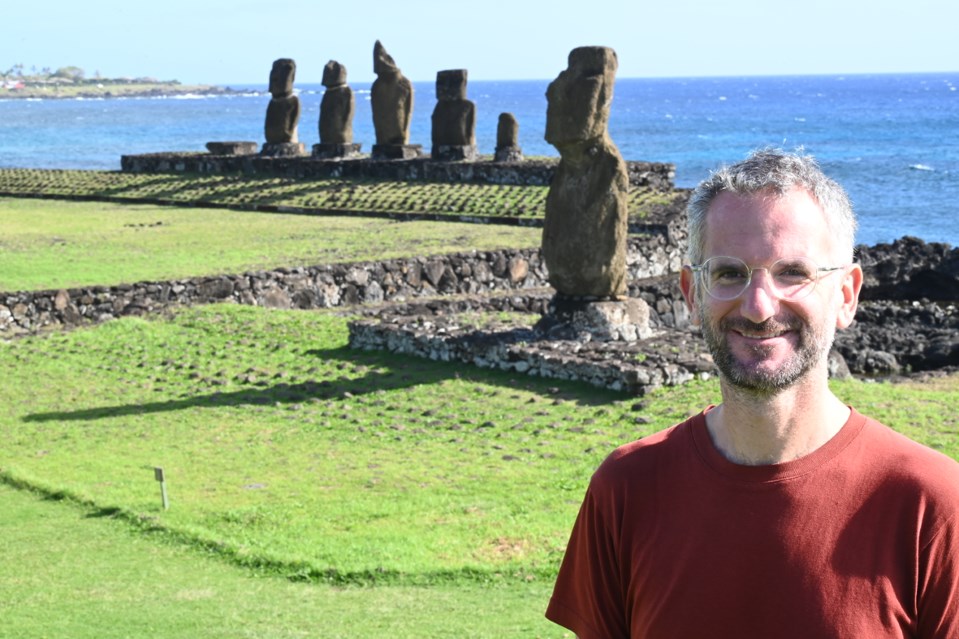
End of the tangent, we settle down on the grass at the Tahai site, facing the Moai with eyes after taking photos of him and his companions from every angle.
We return early so that François can collapse into bed, exhausted from the jet lag.
Day 2: We set off for a walk around the city. We have several things to do today. First, visit the Rapa Nui Museum. It’s free to enter. The museum is divided into three rooms. The first is an exhibition of sculptures by a local artist. There are some nice pieces to see, although nothing is authentic. The second room traces the history of the Rapa Nui people and includes many historical and cultural elements (especially about the Moai). The explanatory panels are numerous, clear, well-illustrated, and bilingual in Spanish and English.
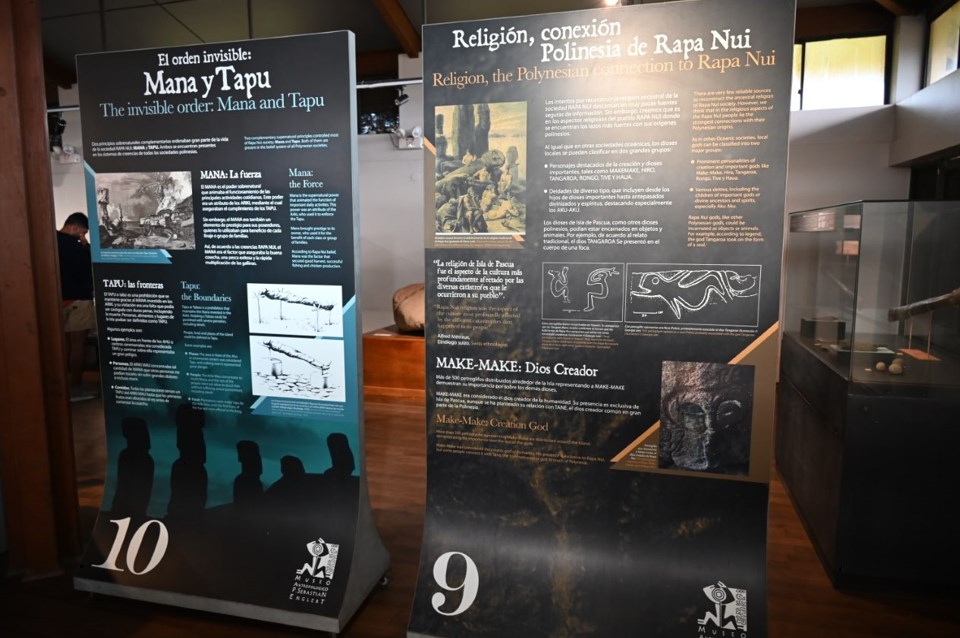
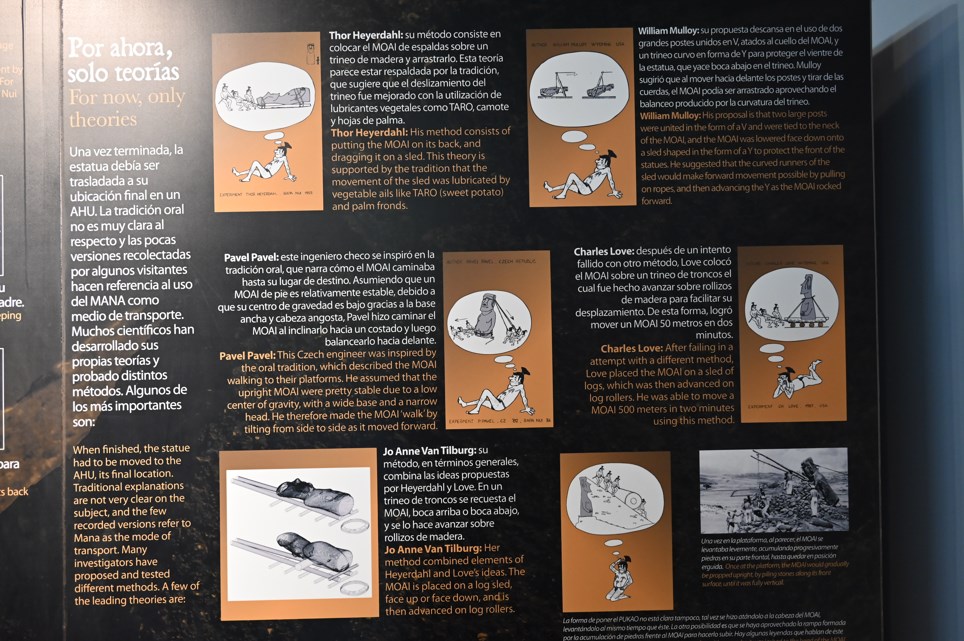
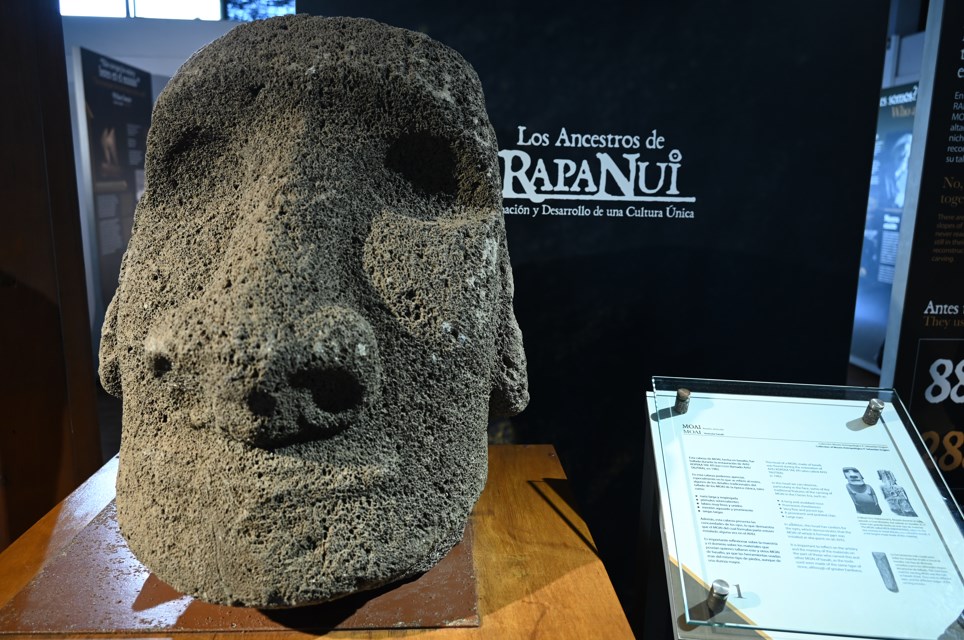
Some original pieces are also on display. The last room is only in Spanish, so we turned back. In the end, looking back, we have no regrets about our choice, and everything we’ve read will help us better understand what we’ll see in the coming days.
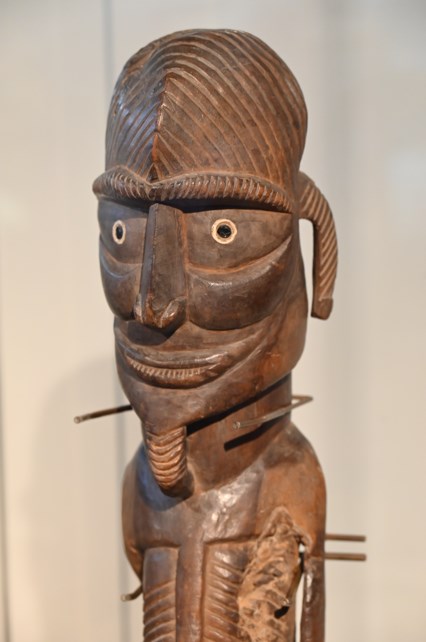
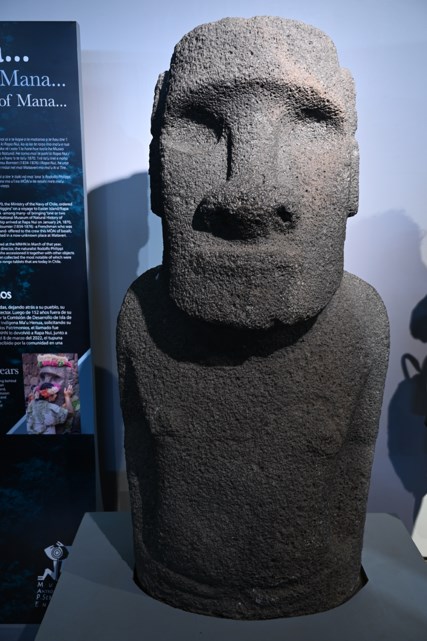
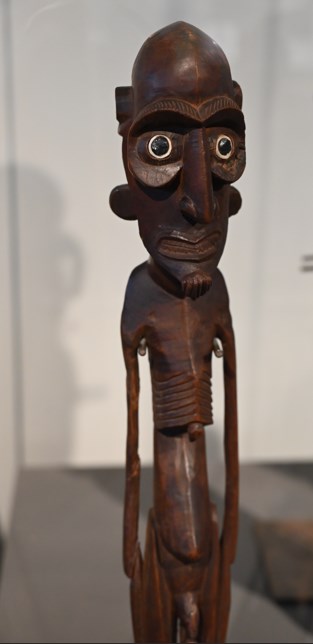
Next, we need to book tours to visit the sites. Since we are here for a long time and are fans of Polynesian culture, we’ve decided to see all of them (except those on the northern tip of the island, which are only accessible on foot, always with a guide, and at a price 1.5 times higher than the car tours). We therefore book a tour for tomorrow and the day after via WhatsApp.
Next, we need to buy our ticket to access the site. While it’s possible to do it online, we prefer to buy them in person at the office located in the center. We are lucky to encounter a French-speaking employee who rolls her r’s (long live Polynesia!). She mentions that in case of loss, we would have to buy new ones. However, she has registered our passports in her system to give us the tickets, but still… We quickly leave after spending a pretty penny.
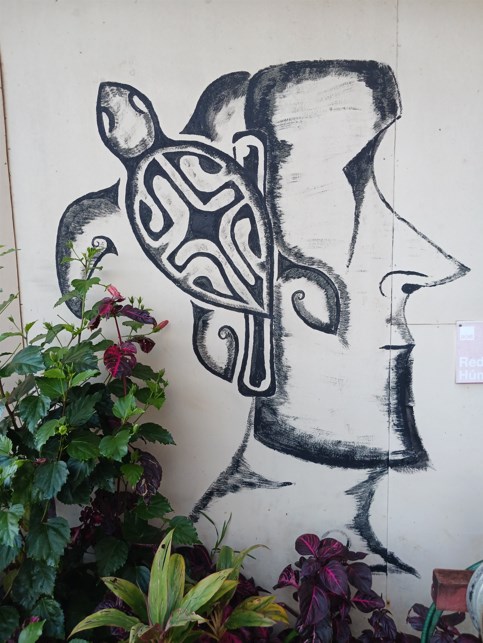
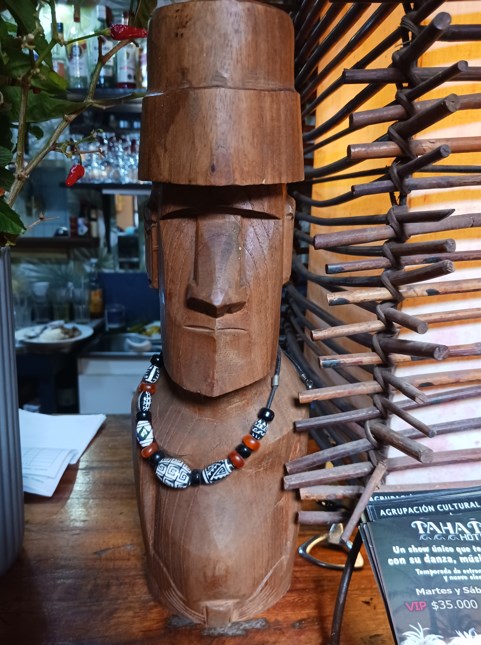

Next stop: the post office. Since the beginning of the trip, we’ve been sending postcards to our loved ones and colleagues. Postcards mean stamps. François manages to buy stamps with his basic Spanish, but without getting a smile from the employee when he thanks her by saying ‘Maururu’ (thank you, in Polynesian).
We have lunch at a nice restaurant. The South American menu with Polynesian influences features pisco sour alongside local beer, and the beef loin competes with the grilled fish. The meal is good and surprisingly not too expensive. The music and decor are also traditional.
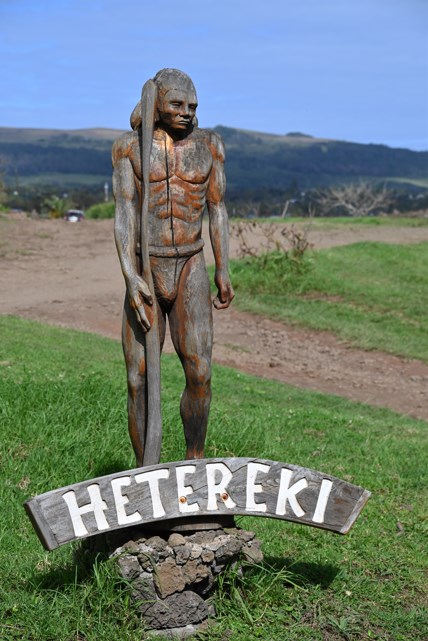
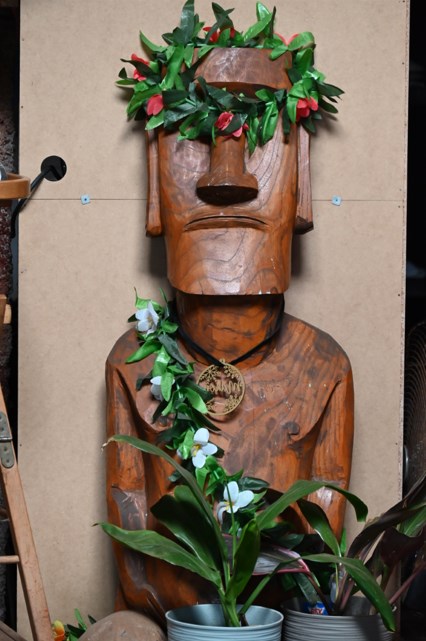
If you’re used to reading us, you already know that we always set aside some time for shopping wherever we go. If you know us a bit, you also know that we love Polynesian culture. So, we planned to stock up on souvenirs on Easter Island. We start by heading to the large artisan market, trying as much as possible to avoid anything that’s Made in China. Just because we’re on a remote island in the Pacific doesn’t mean we can’t get deliveries from AliExpress… The market is shaped like a star with three branches. Each branch is filled with stalls where the Moai are king. On t-shirts, bags, or hats, or in the form of statues, magnets, keychains, or jewelry, they are everywhere. The products vary in quality. Some, particularly the statues made of wood and volcanic rock, are quite nice. Others, however, leave a little to be desired. Sometimes, it’s barely noticeable that we can still see the Chinese label stuck to the packaging.
Unfortunately, several stalls are closed (it’s mid-afternoon). We stayed for about fifteen minutes in the market to look around. Only two artisans greeted us with a discreet ‘Iorana’ (Hello, in Polynesian). Too bad. It’s far from the warm atmosphere of the markets in the Marquesas or even in Papeete. We’ll come back another day and at a different time to see more products and make a more informed choice.
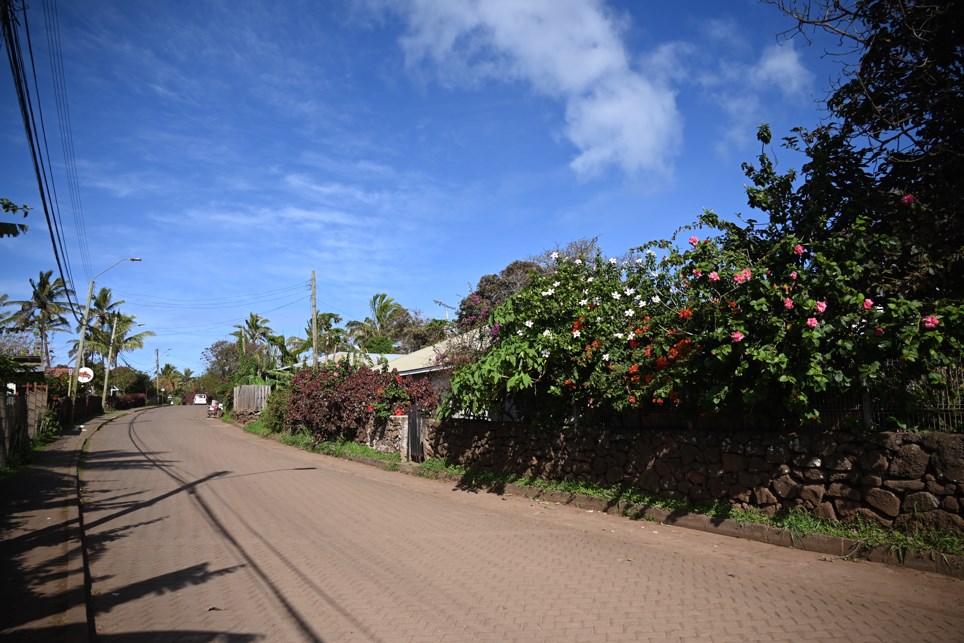
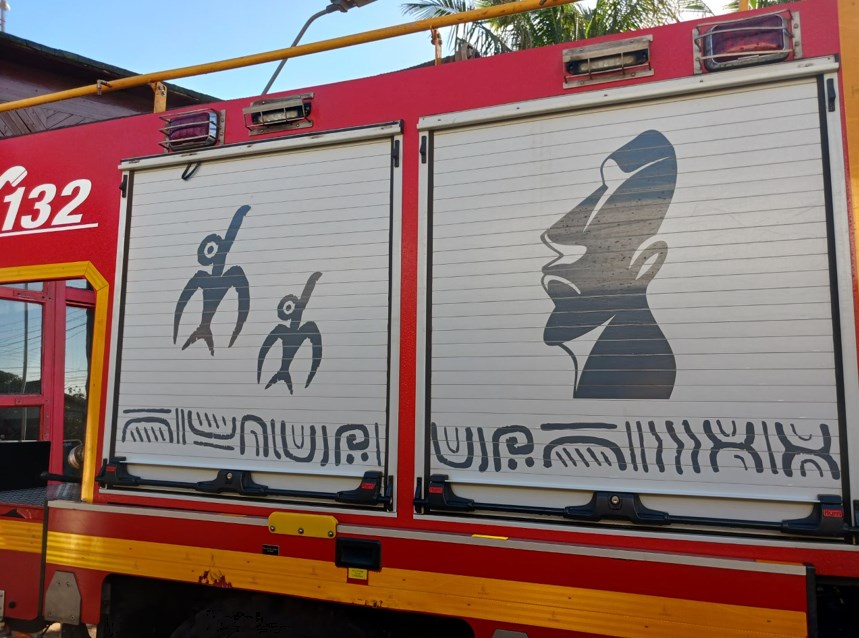
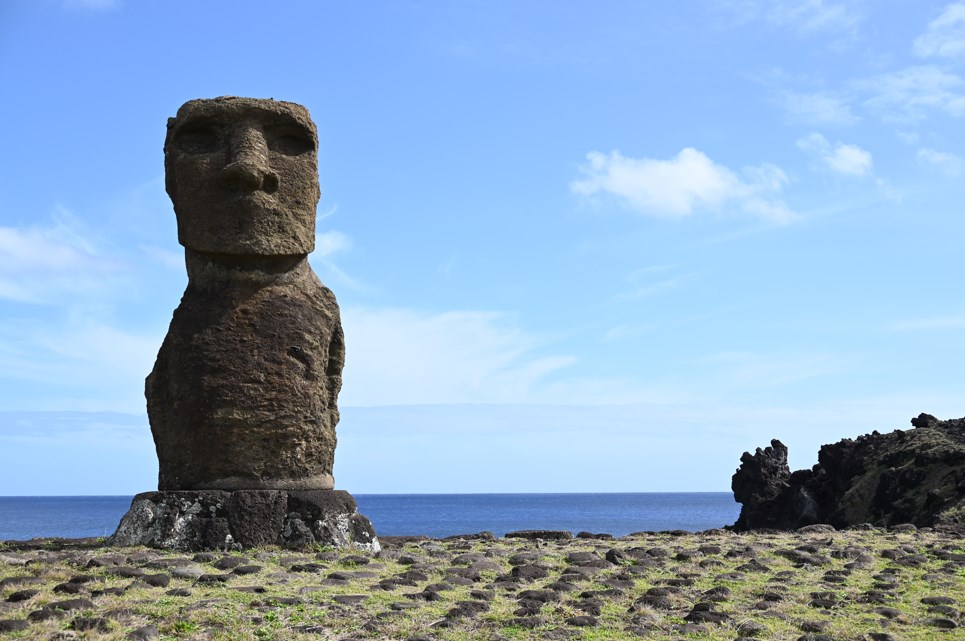
We then head to a craft fair. Located near where we bought our tickets for the archaeological sites, it offers much of the same as the market. Some prices seemed a bit lower (especially for the statues), and the welcome was a bit warmer. However, here too, most of the stalls are closed. We’ll have to come back.
We end the day at Tahai. The site is known for having one of the most beautiful sunsets on the island. With the sun setting behind the statues, it allows us to capture their silhouette on film.

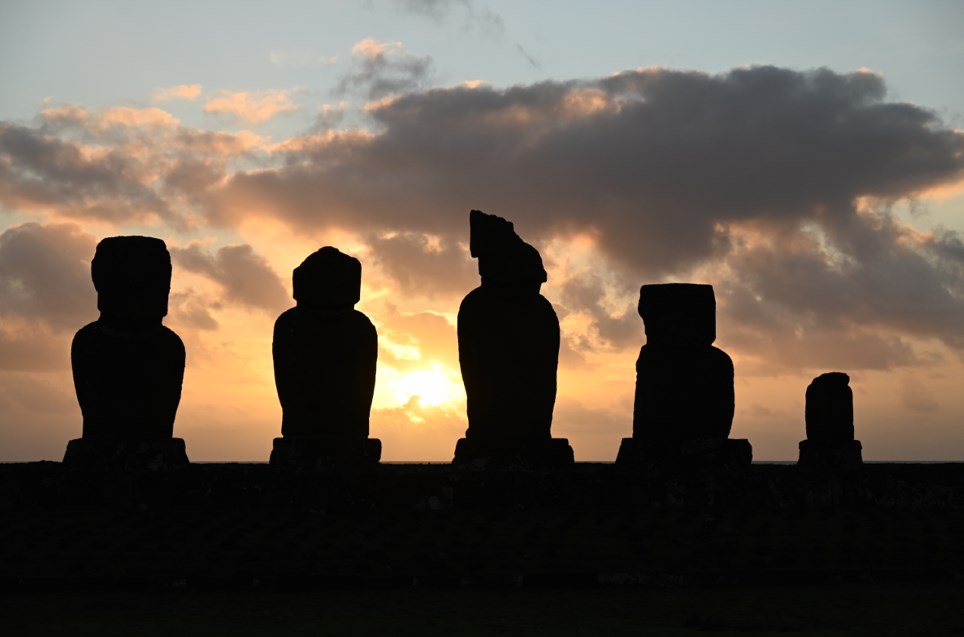
Day 3: We have an appointment at the agency’s office at 9:30 AM for our first day of the organized tour. We are the only non-Spanish speakers among the 12 people in the group. Fortunately, Simón, our Rapa Nui guide, speaks English very well.
The tour begins at the Vinapu site. Here, there are eight Moai that were toppled during the civil wars. A center dedicated to interpreting Moai culture has been set up, featuring houses, gardens, and chicken coops as they were in the past. Thanks to Simón’s explanations, these installations take on their full meaning and allow us to learn more about the traditional way of life of the Rapa Nui people.
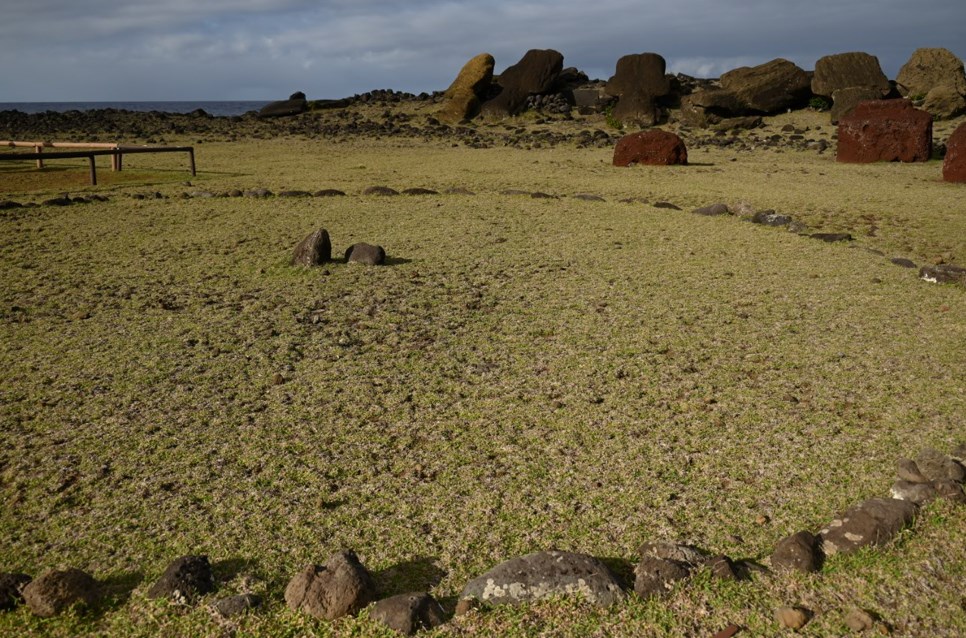
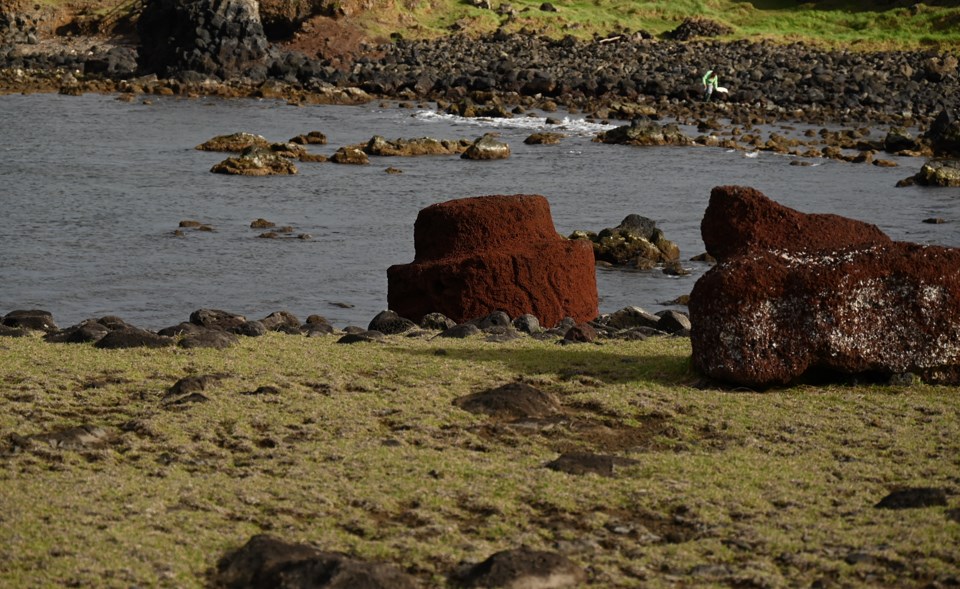
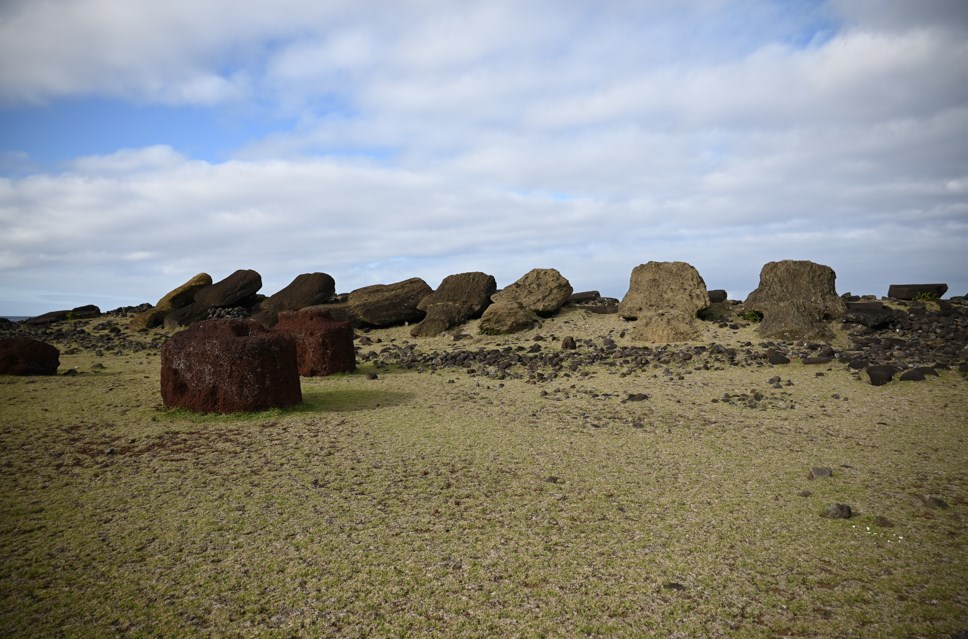
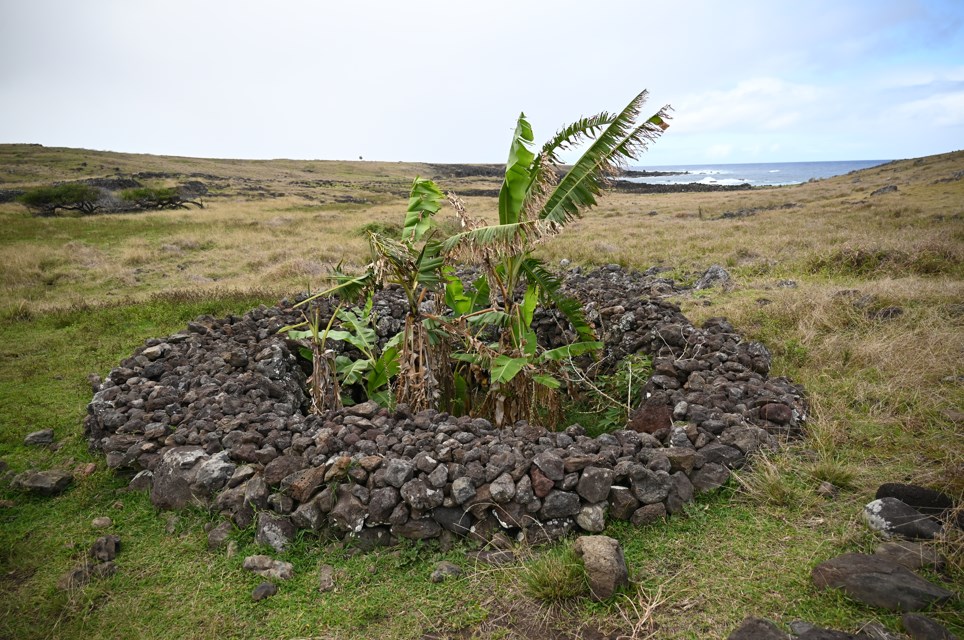
The second site is Akahanga. Here, there are the remains of a village, traditional ovens, and a cave that served as a refuge during storms. 13 Moai are present, but all have been toppled. Cremation ovens are located behind the Ahu. It is also at this site that the tomb of the first king of the island, Hotu Matu’a, is found.
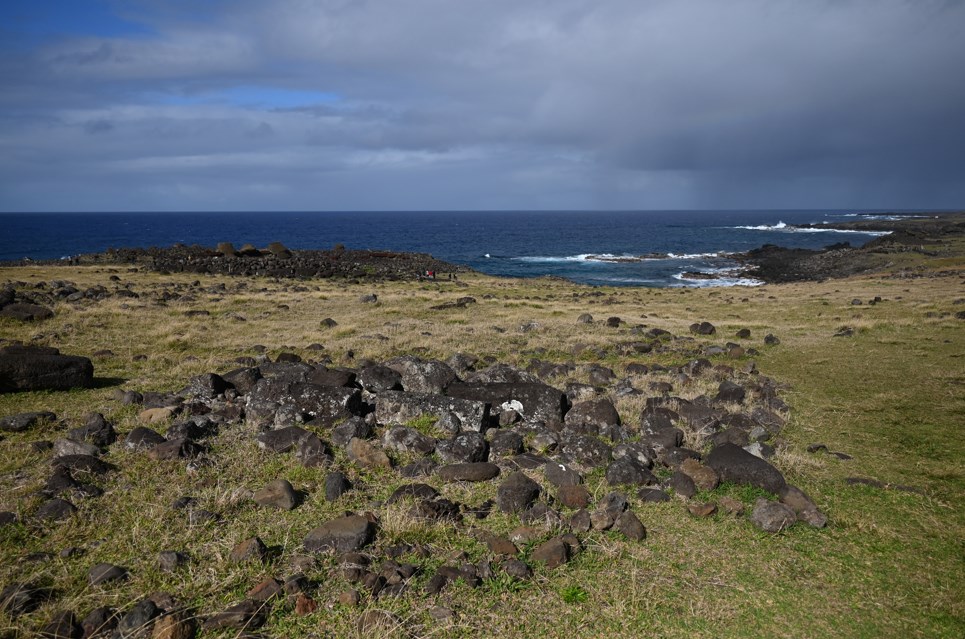
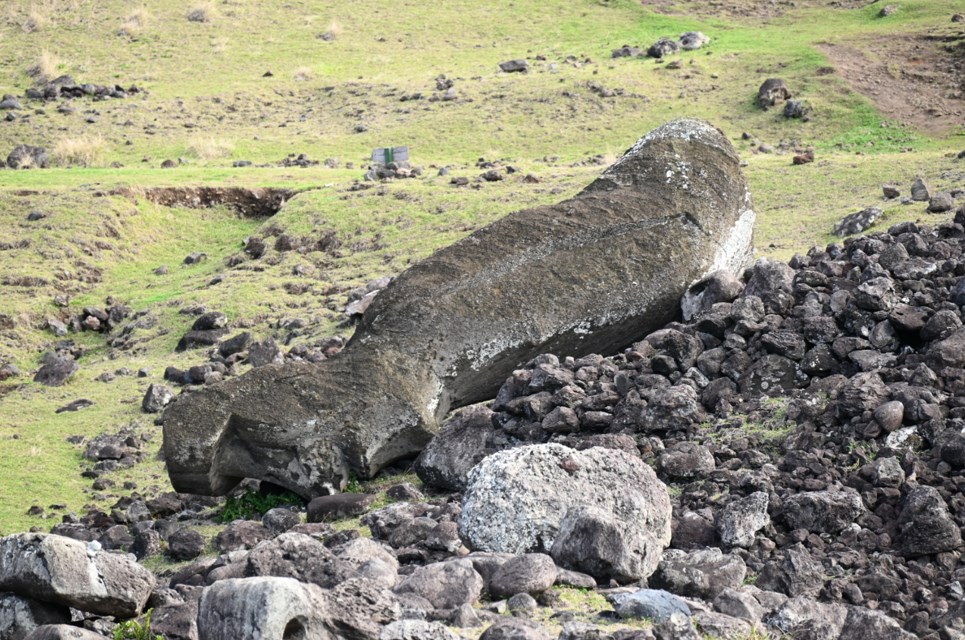
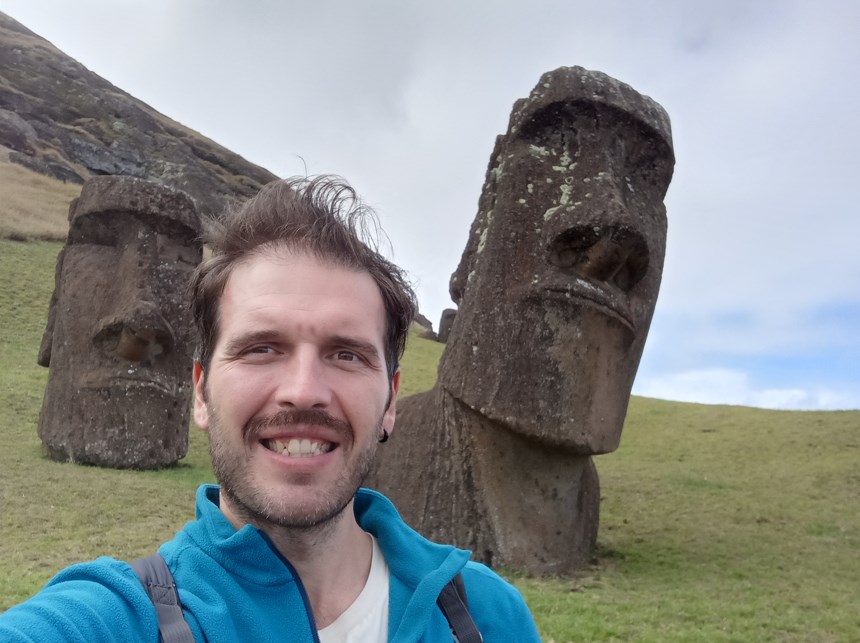
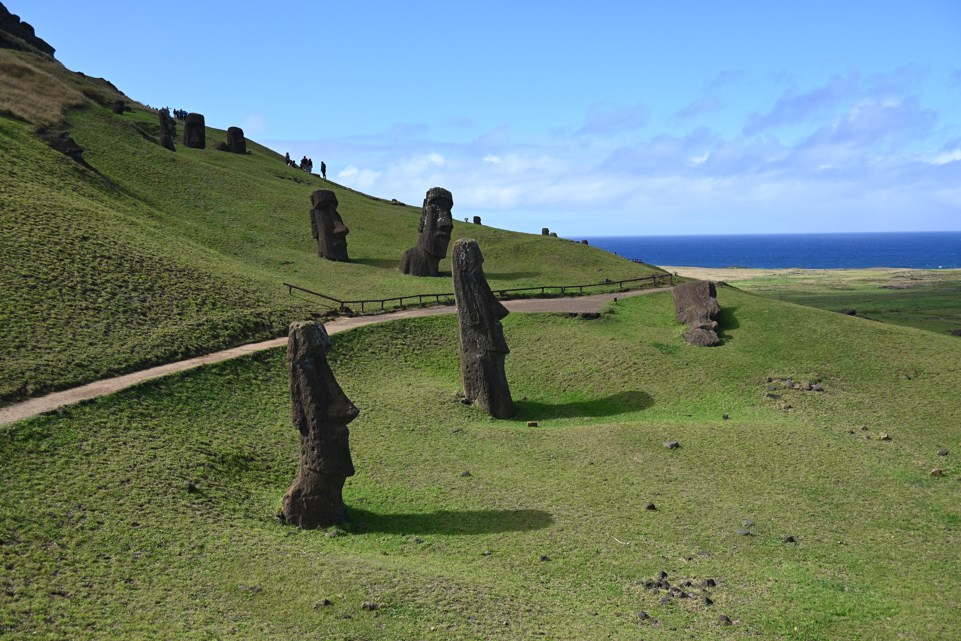
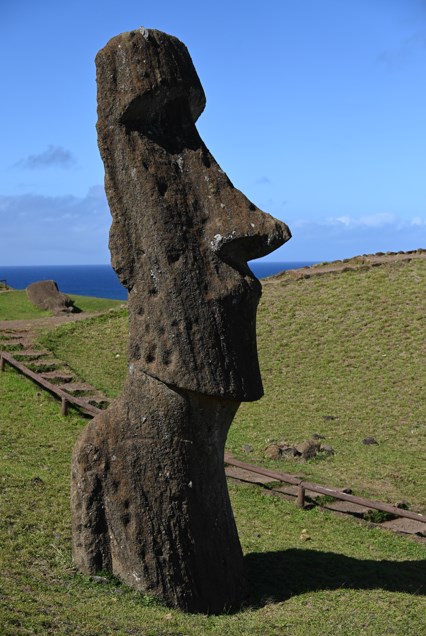
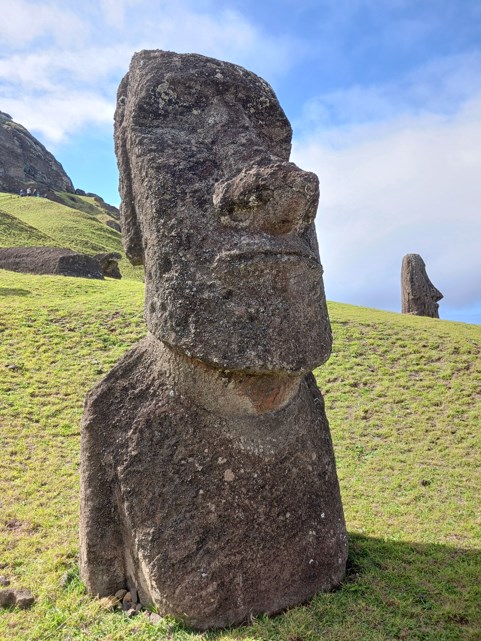
The third stop is the Rano Raraku volcano. It is from the stones that make up its slopes that the Moai were carved. Several statues are present. Some are finished, while others were abandoned during construction. Many are also buried, with only their heads protruding. It looks a bit like a Moai garden. The pieces are magnificent.


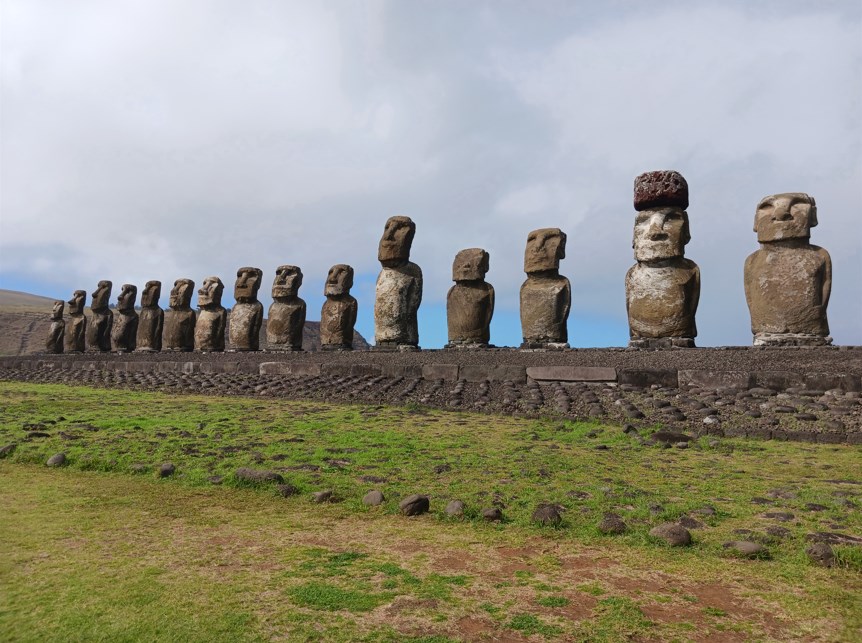
The next site is undoubtedly one of the most famous on the island: Tongariki. On the largest Ahu on the island stand proudly fifteen Moai, including the heaviest Moai on the island (86 tons). Destroyed in 1960 by a massive tsunami, it has now been restored and is simply magnificent. It is probably one of the most beautiful sites on the island. However, its length makes taking photos difficult. During our visit, we actually counted 17 Moai…
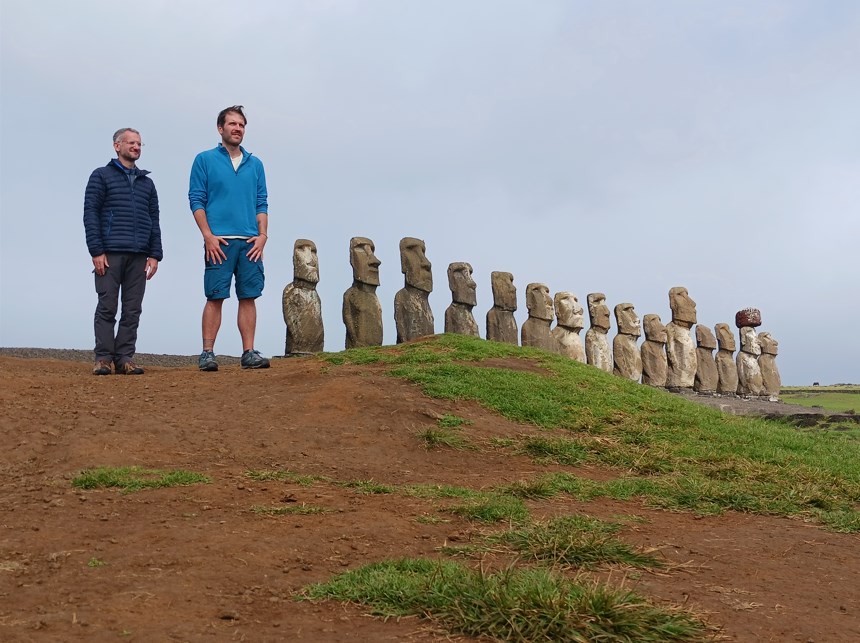
The fifth site (which we visit in the rain) is Te Pito Kura. This site is home to the largest Moai transported from the Rano Raraku quarry and a rock with mystical properties, believed to have an influence on fertility. It was even walled up because people used to perform fertility rituals on it…
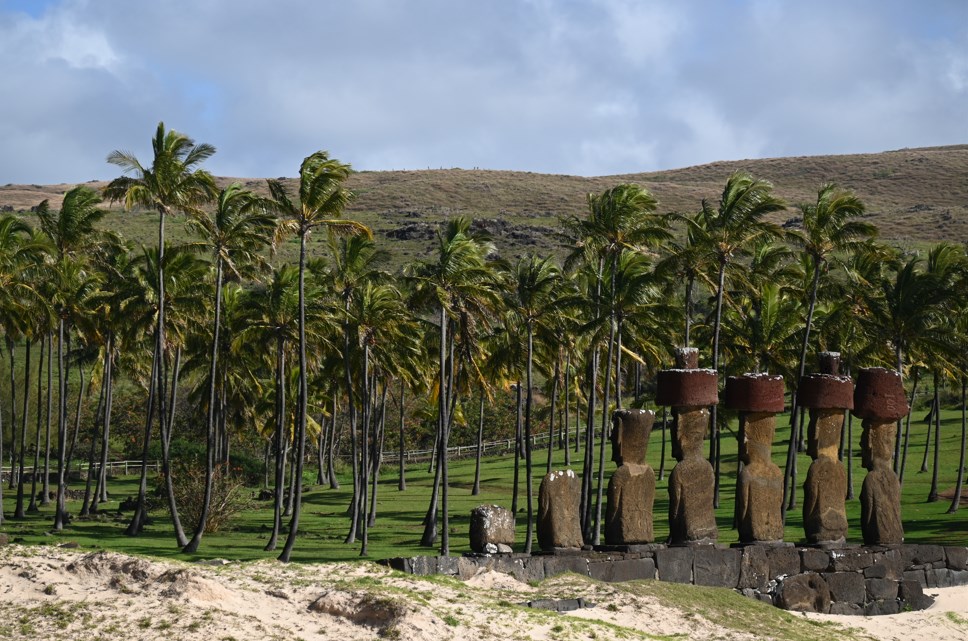
The last site is Anakena Beach. It is believed that the first Polynesians who came from the Marquesas landed at this bay. Two ahu are present: one with a single Moai and another with seven Moai, most of which still have their topknots. The perspective of the ahu, beach, and ocean is stunning. It’s just a shame we stopped there at the end of the day. With the sun behind the Moai, taking photos is difficult.
We end the day with a performance of traditional Rapa Nui dances and music. For 1 hour and 15 minutes, about twenty dancers, dressed in beautiful yet minimalist costumes, move every part of their bodies.
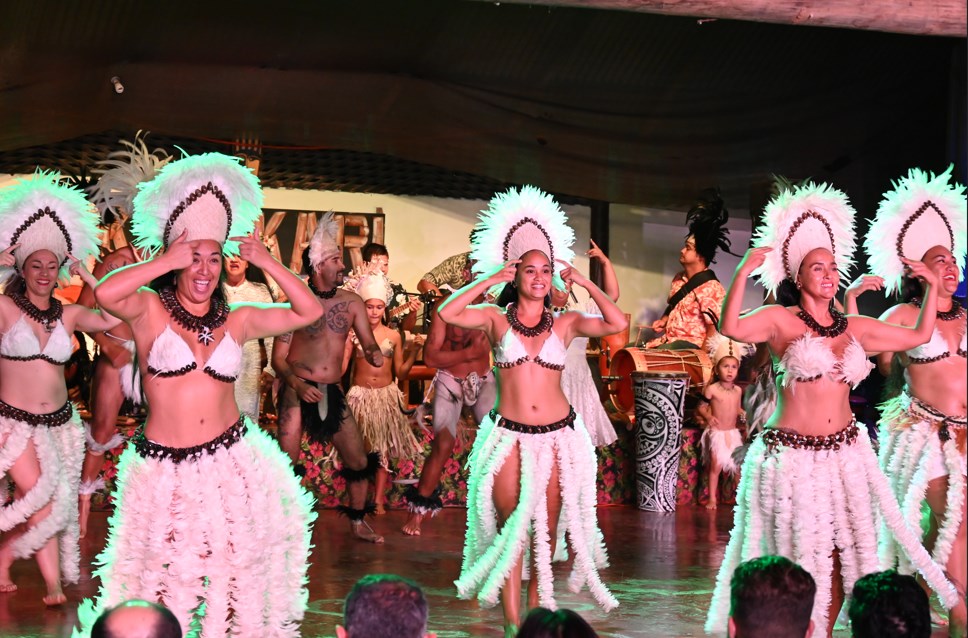
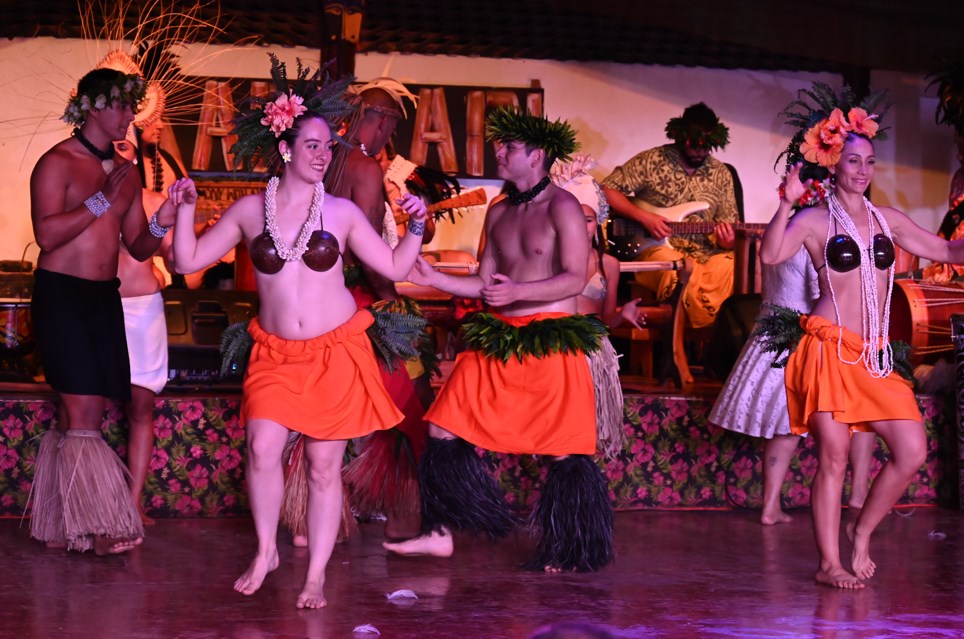
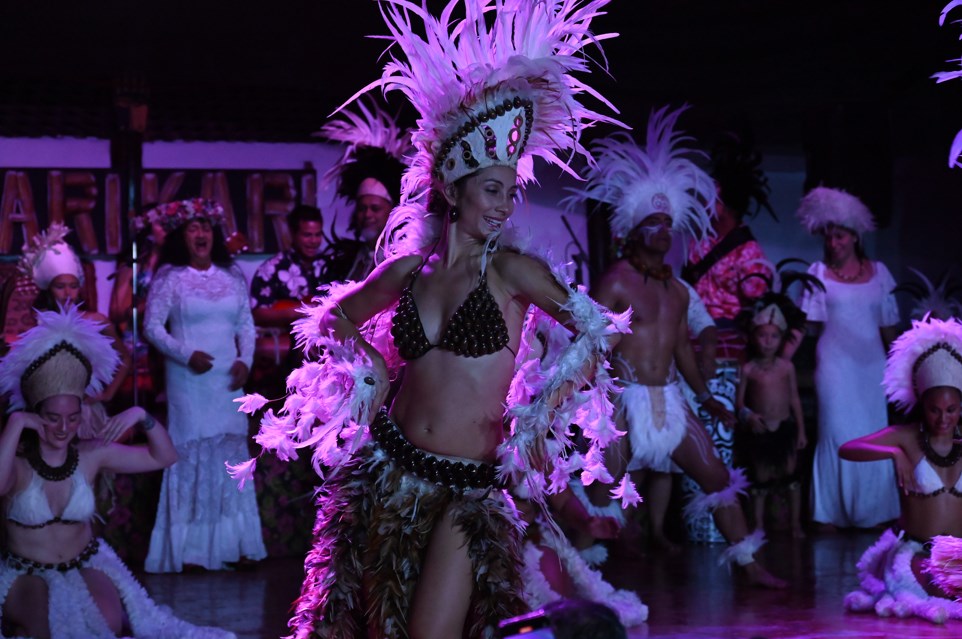

The music and songs that accompany them remind us of wonderful memories of Tahiti. The few interactions with the audience are done in Rapa Nui, Spanish, and English. On two occasions, spectators are chosen to go shake their hips on stage with the dancers. Clearly, not everyone can be Polynesian.
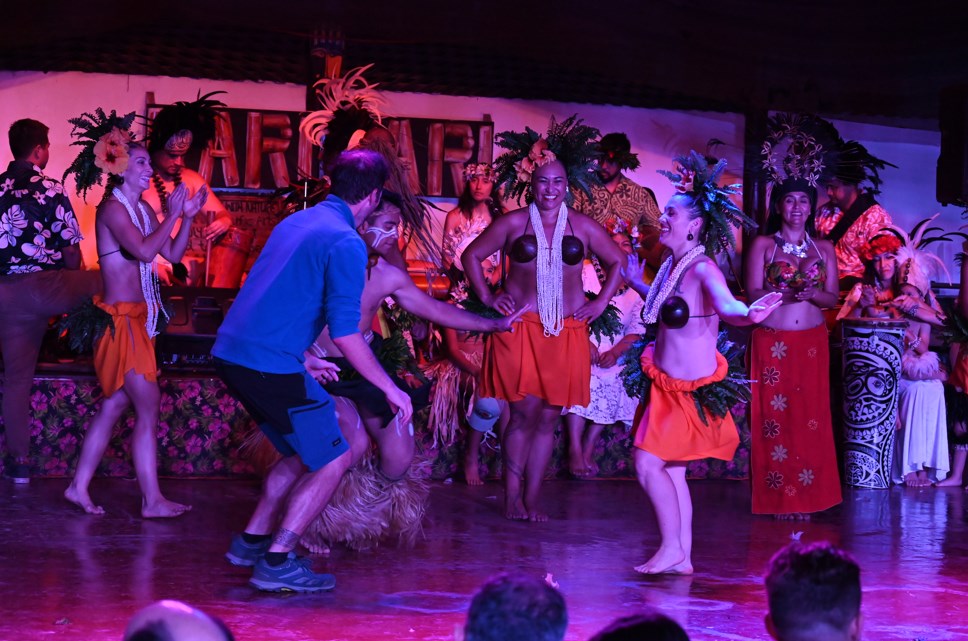
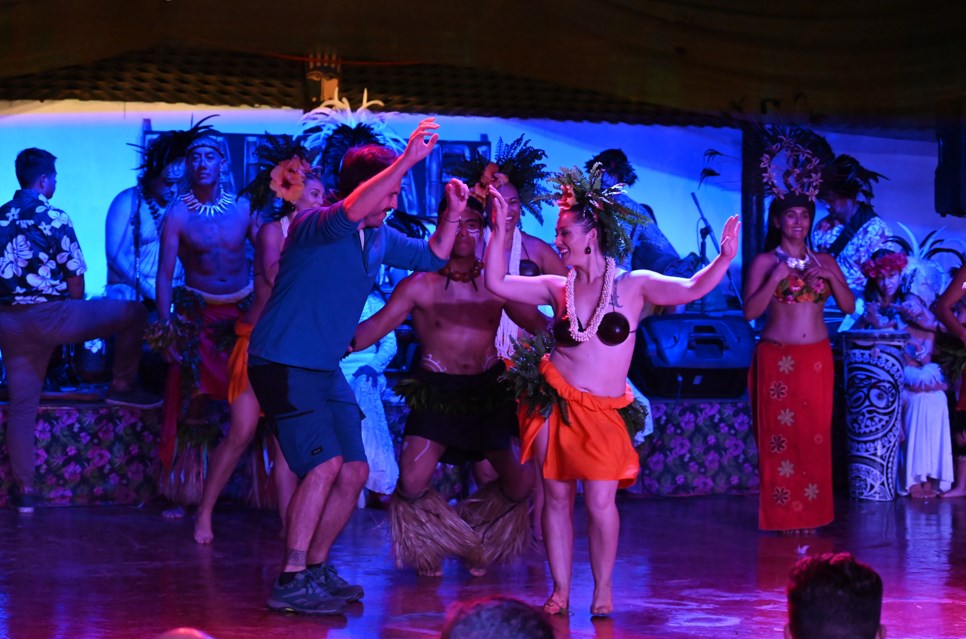
François gets into the spirit of things. He clearly needs to work on his hip movement and knee motion. Despite the rather high price, we have a great time. Polynesian dance performances have this ability to make you smile and create a sense of happiness.
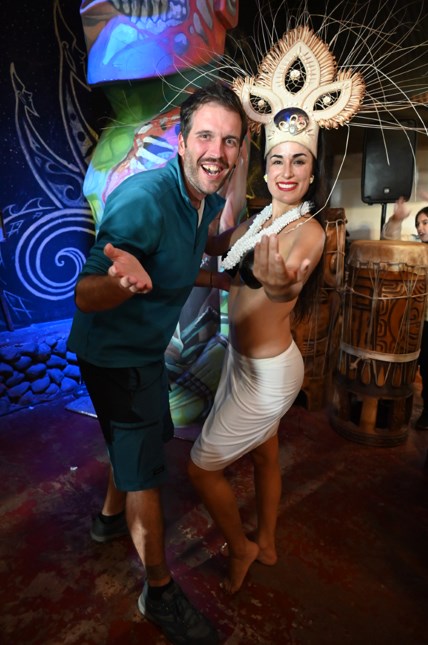

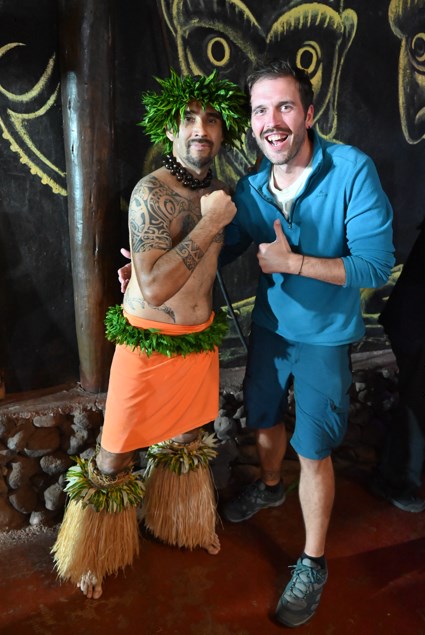
Day 4: Woken up at 4:30 AM by roosters crowing under the full moon, we begin our second day of the tour in a rather tired state (and with a lingering desire to buy a rifle for the next night). We meet the same guide as yesterday and nine other companions. Between 9:30 AM and 2:30 PM, six sites are on the agenda.
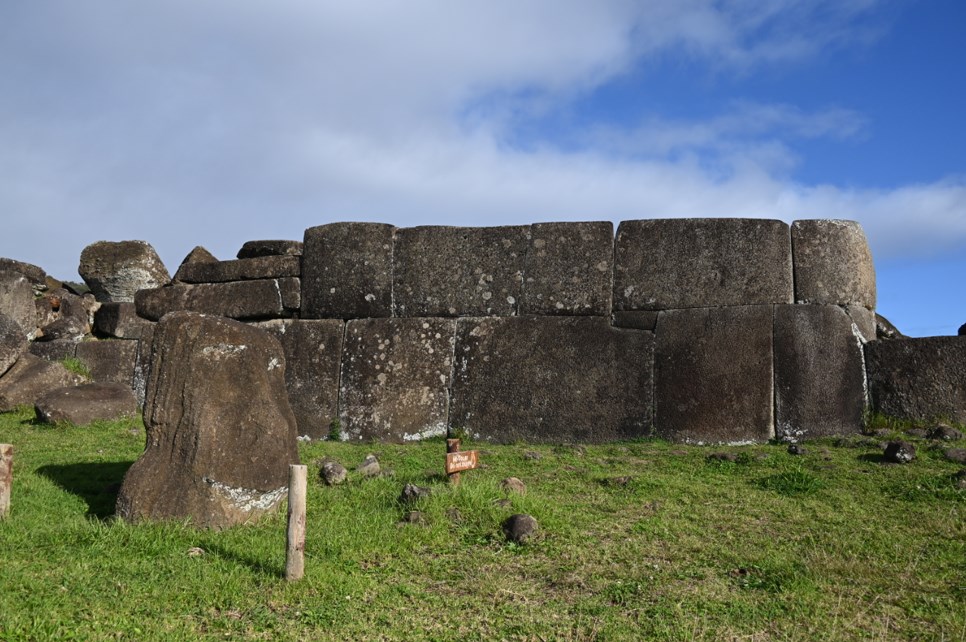
The first: Vinapu. This is another Ahu without a Moai. The platform is the largest carved stone platform on the island. Just like in Cuzco and Machu Picchu, the stones are tightly fitted together without any binding mortar. This particularity makes the site interesting (and even more so for those who have been to Peru), despite the absence of a statue.
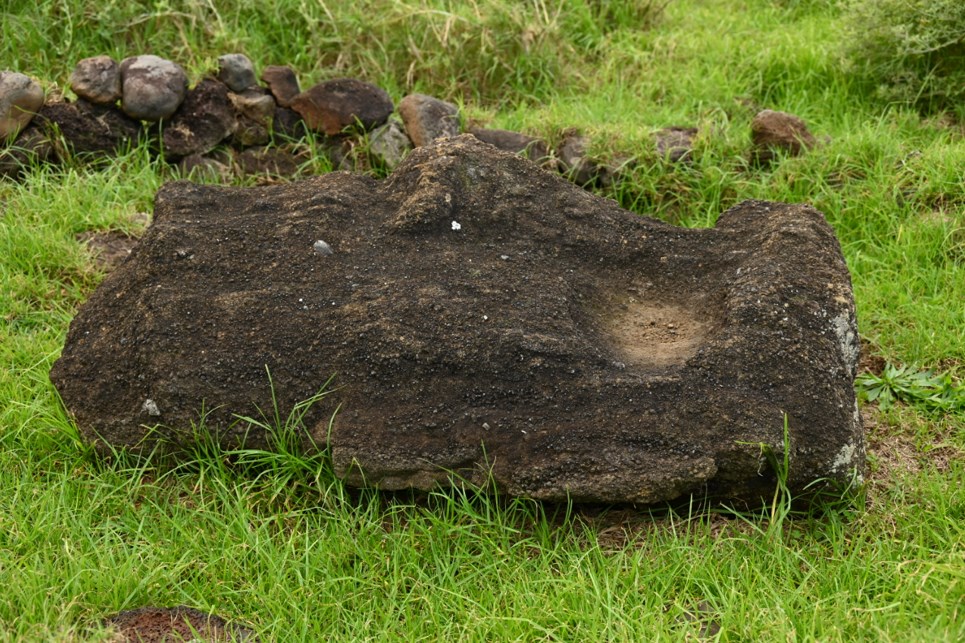
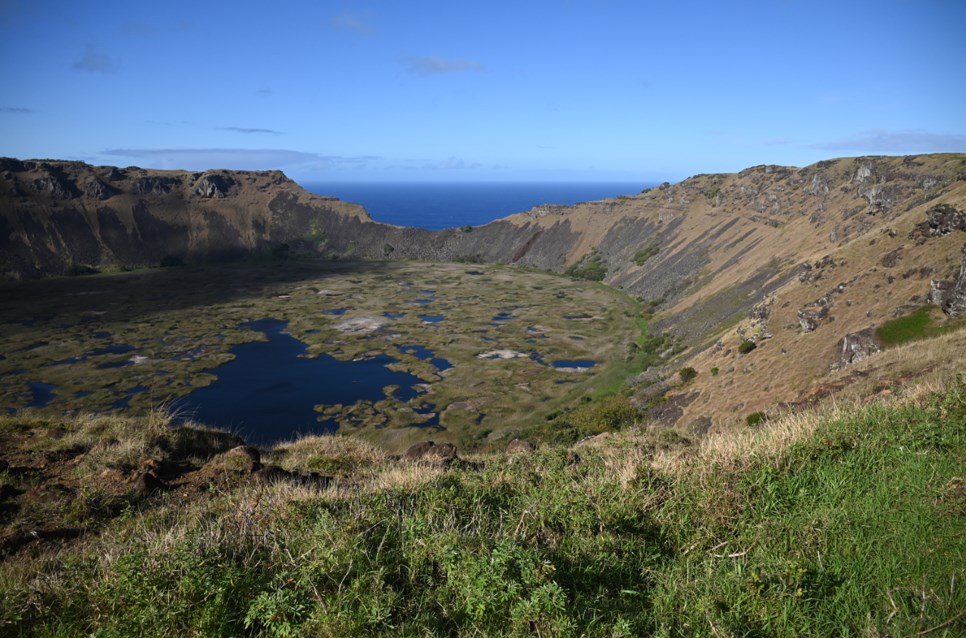
The second is the observatory of the Rano Kau volcano crater. This dormant volcano, which has been inactive for millions of years and is located at the southwest tip of the island, contributed to the island’s creation alongside the Terevaka volcano (to the north) and Poike (to the east). The crater is now filled with 12 meters of water, on which small vegetated islets have formed.
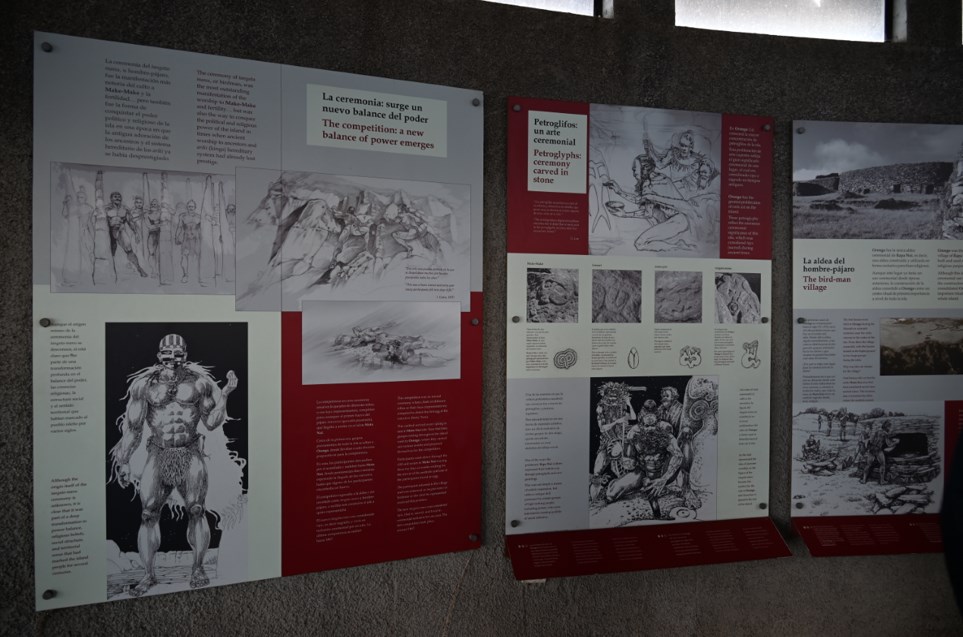
We get back into the van to continue the ascent of the volcano; it’s honestly much easier than climbing Mount Bromo or the Golden Rock. At the top, there is a room with informational panels about the cult of the god Make-make and the birdman competition. The first is a god created under the influence of the monotheism of Western priests, after the Moai period. The second is a competition in which the champion from each clan on the island must retrieve a bird’s egg from an offshore island. The chief of the winning clan is then named ruler of the island for a year. During this competition, almost anything goes. It’s like the Polynesian Hunger Games.
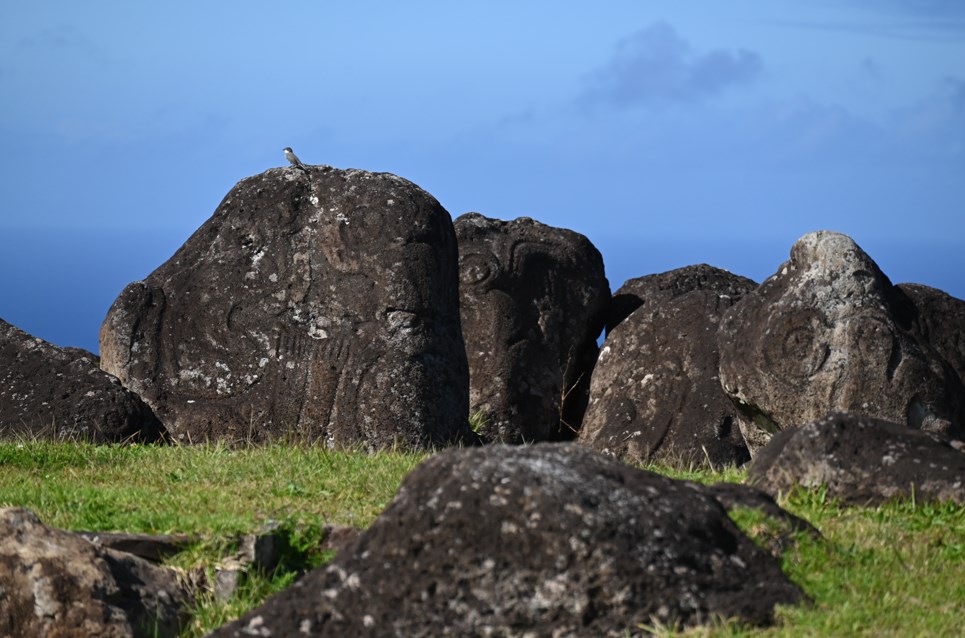
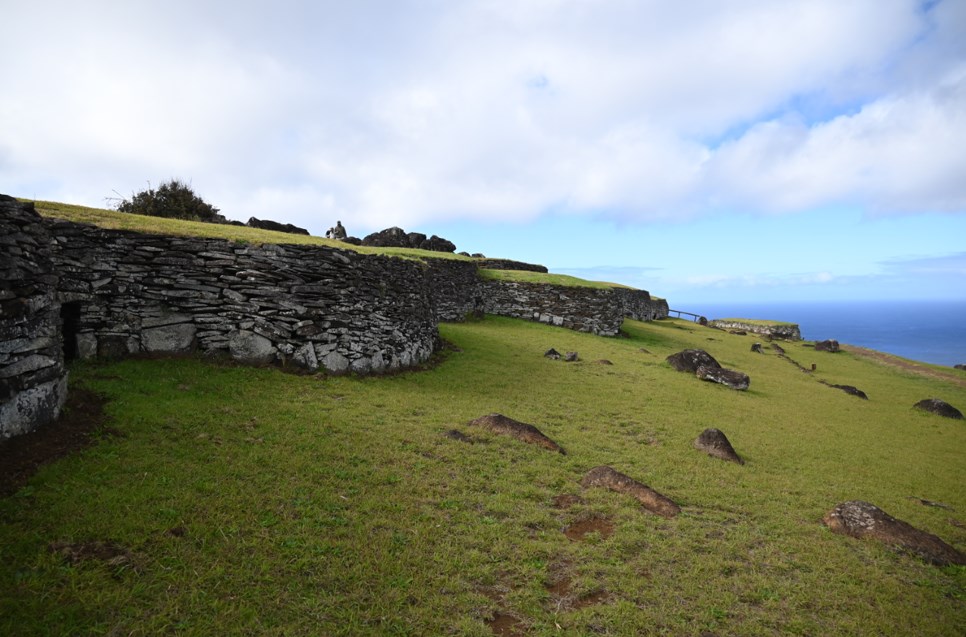
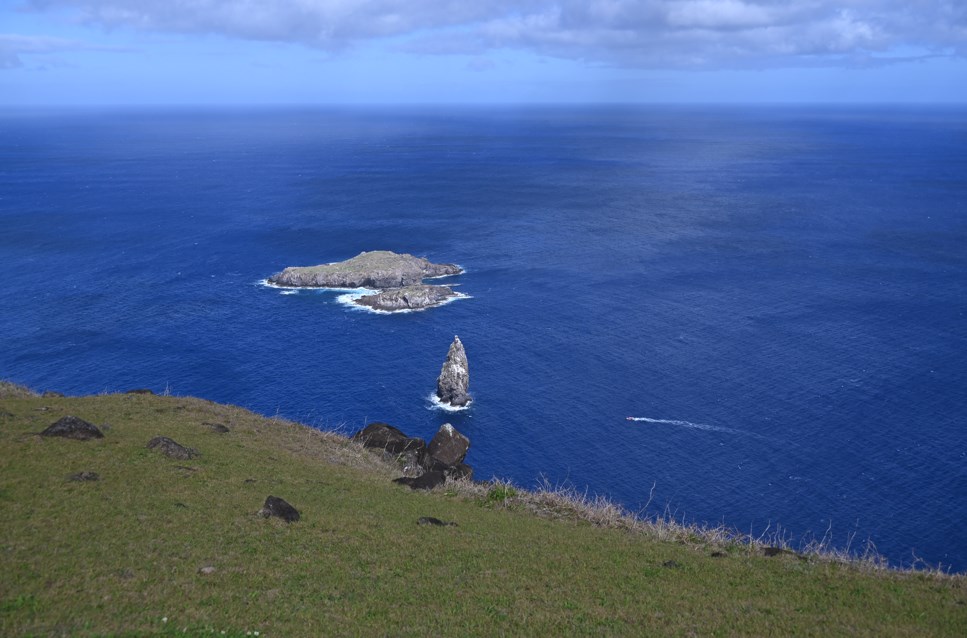
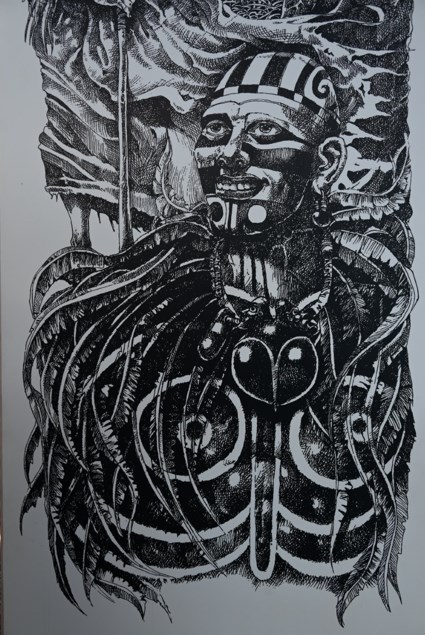
After this room, it is possible to access Orongo, where there is a reconstruction of the competitors’ champions’ houses. The altitude also offers a magnificent view of the sea and the three nearby islets.
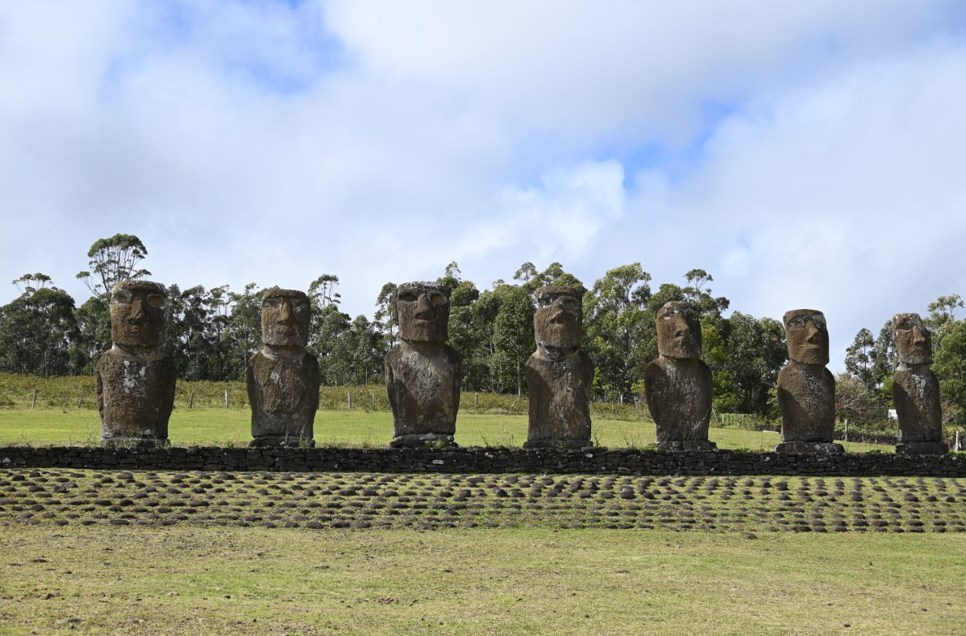
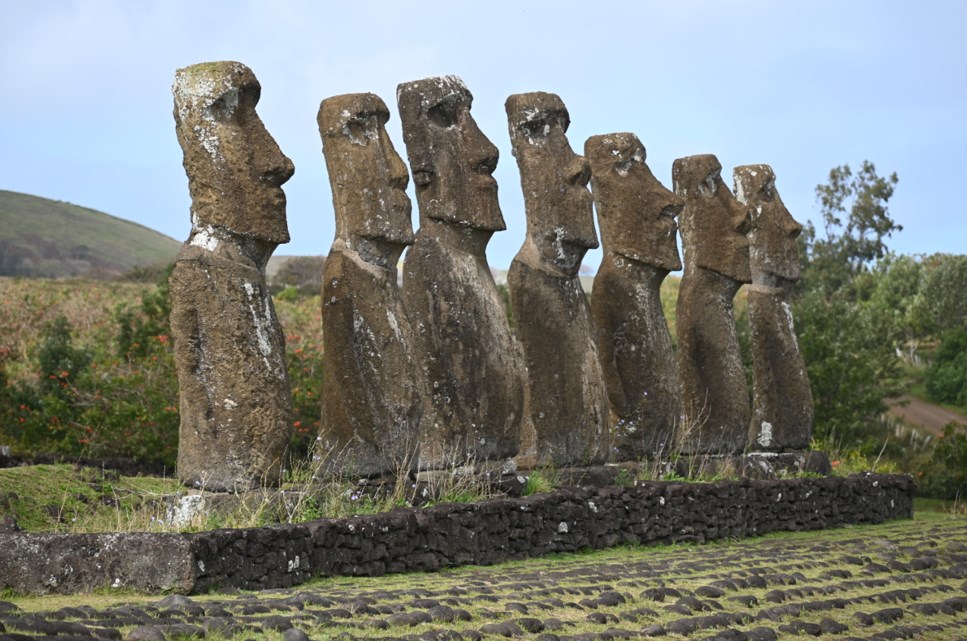
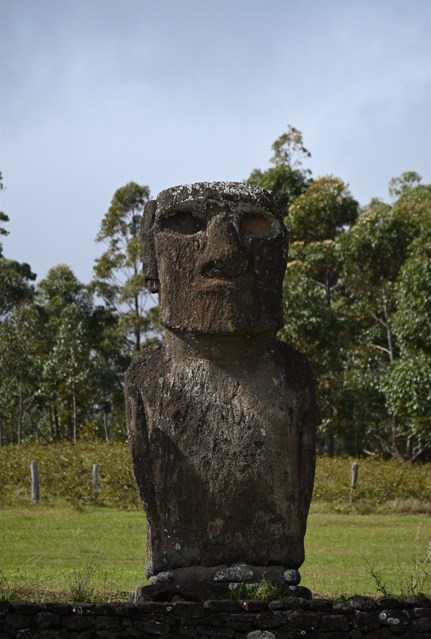
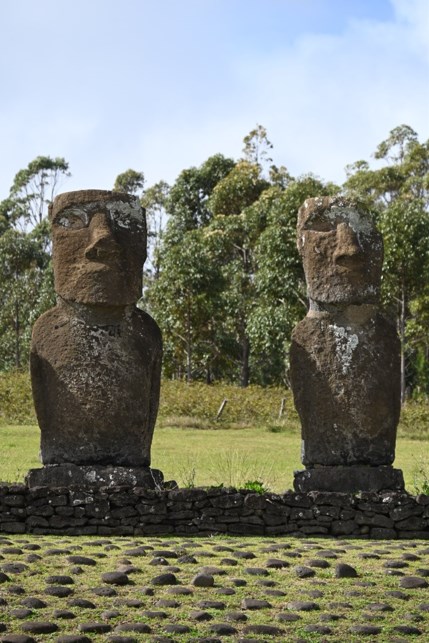
Our fourth stop is the Ahu Akivi. It is located on a plain bordered by cattle pastures. Less impressive than Tongariki (the 15 Moai) visited yesterday. This time, it is seven statues that stand on the Ahu. These are also the only ones facing the ocean.
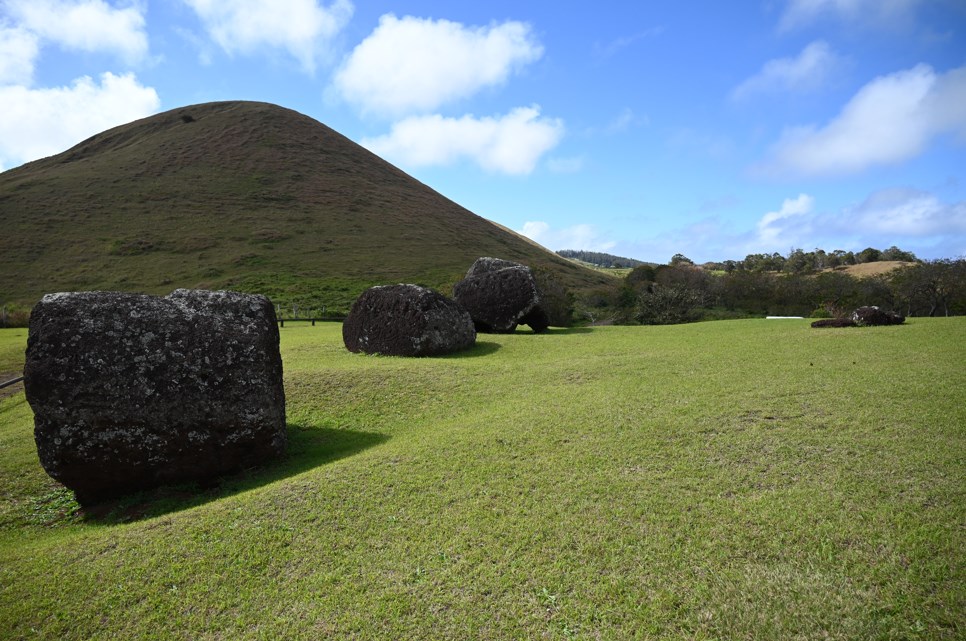
The fifth stop is Puna Pau. It is here that the pukao (the red topknot) were carved from red stone. Unfortunately, the site is not very informative, and few things are visible. It is possible to spot some petroglyphs on the rocks.

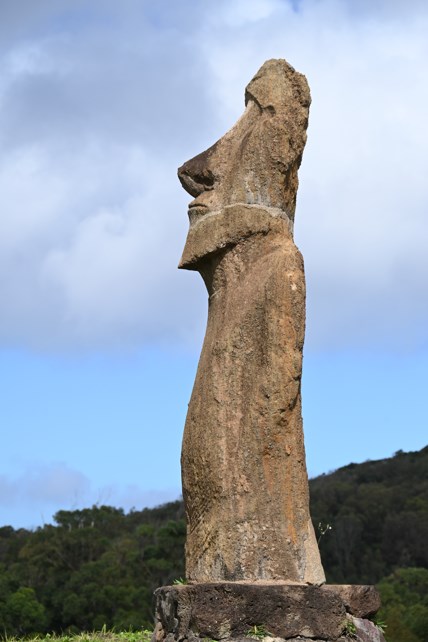
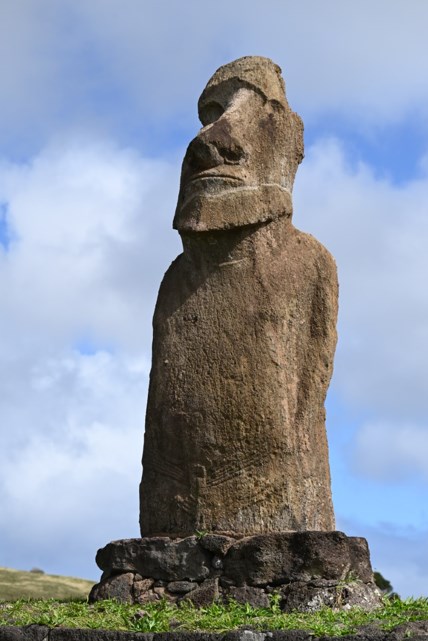
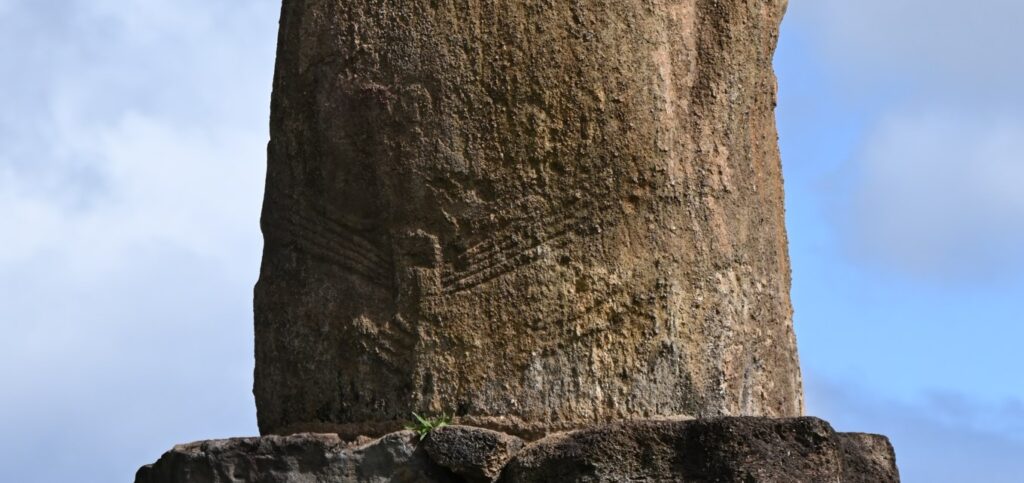
Last stop of the day: the Ahu Huri A Uranga. On this Ahu, there is a single Moai. Its uniqueness lies in the fact that it has 4 hands. Its hands were damaged during transport, so new ones were carved. Nice profile.

Back in town and starving, we indulge in empanadas. They are huge in Chile!
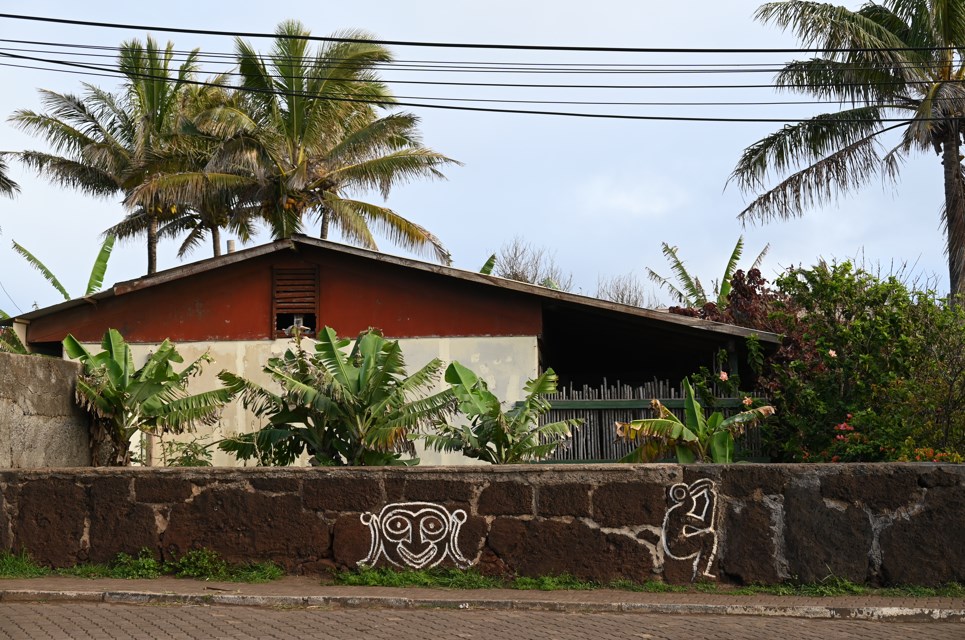
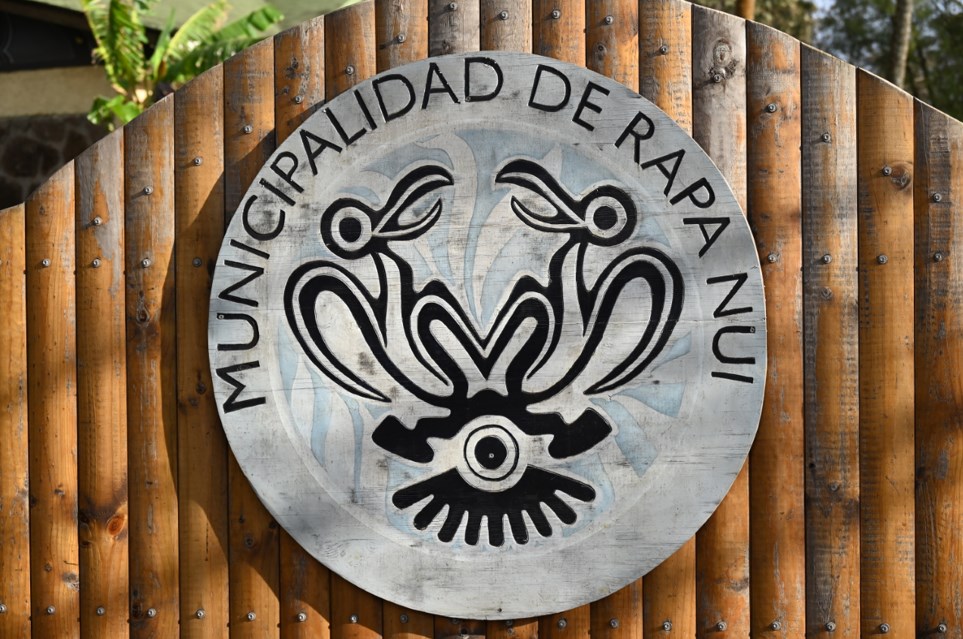
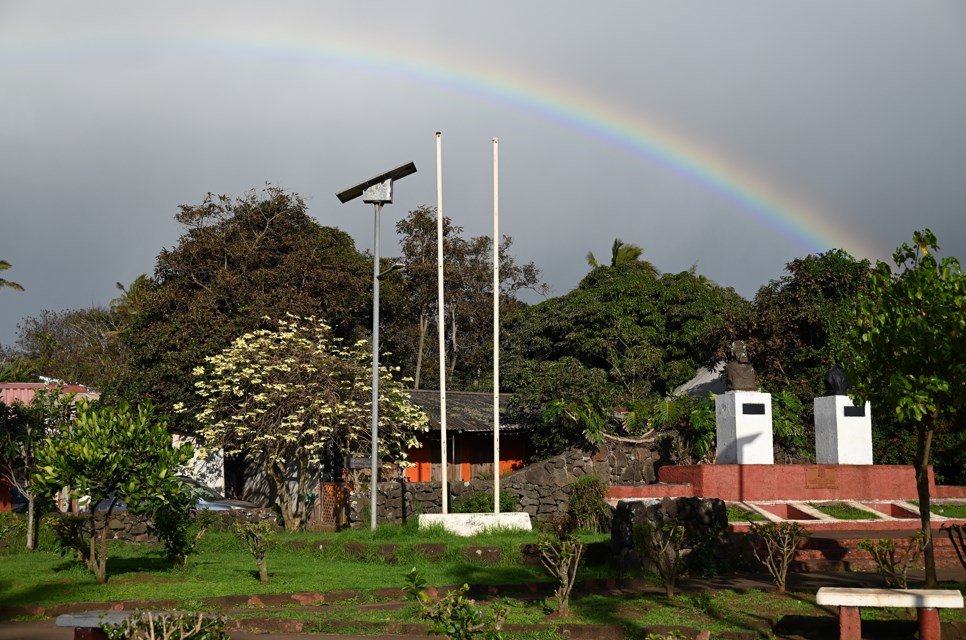
We do some shopping in the afternoon before heading back to avoid another rainstorm that’s approaching.
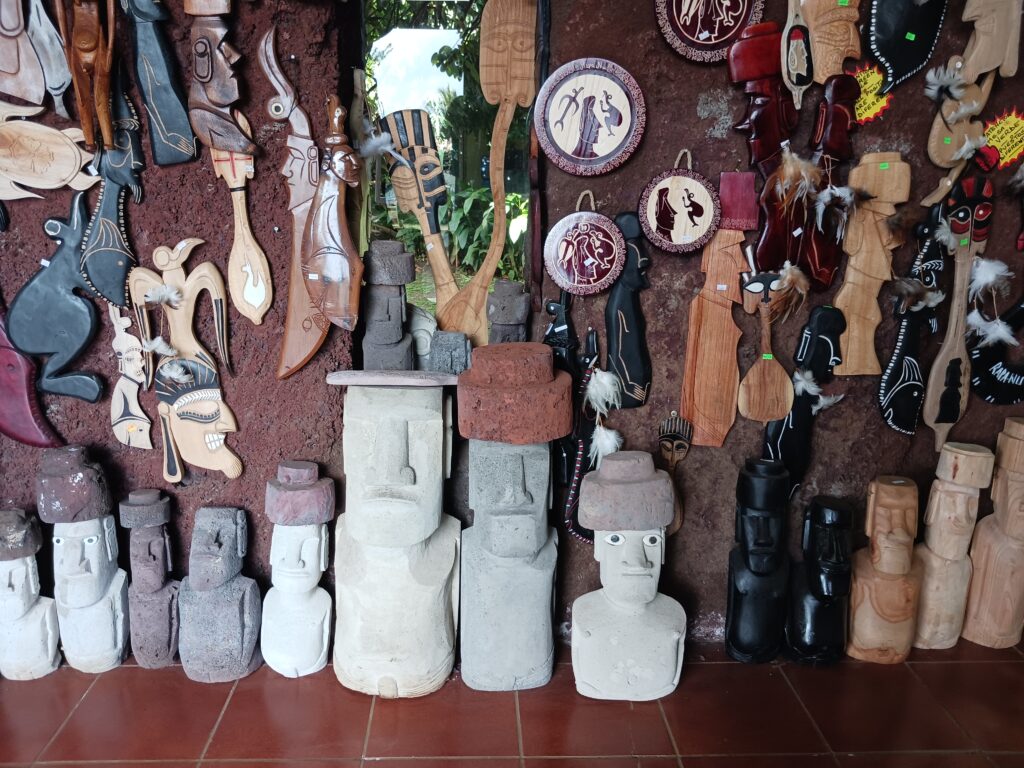
Summary of these two days of visits: In hindsight, we realize that guided tours are essential to understand the historical sites. Since many sites are in ruins, without a guide, we would have simply understood nothing. Sites like Vaihu, Akahanga, and Puna Pau are incomprehensible without guides, and a tourist who visits them quickly leaves. Admittedly, the cost of the tours remains exorbitant, but the overall experience was better than we anticipated. However, the simple fact of not being able to move around freely and sit in front of the Moai statues was something we missed.
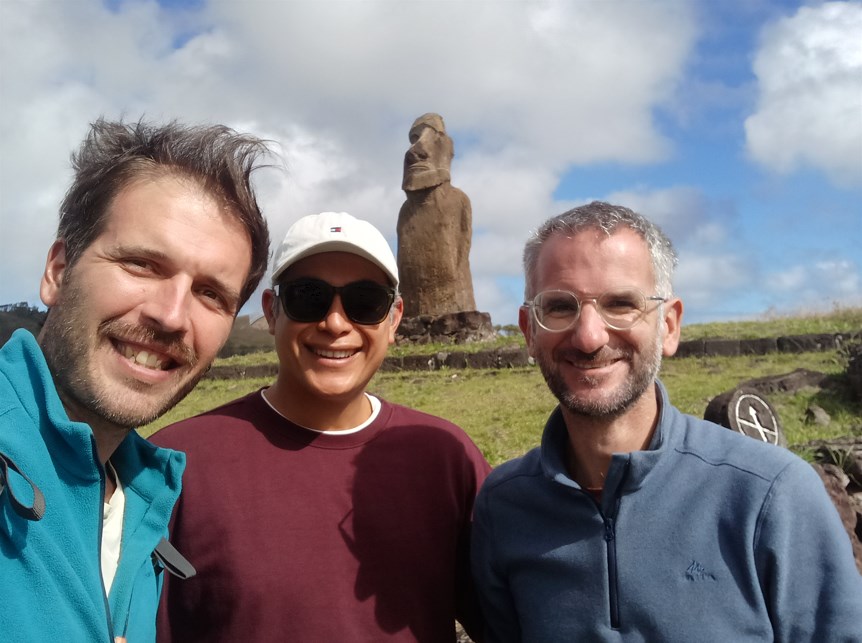
Day 5: We go shopping again and indulge a little in trinkets featuring Moai statues.


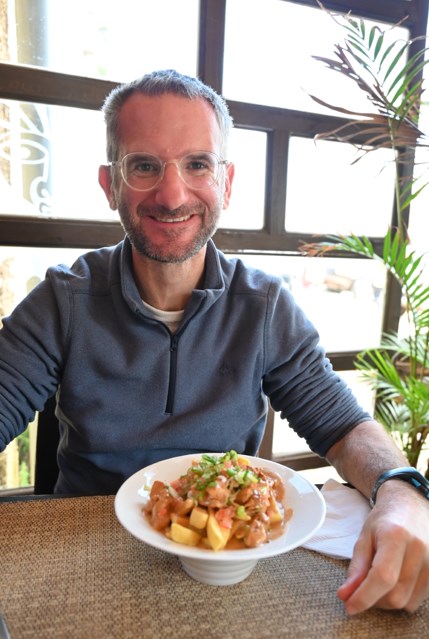
For dinner, a plate of fries topped with pieces of chicken, all smothered in a cheese sauce (basically, a South American poutine), accompanied, of course, by a local beer.
In the afternoon, we are back at the Tohai site.
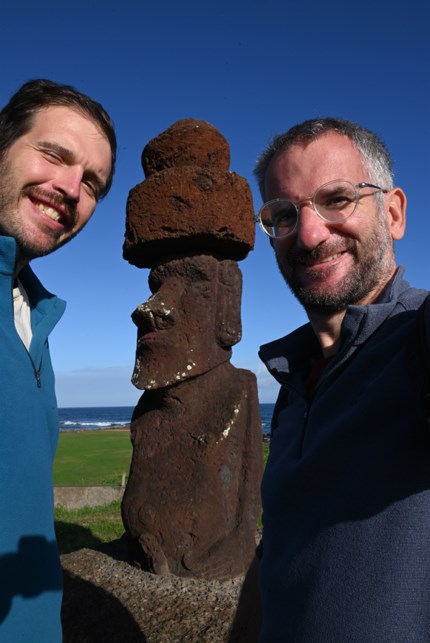
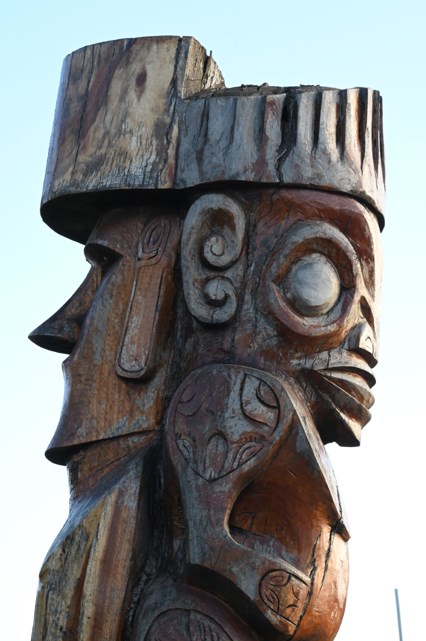
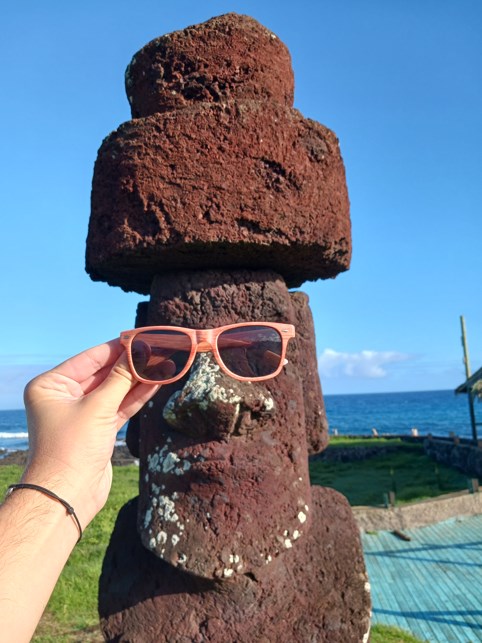
We end with a walk along the sea. Several statues are present, occasionally reminding us of our stay in the Marquesas.
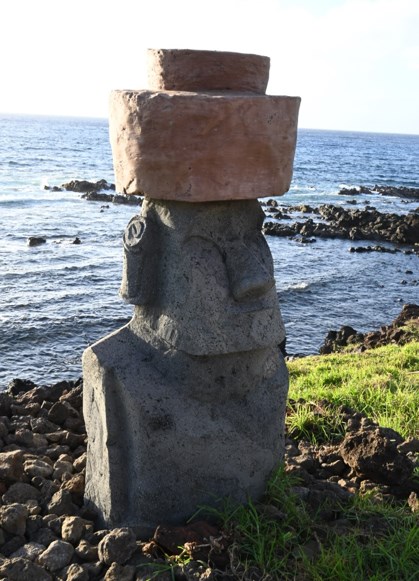
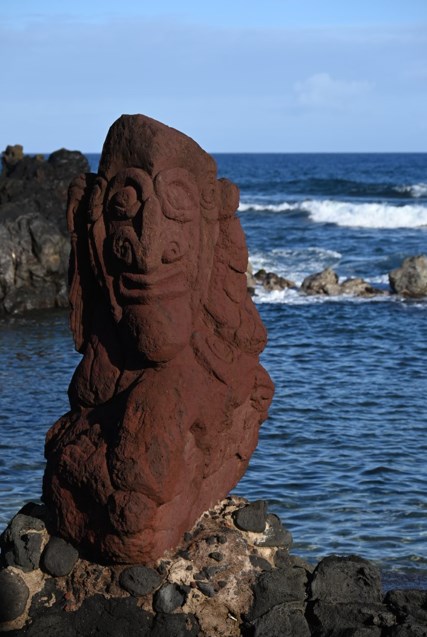

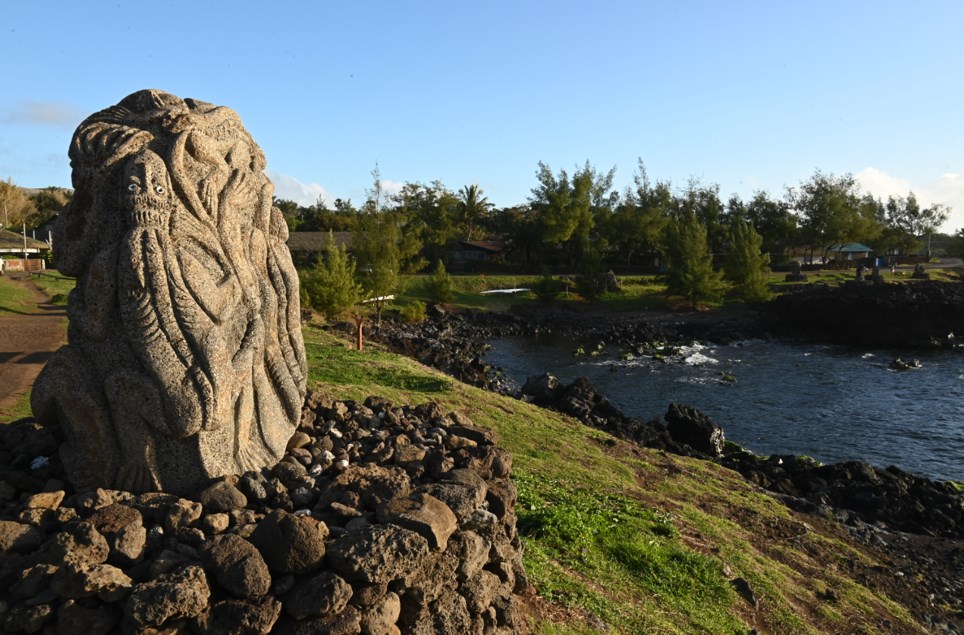
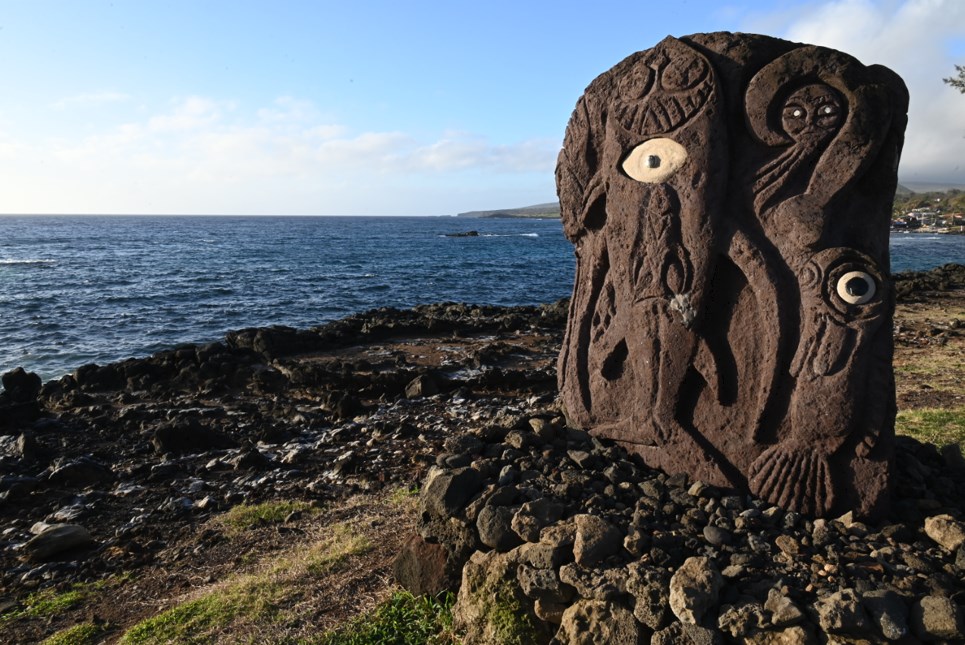
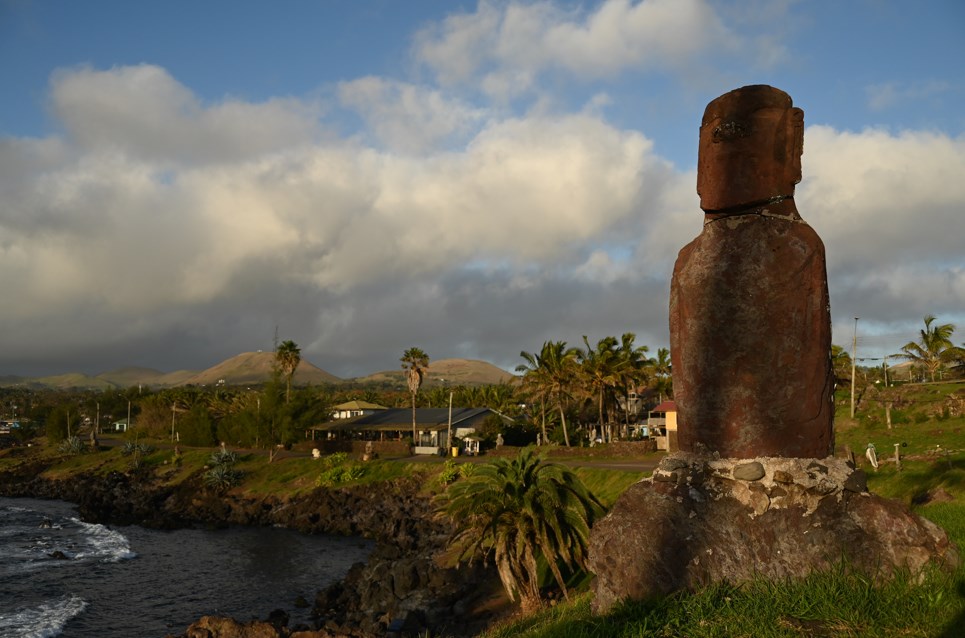
Day 6: In the morning, we take another stroll through town to finish our shopping. We also return to the Tahai site before heading to the airport, where a flight of just over four hours will take us back to Santiago.
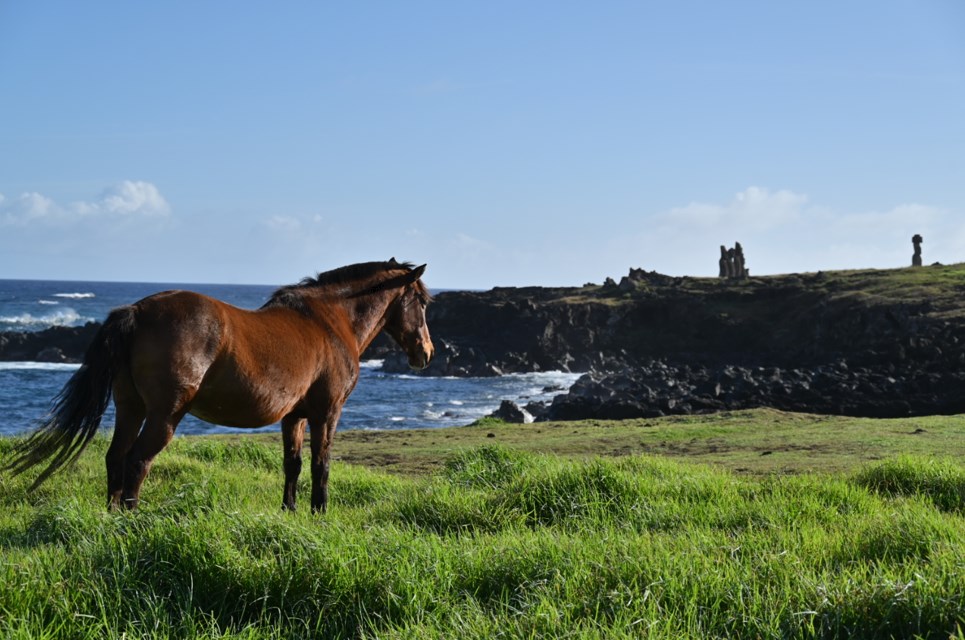
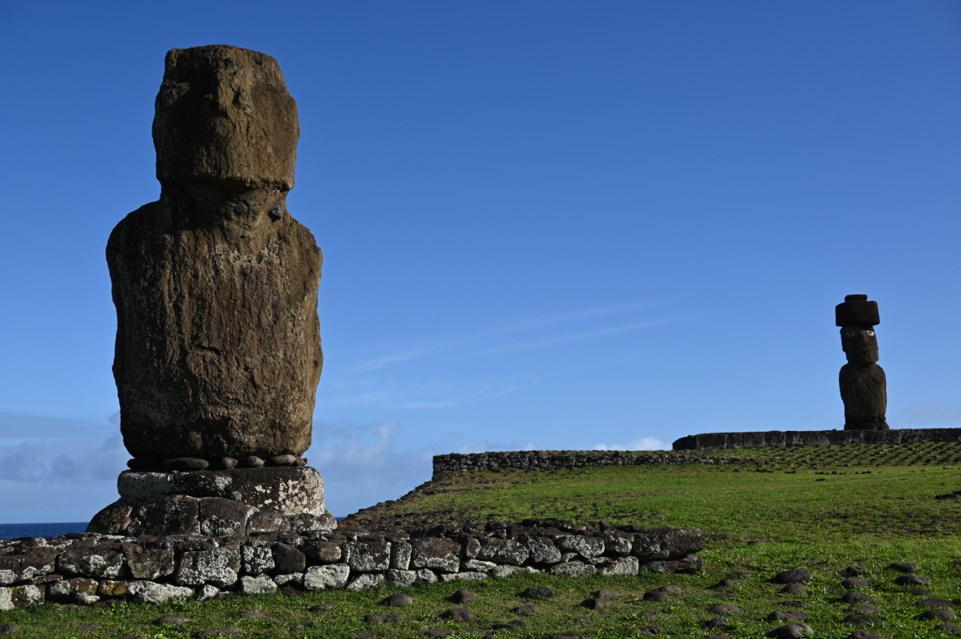
Our stay on Easter Island has already come to an end. After this return to Polynesia, we are ready to continue our adventures in Chile, exploring completely different landscapes.
Find all our other articles on Chile:
Find all our other articles on French Polynesia:


