THE HAIRY GIRAFFE… IN AUSTRALIA
After a month in Australia, it’s time to reflect. How did we experience this journey? What were our joys, disappointments, questions, doubts, and discoveries? This is not merely an assessment of a country but rather of a trip—how we perceived it individually and subjectively.
 We are François and Benjamin, Canadian and French giraffe hairstylists and travel enthusiasts. On this blog, discover our travels, tips, moods, and everything you need to become a giraffe hairstylist and embark on travelling the world. An honest blog with photos guaranteed 100% unfiltered and untouched. |
Benjamin’s Travel Reflections
After 6 months of traveling across Asia, we set down our bags for 30 days in Australia. We landed in the north of the country, in Darwin. The contrasts with Indonesia, where we had spent the previous month, were obvious from day one. We were no longer in Asia and were reconnecting with Western culture. Far from Bali, we once again enjoyed the simple pleasures of drinkable water and Anglo-American cuisine (fish & chips, barbecues, and burgers are everywhere). But Australia is not Europe. And even though there are obvious similarities with Canada or the United States, Australia is not North America either.
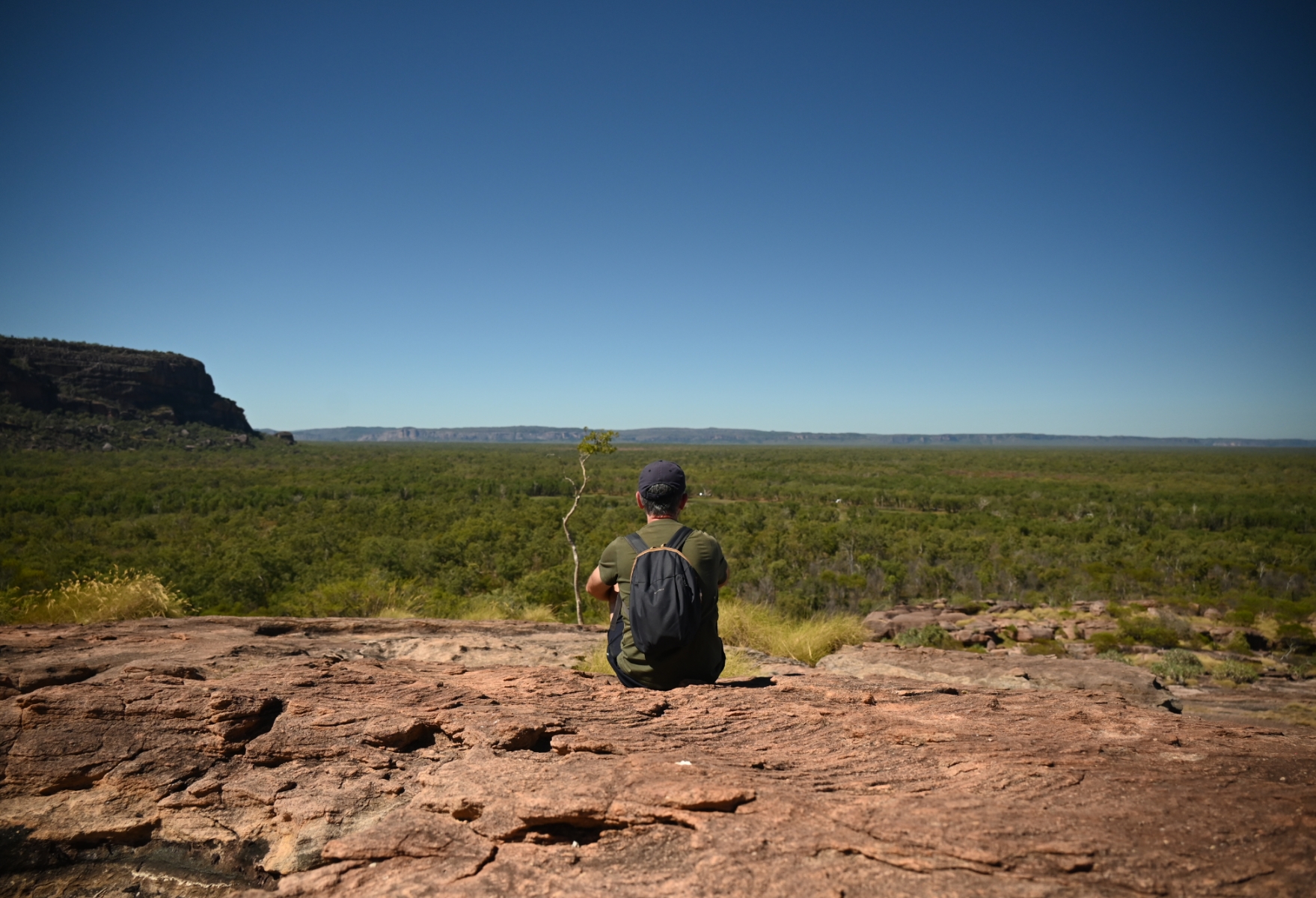
A true continent-country, Australia offers different facets, and in one month, we were able to explore a few of them: the sunlit deserts of the Top End, the beachside rainforest of Far North Queensland, the orange sands of the Red Center, and the multiculturalism of Sydney. These four regions offer very different experiences, to the point where you might almost forget they are part of the same country. But one thing connected them in my experience: everywhere, I felt at ease. Much like in Taiwan and China, traveling in Australia brought me an almost disconcerting sense of pleasure.

Of course, the ease of traveling in Australia is partly due to the country’s modernity. Air connections make it easy to reach places thousands of kilometers apart. Restaurants and supermarkets can be found even in small towns. Hotels, although generally poor value for money (with their exorbitant prices), offer many amenities. And even the most famous sites (Sydney Opera House, Uluru…) are not overcrowded.
But what makes the journey so enjoyable is undoubtedly, above all, the Australians themselves. I knew Australians had a reputation for being ‘cool.’ And I expected them to behave like Americans (the ‘cool attitude’ has always been, to me, an American trait). And while it’s true that during the first few days, I struggled to tell Australians apart from Americans, I gradually began to notice differences.

Is it because their country is so far from the rest of the Western world and several hours by plane from Asia? Is it due to Australia’s insularity? Or is it because the country is almost empty (barely 24 million inhabitants for a territory 14 times the size of France)? Whatever the reason, Australians struck me as kind and carefree, with a sense of solidarity and mutual support. Even in Sydney, a metropolis of 5 million people, there’s sometimes a village-like atmosphere, where everyone seems to know each other and participates in the life of the local community.
Obviously, I didn’t stay long enough to know what it’s like to live there, but as a tourist, this atmosphere offers a positive image of the country and makes the stay easier and more enjoyable. I had felt something similar in China, where the bonds within local communities seemed very strong, and that had lessened the difficulties of navigating a country where almost no one speaks English. Of course, in Australia, the language barrier is much smaller, even though the strong accent sometimes created a barrier, while Australians have the pleasant tendency to chat with you and crack jokes.
For the rest, the country offers landscapes of great variety, ranging from red deserts to tropical forests and white sandy beaches. The national parks are stunning, even if they can’t quite rival the North American parks.


What I enjoyed most about these vast spaces, beyond the immensity of certain sites and the endless landscapes, was the wildlife. Australia is known for being home to the most dangerous fauna in the world, whether on land (venomous snakes and spiders) or in the water (crocodiles and jellyfish). It is also known for housing animals almost as cute as pandas: koalas and kangaroos.
Yet, while wildlife is omnipresent in Australia, it can be challenging to observe. You need to be attentive and quiet during every hike to hope to spot a kangaroo before it hops away. You have to be incredibly lucky to encounter one of the many animals hiding in the rainforest. This search, much like on a safari, added an exciting dimension to our visits. I quickly got into the game, which allowed me to better observe and appreciate the parks. And even though I was disappointed not to have seen any koalas or thorny devils, we were lucky enough to spot a cassowary, a massive bird closer to a velociraptor than a sparrow!
This surprising wildlife can be found even in the heart of cities. While Parisian parks are overrun with pigeons, in the center of Sydney, it’s the impressive long-beaked ibises that stroll among the locals. Surprising… and a little intimidating!

On the other hand, I cannot overlook a major drawback of traveling to Australia: its cost. Everything is expensive, and even more so when you factor in the round-trip flight from Europe. Once there, accommodations are pricey, food is not cheap, car rentals are costly, and I won’t even mention Aboriginal art. The expenses add up very quickly! Naturally, at that price, some might prefer exploring the great national parks of the American Southwest or going on a safari in Africa. For those on a world tour (and especially for those with a working holiday visa), staying longer can help avoid the high costs of international flights and make some expenses more worthwhile. For everyone else, if you have the budget, Australia is a beautiful country to visit, right there on the other side of the world.
Check out François’ Travel Reflections:
Find all our other articles on Australia: