The Hairy giraffe… IN BOLIVIA
Since we crossed the land border from Chile, it was impossible not to begin our journey in Bolivia with the Sud Lípez. A true natural gem, this region alone is worth the trip. The landscapes we saw there are among the most beautiful of our world tour.
The memories of our stay in the Sud Lípez and the Uyuni Salt Flats remain unforgettable. They rank among the most beautiful places we have ever seen, alongside French Polynesia, Namibia, and Greenland.
Unfortunately, not the entire country is exceptional. Our stays in the cities failed to charm us. In addition to not capturing the magic of the Sud Lípez, our Bolivian memories now sometimes come with a lingering taste of food poisoning.
Here’s everything about our trip!
How long? We spent 2 weeks in Bolivia.
When? Early August. It’s winter in Bolivia. The nights are cold. At high altitudes, even with the sun out, it struggles to provide warmth. Expect to keep your coat on all day (and maybe even your hat and gloves). It’s also the low season, so there are few tourists at the sites and accommodations.
Ease of independent travel: 3 giraffes  The inability to explore the Sud Lípez independently is unfortunate. Otherwise, we didn’t encounter any major issues with transportation by bus or plane. As for buses, we managed to buy last-minute tickets without any trouble.
Costs: 3 giraffes Think again if you believe Bolivia is a cheap country. Grocery prices in supermarkets often exceed those in France. (Of course, there’s always the option of buying cheaper street food—if you’re Superman or don’t mind spending 24 hours stuck on the toilet).
The entrance fees to sites in the Sud Lípez region cost about the same as some sites in France.
The tourist visiting Bolivia quickly understands one rule of the country: here, nothing is free. Need to use the restroom? No problem, but you’ll have to pay an entrance fee. The amount varies depending on the location. Don’t even think about sneaking in without paying—Madame Pipi will be waiting for you at the exit to make you pay and remind you that nothing comes for free.
With your entry fee, you get access to a typically unsanitary toilet where the flush probably doesn’t work and—if you’re lucky—two or three sheets of toilet paper. It’s not like urinating isn’t a basic human need. Everything is set up to make you pee: the altitude dehydrates you, so you drink (which means you have to pee). You take Diamox to prevent altitude sickness (= more pee). It’s cold (= even more pee). These Bolivians have really found the perfect money-making scheme.
If you take the bus, expect to pay a terminal usage fee. In other words, a mandatory tax of a few bolivianos when leaving the terminal.
Ease of communication: 2 giraffes  Spanish is the language spoken by everyone. Few people speak English. Nevertheless, South American Spanish is easier to understand than Spanish from Spain. If you have some basics, you should be able to get by without too much trouble. If you don’t understand a word, be prepared to use hand gestures…
Safety: 3 giraffes Despite the country’s great poverty, we didn’t feel unsafe while walking through the streets of the cities. While La Paz remains the place where we saw the most people wandering the streets, we didn’t feel threatened. However, we did take basic precautions to avoid any issues.
Road transport is dangerous in Bolivia. Taking the bus can indeed be more hazardous for a tourist’s safety than walking through the streets of Potosí or Uyuni. The roads are often in poor condition. Some buses seem to be from the time of Methuselah, and their brakes make a hellish noise, especially when descending a slope (we cross our fingers they don’t give out). Seat belts are generally absent. Breaks are almost nonexistent. To make up for this, drivers also tend to drive under the influence of psychoactive substances to keep themselves awake during the very long trips. On top of that, dangerous driving behaviors include overtaking on a curve on a mountainous road with no visibility.
The almost systematic absence of traffic lights, stop signs, or roundabouts makes intersections very dangerous.
Health: 2 giraffes The risk of mosquito-borne diseases is low above 2,500 meters in altitude. At lower altitudes, mosquitoes can transmit malaria, dengue, Zika, and other diseases.
The sun is very strong at high altitudes (even in winter). Before heading out on a tour or expedition, make sure you have a hat, sunglasses, sunscreen, and water. Lip balm is also recommended as the air is very dry. Eye drops may also be useful to hydrate your eyes or wash away any dust that may have come into contact with them.
Be especially careful of altitude sickness (soroche). It typically occurs above 3000 meters in altitude. The main symptoms are headaches, nausea, vomiting, fatigue, and dizziness. Before heading to high altitudes, drink plenty of water, eat light, and avoid alcohol and coffee. In addition to that, 24 hours before departure and throughout your stay at altitude, we take Diamox daily. We also used it during our travels in Peru and Chile and never had any issues. However, consult your doctor before taking any medication.
Water is not potable at all in Bolivia. Food hygiene standards are questionable. Refrigerators are not common throughout the country. Be very cautious when choosing your food or restaurants. We recommend bringing antibiotics for food poisoning, as there is a high chance you will experience at least one during your stay.
Gay friendly: 4 giraffes  LGBT rights in Bolivia are not too bad. While same-sex marriage is not allowed, there are several laws in place to protect against discrimination and harassment.
Travel ease: 2 giraffes Some parts of the country cannot be explored independently. Renting cars is too dangerous. The language barrier is definitely present. Traveling through Bolivia is manageable, but not comfortable.
Highlights:  Even though our favorite spot clearly goes to the Colorada Lagoon, the other lagoons (White and Green) in the Eduardo Avaroa Andean Fauna National Reserve are stunning, as is the Uyuni Salt Flat.
Letdowns:  the catastrophic hygiene standards that led to food poisoning, the lack of things to see once the South Lípez is done
Check out our Travel Reflections articles on Bolivia:
TWO-WEEK ITINERARY IN BOLIVIA
Here is the detailed itinerary of our 2 weeks in Bolivia:
Before Day 1: We decided to head to the south of Bolivia, specifically the region south of Uyuni, starting from San Pedro de Atacama, where we had finished our stay in Chile. To do so, we had no choice but to join an organized tour. It is impossible to cross the Bolivian border and travel independently within the nature reserve on the other side. (In reality, it is possible if you have your own vehicle. Since car rental agencies do not allow crossing the border, it’s safe to say it’s impossible to do it independently as an average tourist).
So, we booked our spots at an agency in San Pedro a few days before. First, it’s important to know that there is no shortage of agencies in San Pedro. On the main street, we counted at least fifteen. They all offer the same thing: a 3-day tour (2 nights) with a terminus in Uyuni, or a 4-day tour (3 nights) with a return to San Pedro. Of course, we chose the first option so we could continue our journey in Bolivia afterward.
By comparing the itineraries of different agencies, we quickly realized that the sites visited during the tours are exactly the same. As for the prices, they vary by about 20 to 30 US dollars (yes, the tours must be paid in US dollars, of course…). Prices are also lower if booked in person rather than online. Since we were traveling during the low season, no agency was fully booked for our desired dates. (Perhaps it’s different during the high season?)
So, if all the agencies are similar and offer the same services, how do you choose? Simply by reading reviews from past clients on Google or TripAdvisor.
You’ll come across some pretty wild stories. Rundown accommodations in six-person dorms, beds infested with bedbugs, questionable shared bathroom hygiene, and hosts who are anything but welcoming. Some drivers are best avoided too—reckless driving, excessive speed, and wandering hands in tourists’ luggage. In fact, some clients even got nauseous from the way certain drivers handled the road.
The food served during the tours doesn’t escape criticism either—spoiled meat, little variety, and portions so small that people are left hungry. Food poisoning is a recurring theme in the reviews, with both tourists and drivers spending the night in the bathroom. Getting sick is never fun—it’s actually one of our biggest concerns during this world tour. But it’s even worse when you’re in the middle of nowhere, in a country where hygiene standards are already questionable, with shared toilets, and on an expensive organized tour. It can really put a damper on the experience.
So, Benjamin carefully combed through reviews of tour agencies—especially those recommended in travel guides—in search of the rare gem. The final choice landed on Cruz Andina, the only agency without recent reports of food poisoning in its reviews. The drivers also seem to be decent. We’ll see what the future holds.

Day 1: We wake up at 5:30 AM because our first driver is scheduled to pick us up at 6:10 AM. After making a round through the village to pick up four other pairs of travelers, we head toward the Chilean border, located east of San Pedro.
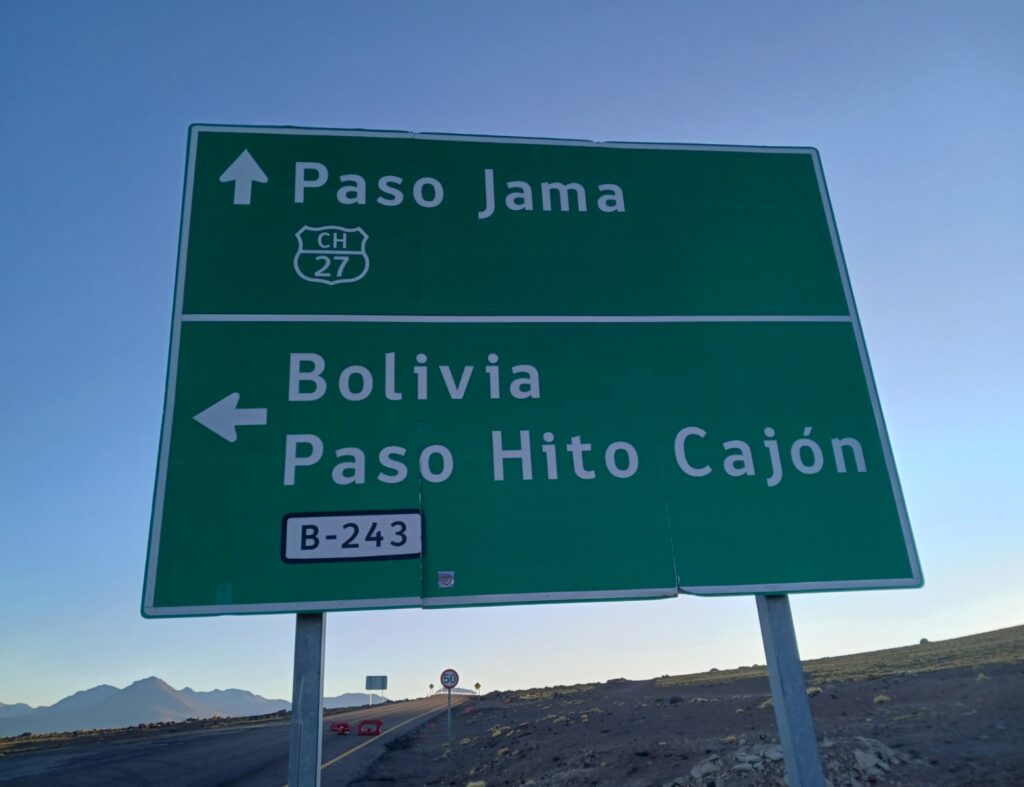
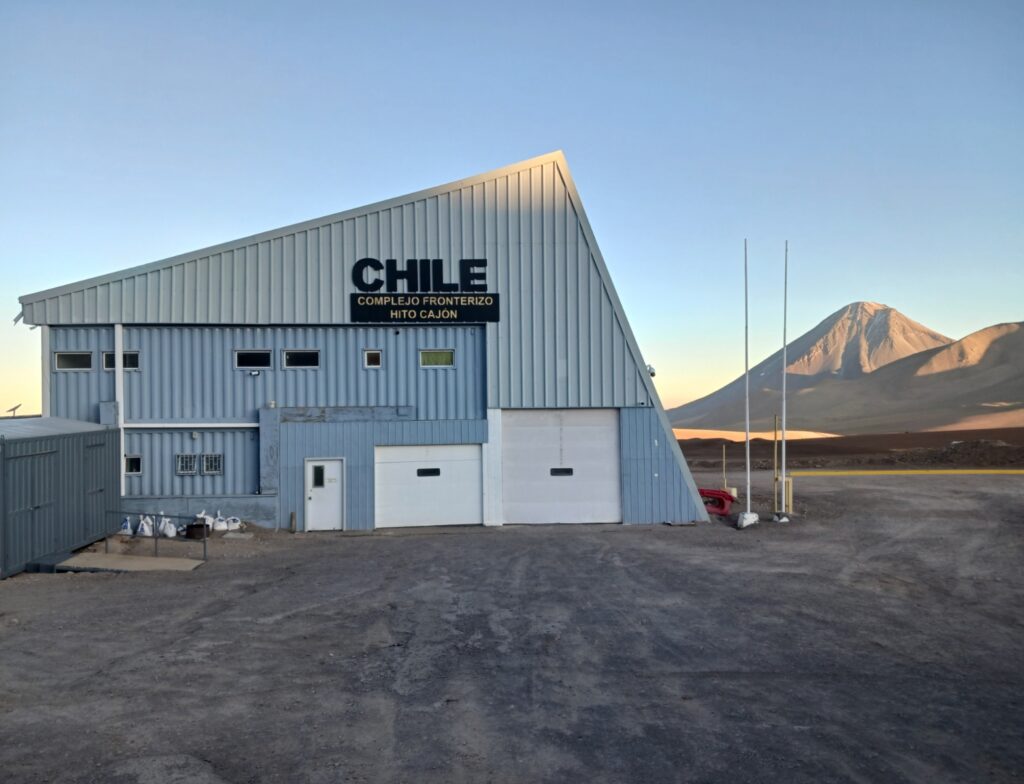
Around 7:15 AM, we arrive at the Chilean border, which… isn’t open yet! No big deal! We park in line (we’re the second vehicle), and the driver steps out to prepare breakfast, which we eat outside in the freezing cold.
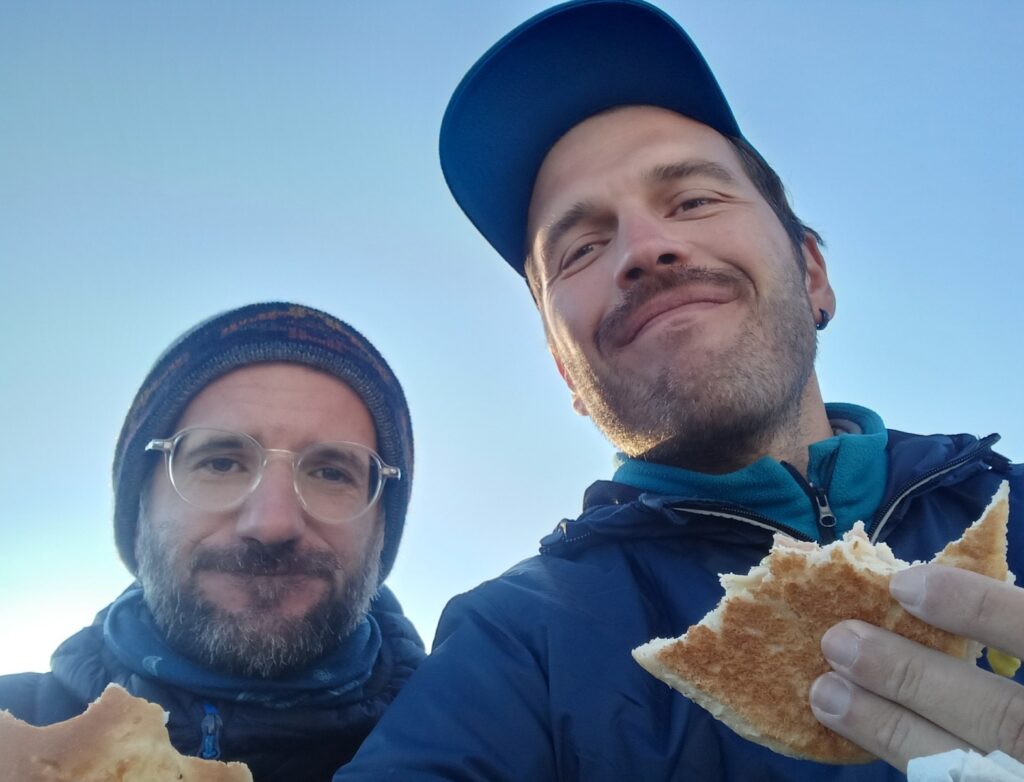
The Chilean border finally opens at 8:00 AM. We pass through without any issues (and without a single smile from the customs officer). We get back into the vehicle and head to the Bolivian border… which is also closed. We wait outside in the wind for about 45 minutes before a stern-looking border officer finally starts stamping passports.
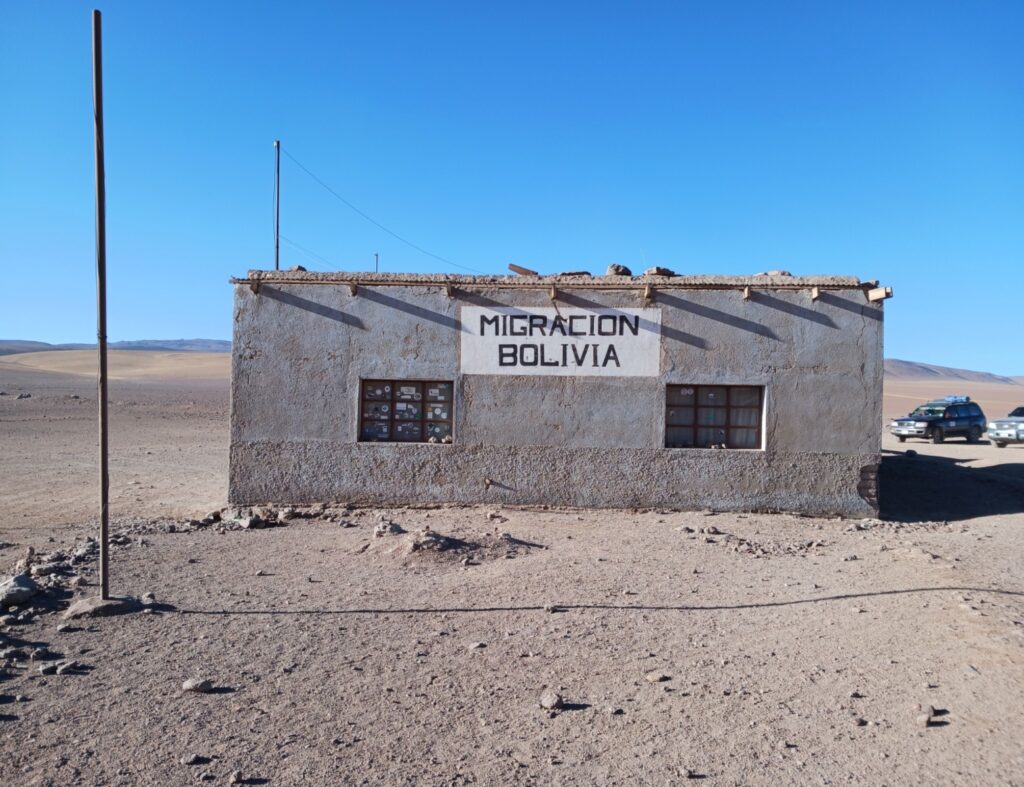
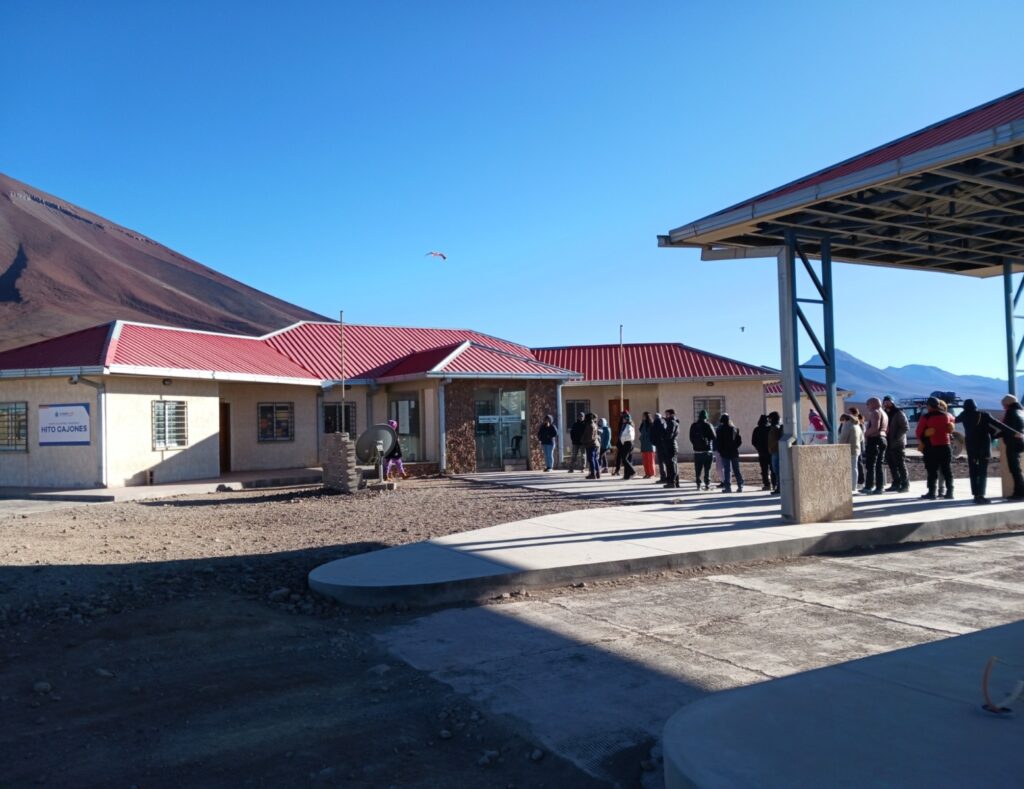
Once we clear customs, we head to the reception of the nature reserve to purchase our entry tickets.
After everyone has paid the entry fee, secured the luggage on the roof, and said goodbye to a pair who are heading on a private tour, we are finally ready to begin our journey in Bolivia. It is 10:00 AM.
Six sites are scheduled for the day.
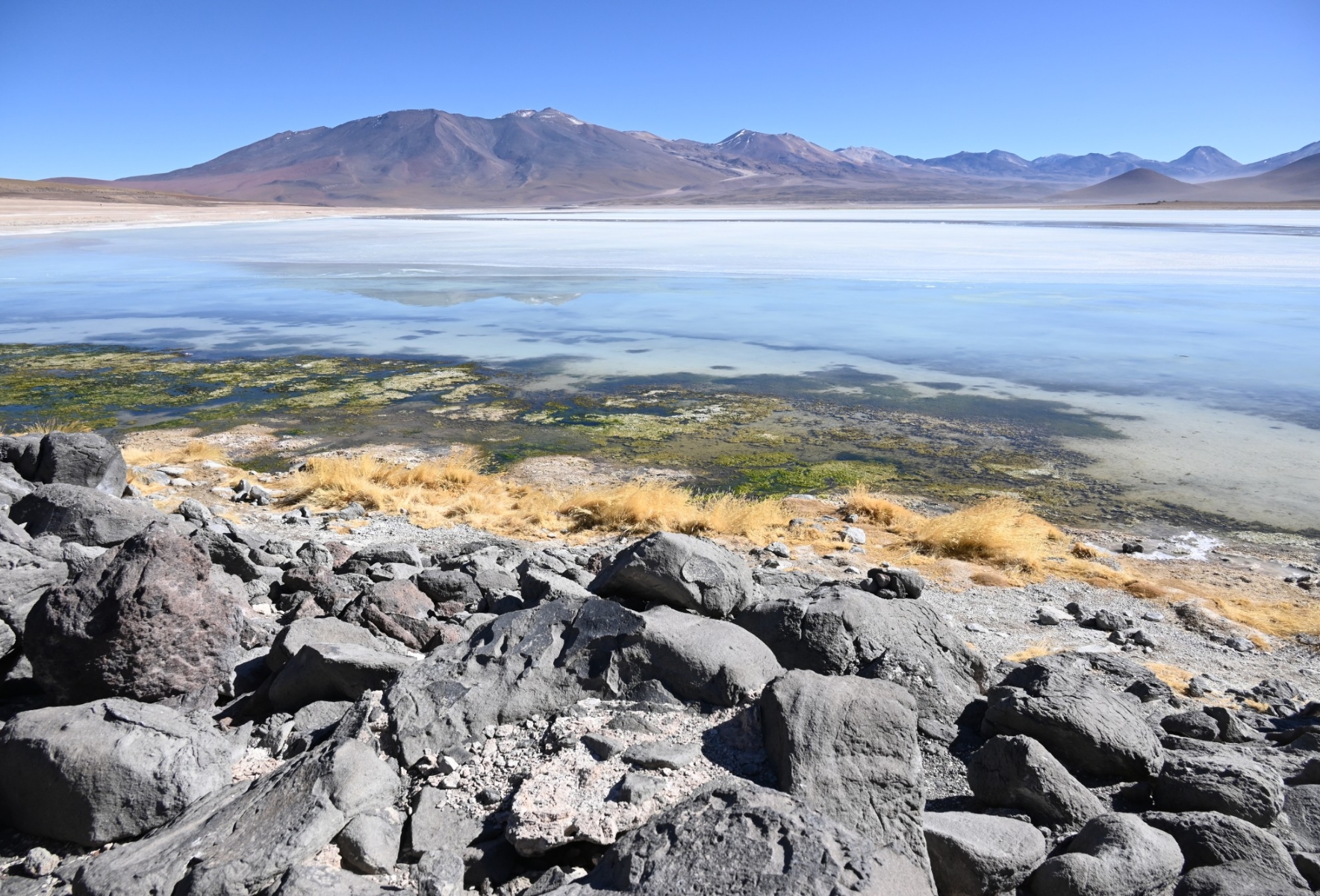
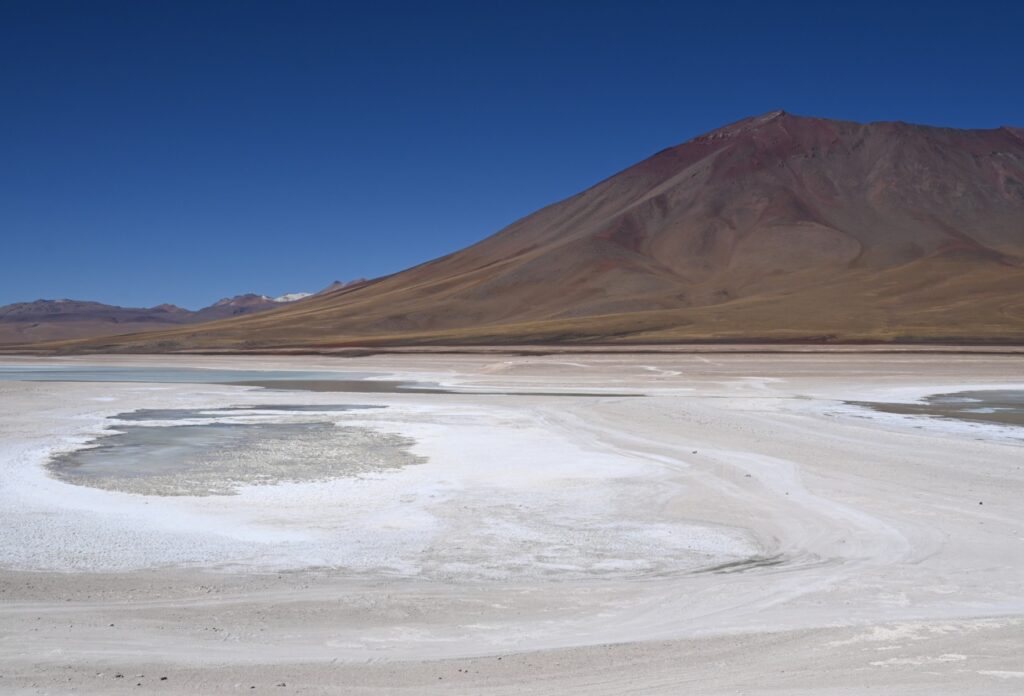
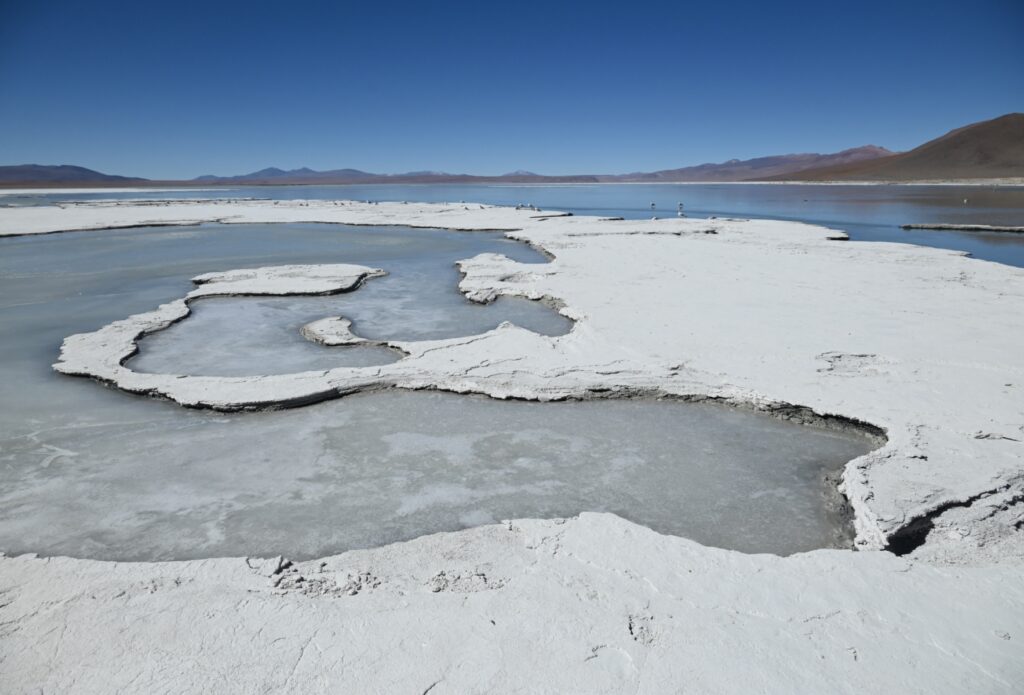
The first stop is the White Lagoon. Here, it’s not salt that gives it this color, but borax, which is abundant in the region. The scenery is stunning, and the white is dazzling.
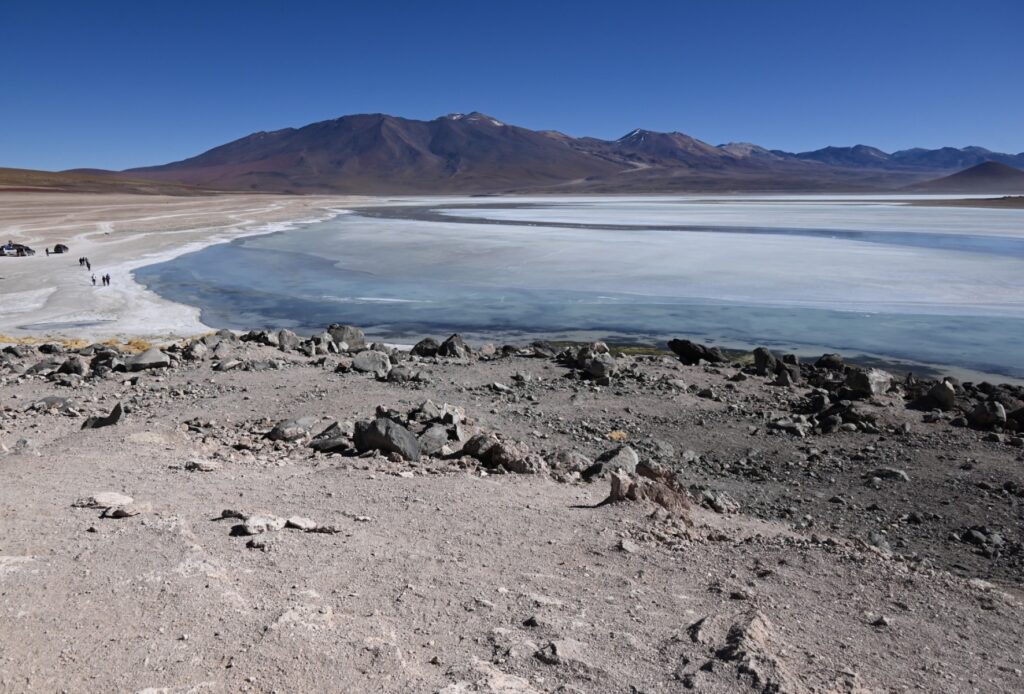
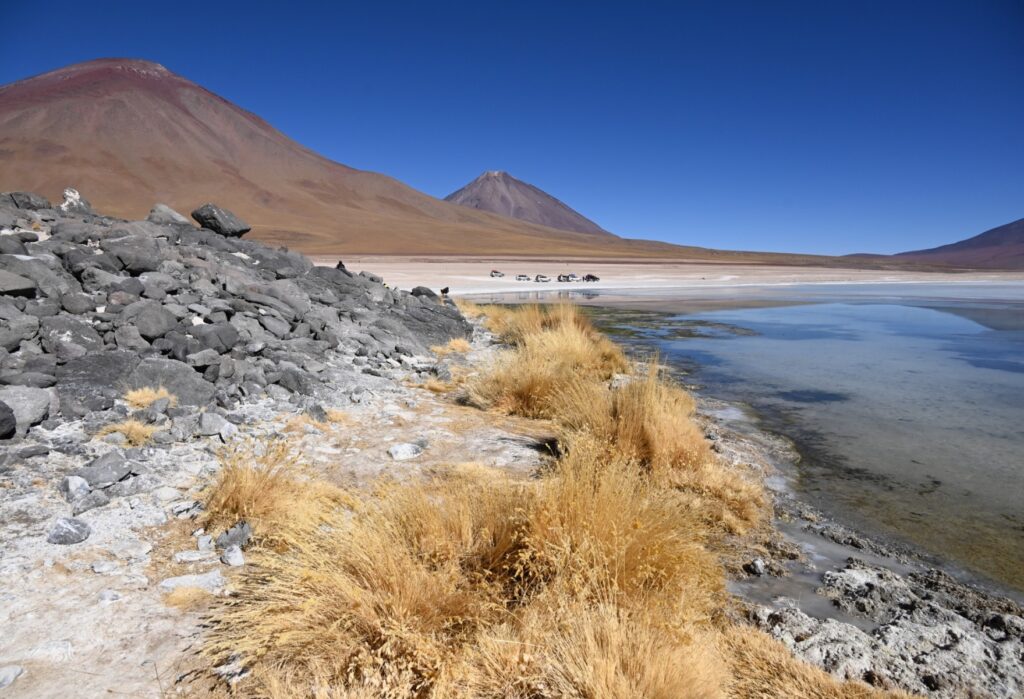
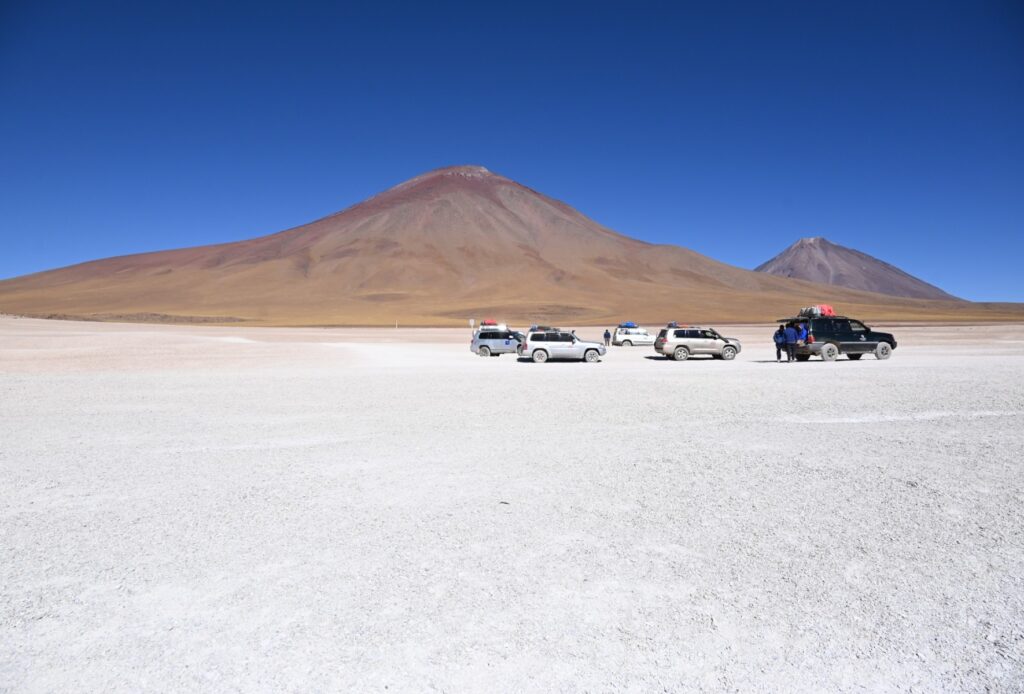
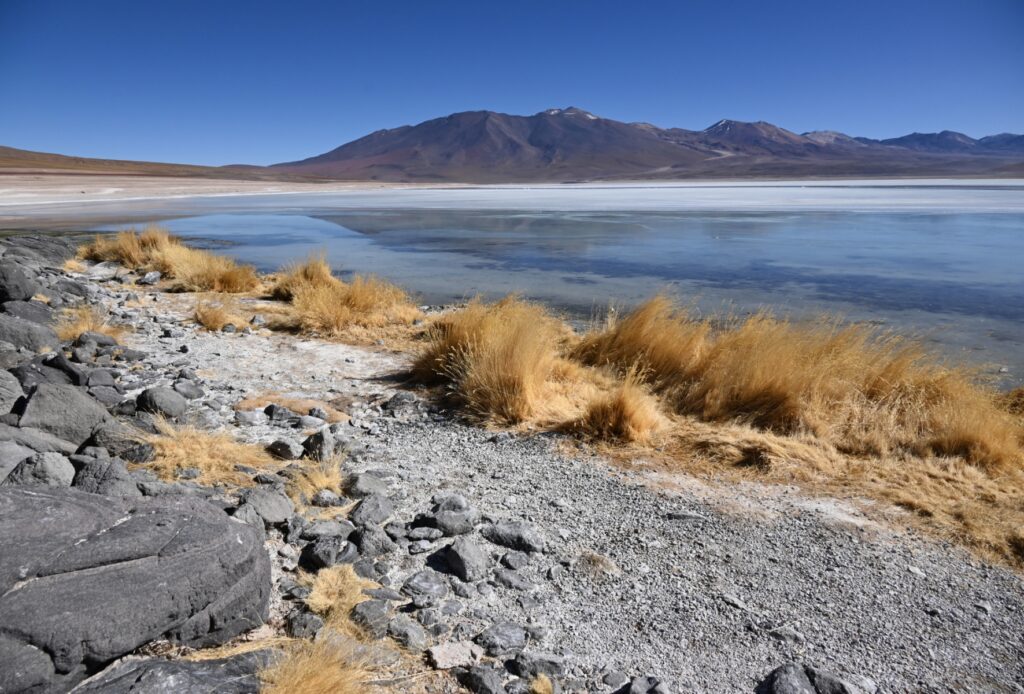
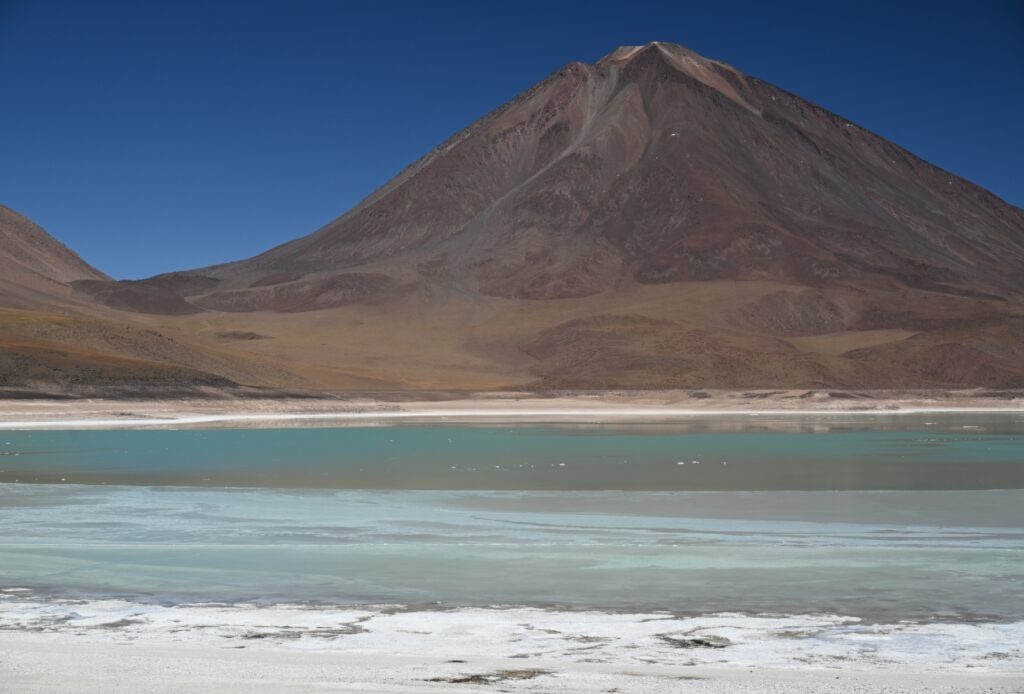
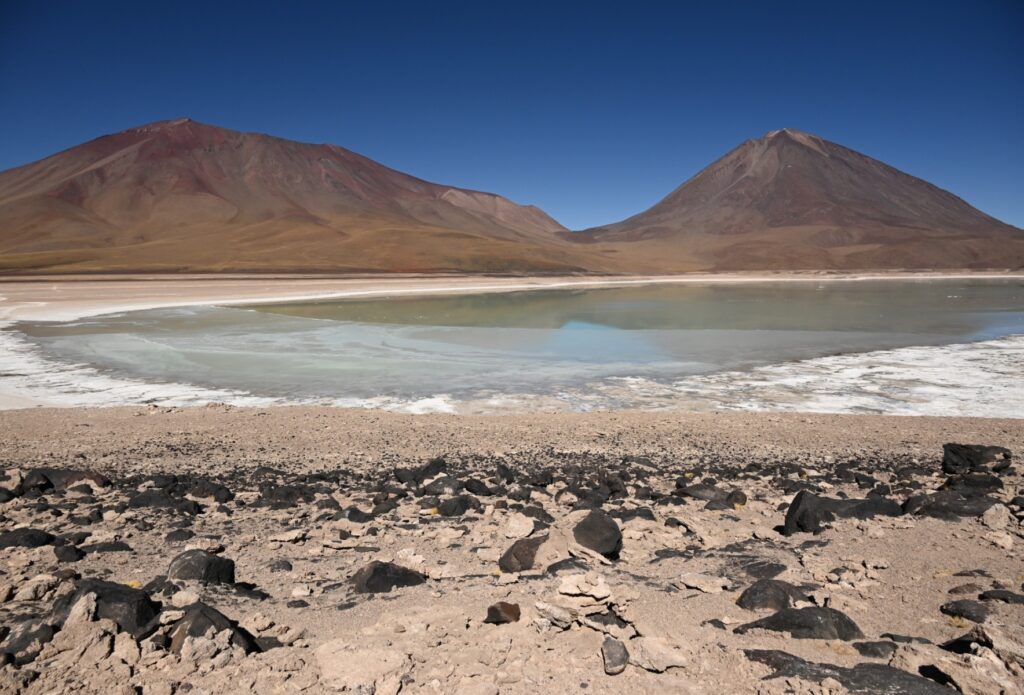
The second stop is the Green Lagoon, which has a beautiful green color (we’re starting to get the hang of it). Its color comes from the copper it contains, and it varies in intensity depending on the position of the sun. The lagoon is fed by a spring located at the summit of the Licancabur volcano, which rises to over 5000 meters.
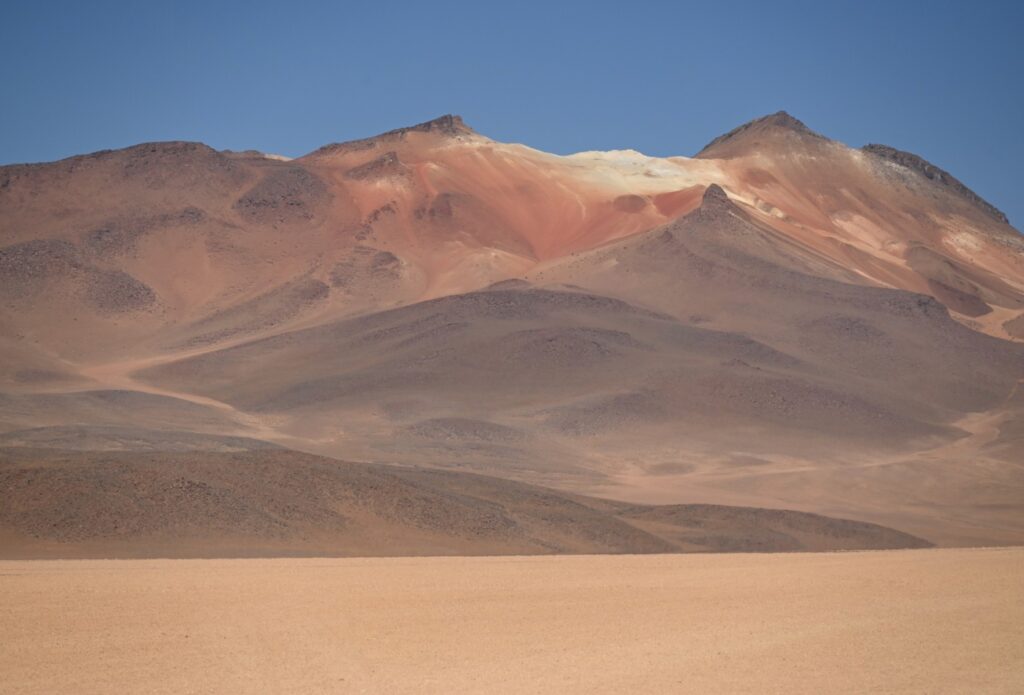
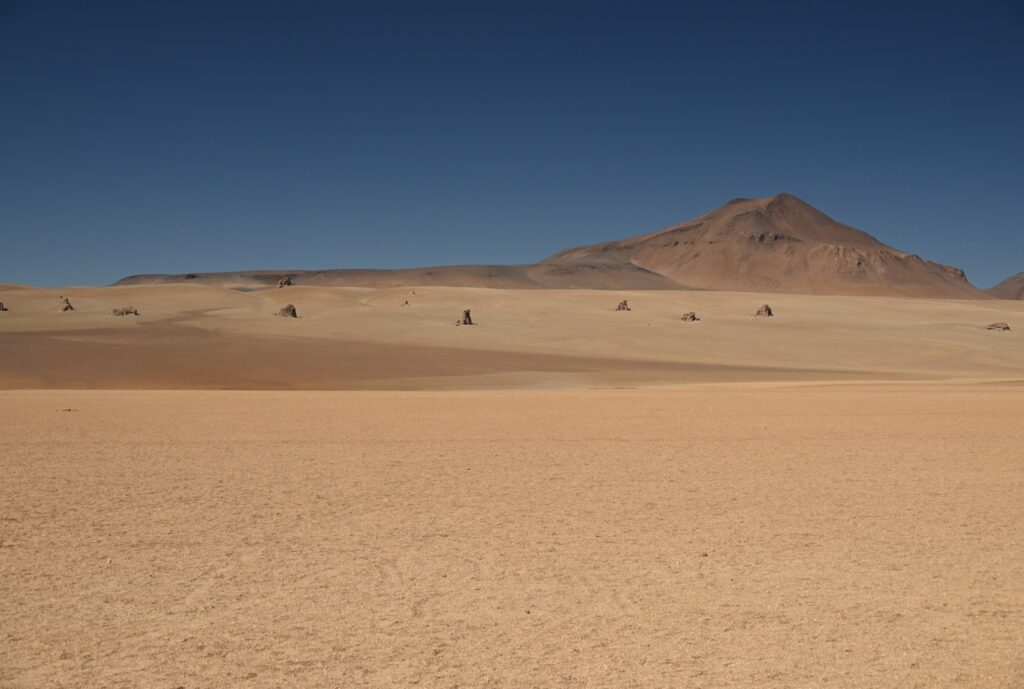
The third stop is the Salvador Dalí Desert. The desert is named after the famous artist because the rocks here resemble a painting by Dalí, Nude in the Desert. Dalí himself never set foot here. While the site is fairly insignificant, the distant mountains, colored by sulfur and various oxidized metals, are stunningly beautiful.

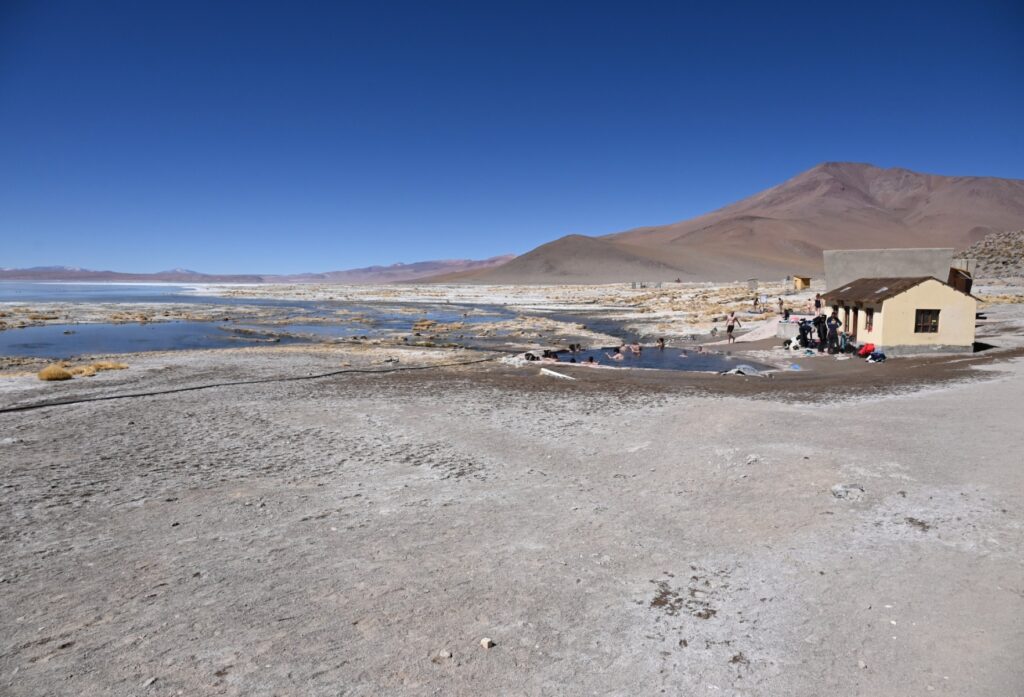
The fourth stop is a thermal spring. The bathwater ranges between 20 and 22 degrees Celsius. You can bathe there for a handful of bolivianos. However, it is recommended not to stay for more than 30 minutes to avoid any gastrointestinal discomfort.
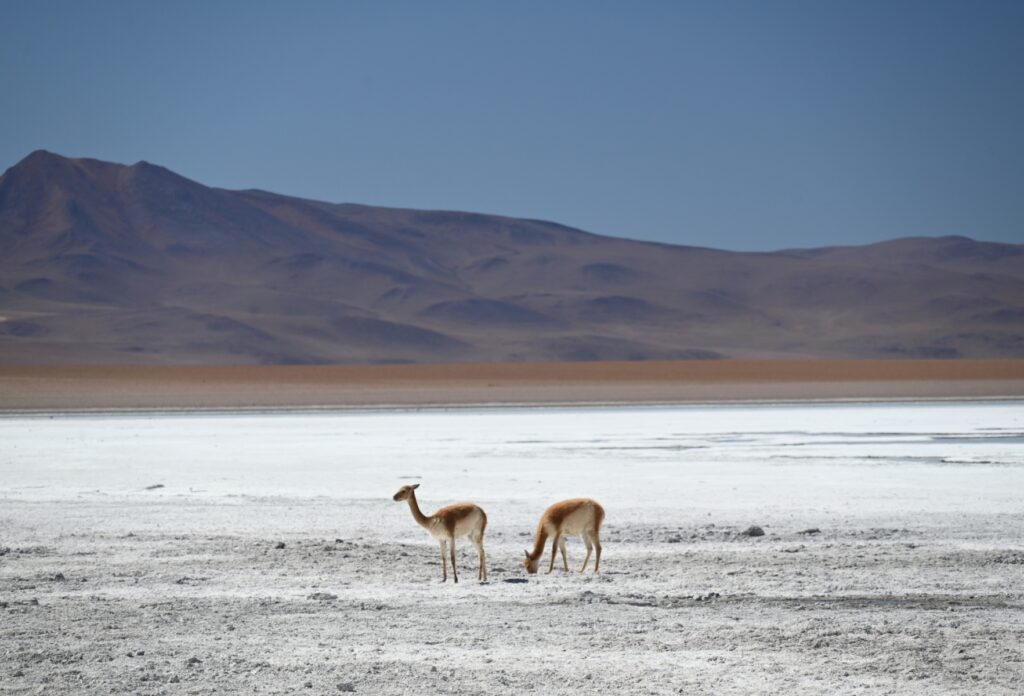

We have lunch on-site, eating pasta and chicken.
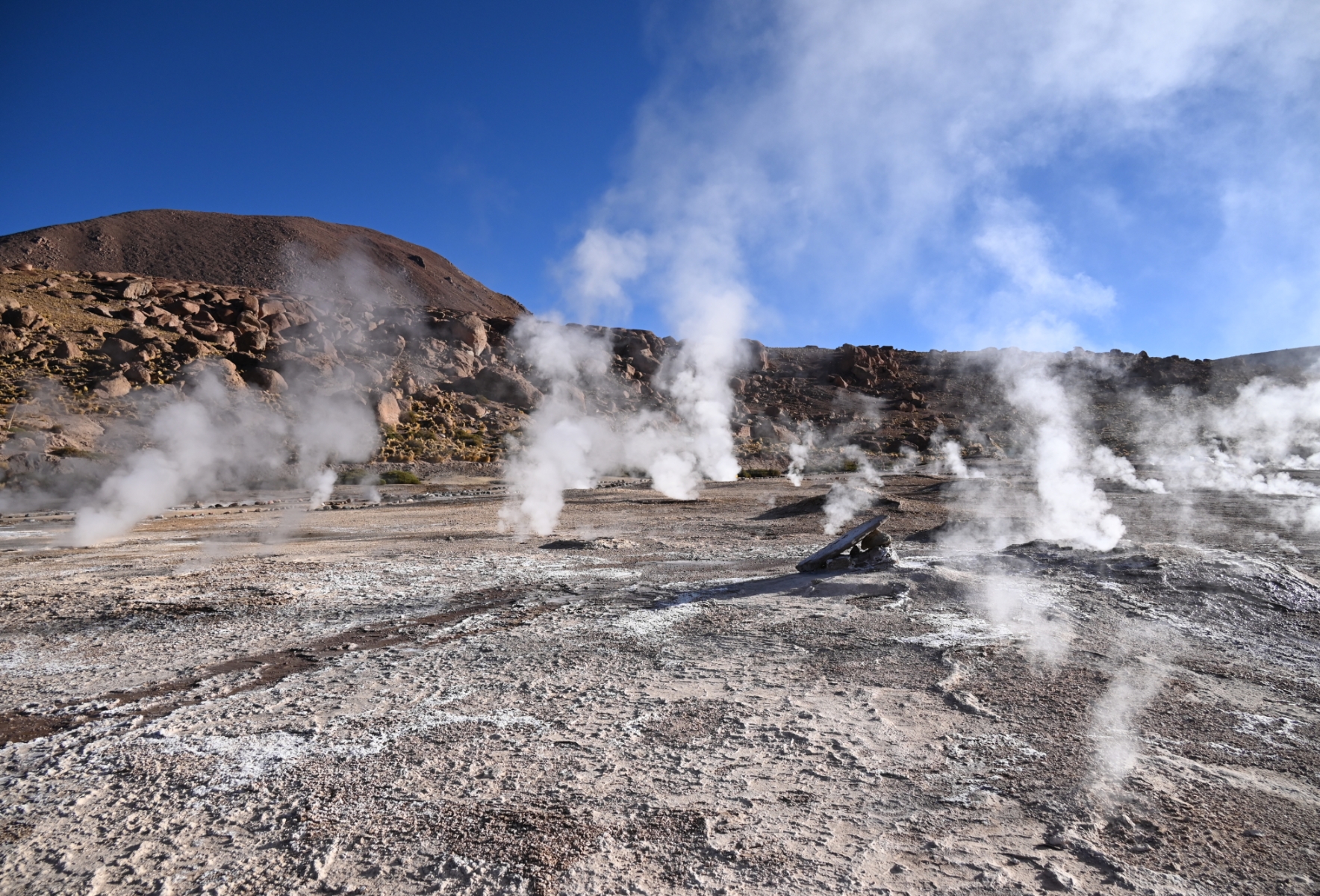
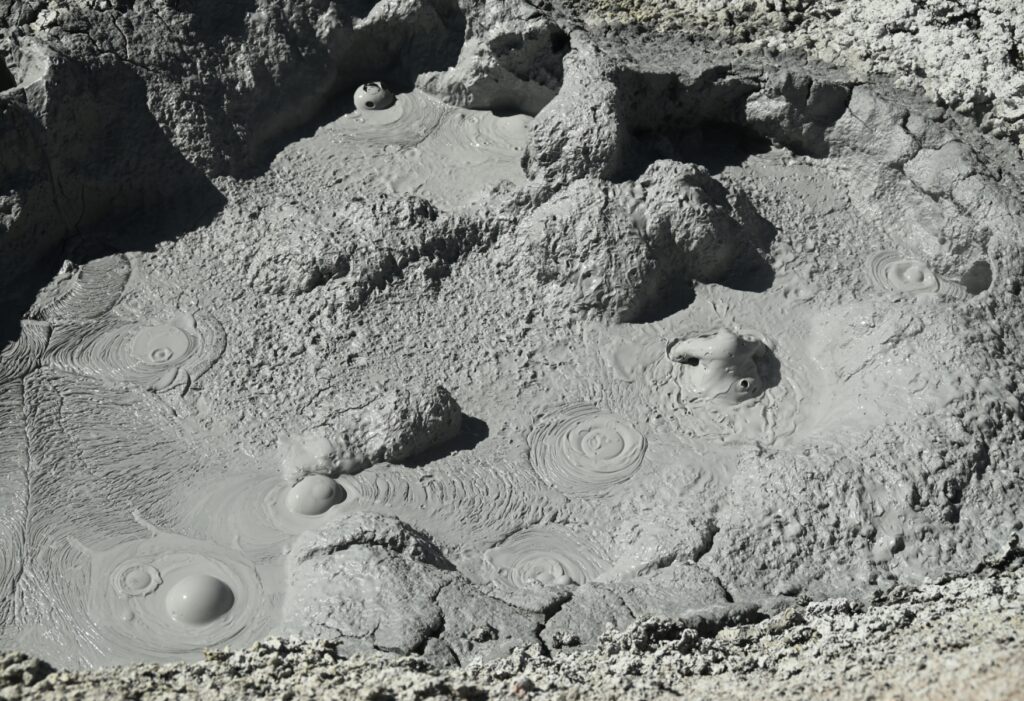
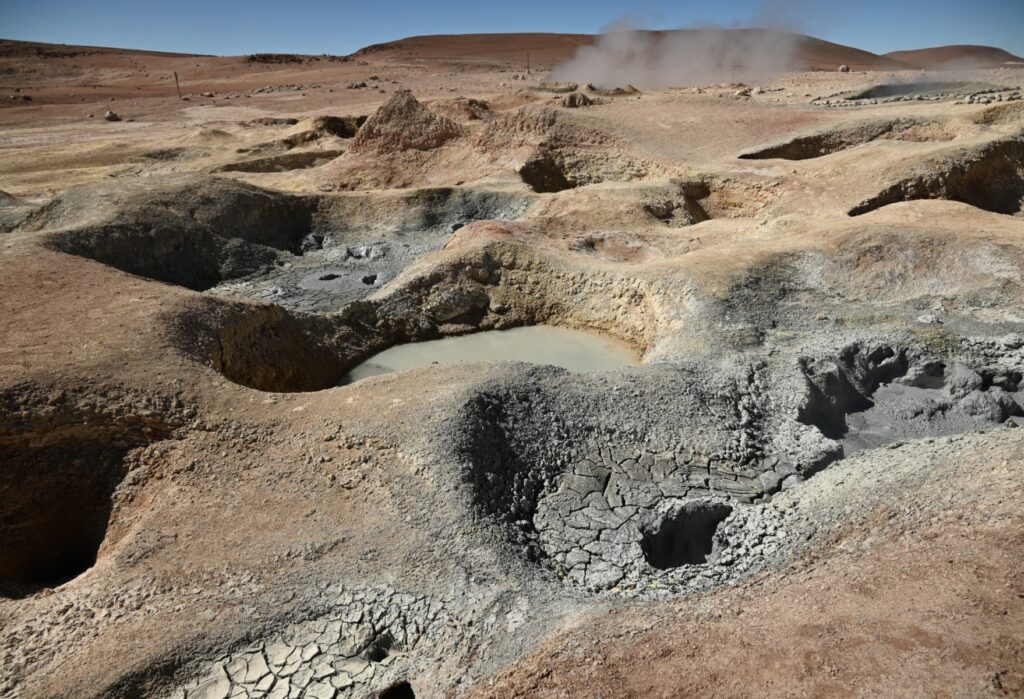
The fifth stop is the Sol de Mañana geyser field (meaning “Morning Sun”). We arrive in the early afternoon, when the fumaroles have already calmed down considerably. Still, the site remains quite beautiful and is nothing like El Tatio in Chile. Here, everything is concentrated, with steam billowing from large holes in the ground. In some of them, you can even see bubbling mud.
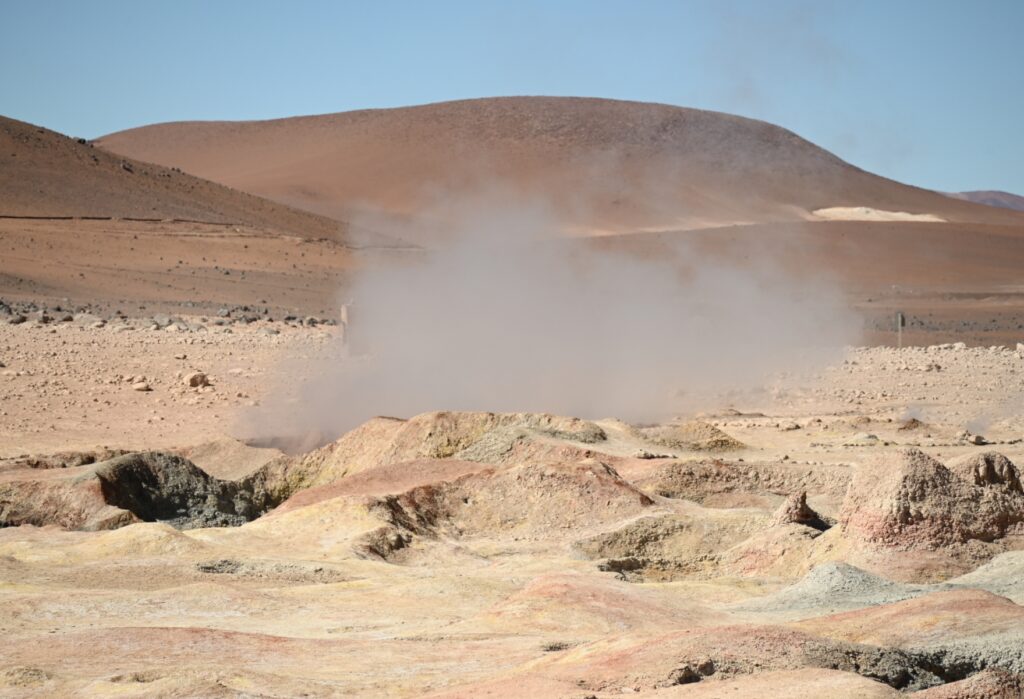
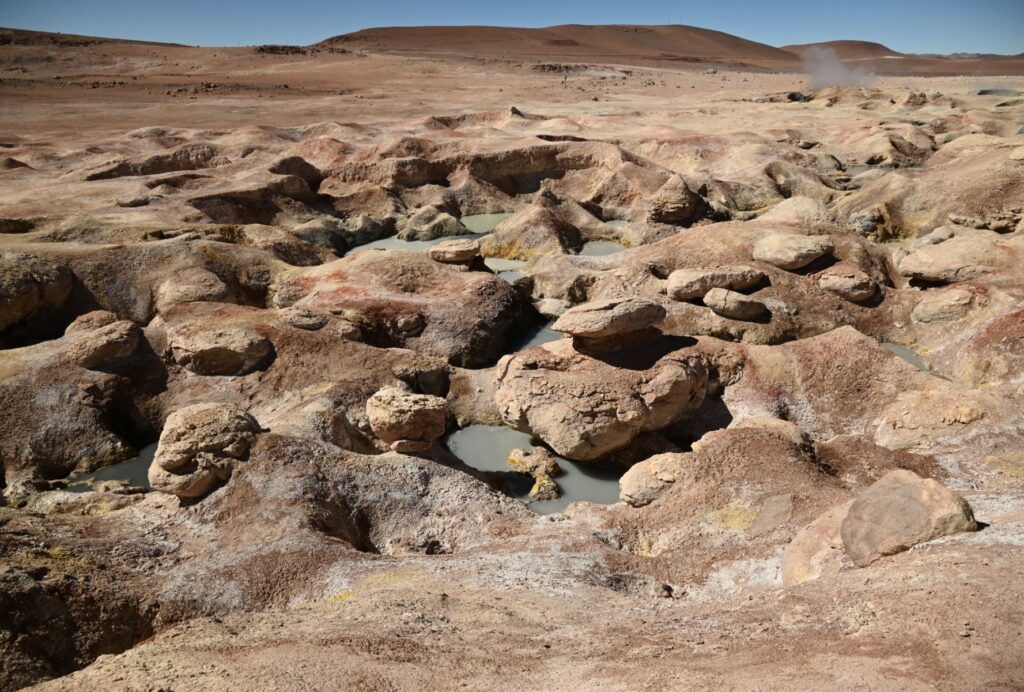
It looks like a pool of molten lead. The smell of sulfur lingers everywhere. These geysers sit at 4,850 meters (15,912 feet) above sea level, making this the highest-altitude site we’ll visit today.
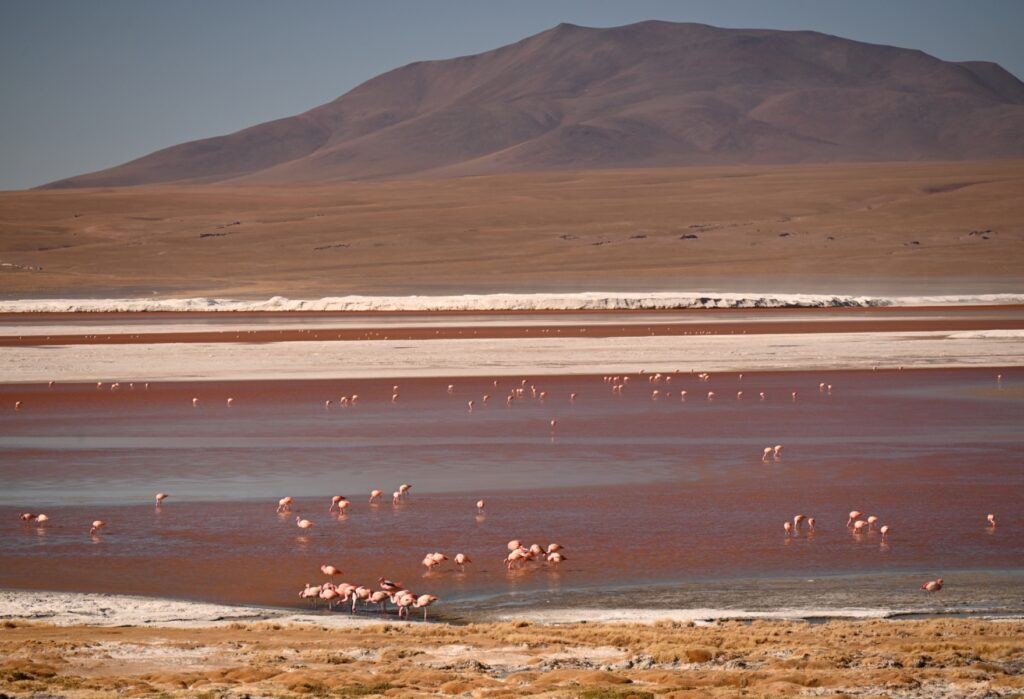
The final site is the most beautiful of all—the Colored Lagoon. This vast lagoon takes on green and pink hues due to the algae and crustaceans living in its waters. These colors, blending with the yellow of the dry grass and the white of the borax deposits, create a truly unique spectacle.
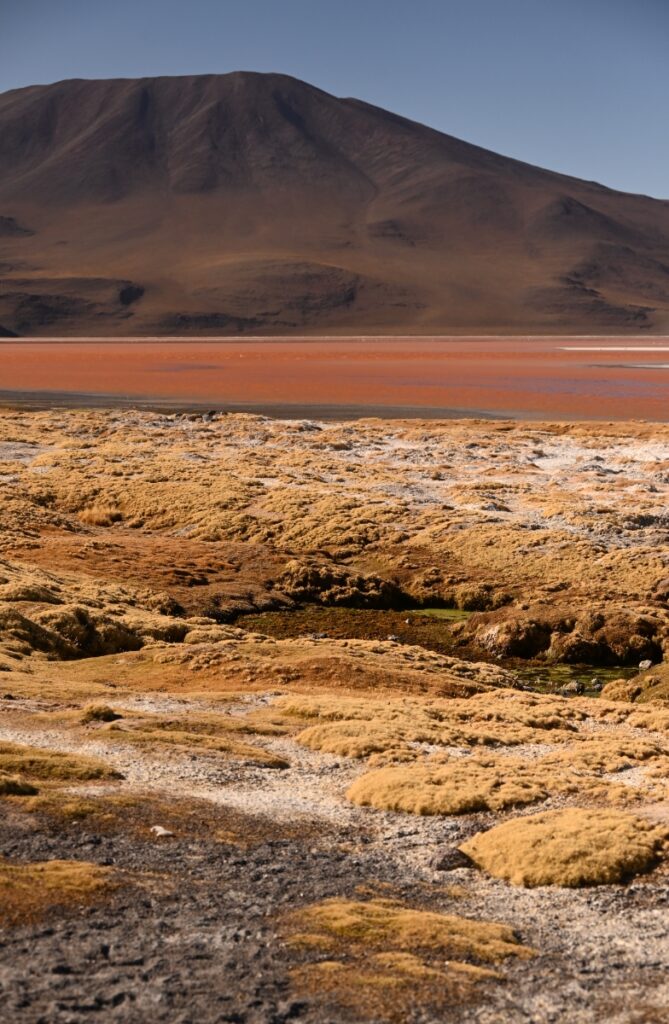
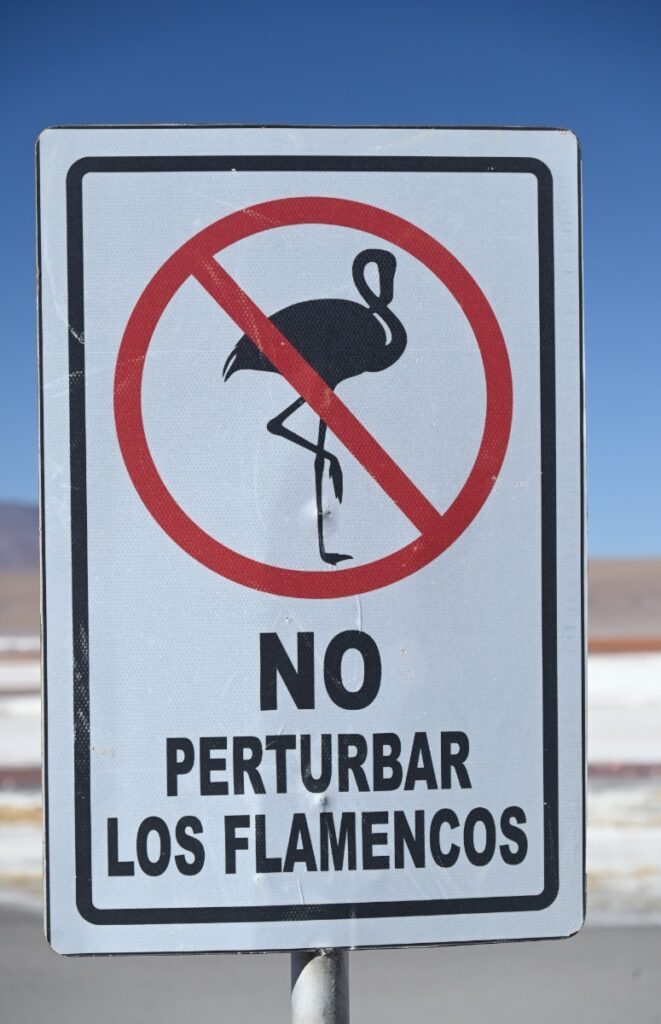
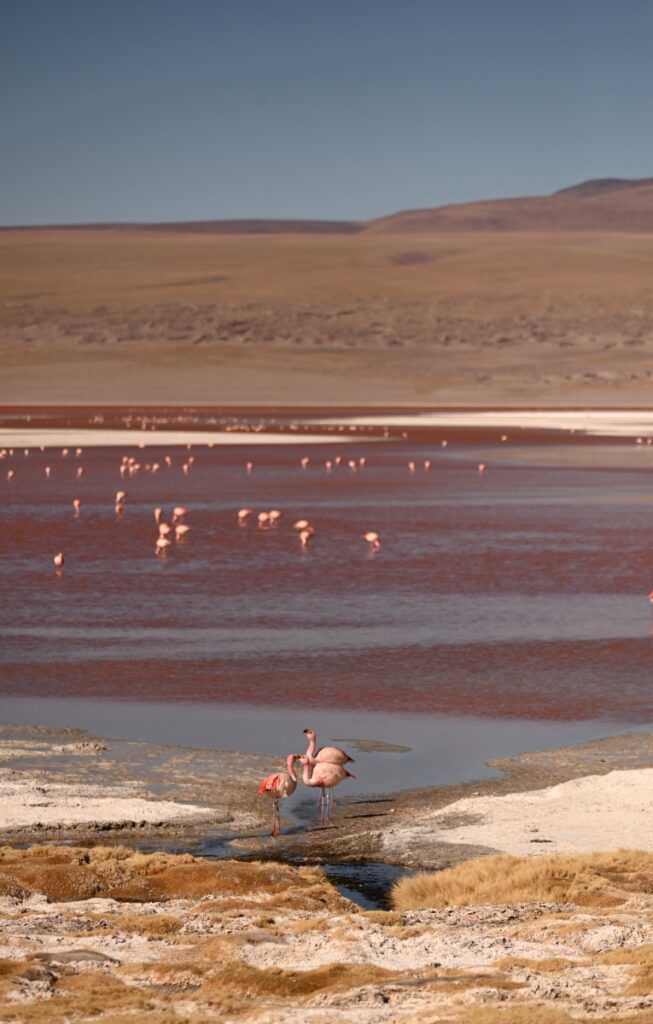
But that’s not all. The lagoon is also home to 20,000 flamingos in summer and 10,000 in winter—giving us a breathtaking spectacle and the perfect chance to put our camera to work.

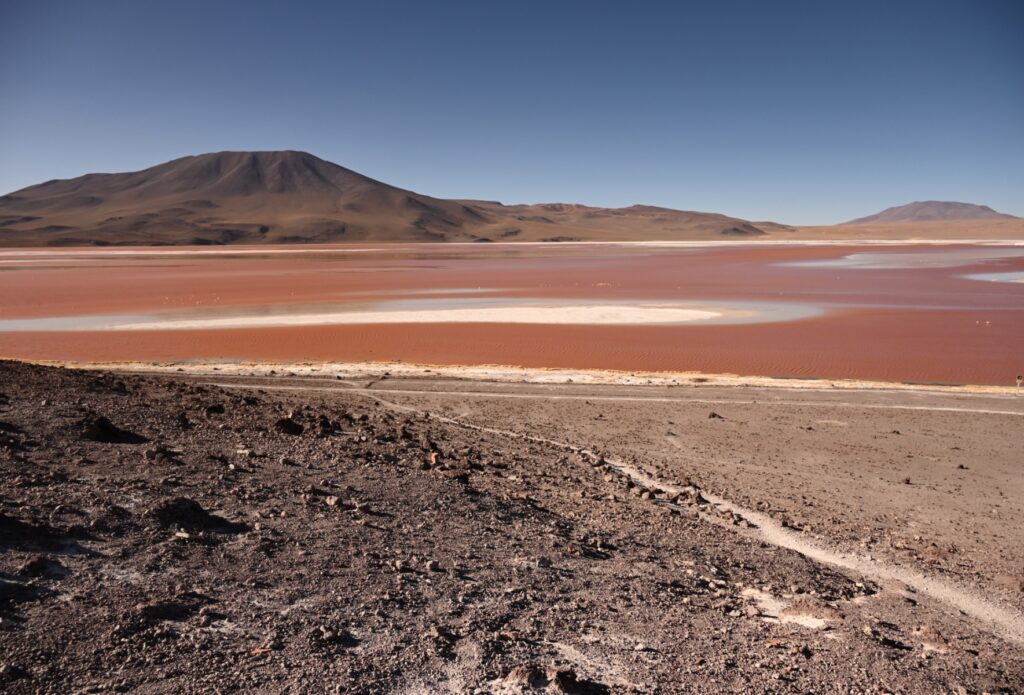

Next up, a non-stop 2.5-hour drive will take us to Villamar—a tiny settlement of 800 souls, where people live off llama herding, potato farming, and quinoa cultivation. However, we make a quick stop to help another stranded car along the way. We finally roll into Villamar at 7:00 PM… turning this into quite the marathon day.
Since it’s the only inhabited spot around, all tourists—no matter which tour agency they’re with—end up spending the night in Villamar… in accommodations that are, well, barely more than basic.
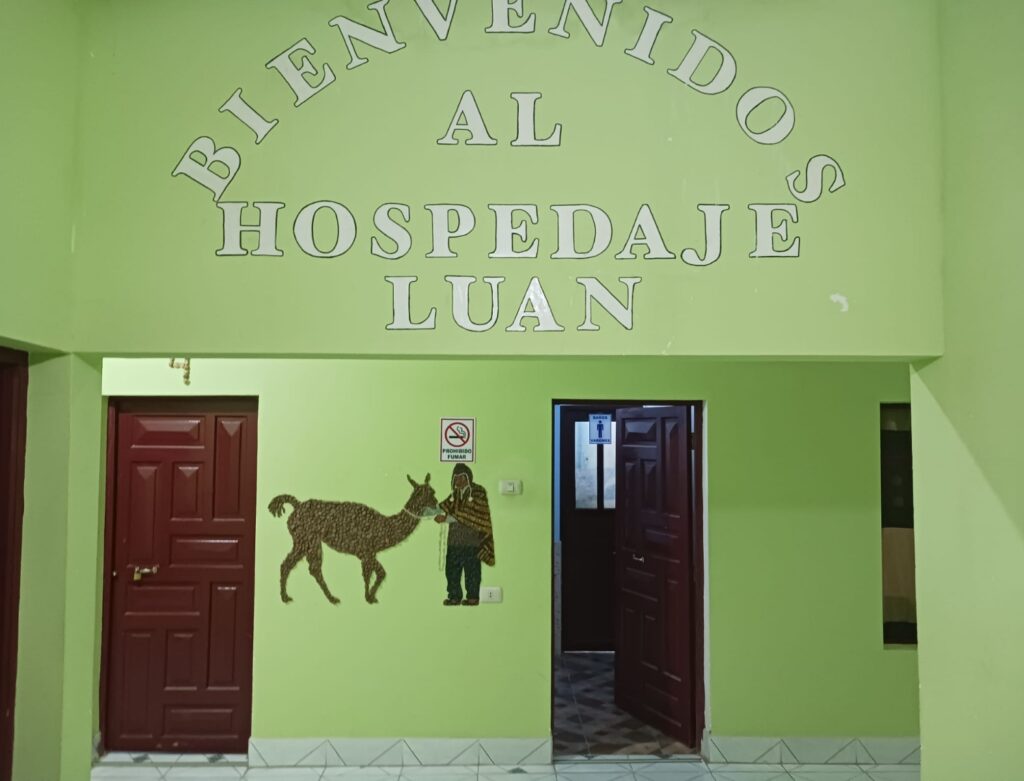
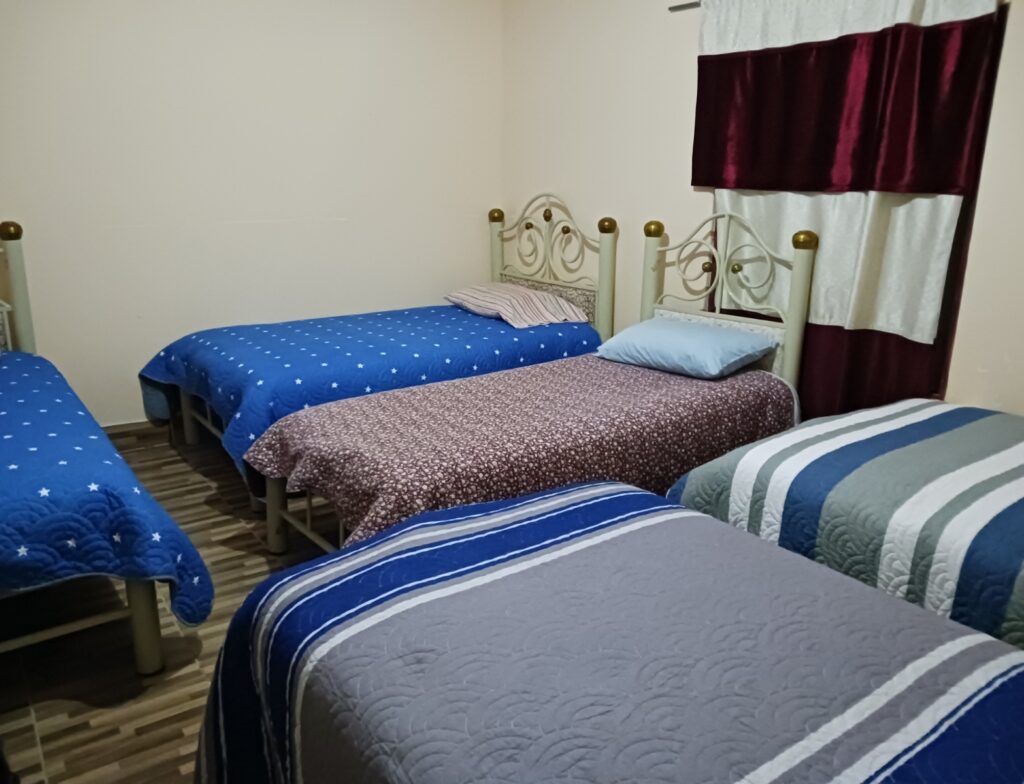
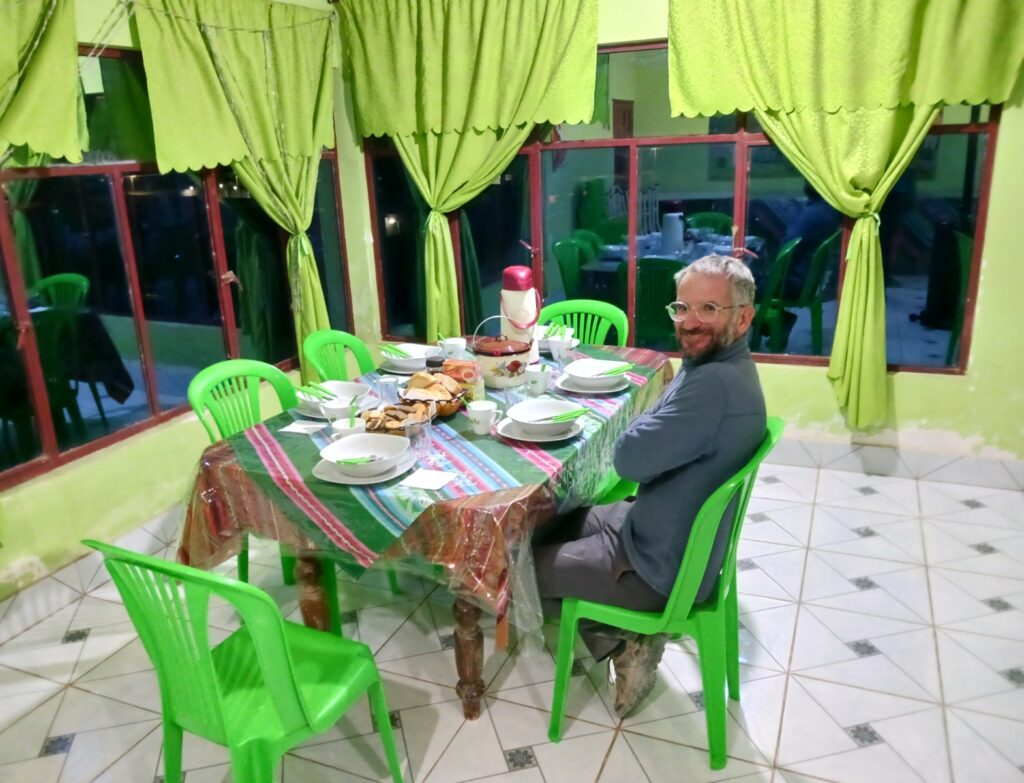
The place where we’re staying (we’re not sure it can even be called a hotel) offers 5-bed dormitories. Luckily, it’s low season—so we’ll have the room to ourselves. On the downside, there’s no heating (nighttime temperatures drop below freezing…), no hot water, no shower, no towels, and no toilet paper. Oh, and there’s just one men’s toilet and one women’s toilet for a total capacity of 45 guests during peak season. Let’s just hope we don’t get sick…
We quickly scarf down some mashed potatoes and a bowl of soup before collapsing under seven heavy blankets—completely exhausted.
Day 2: We had quite an unusual night. While François slept fairly well, Benjamin looks like a sparrow dropped on an ice floe—he spent the whole night freezing.
After a light breakfast, we hit the road again around 9:30 AM.
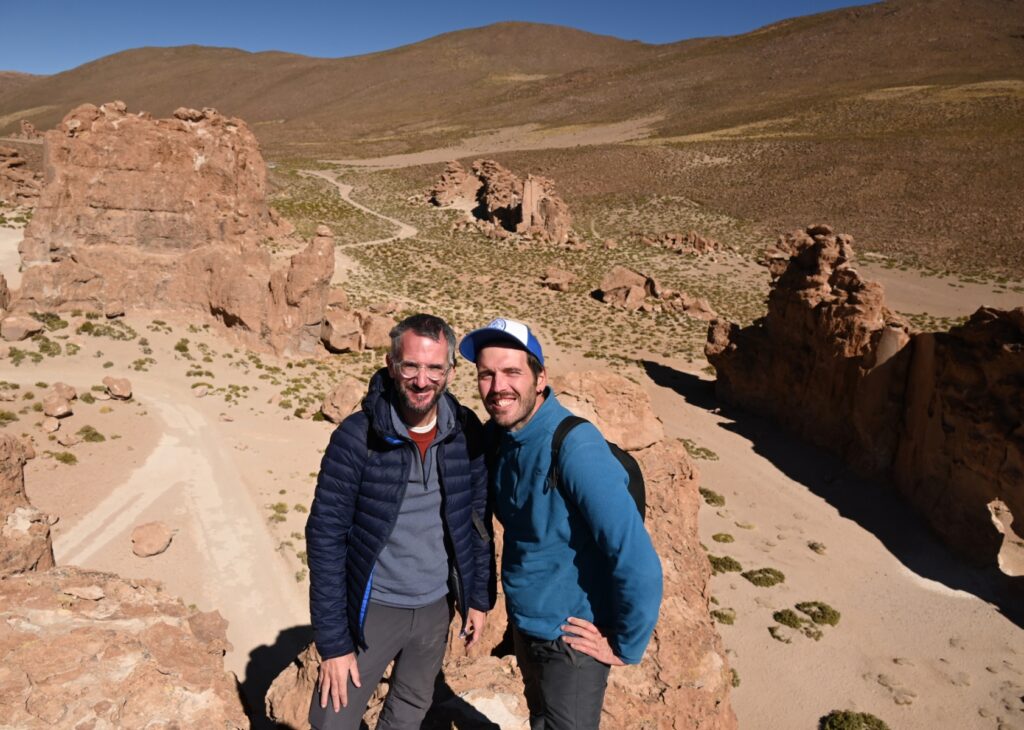
The first site is a rock formation called “The World Cup”. As our guide jokes, “Bolivia may have never won the Football World Cup, but at least they have this rock.” It’s a bit of a trivial claim to fame—though the orange-hued stones are undeniably pretty.
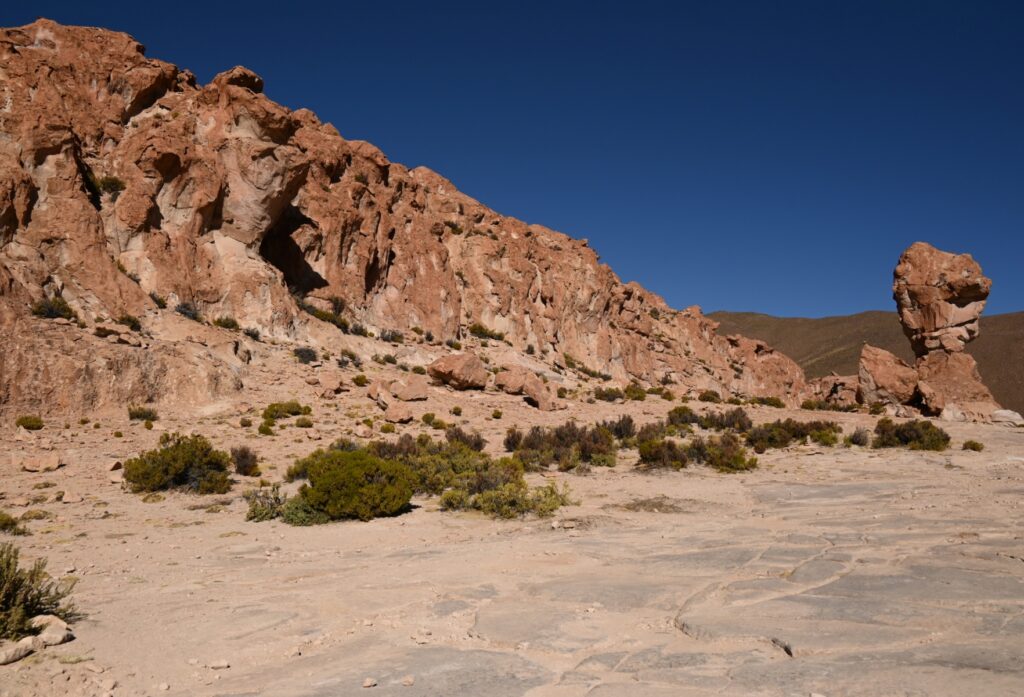
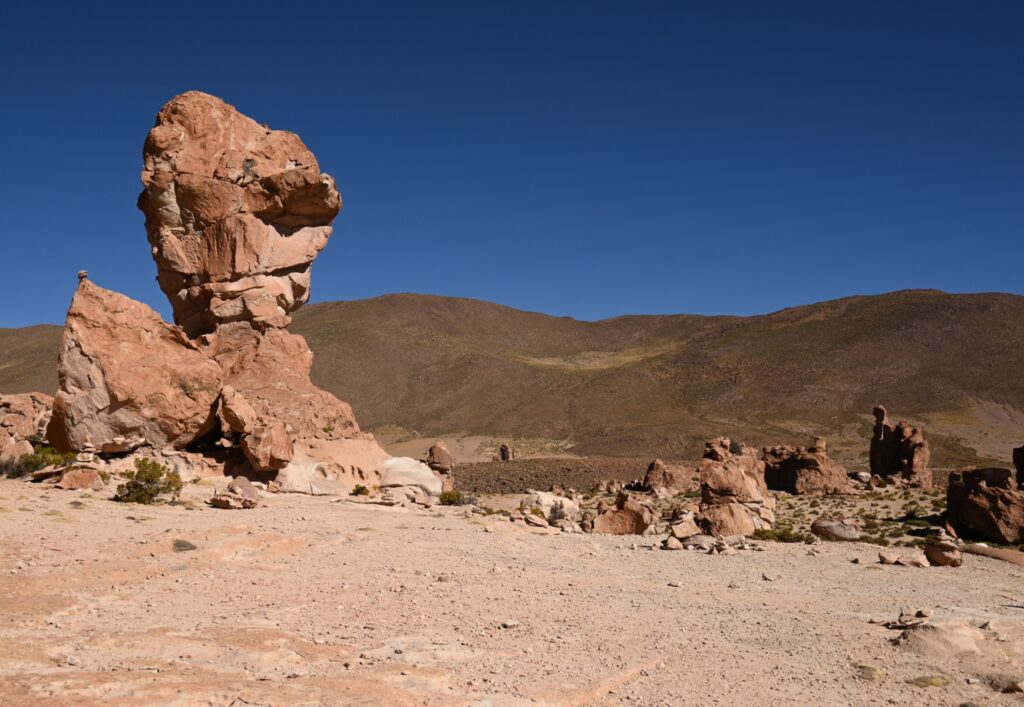
The second stop is “The Stone Camel”—though once again, it takes some imagination to see a lying dromedary. We make this a quick visit.

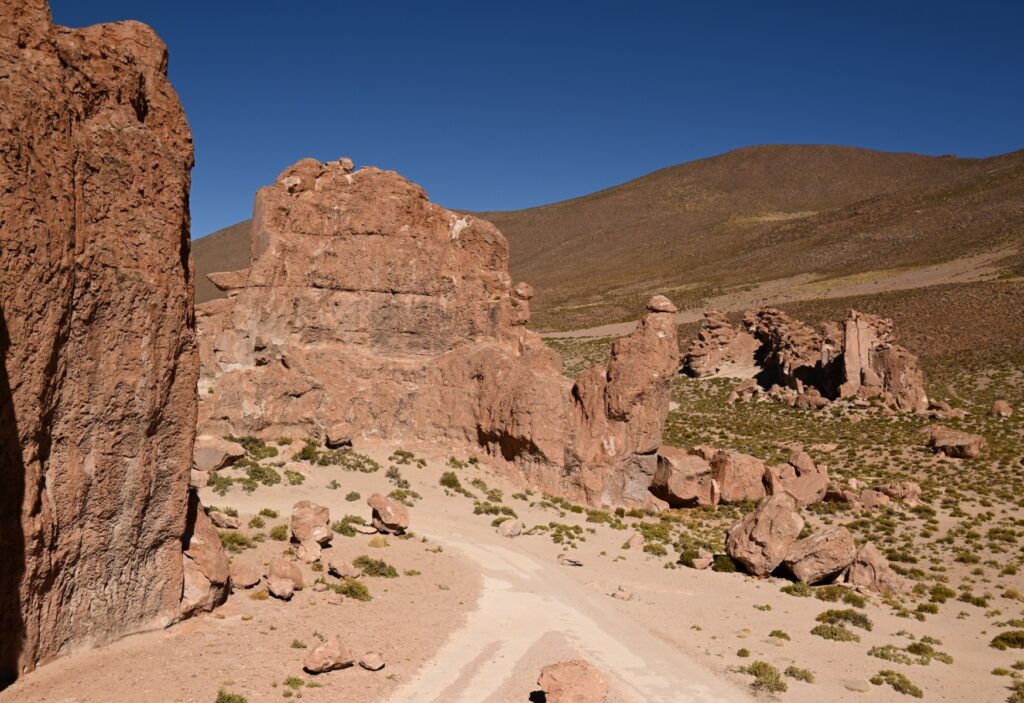
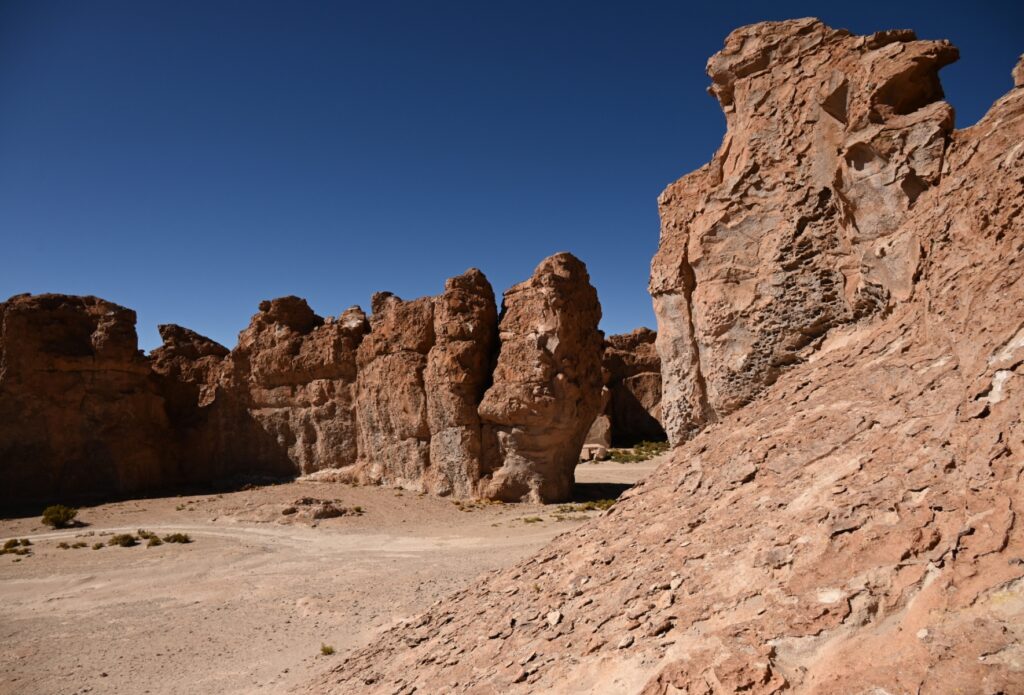
The third stop is “The Italian Town. This rock formation gets its name from the winding road cutting through it—like a street snaking between boulders that vaguely resemble city buildings.
Local legend claims an Italian cyclist once got lost here and was rescued by nearby villagers, though the rocks themselves seem far more reliable than the story.
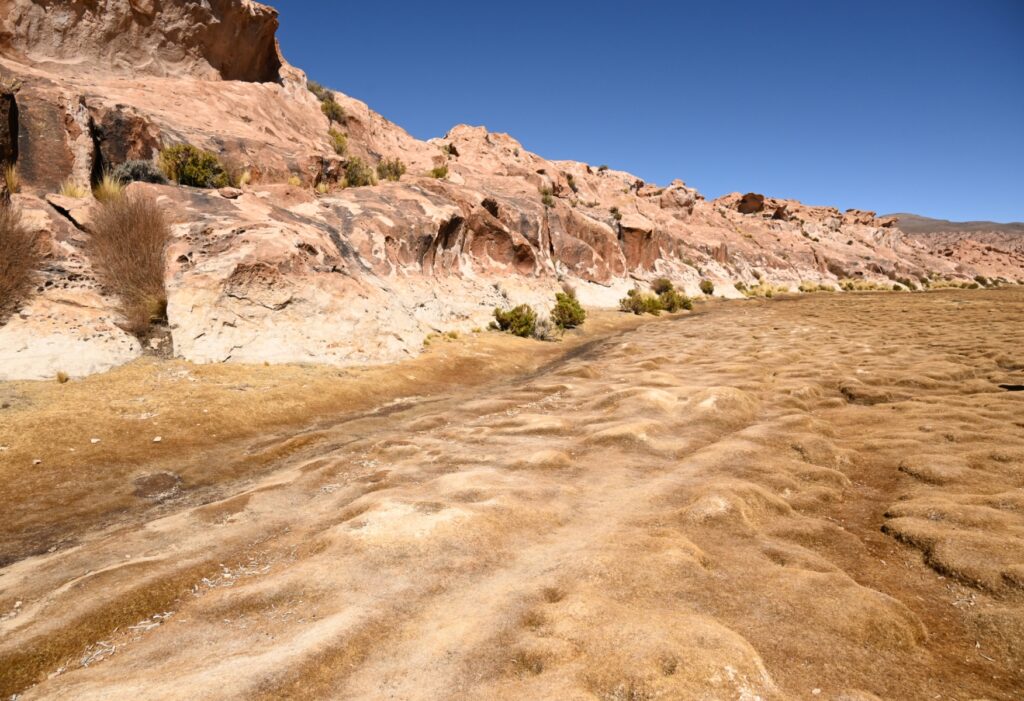
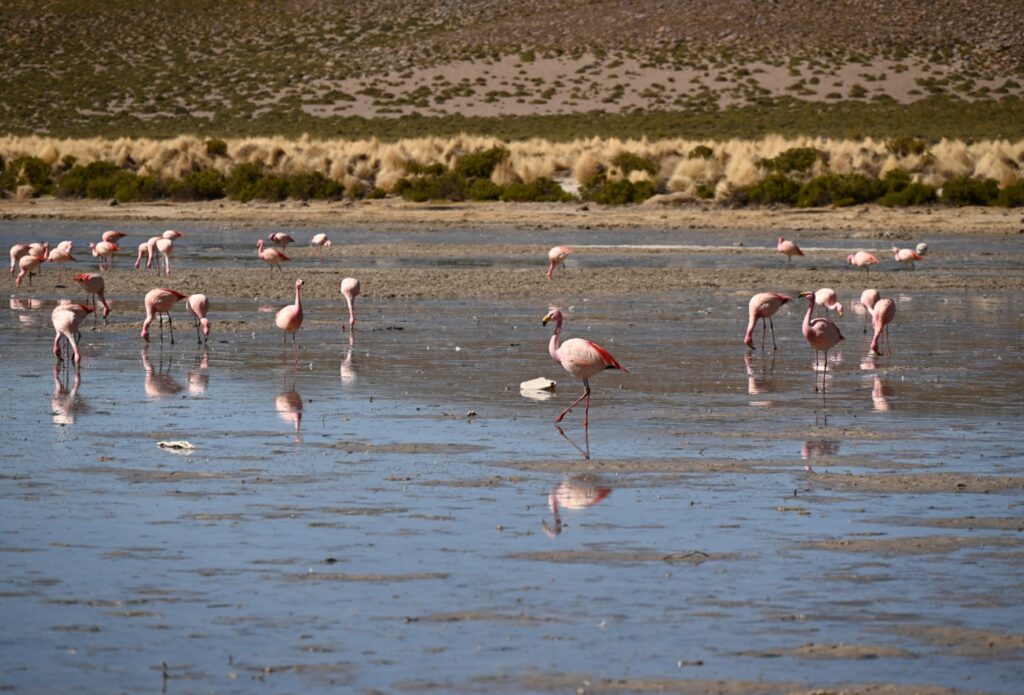
We then make a brief stop by Laguna Vinto along the route, where several Chilean flamingos and James’s flamingos are wading.
Our fourth stop is the Black Lagoon (or Mysterious Lagoon). To reach it, we hike for about fifteen minutes through a rocky landscape dotted with sparse vegetation.
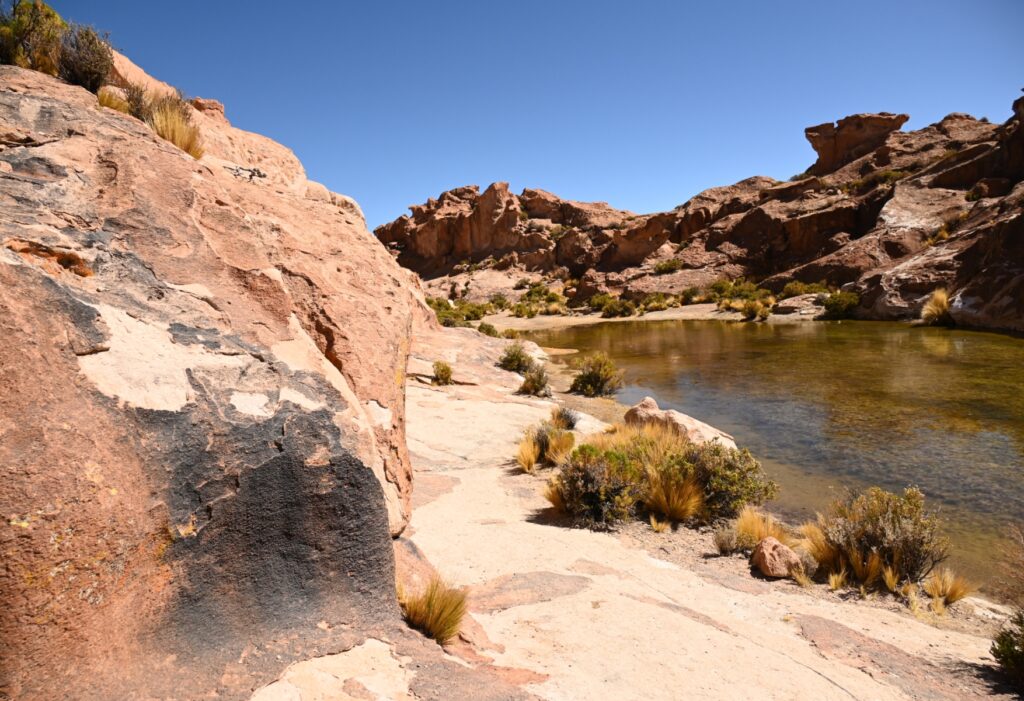
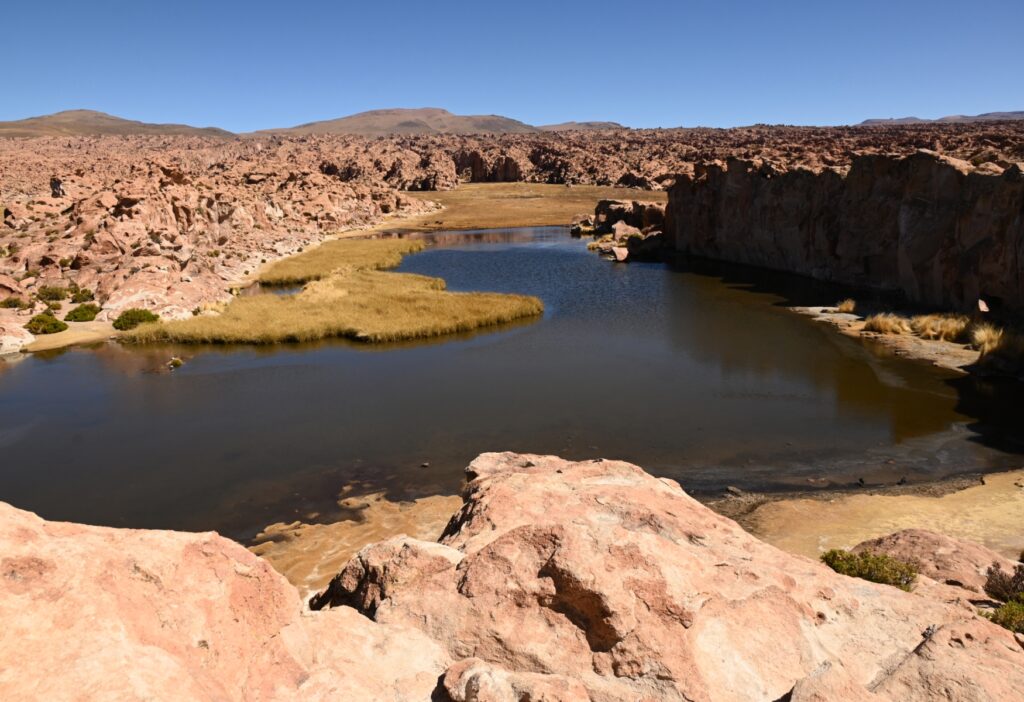
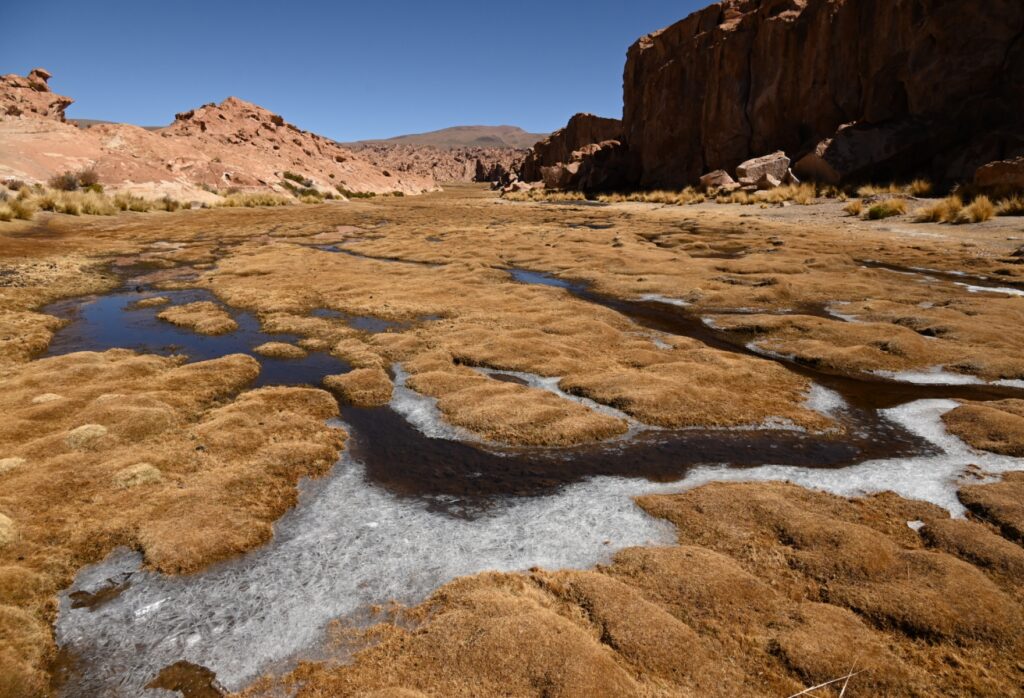
The lagoon is picturesque, with ducks providing a musical backdrop. On the way back, we pass several llamas grazing peacefully around us.
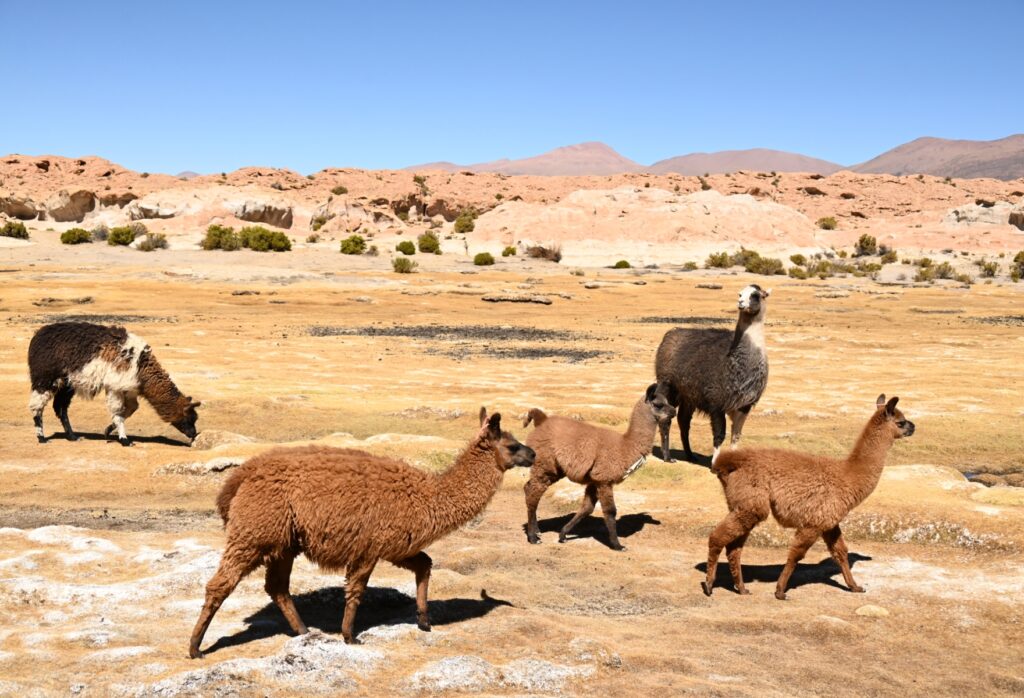
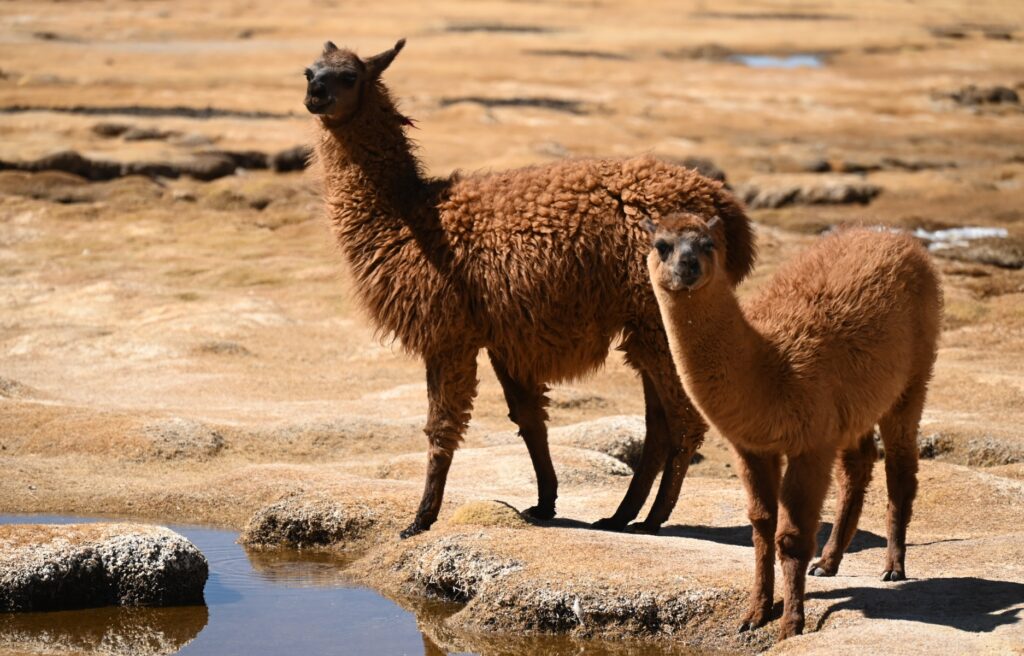
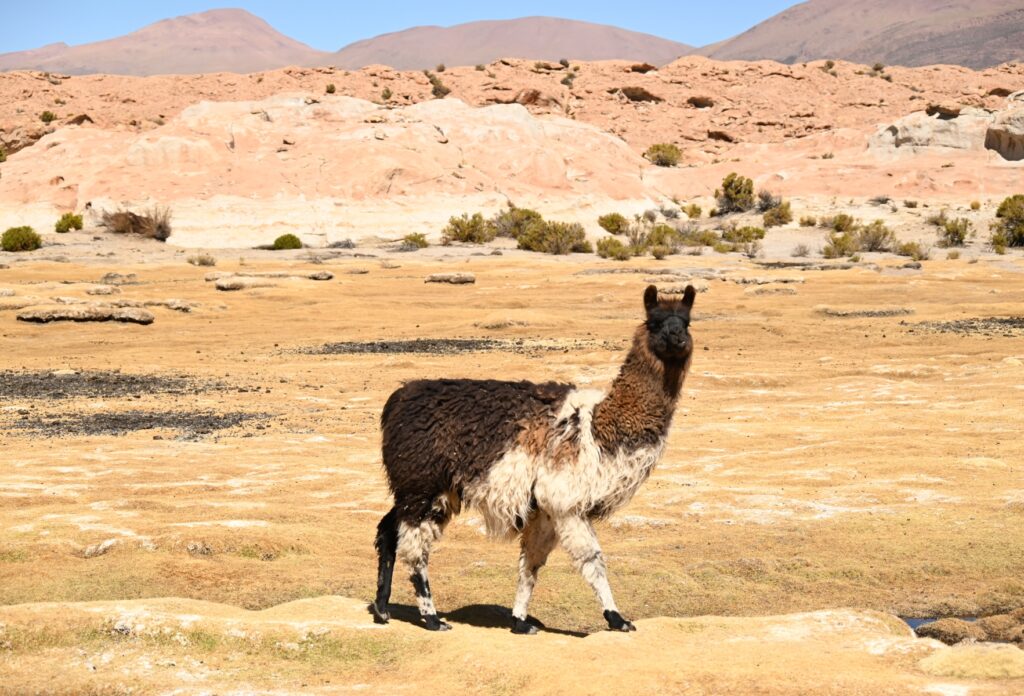
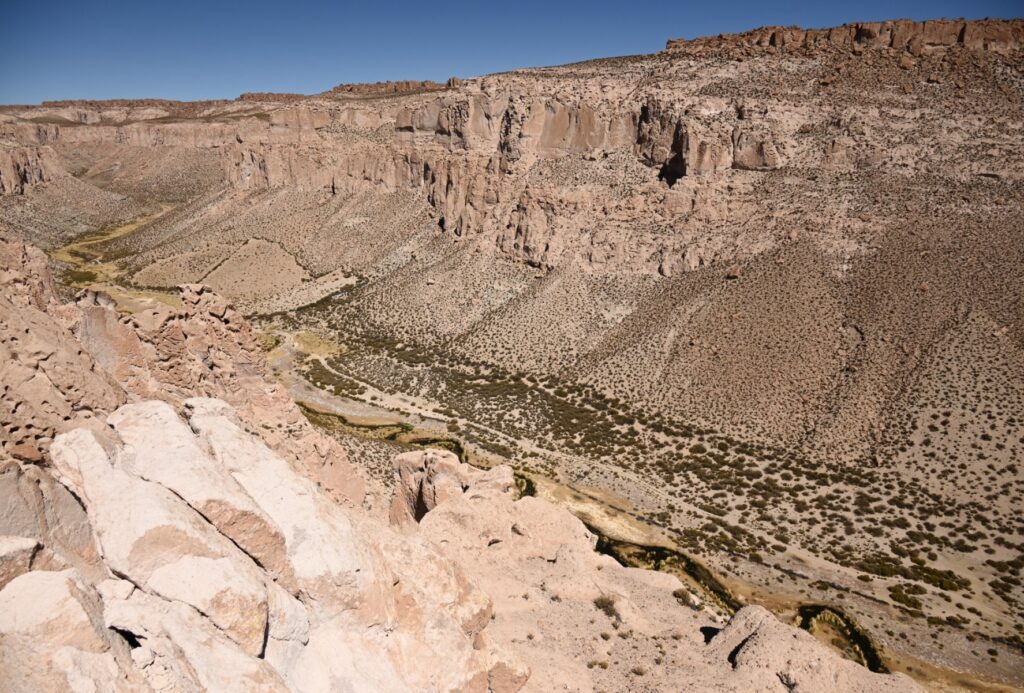
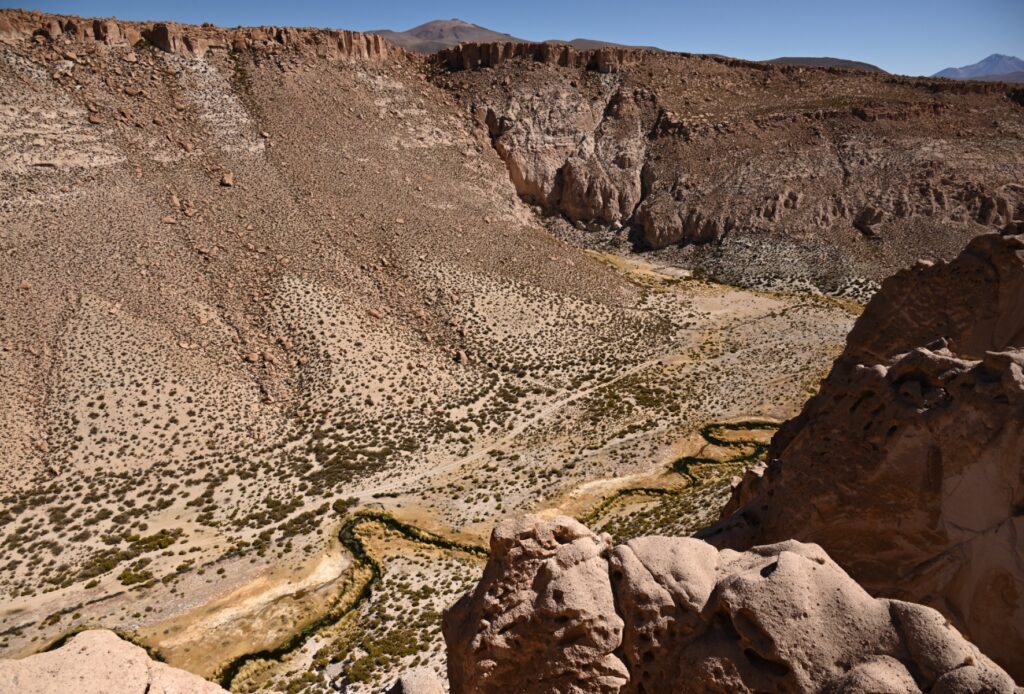
Our fifth stop: Anaconda Canyon. It earns its name from the river winding along the base of the gorge, twisting like a serpent. The scenery is striking—absolutely worth the detour.
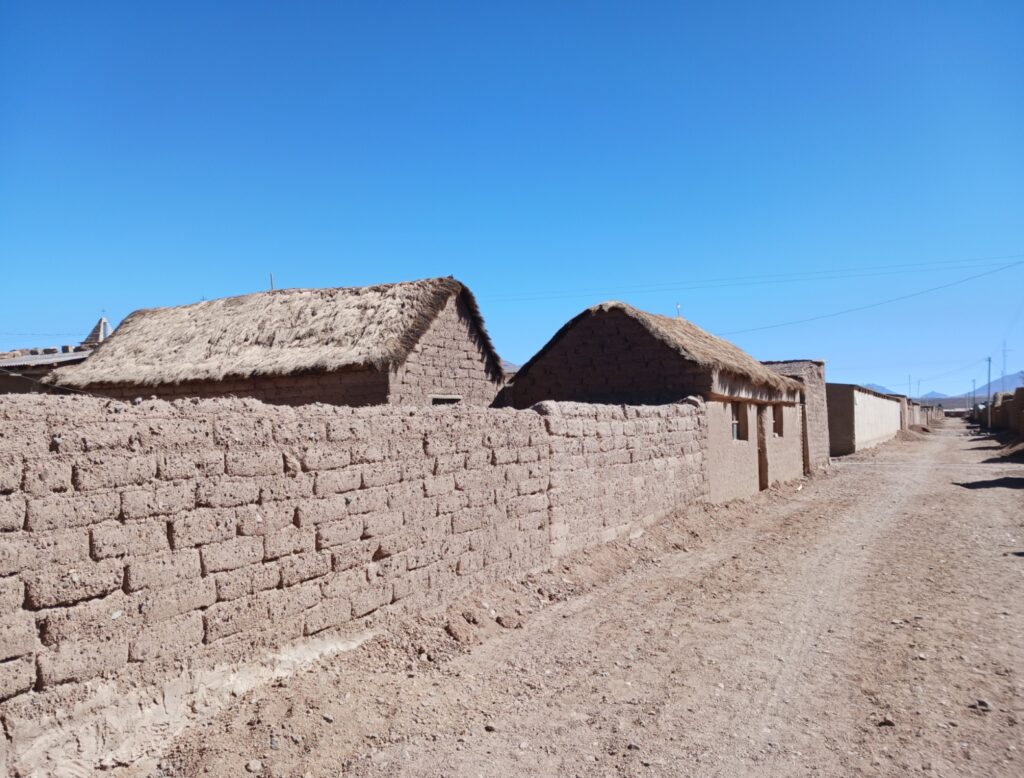
We then stop for lunch in a small village, just over an hour’s drive away.
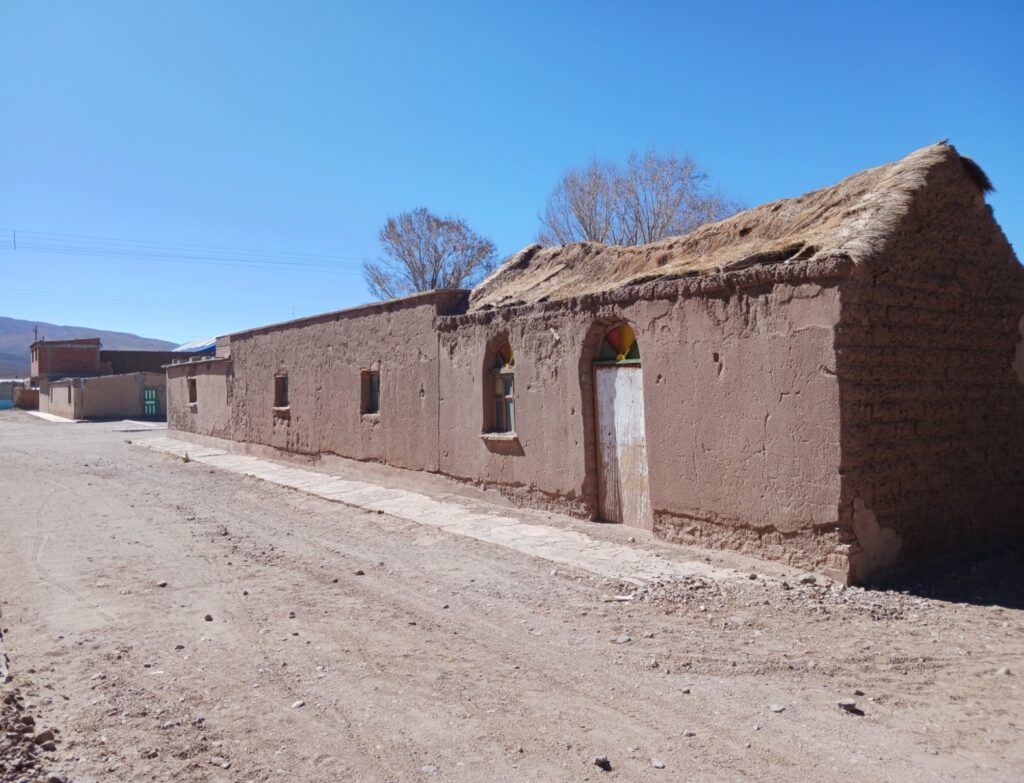
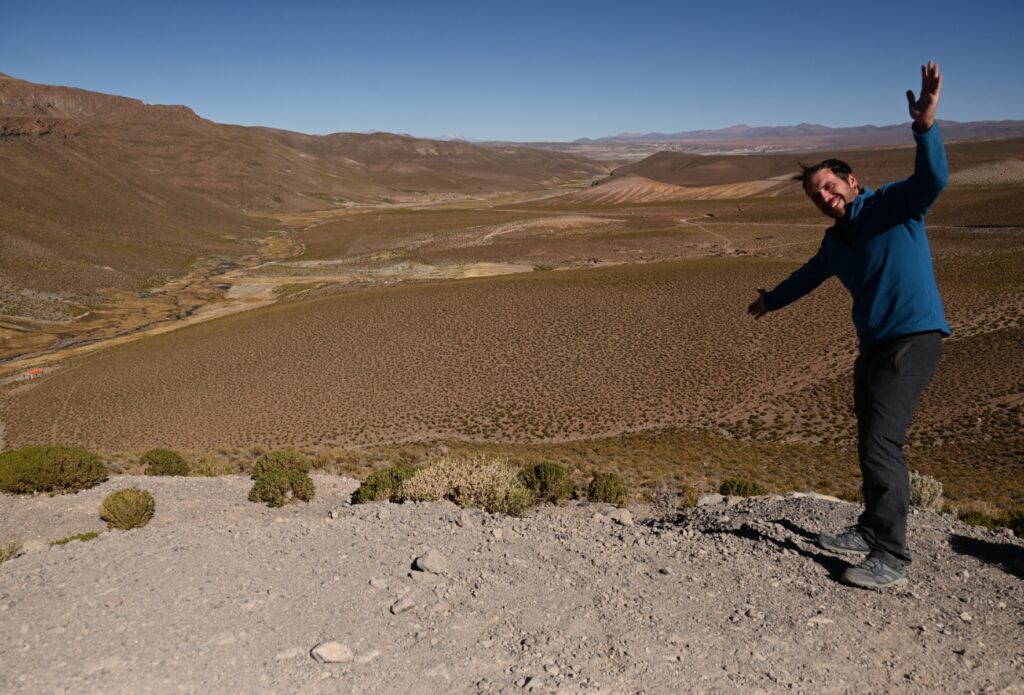
After lunch, the sixth stop: Sora Lookout. The valley views are breathtaking—though no photo could ever do justice to the vastness of this place.
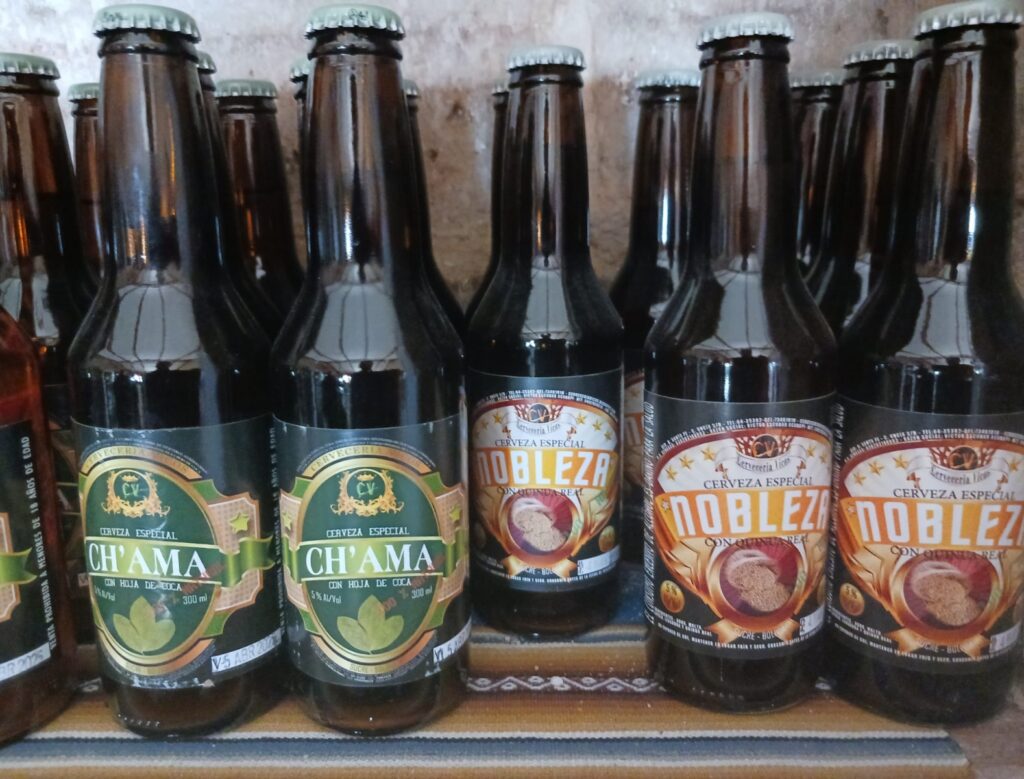
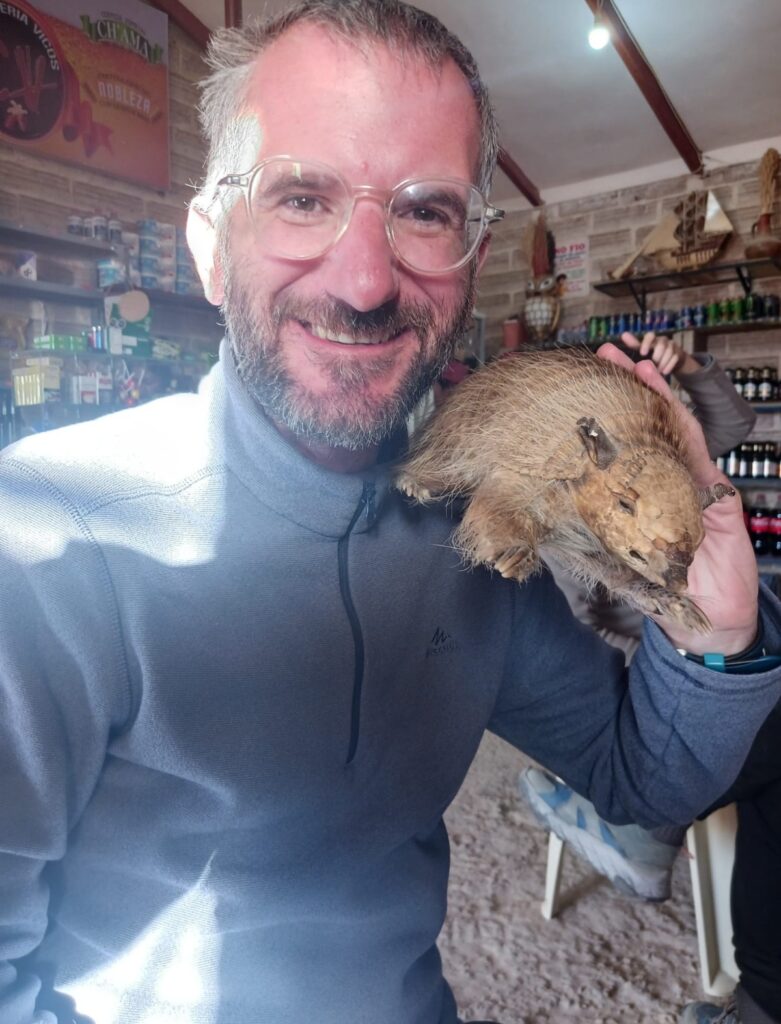
We end the day in Julaca—a small mining town. Our final stop is a quirky grocery-bar hybrid, where we grab drinks amid shelves stocked with artisanal beers (honey-infused, coca-leaf, and quinoa varieties).
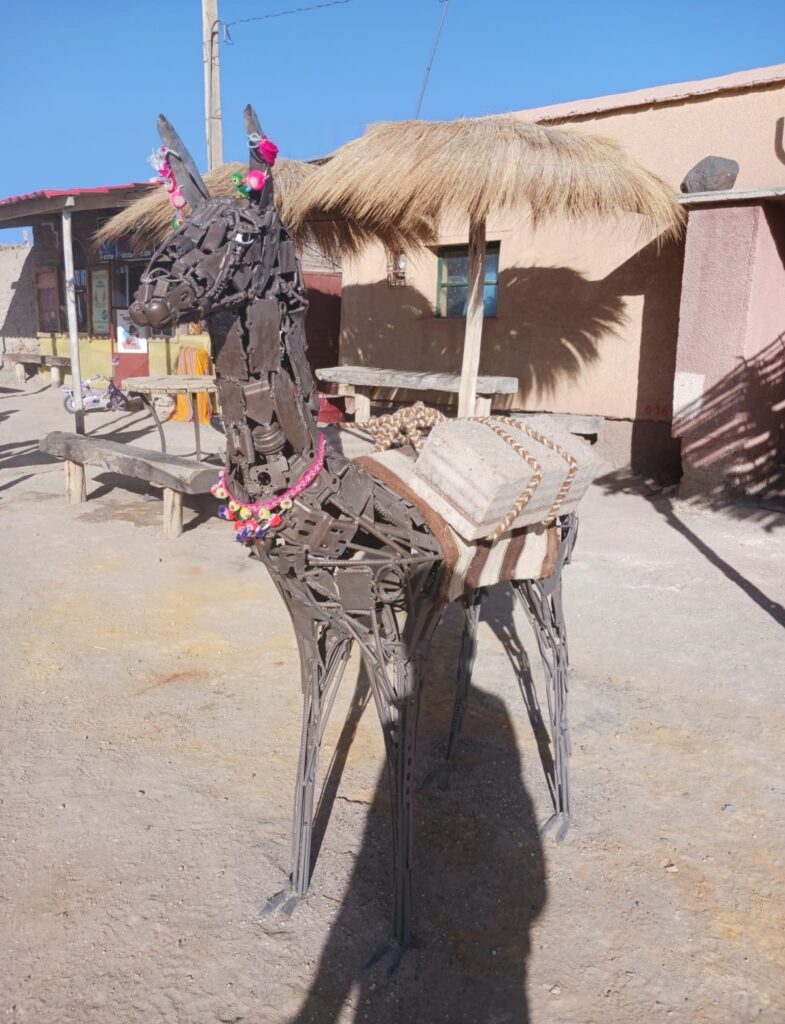
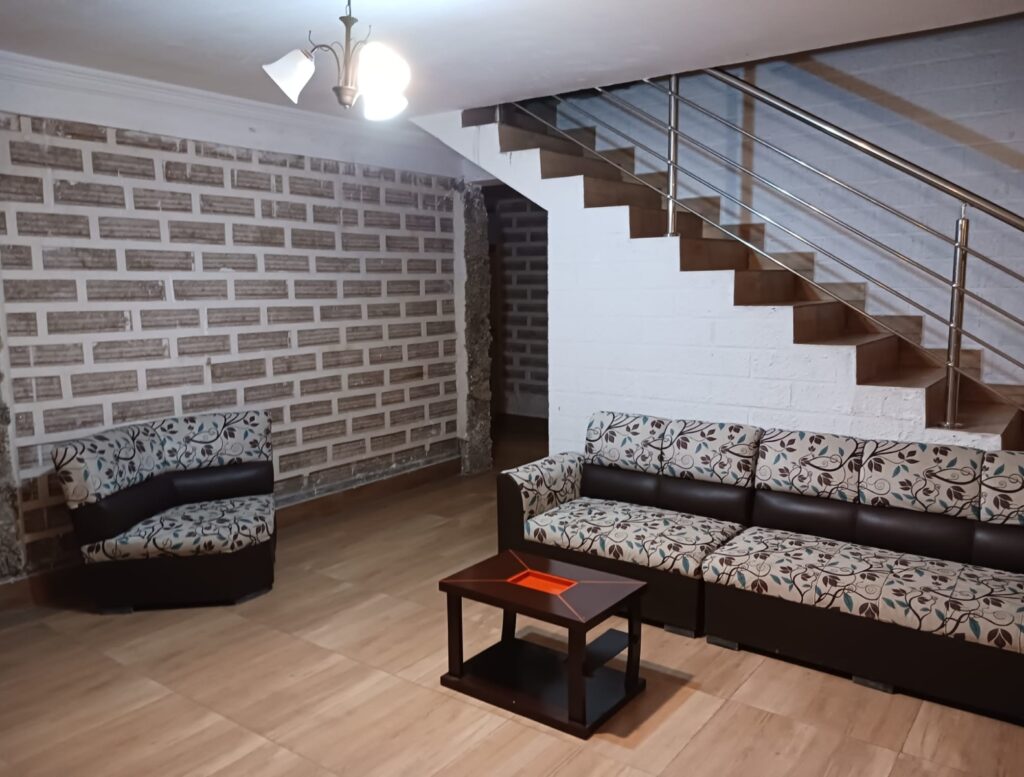
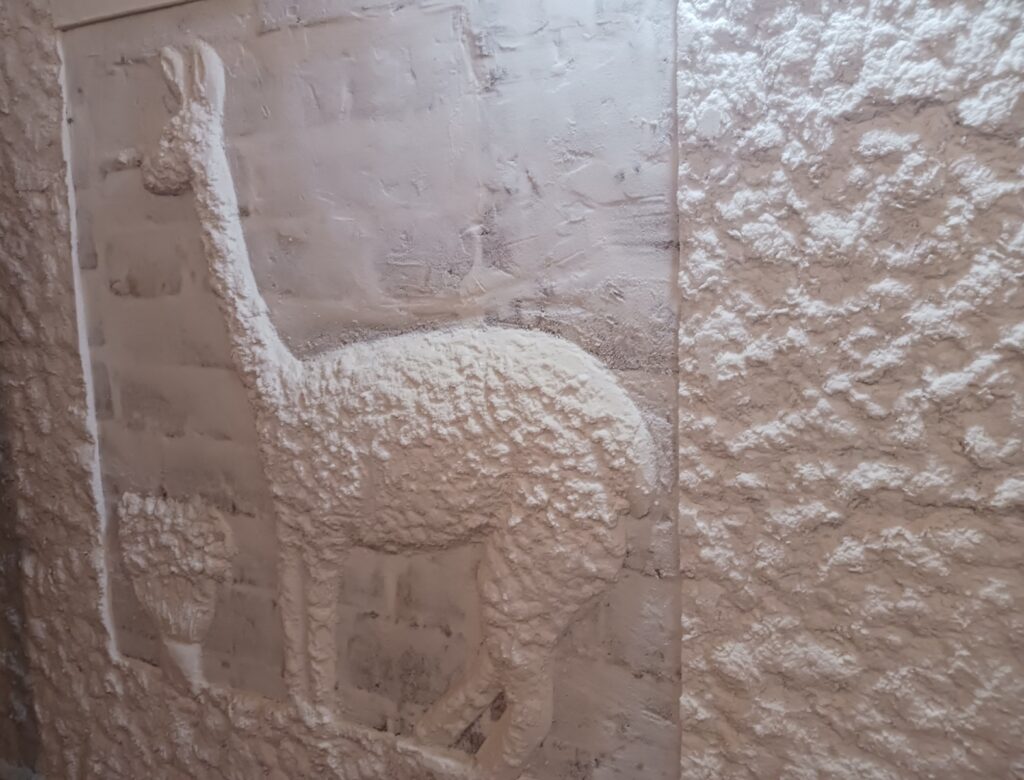
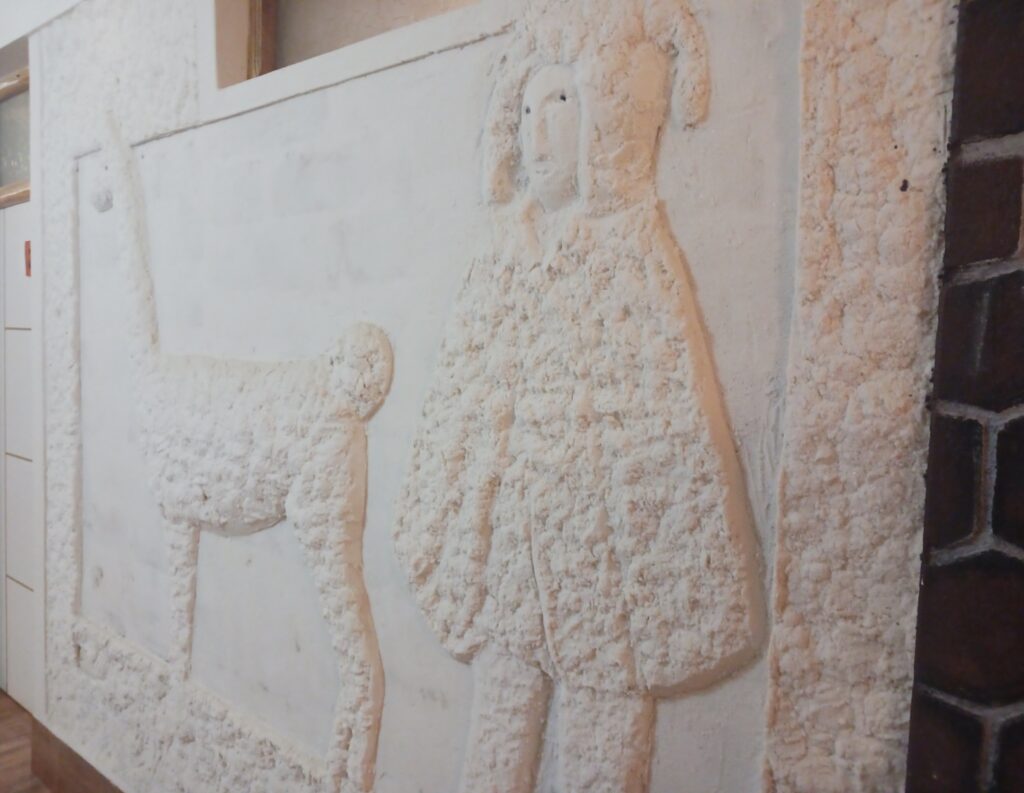
We spend the night at the agency’s hotel, just minutes from the Uyuni Salt Flats. The walls and ceilings are made entirely of salt—a stark (and far more comfortable) contrast to last night’s bare-bones lodging.
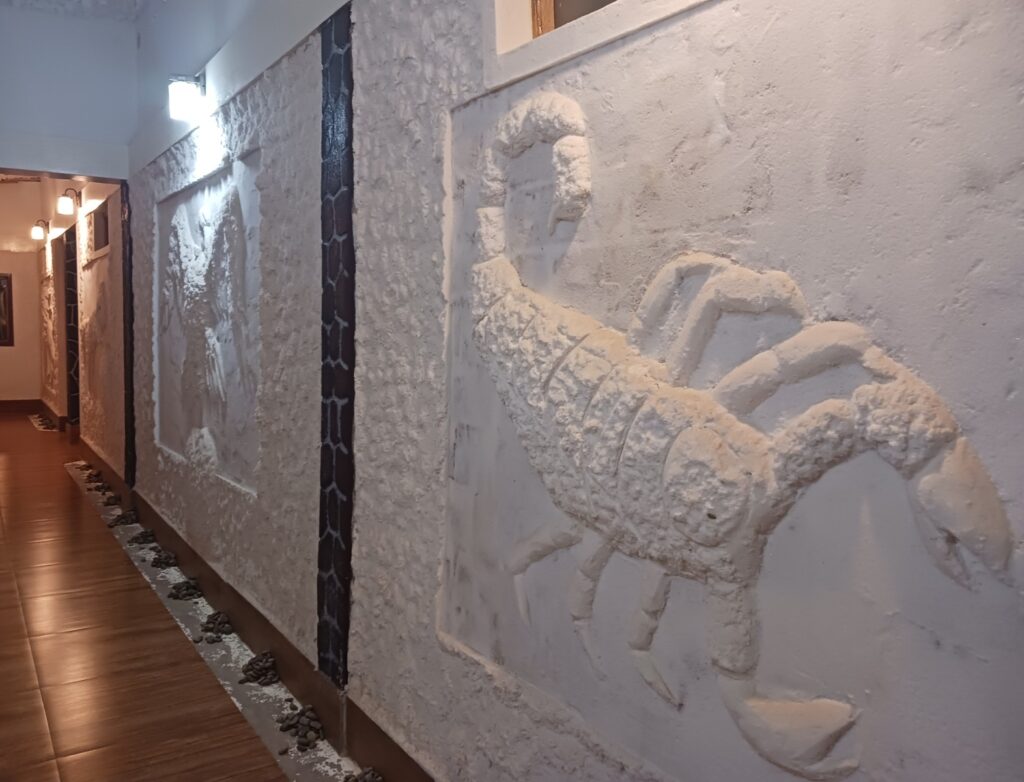
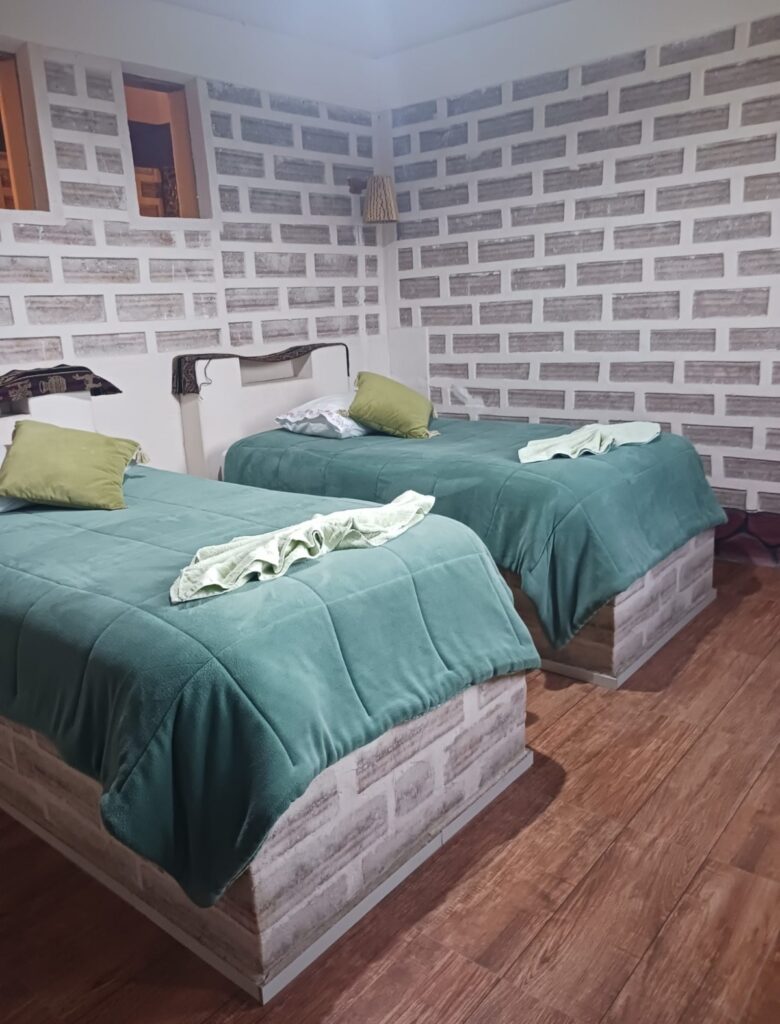
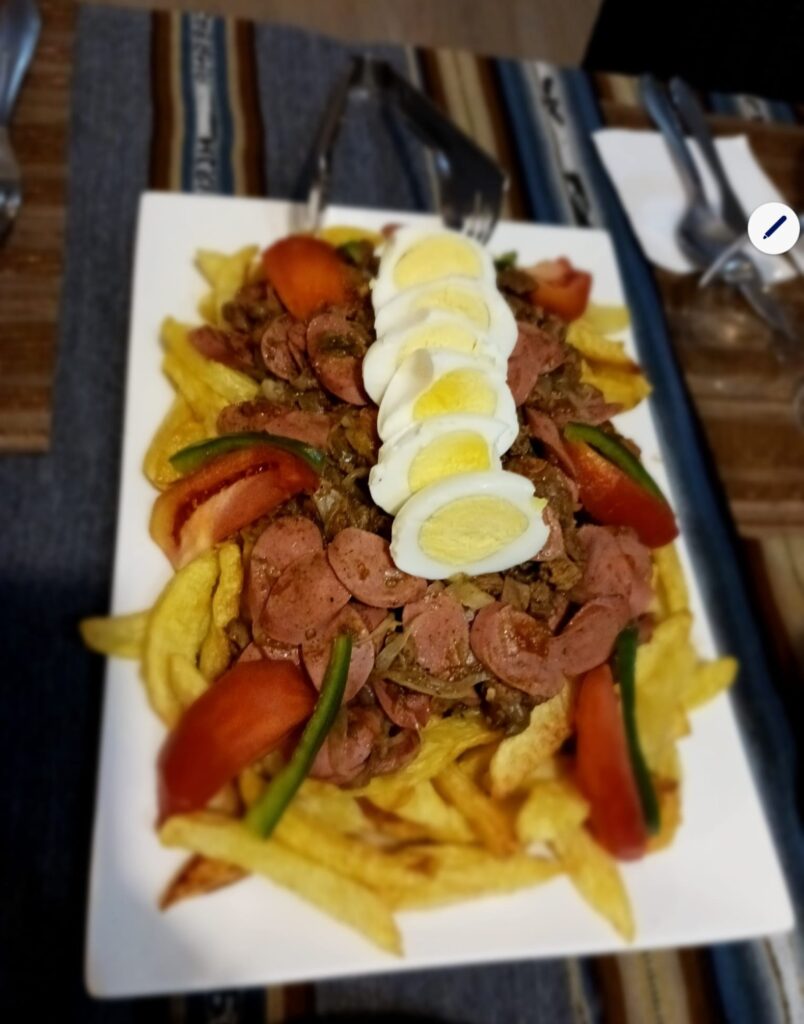
Day 3: We left the hotel at 5:30 AM to witness sunrise over the salt desert. While the sunrise itself was quite beautiful, the true marvel was our first encounter with the vast salt flats—an endless white expanse stretching to the horizon.
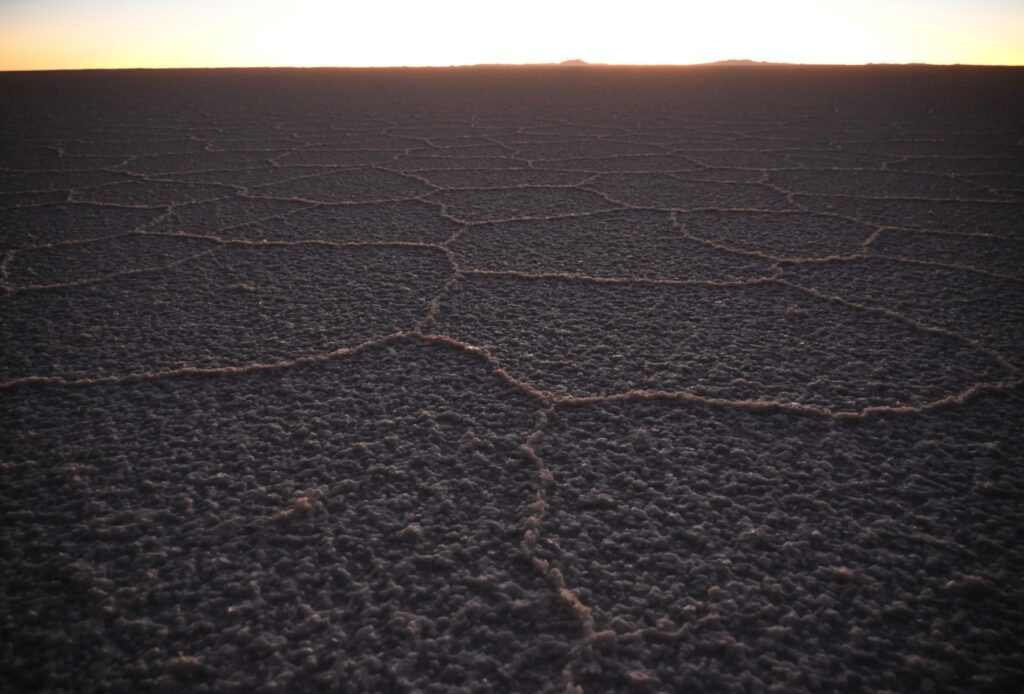
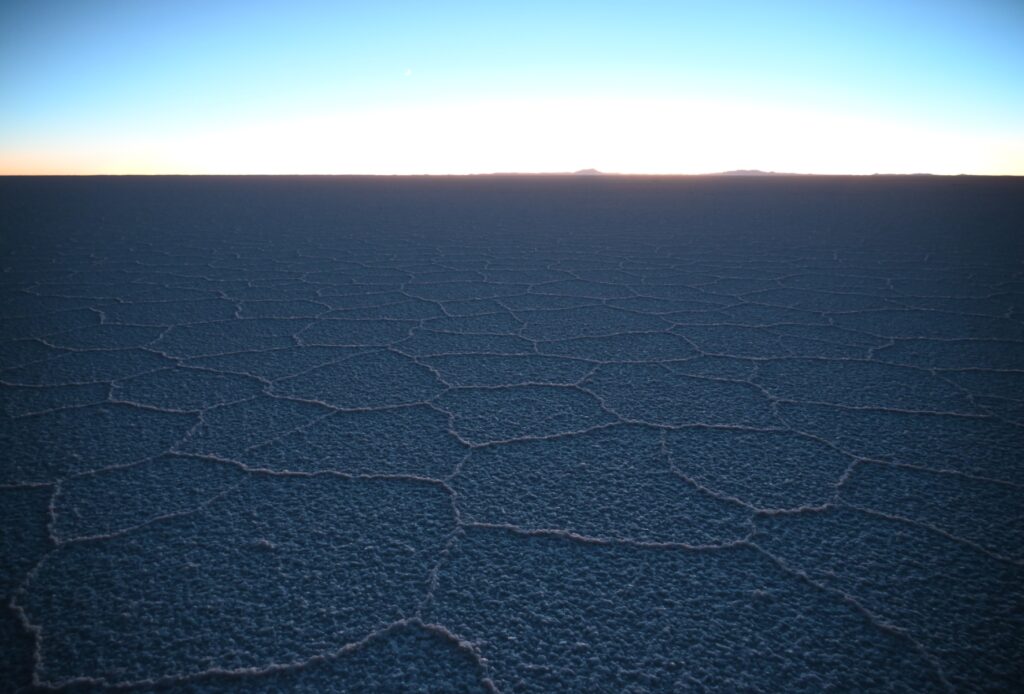
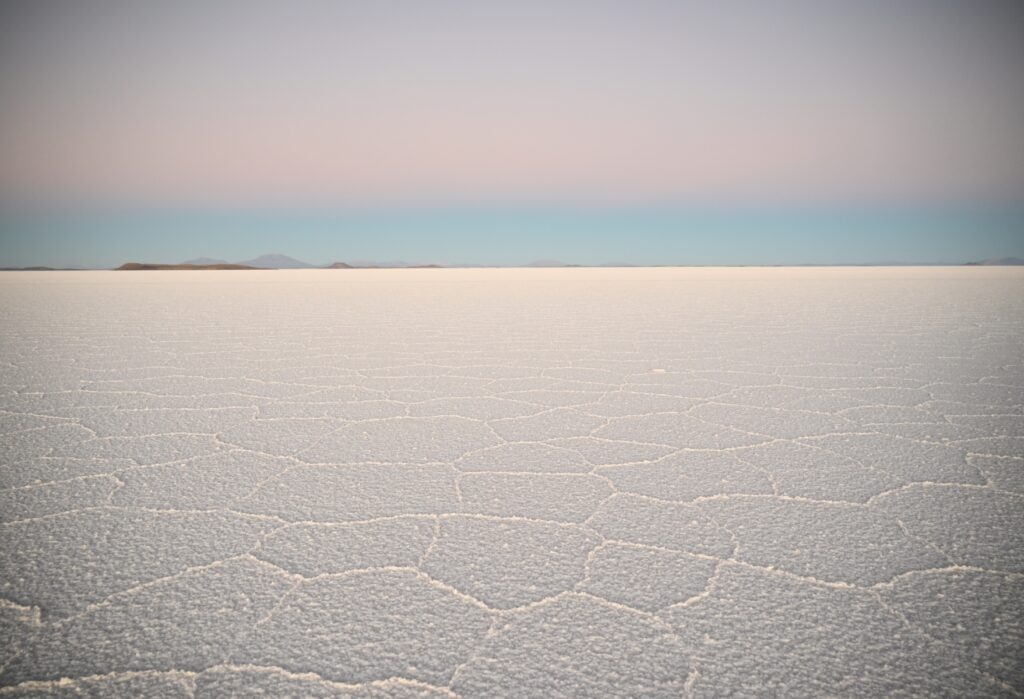
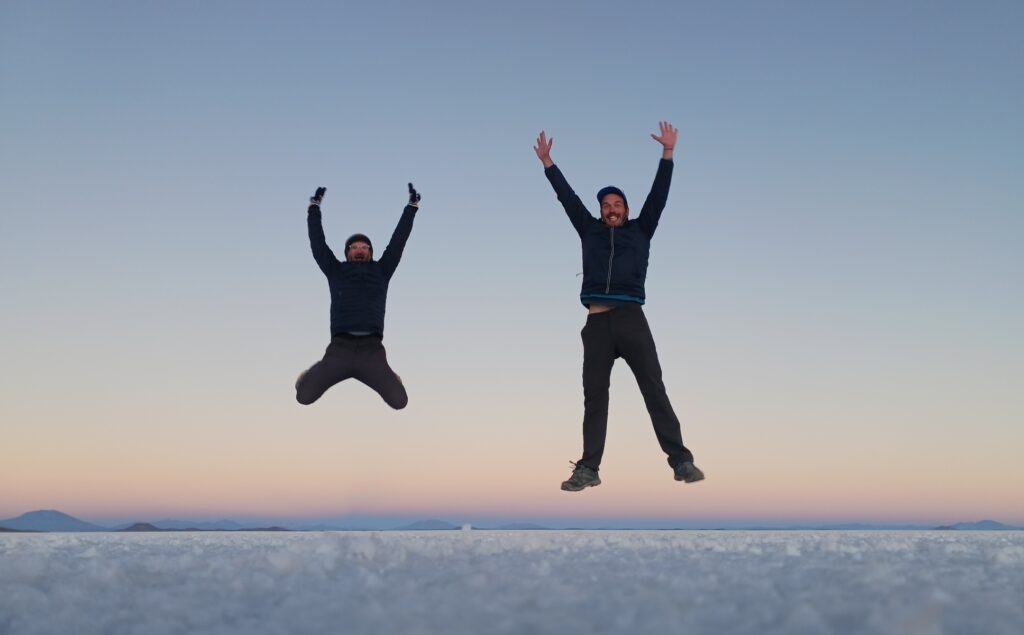
The whiteness grows increasingly intense as the sun rises, becoming truly dazzling by midday. To pass the time—and thaw out a bit (it’s freezing!)—our guide entertains us by filming playful perspective videos on the salt.
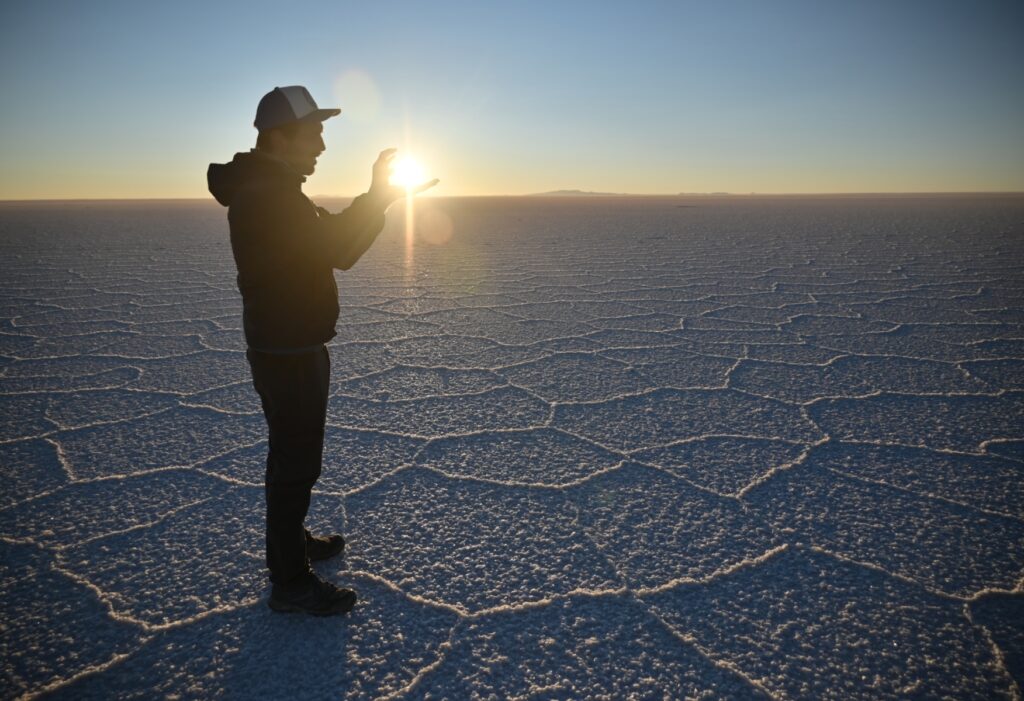

Once the sun is up, we head toward Incahuasi Island (“House of the Inca” in Quechua). In reality, it’s a lone hill rising from the heart of the salt desert.
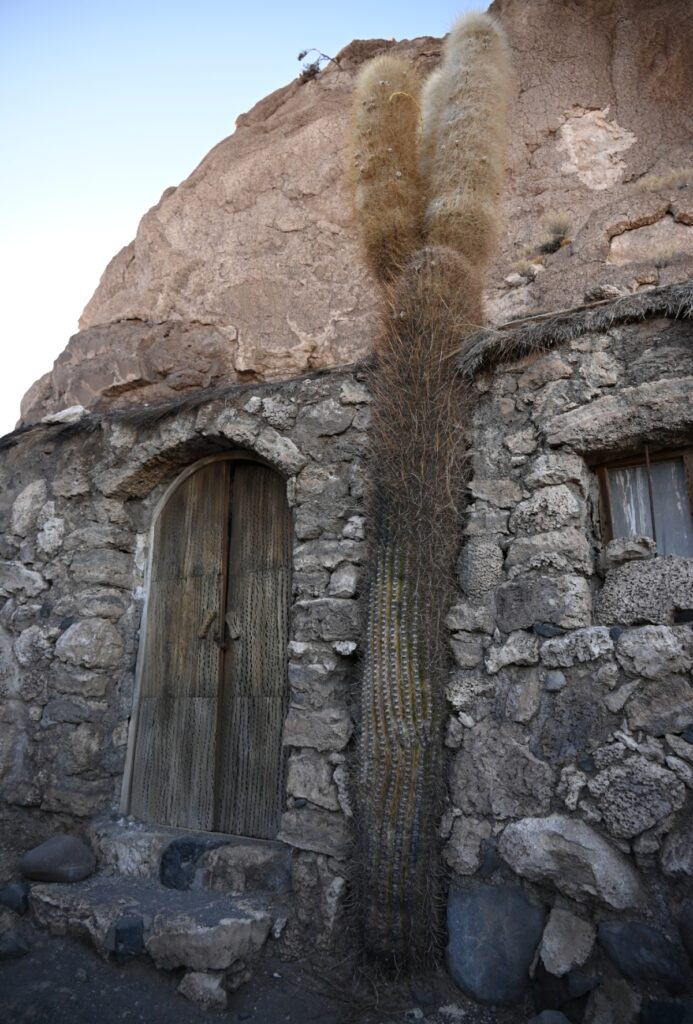
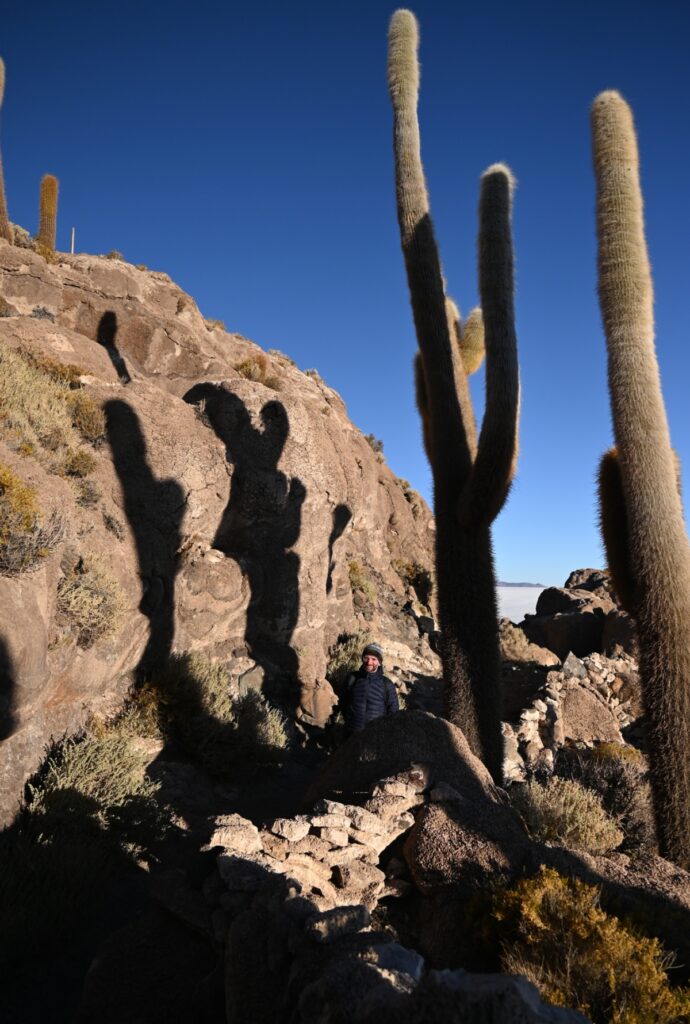
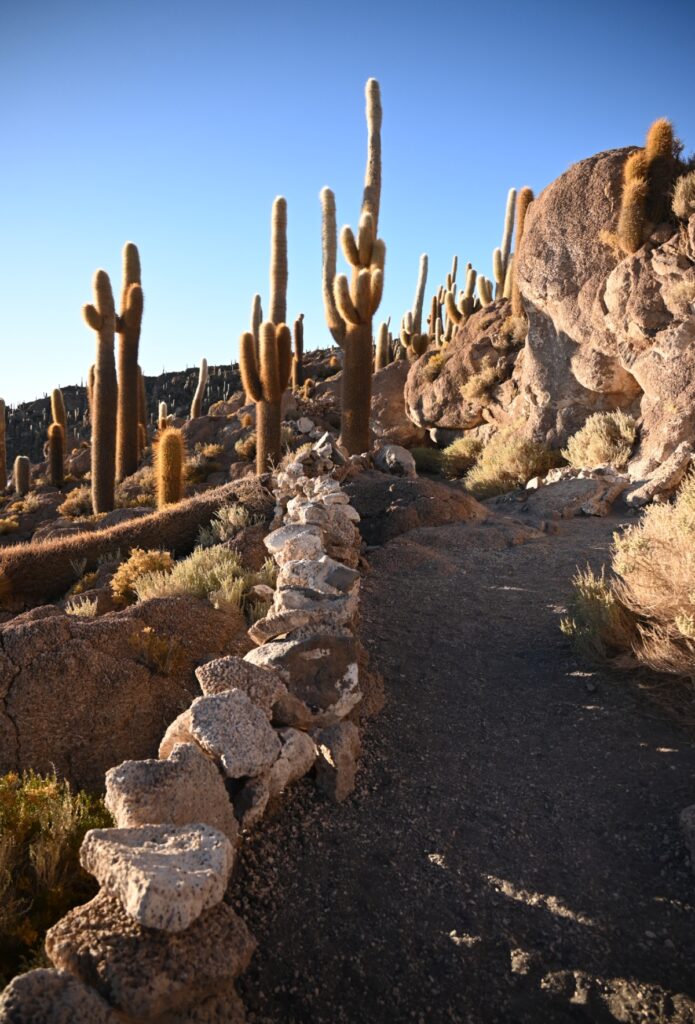
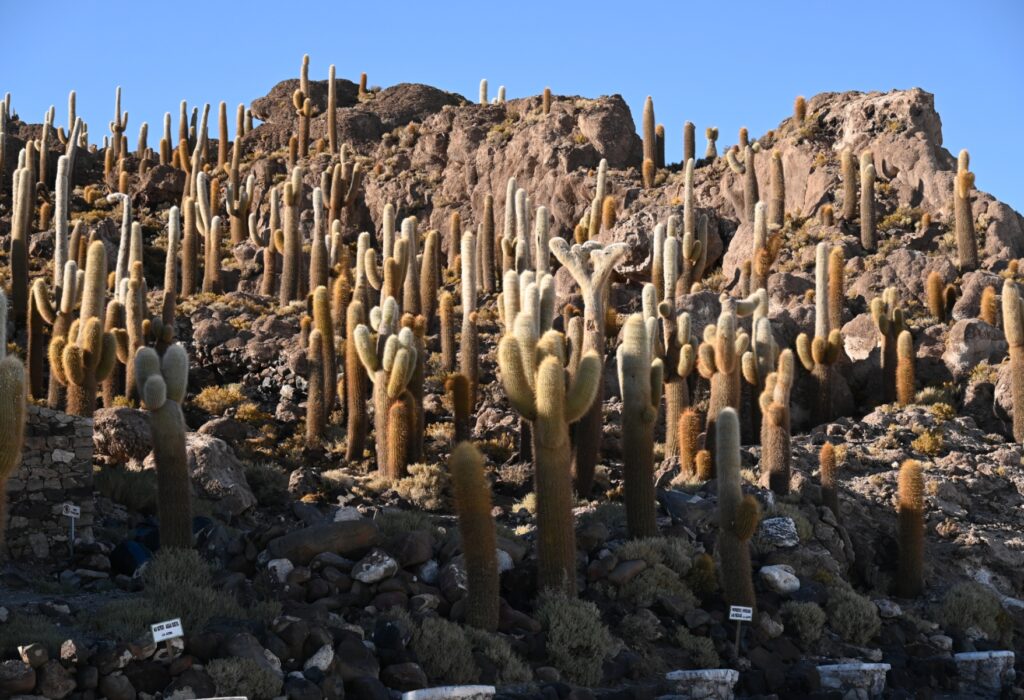
The paid entry grants access to this landscape studded with towering cacti. A narrow trail winds up to the hill’s summit, flanked by ever-larger cacti that seem to compete for grandeur. At the top? A sacrificial altar (yes, really!).
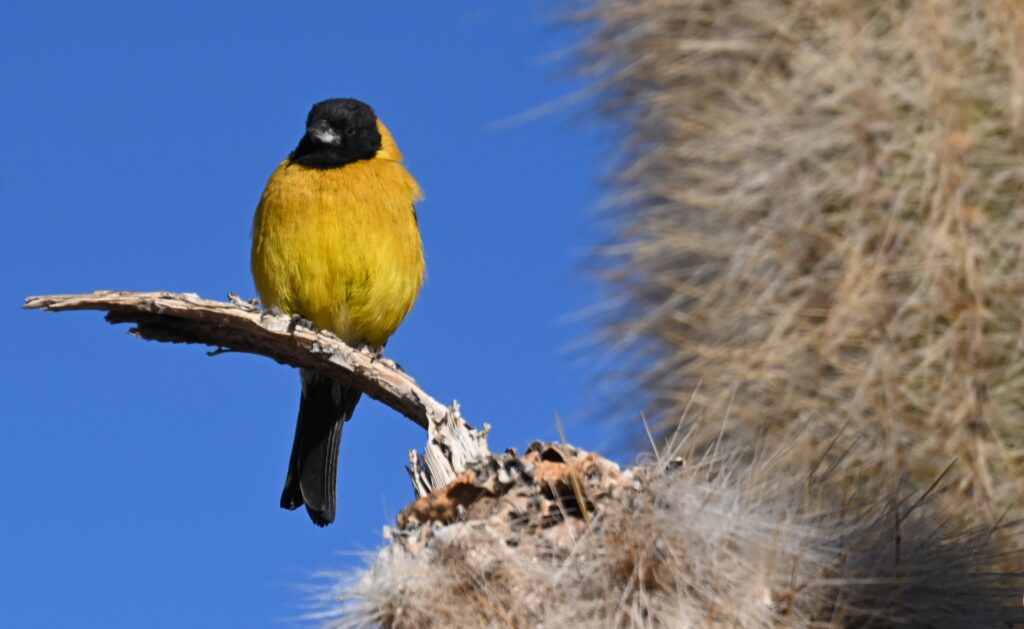
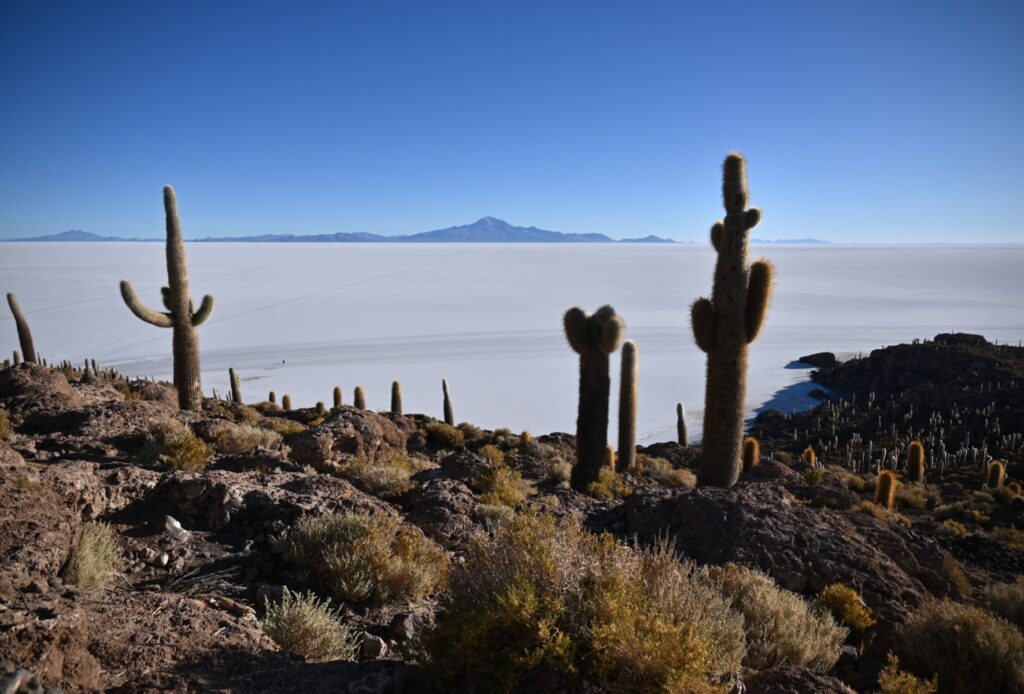
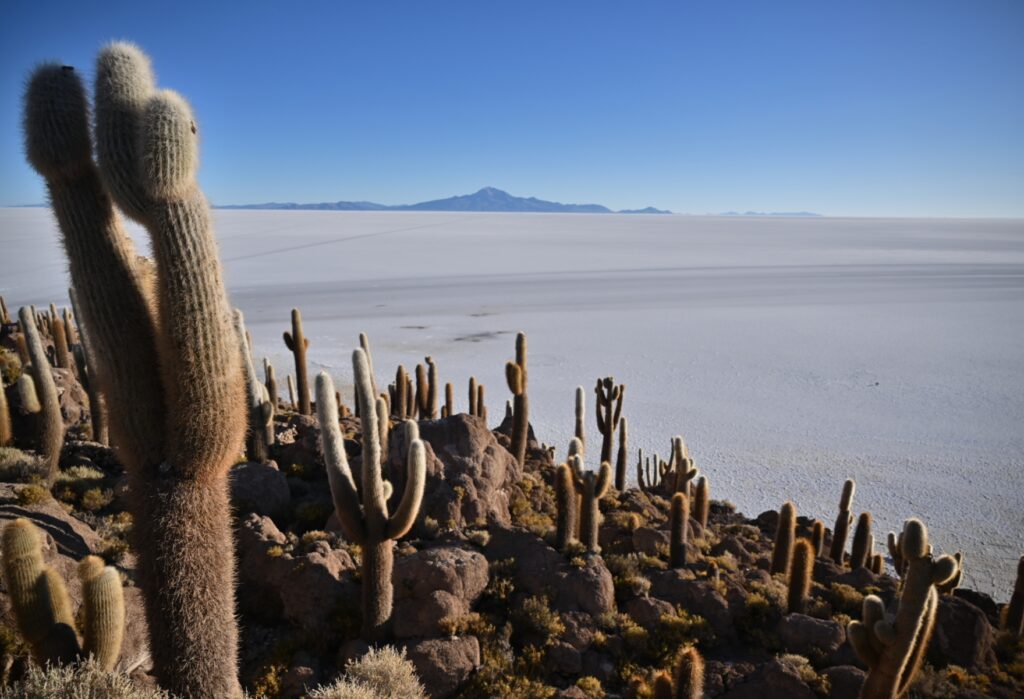
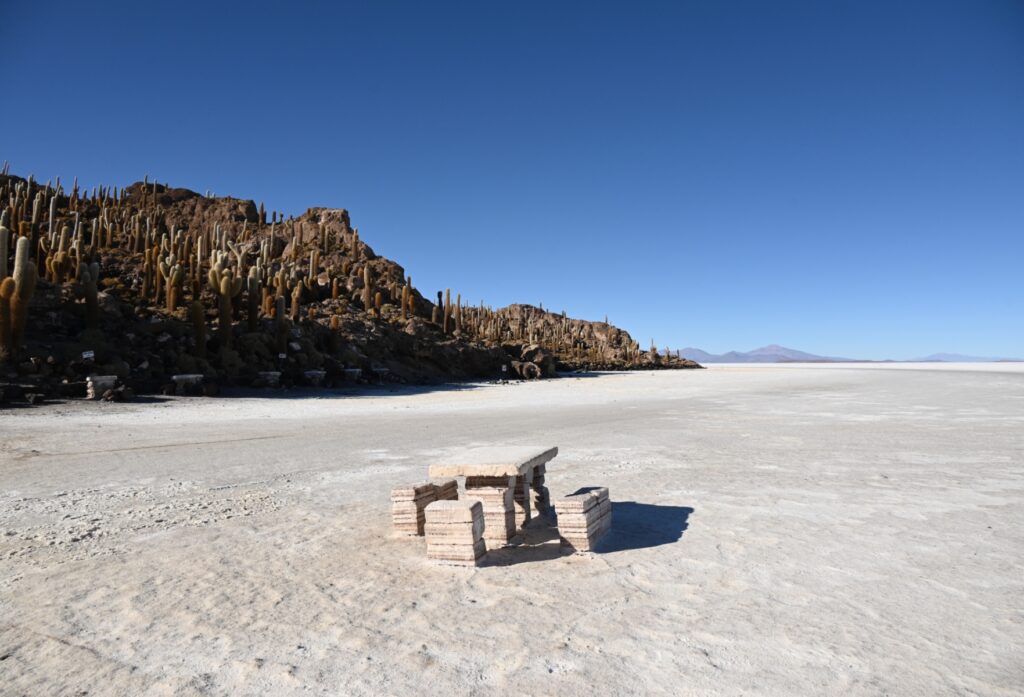
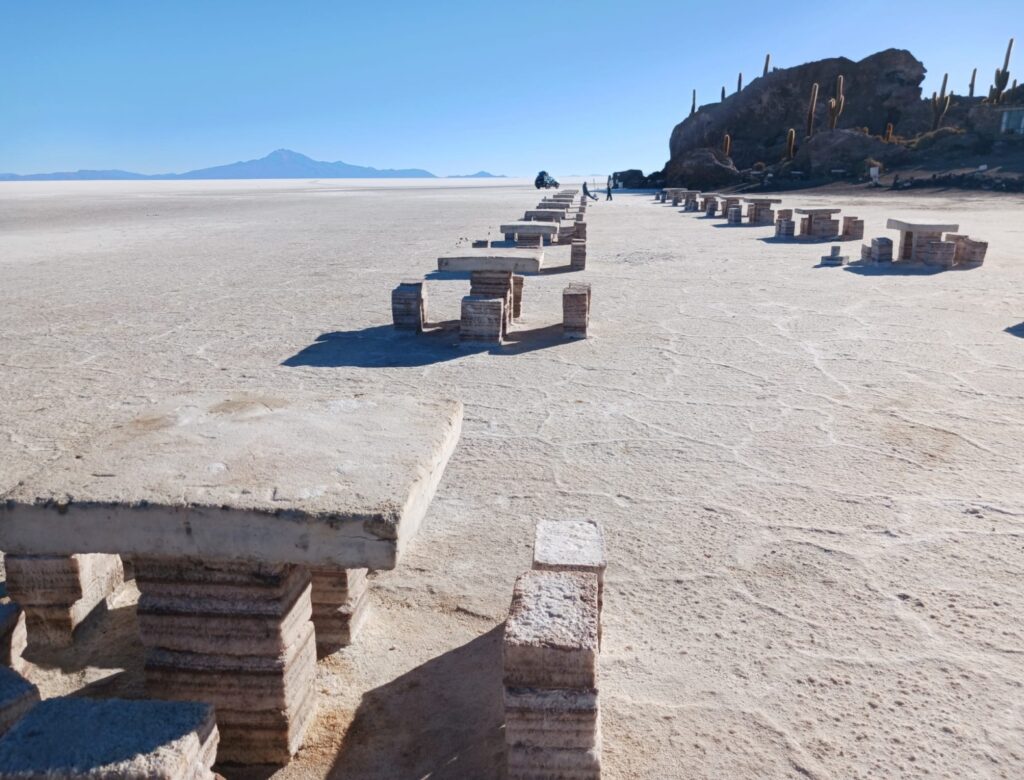
We eat breakfast on salt-carved furniture—because when in the world’s largest salt desert, even your chair is literally seasoned.
Next, we drive to a random spot in the salt flats—it’s photo time! The endless white expanse creates a surreal depthless backdrop, perfect for mind-bending perspective tricks.
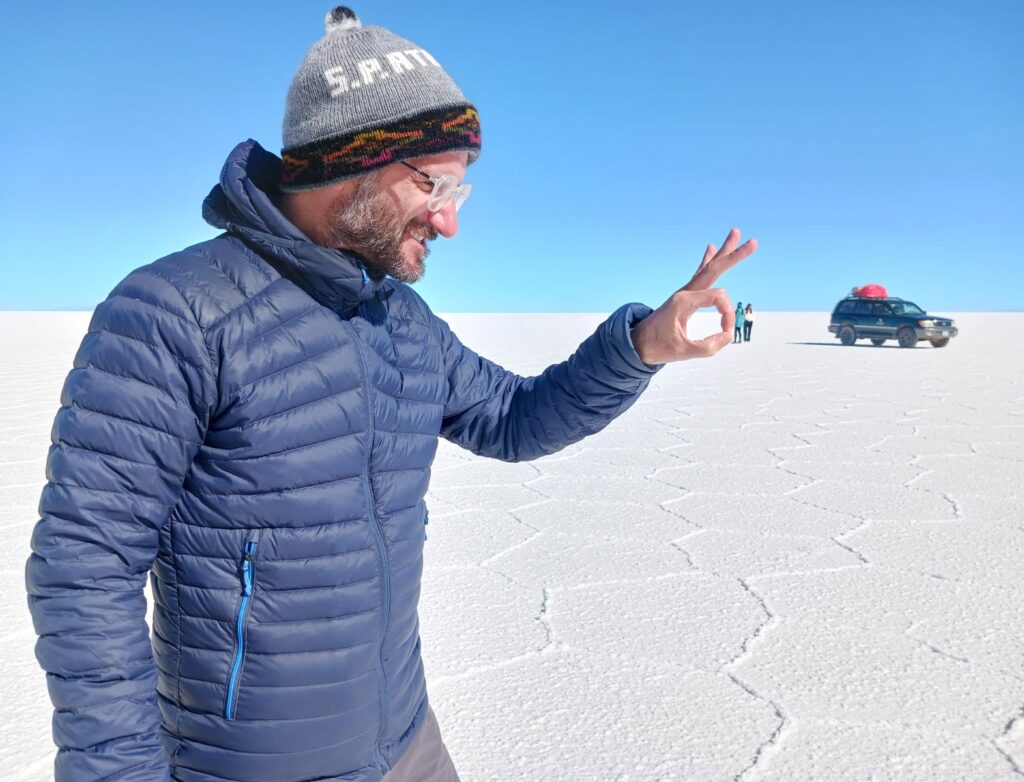
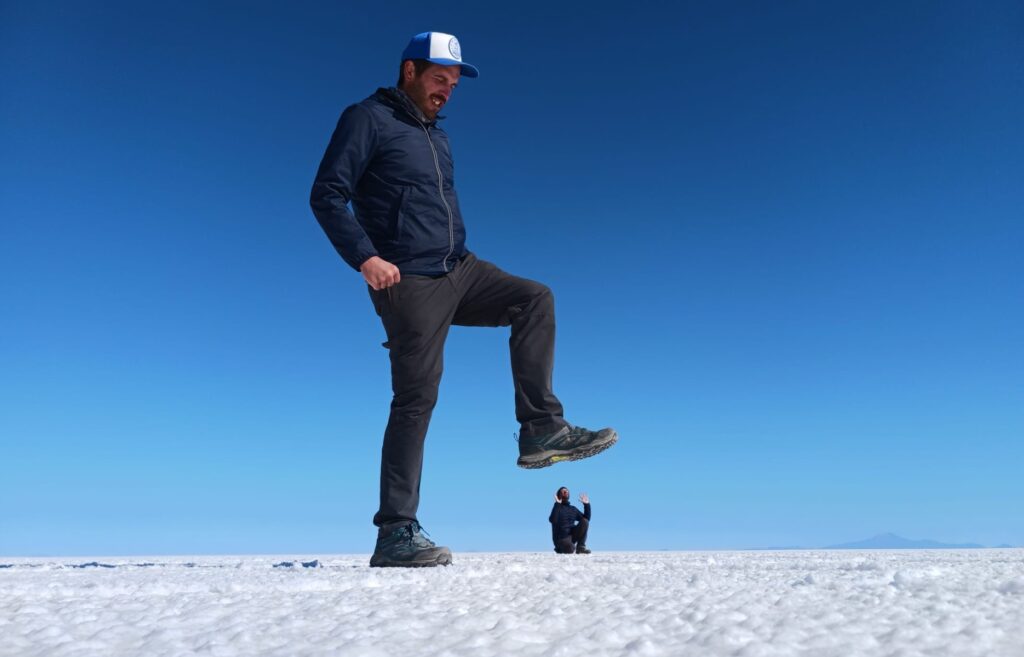
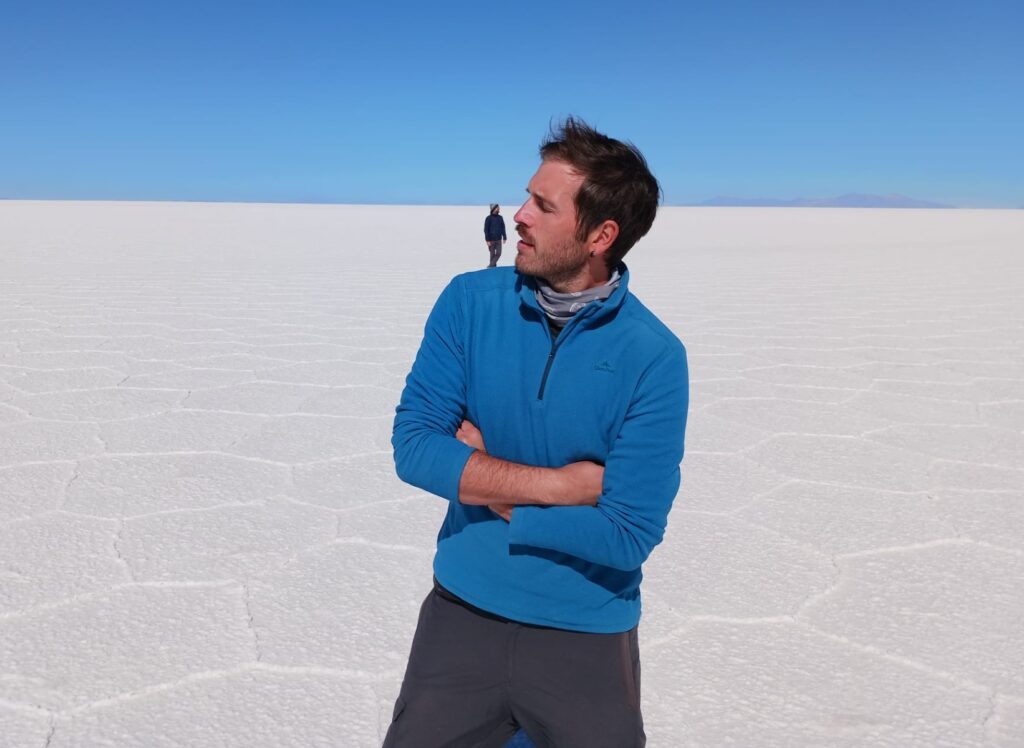
So we take photos “plucking” François like a carrot—or dramatically “pulling” Benjamin out of a baseball cap.
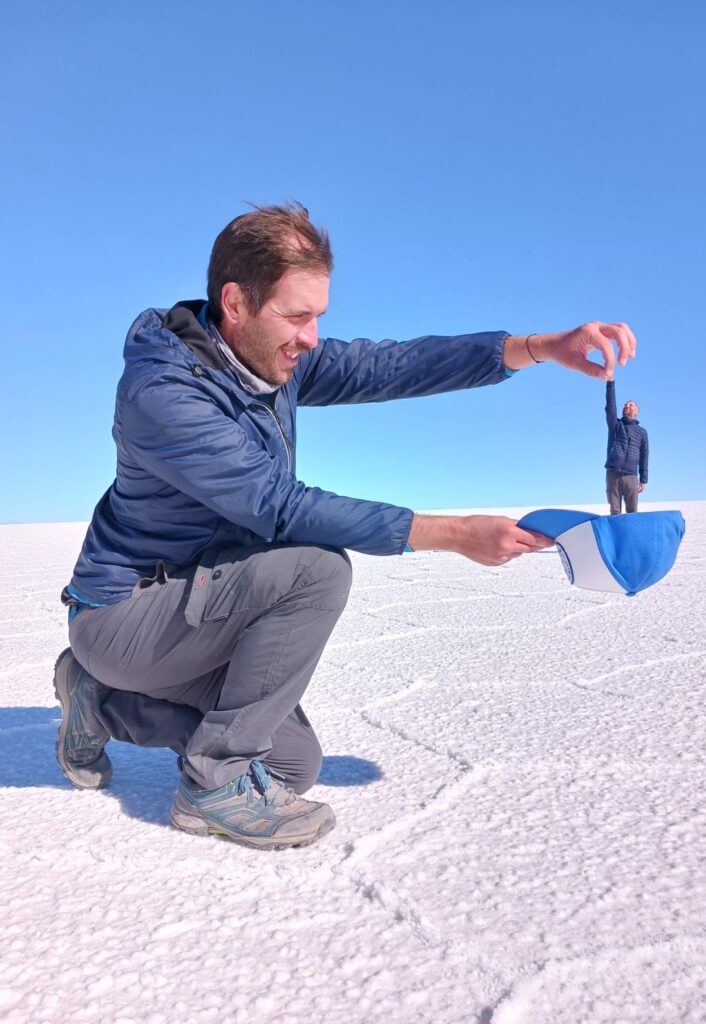
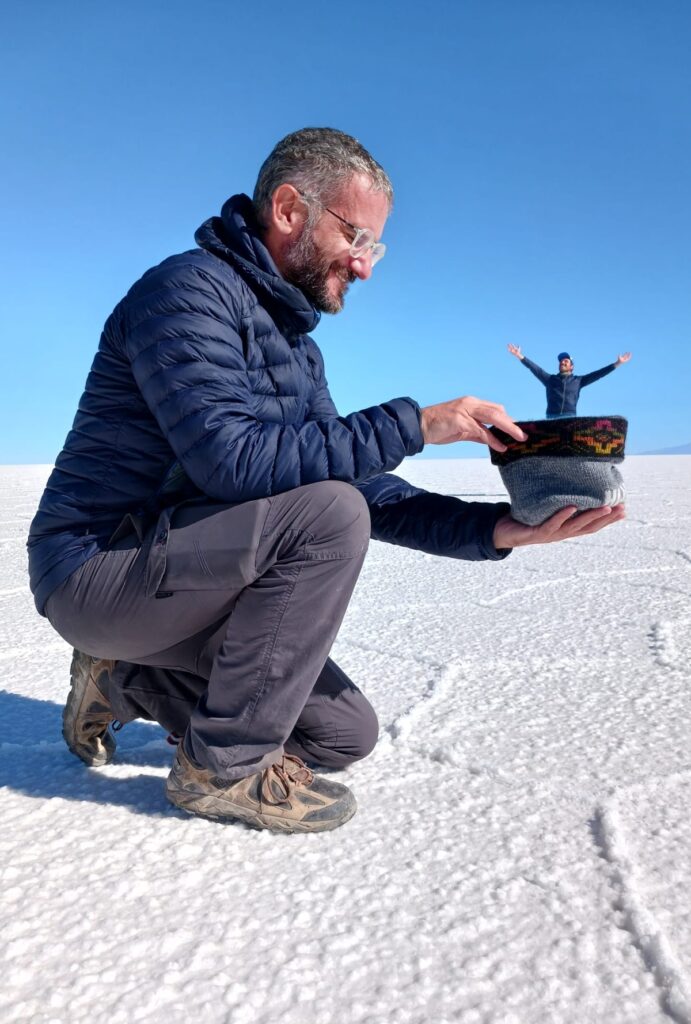
Next, we head to the Salt Hotel-Flag Museum—a building whose only distinction is being entirely salt-constructed. Inside, a shop sells salt-made trinkets (statues, boxes, fridge magnets…) at steep prices. (Spoiler: We’ll find identical items for half the cost at our next stop.)
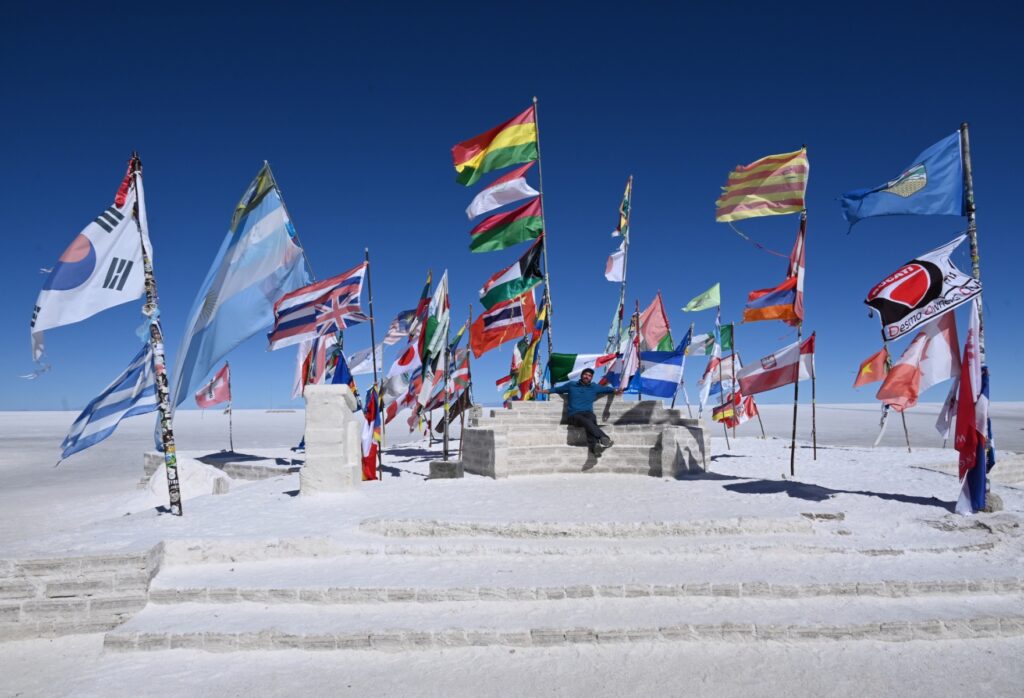
This stop takes us to a commercial street lined with nearly identical shops—all selling the same overpriced salt trinkets, alpaca wool clothing, and assorted souvenirs.
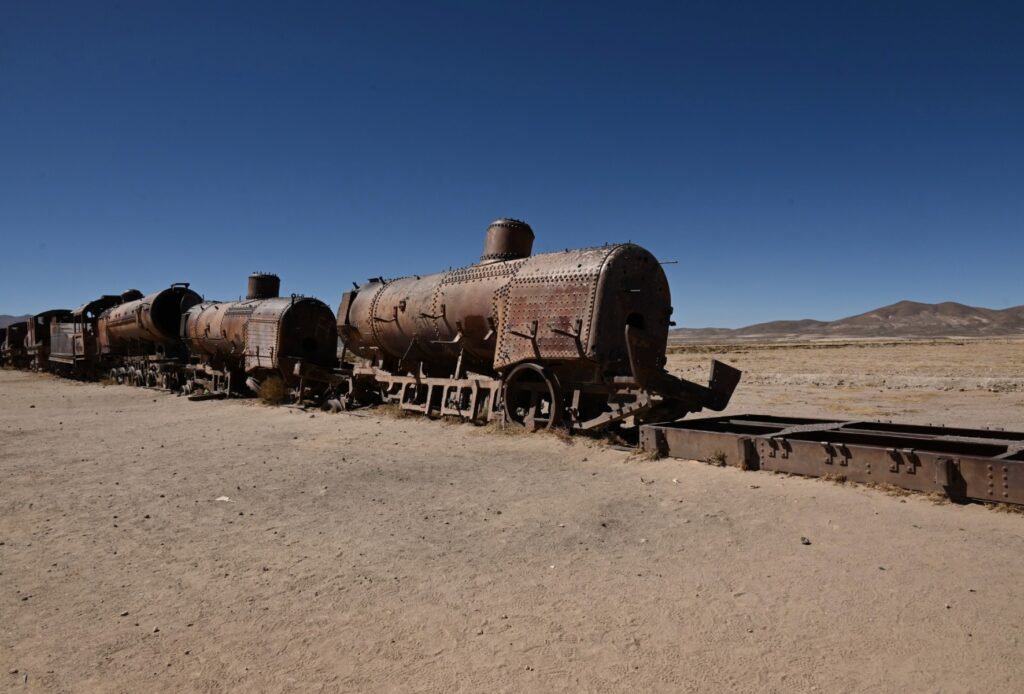
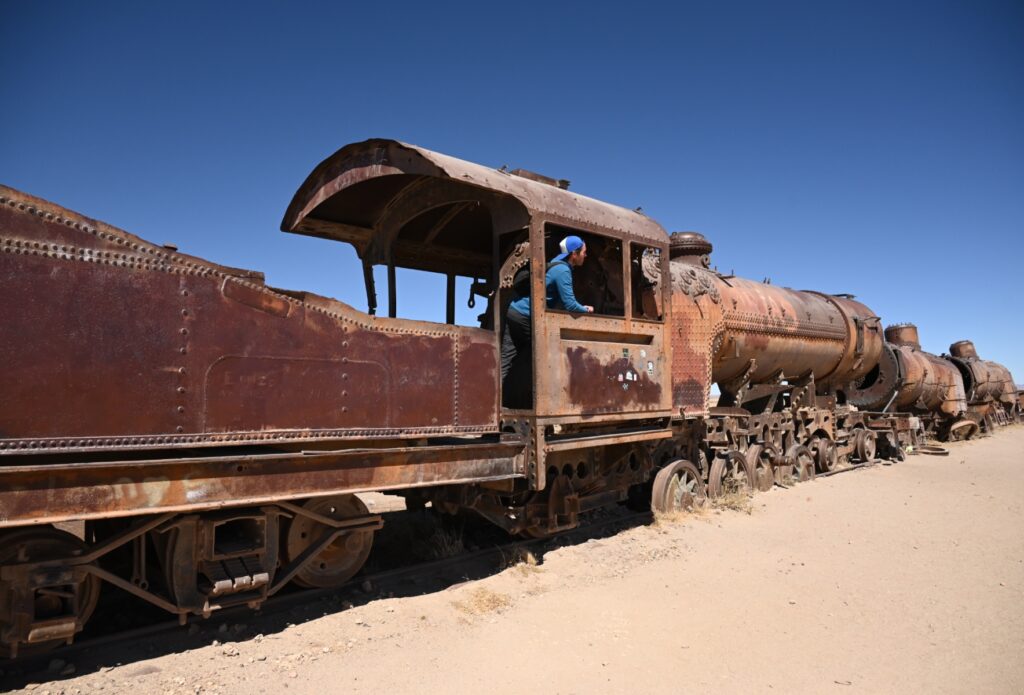
We wrap up the tour with a stop at Uyuni’s Train Cemetery—snapping a few final photos before heading off to lunch.
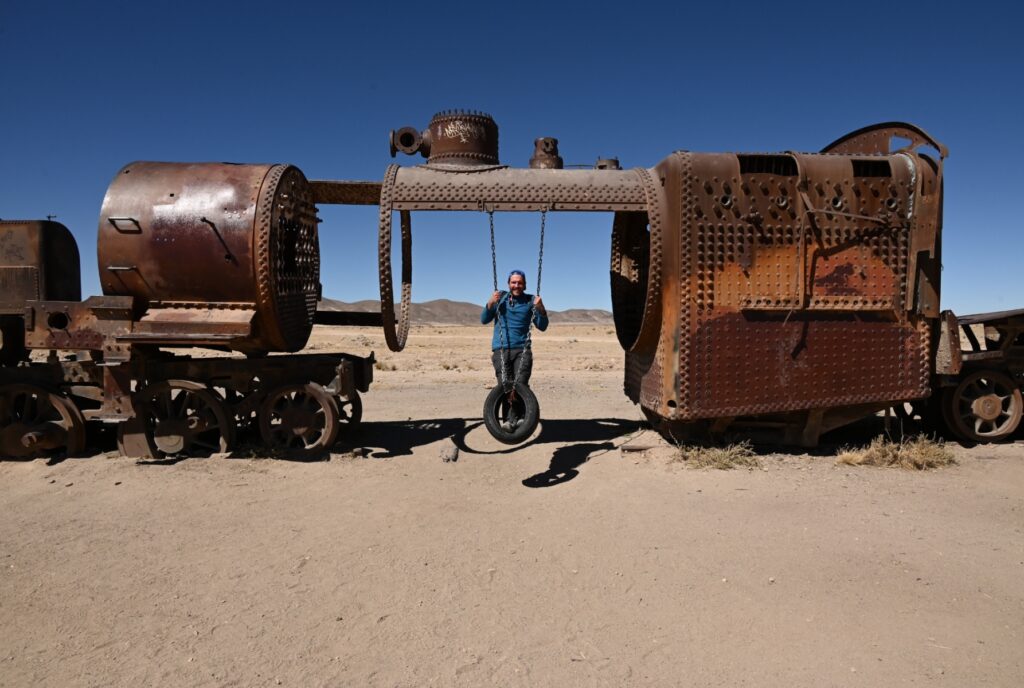

After lunch, our driver drops us off at the hotel.
We head out to run a few errands before returning to unwind with a TV series.
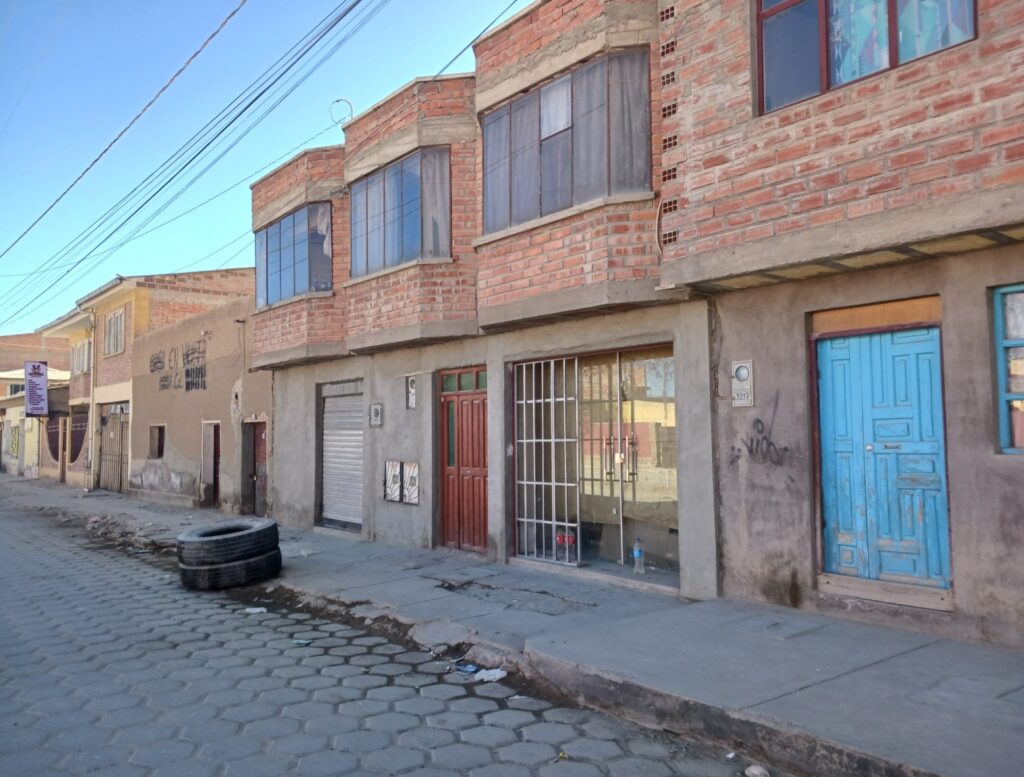
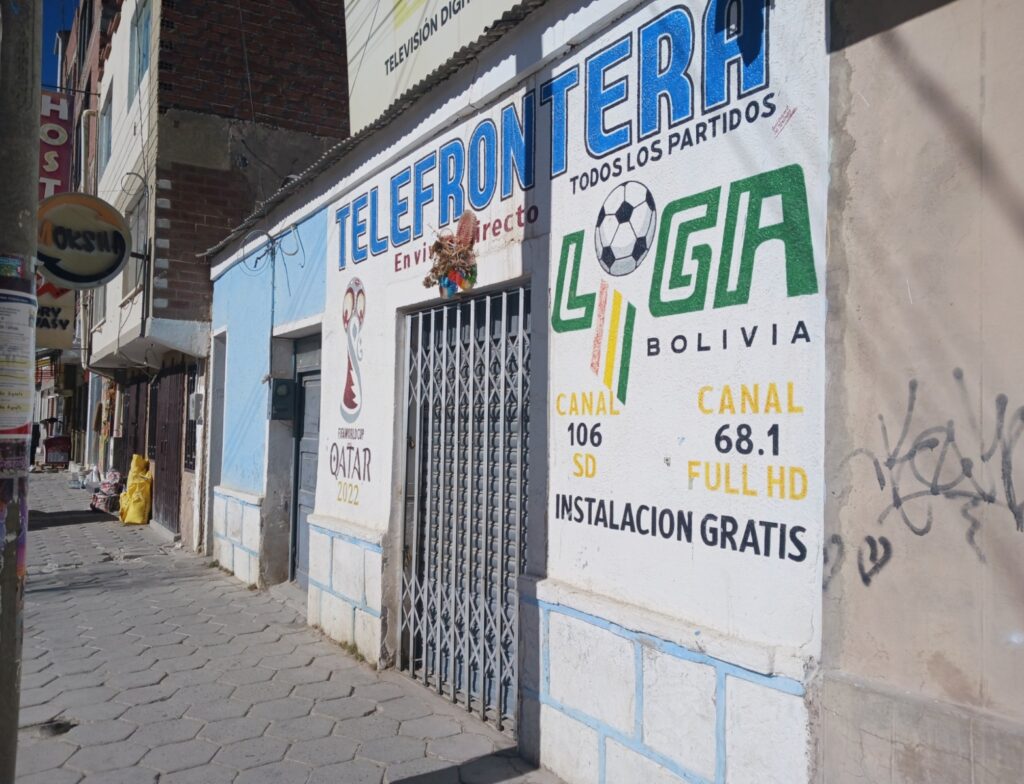
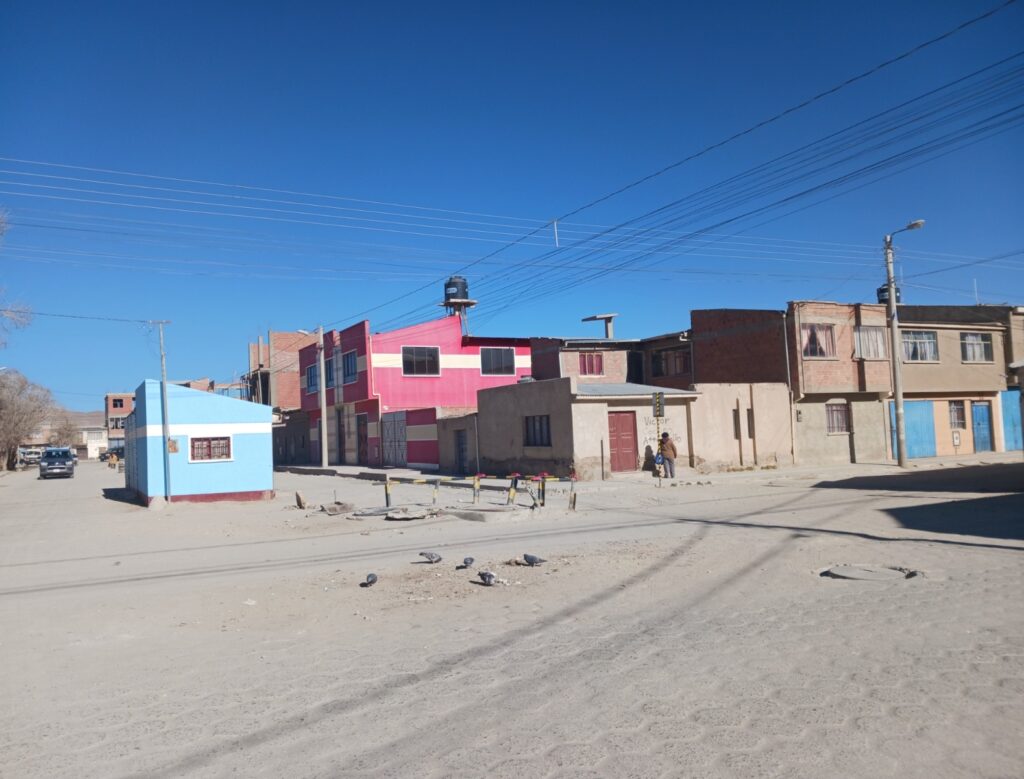
We’ll explore the town tomorrow.
Summary of these three days of touring: it lacks consistency. The most beautiful sites are on the first and last days, while the sites on the second day are more anecdotal. Comfort is also hit-or-miss—while the first night is terrible, the second is really great, though unfortunately cut short by the sunrise. The driver-guide is quite knowledgeable and answers all questions (though only in Spanish, unfortunately). In the end, communal living wasn’t so bad. We were lucky to be with friendly and easygoing fellow travelers.
Day 4: The night was tough for François. A severe case of food poisoning had him rushing to get up multiple times throughout the night. During the day, Benjamin plays nurse and goes out to run a few errands. François is too weak, and Benjamin hasn’t had a wink of sleep.
We’re hanging around at the hotel.
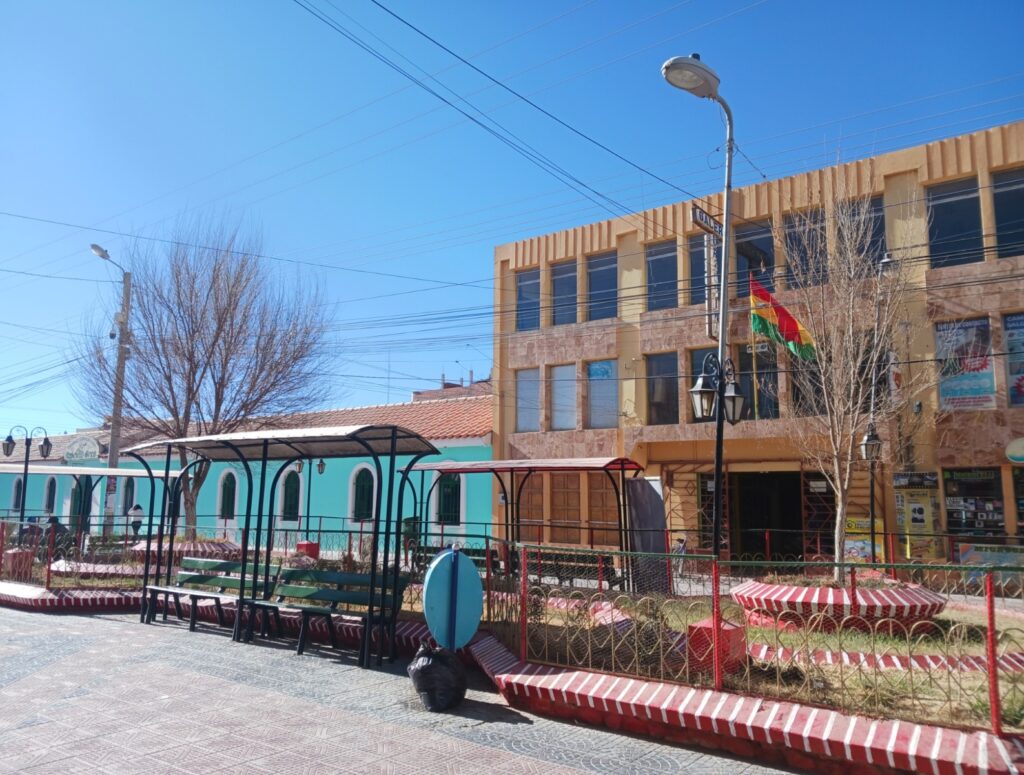
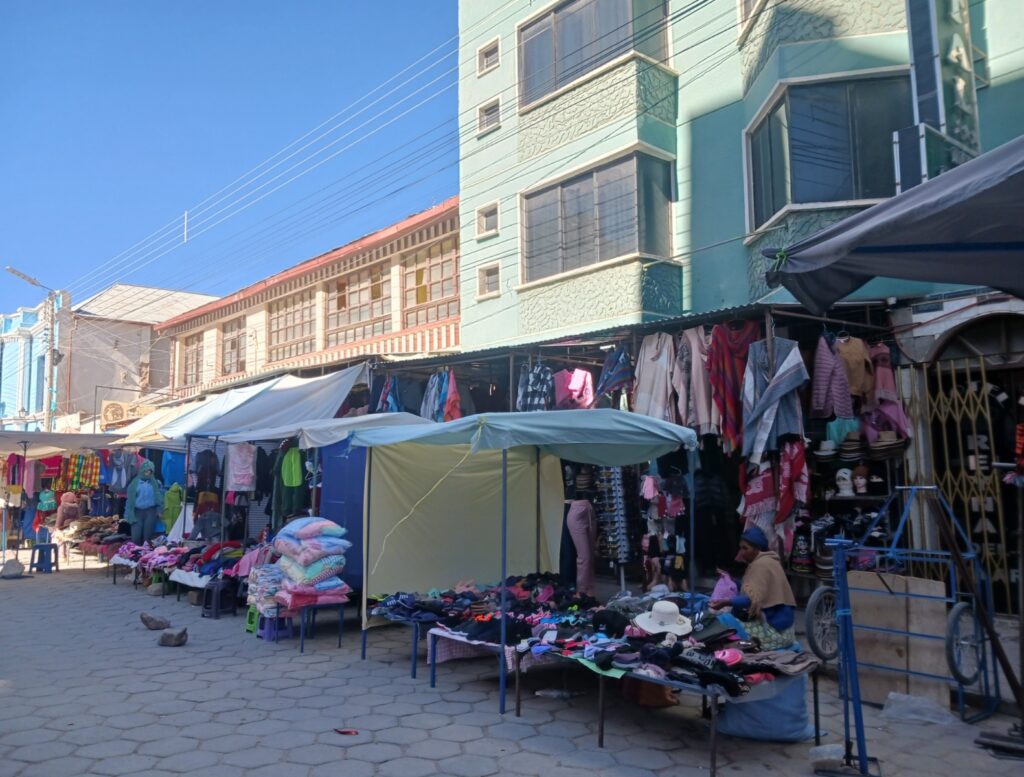
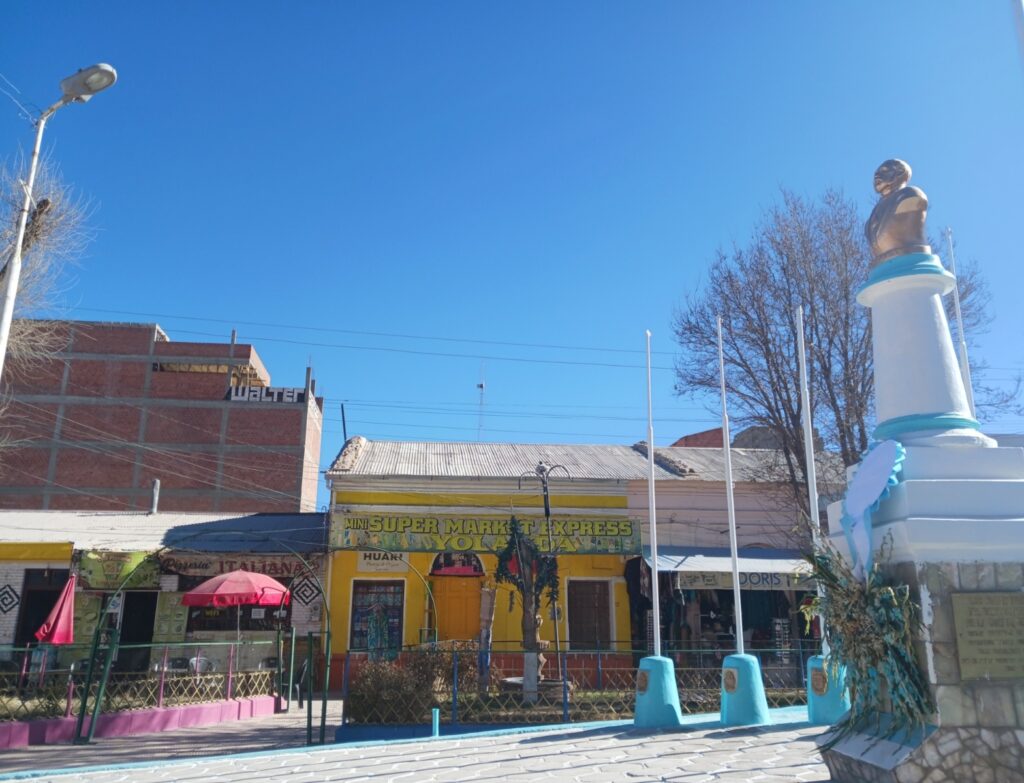
Day 5: We had booked a bus to Potosí the day before, with a departure at 9:30 AM. Upon arriving at the station, we learned that this bus never existed (welcome to Latin America!). We were offered a departure an hour later, at 10:30 AM.
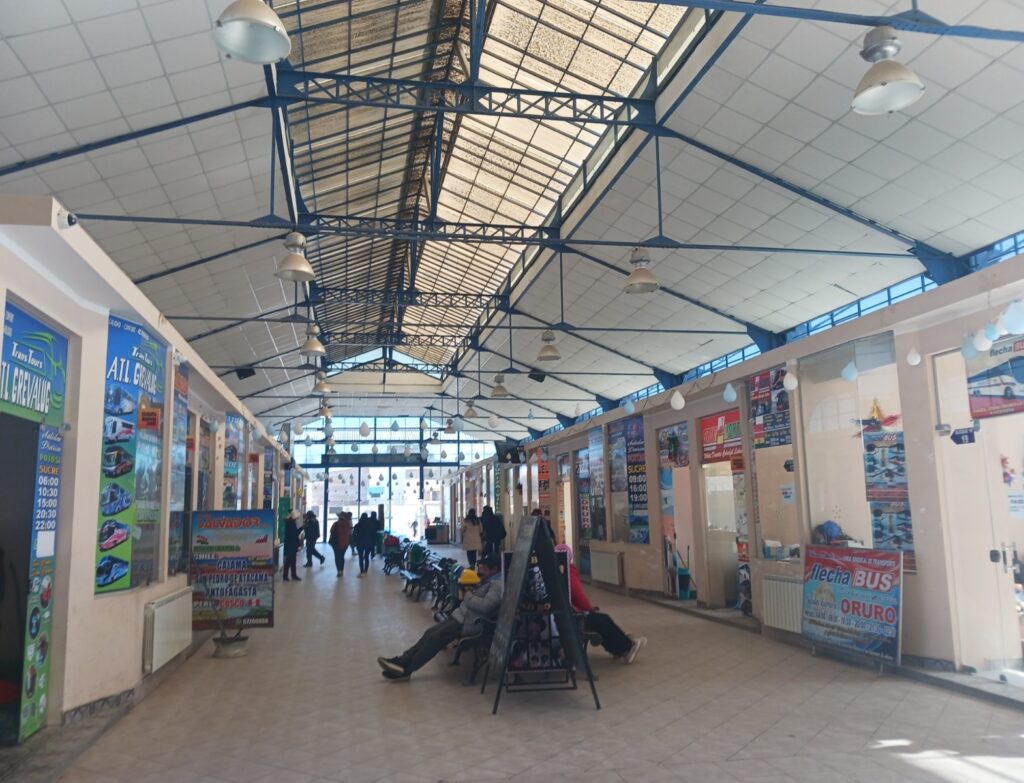
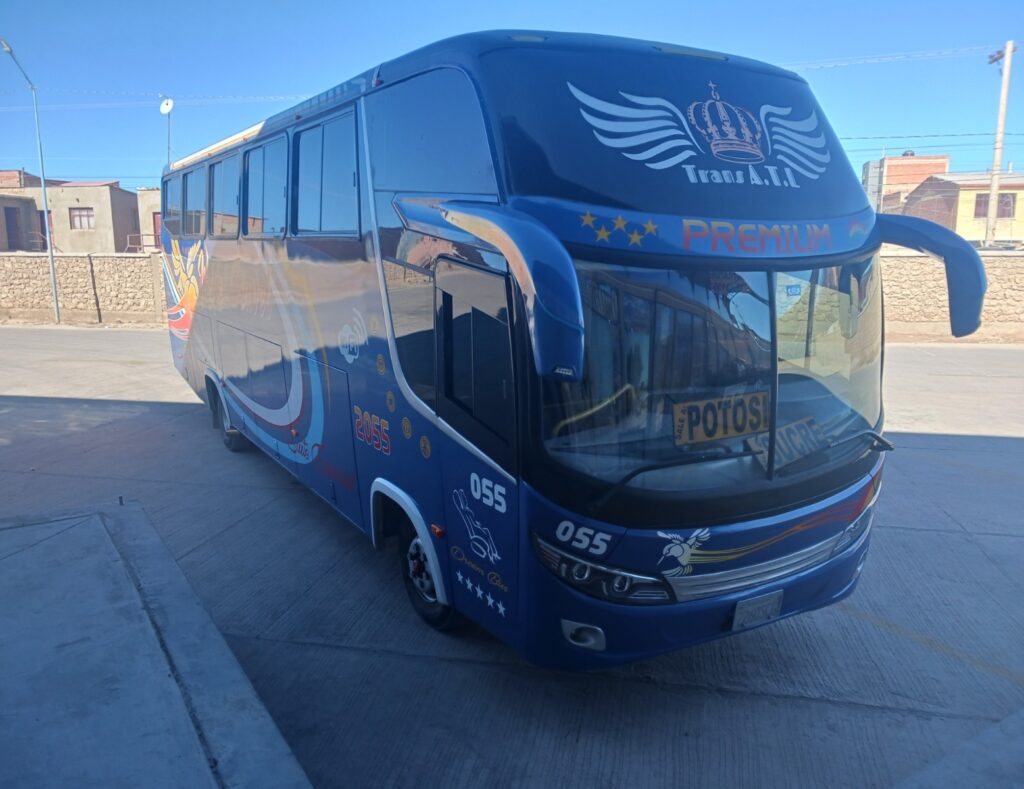
The journey goes smoothly nonetheless.
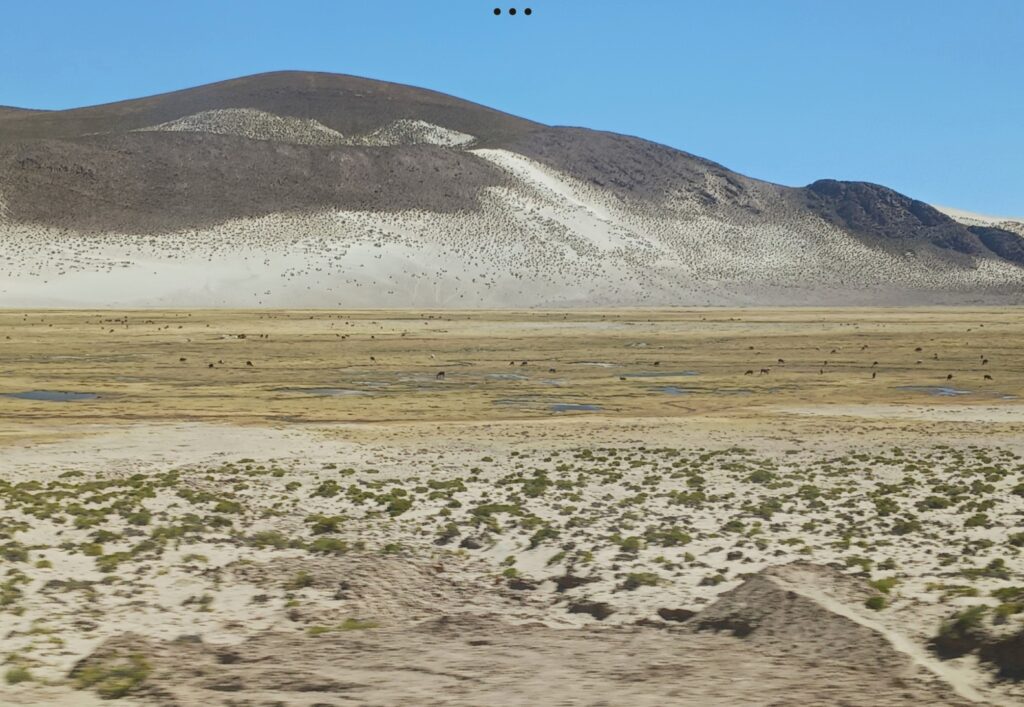

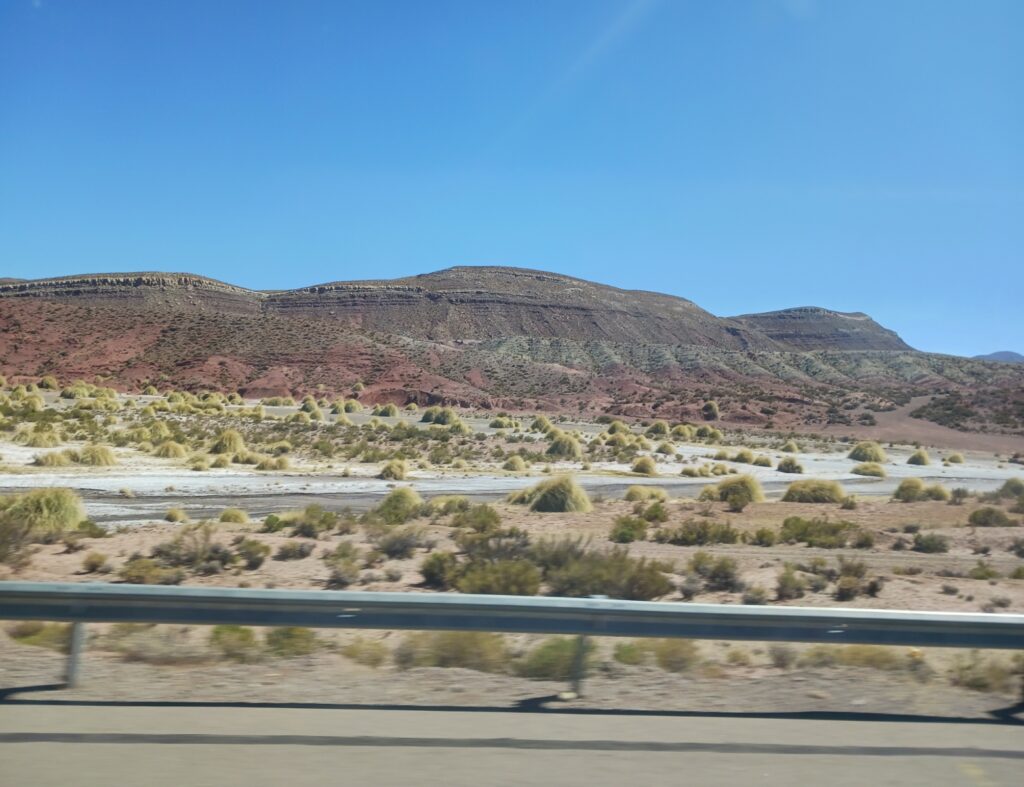
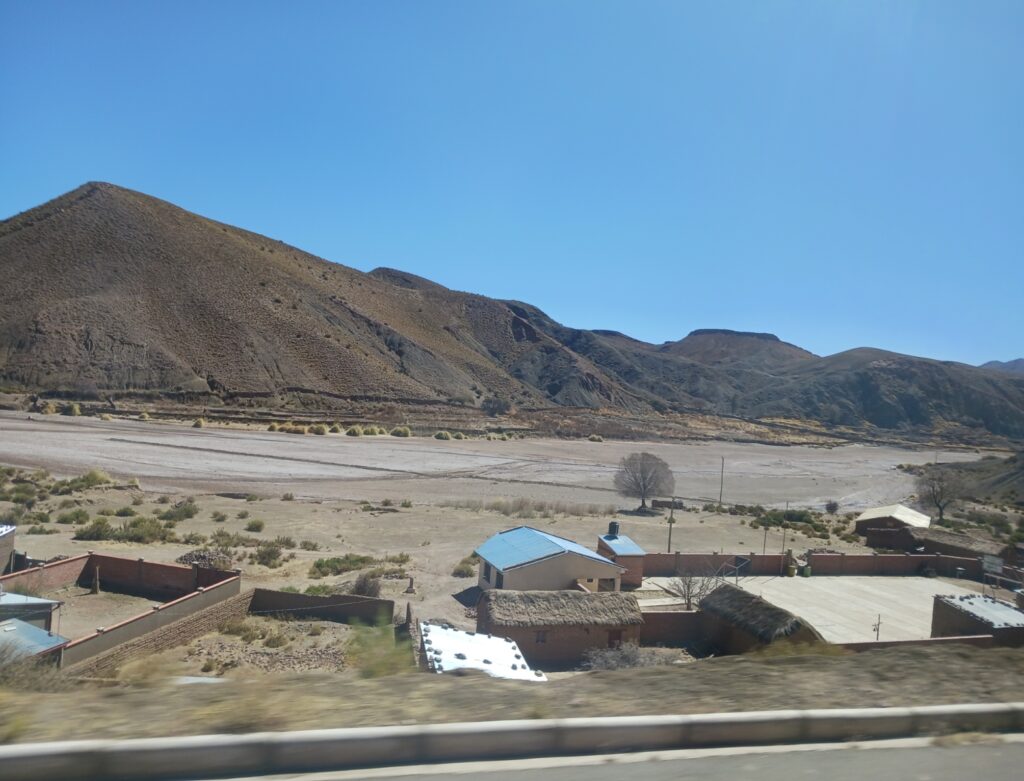
We arrive in Potosí four hours later. As soon as we step off the bus, another surprise awaits us. The hotel we had booked, just a stone’s throw from the station, is closed. A note on the door says it will reopen tomorrow.
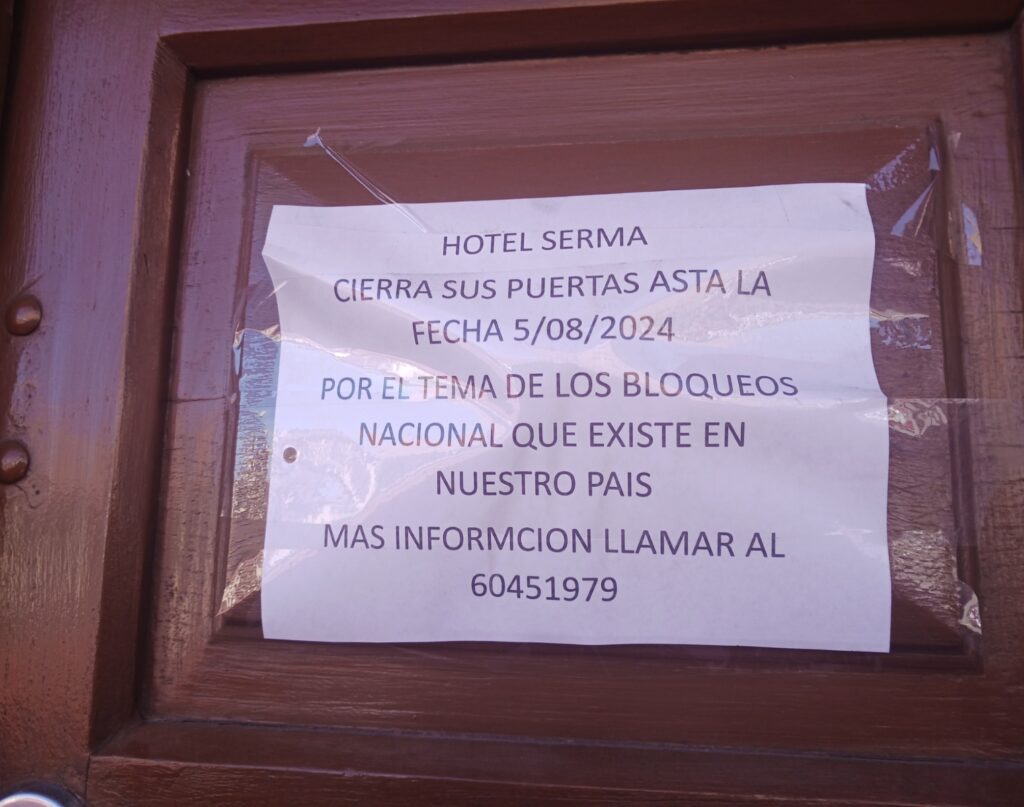
Of course, we weren’t contacted in advance—that would have been too easy. So here we are, scrambling to find a new hotel at the last minute. Refusing to pay $70 per night (hotels in Japan cost us less for vastly superior comfort), we have no choice but to head to the city center, where there’s a decent selection of hotels.
This means walking 40 minutes at altitude, with a 150-meter elevation gain, carrying over 8 kg on our backs. François is barely hanging on.
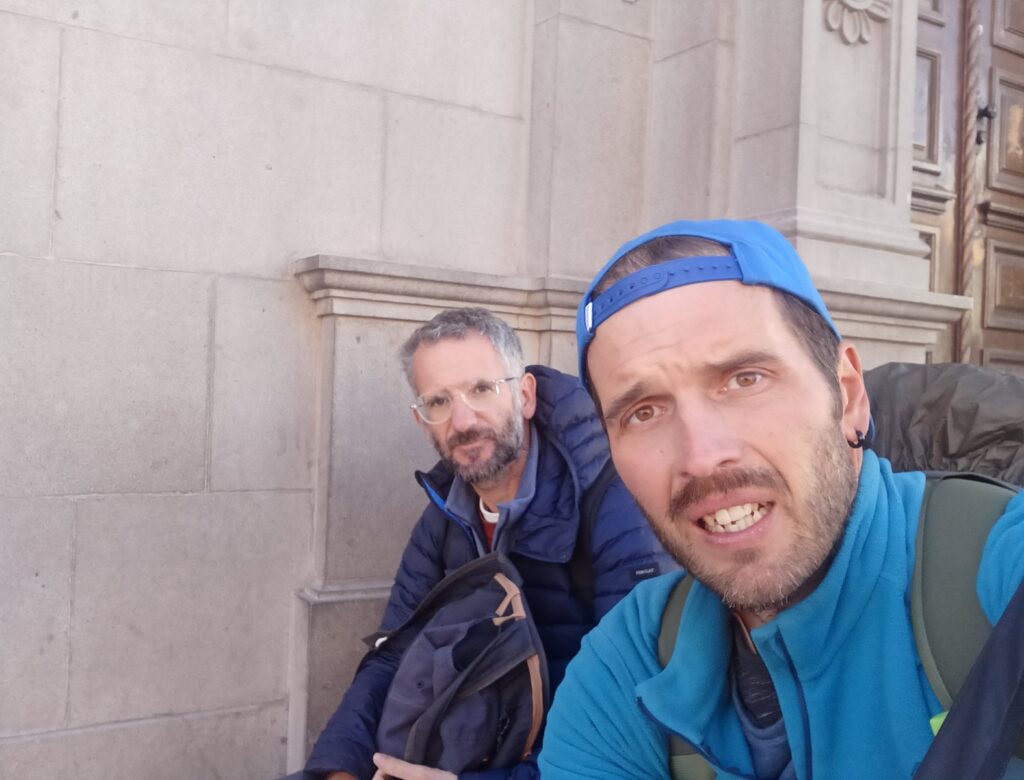
Why not take a taxi? We’re in Latin America—taxis here are rarely honest.
Once we arrived at the hotel, we went out to do some shopping at a nearby supermarket, before heading back to collapse at the hotel.
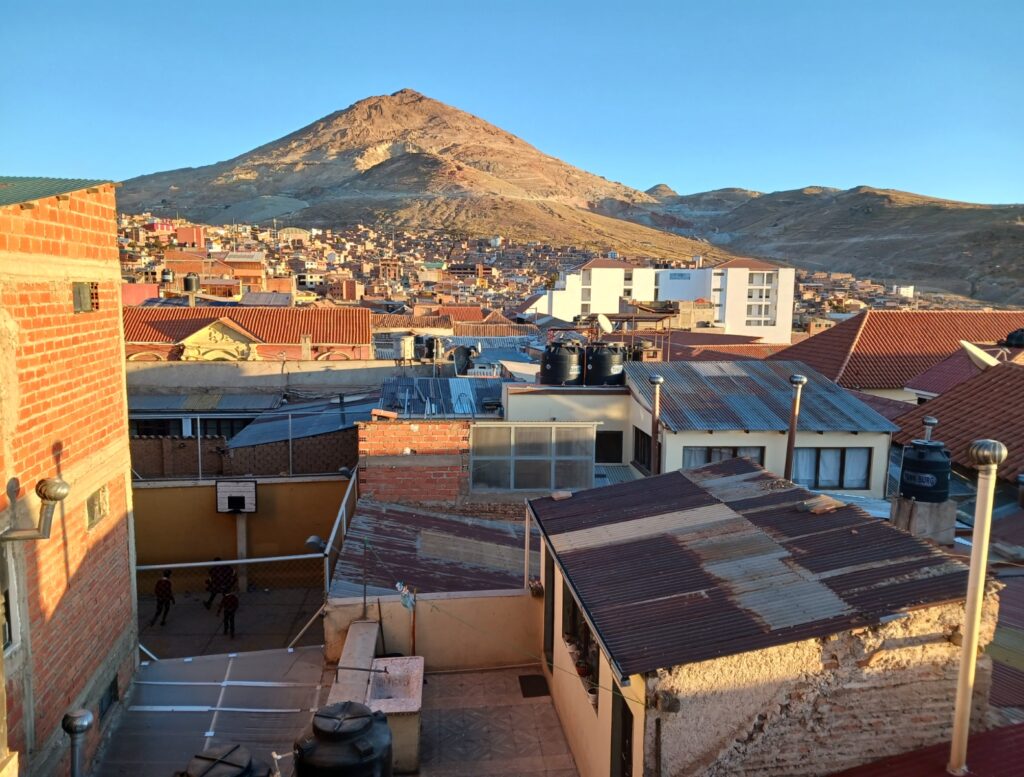
Day 6: The city of Potosi offers little tourist interest. The only attraction is the visit to the silver mines. We decide not to visit them for ethical reasons. Paying to watch workers being exploited and working in deplorable conditions is not our thing.
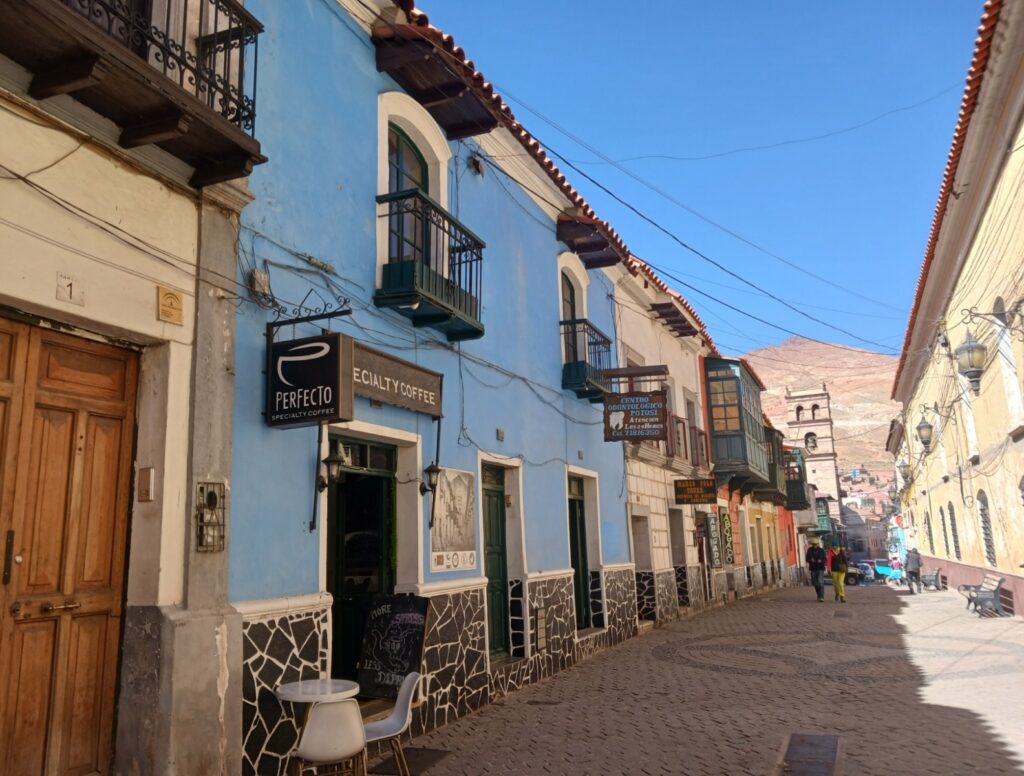
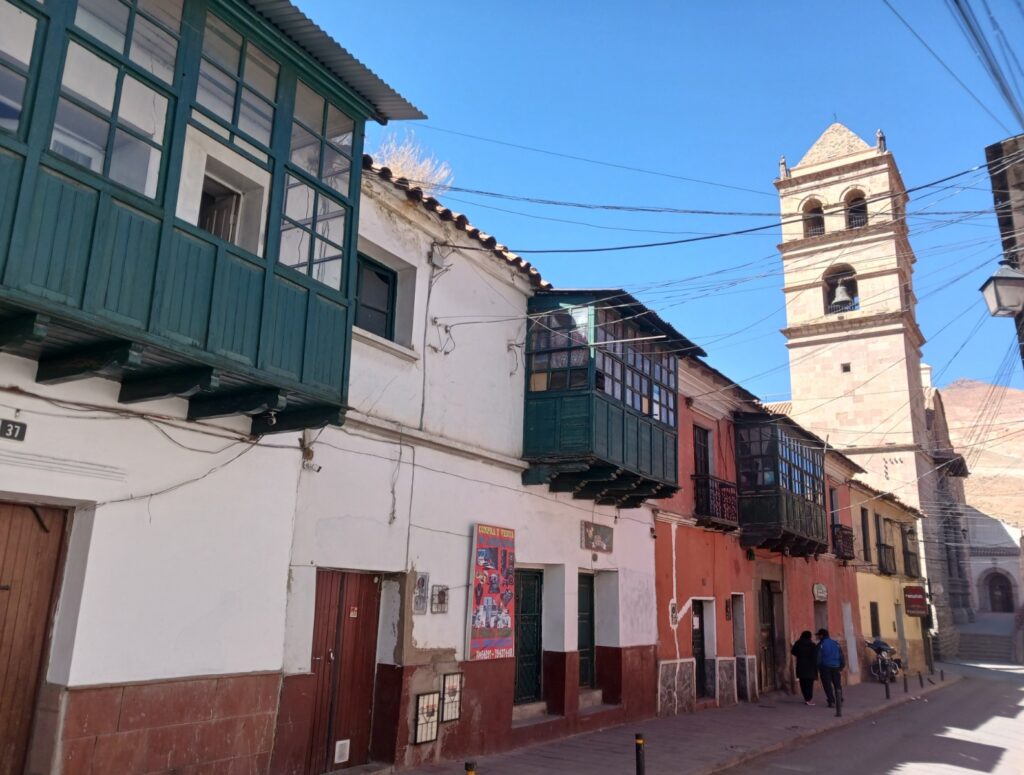
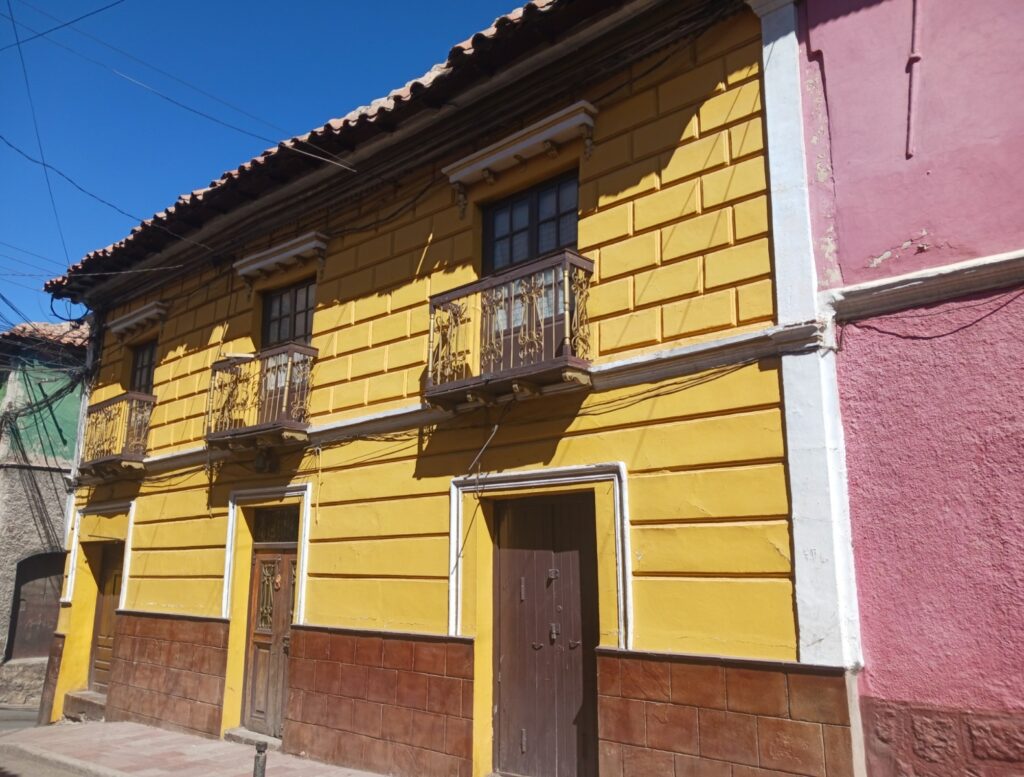
So we stroll around the center of Potosi. Today is the national holiday. We watch a brass band parade.
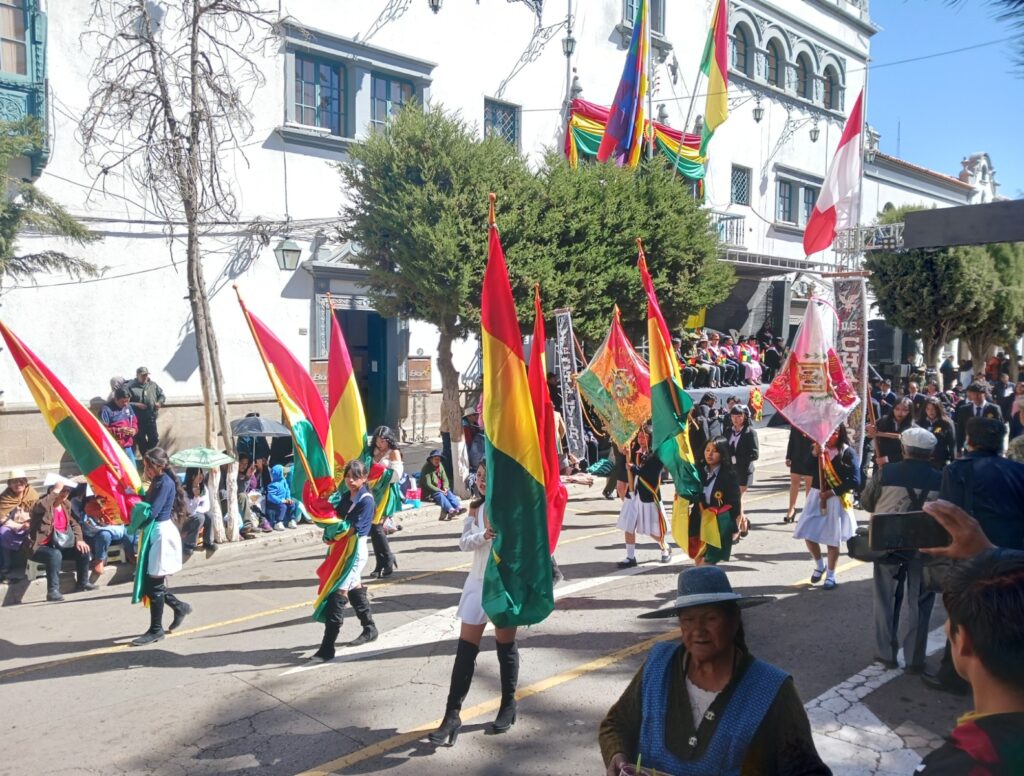
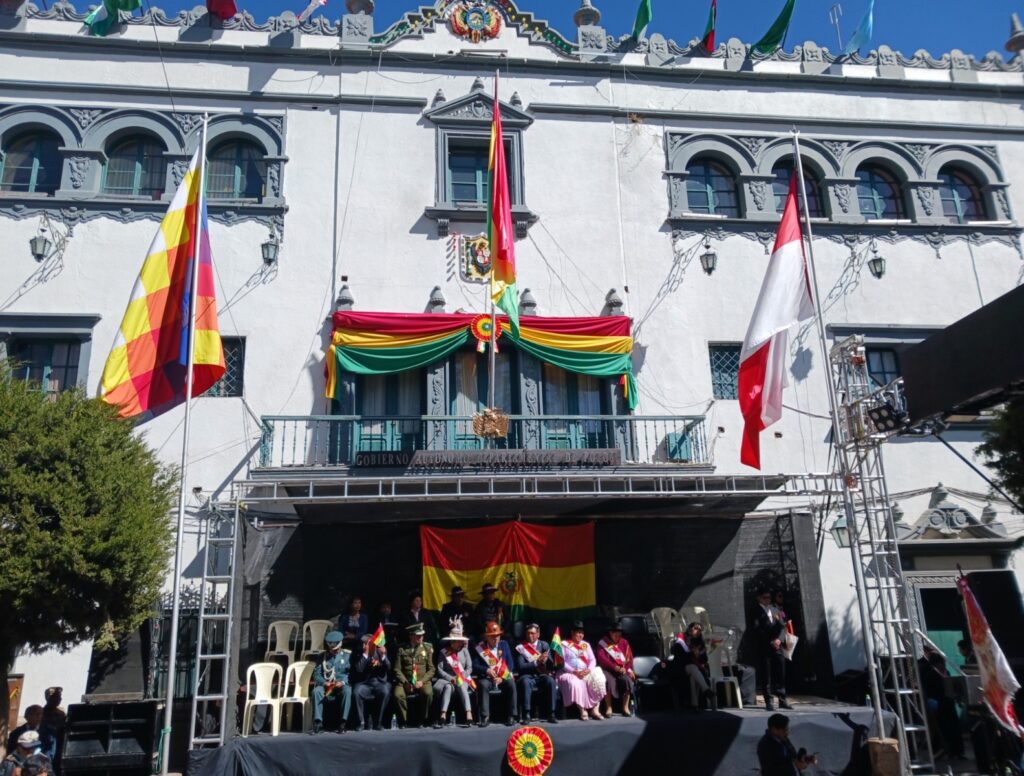
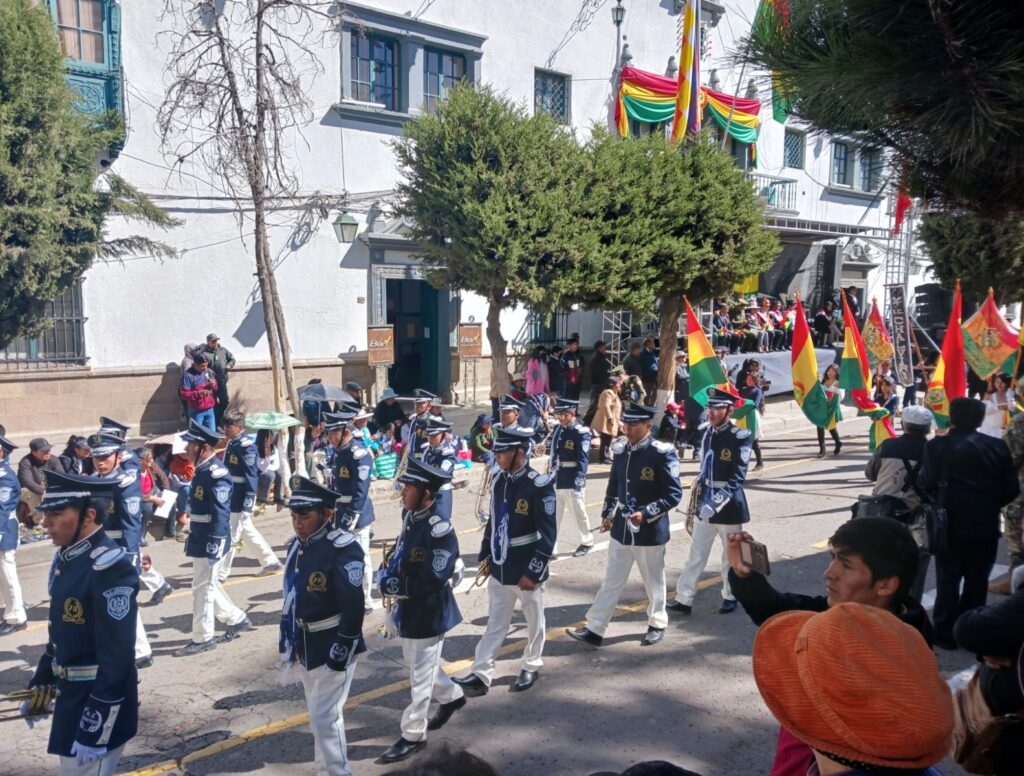
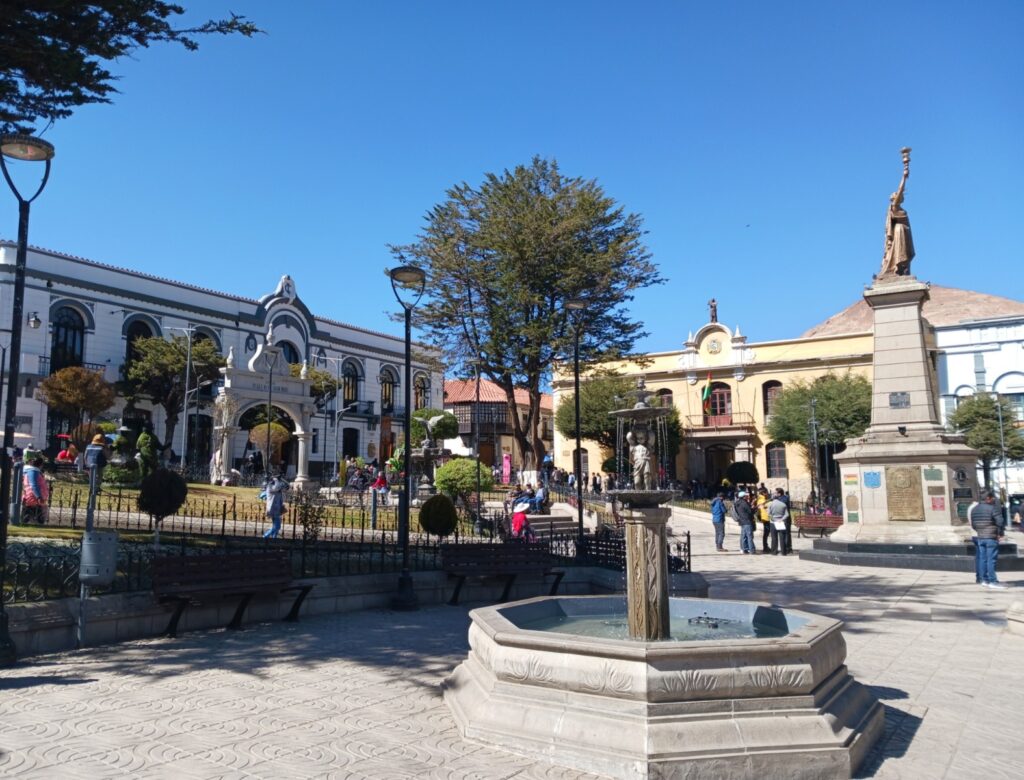
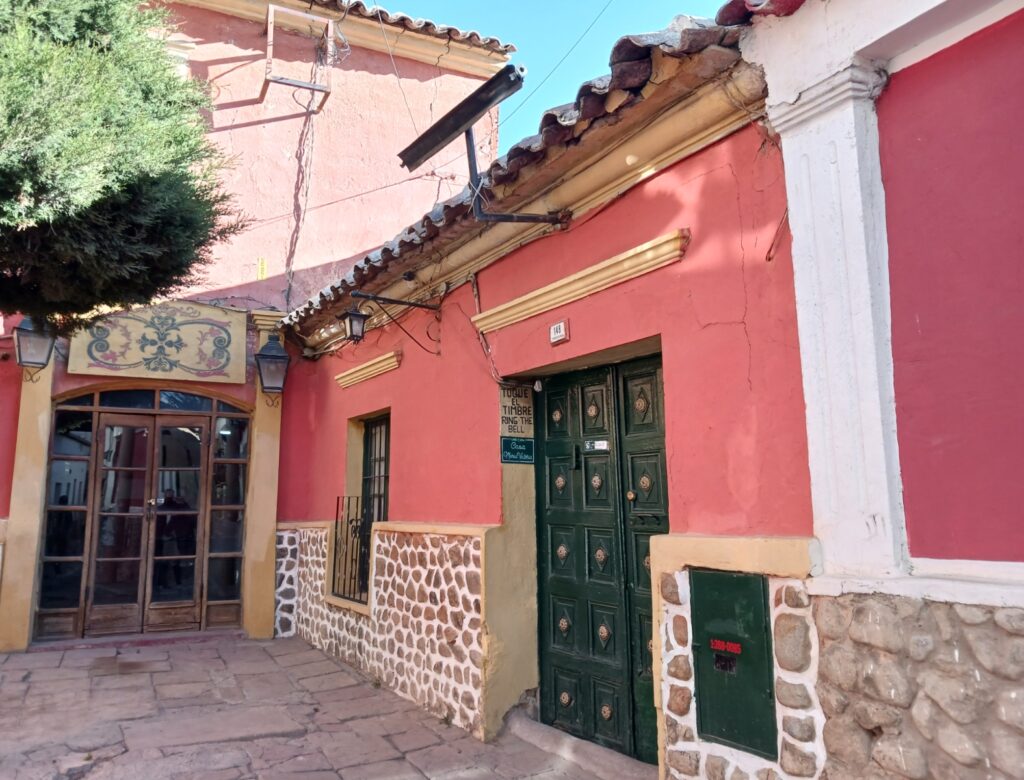
The architecture is quite charming, with colorful buildings and churches everywhere.
Day 7: We need to head to the new bus terminal, the only terminal serving connections to other cities besides Uyuni. Very far from the center, it’s 8 km away. We take a taxi to get there. Of course, we agree with the driver on the fare beforehand. What we hadn’t anticipated, though, is that in Bolivia, taxis are always shared. So here we are, picking up a complete stranger on the road. We make a detour to drop her off before continuing on our way to the station.
Upon arrival, we find an agency with a departure at 9:30. We should therefore arrive in Sucre around 12:30. All excited, we arrive a few minutes before departure at our platform, only to find out that the departure is actually at 10:00…
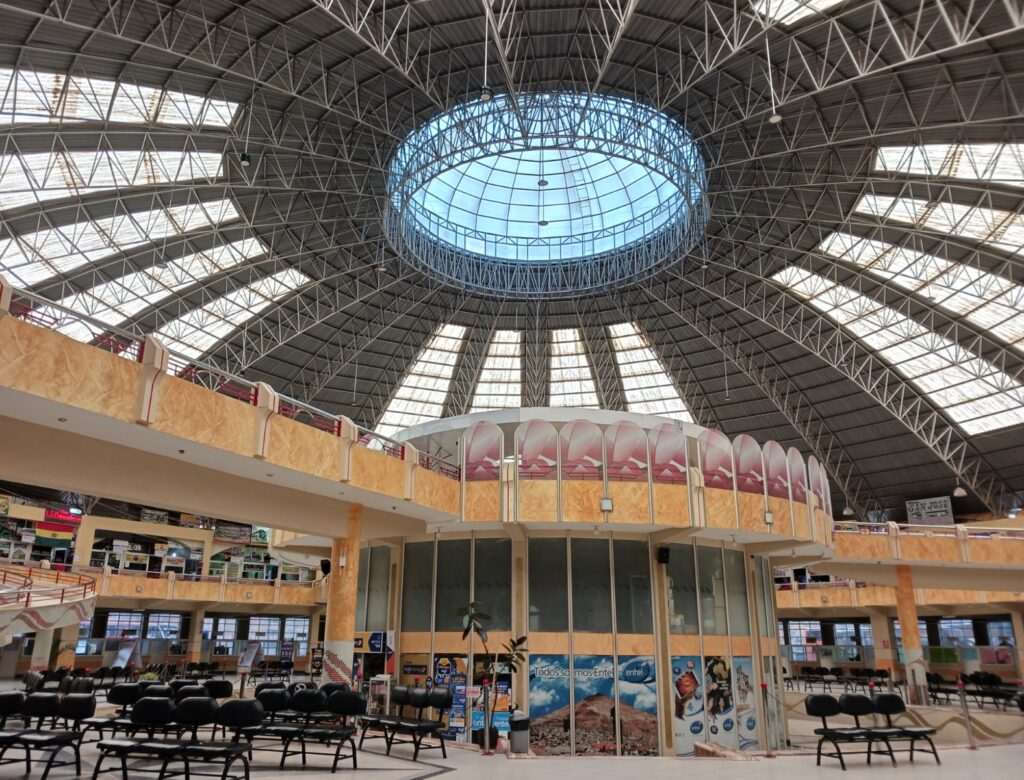
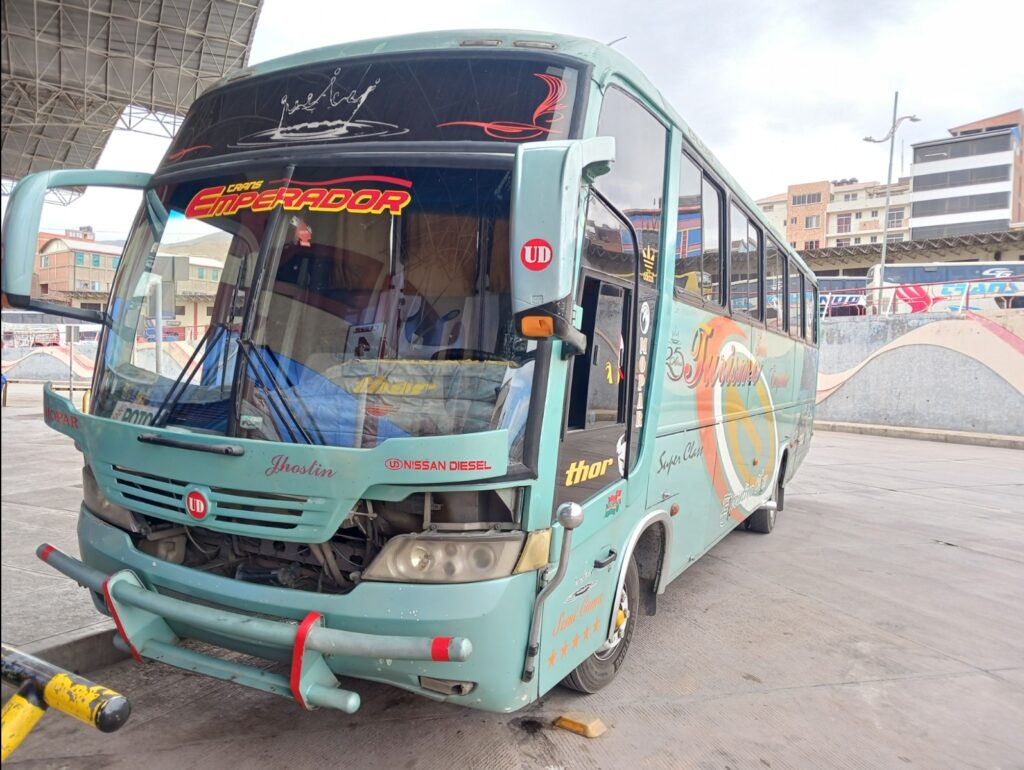
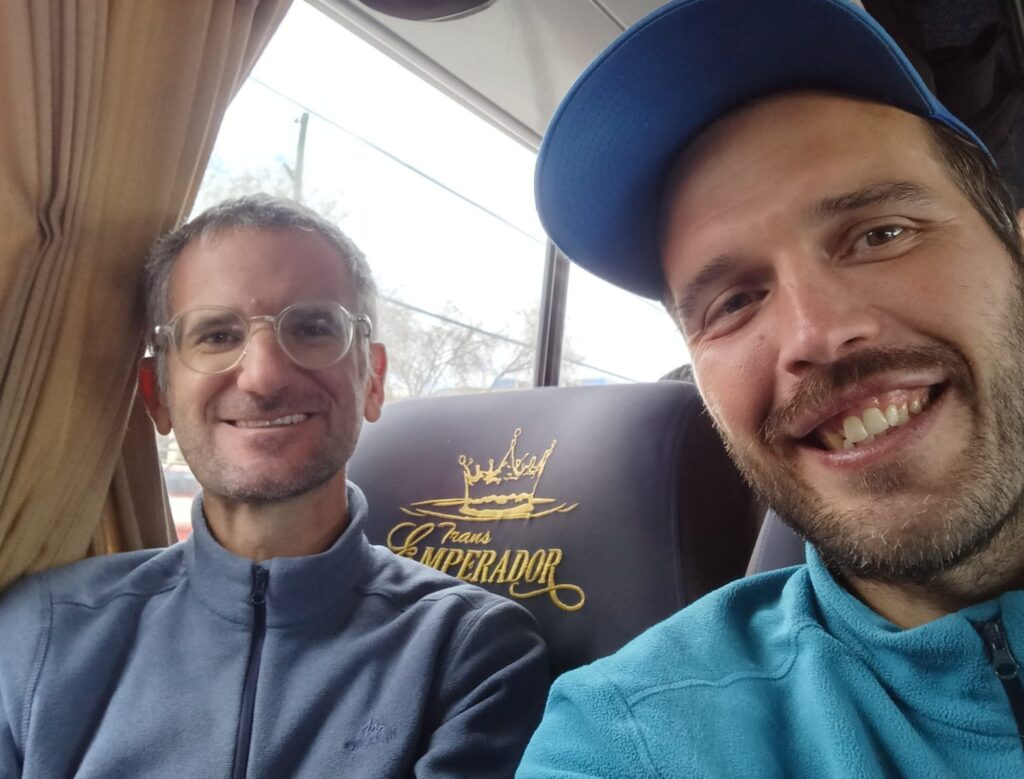
Annoyed by the scam, we get a refund and buy a ticket with another company.
We leave the station in an empty bus, but on time. We are quickly slowed down. Not even a kilometer in, the driver pulls over and takes a 20-minute break.
We set off again, only to stop 100 meters later on what looks like a bridge. Dozens of people are waiting in line. Apparently, the actual boarding point is here. We finally begin our journey at 11:15, which is 1 hour and 15 minutes later than expected…
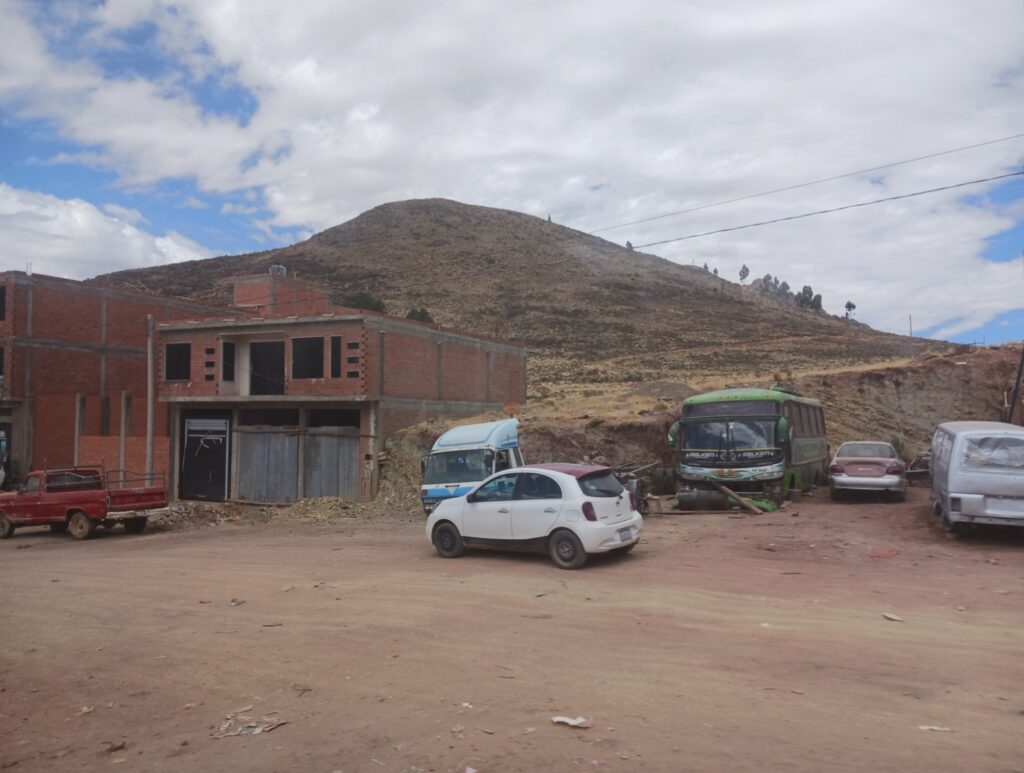
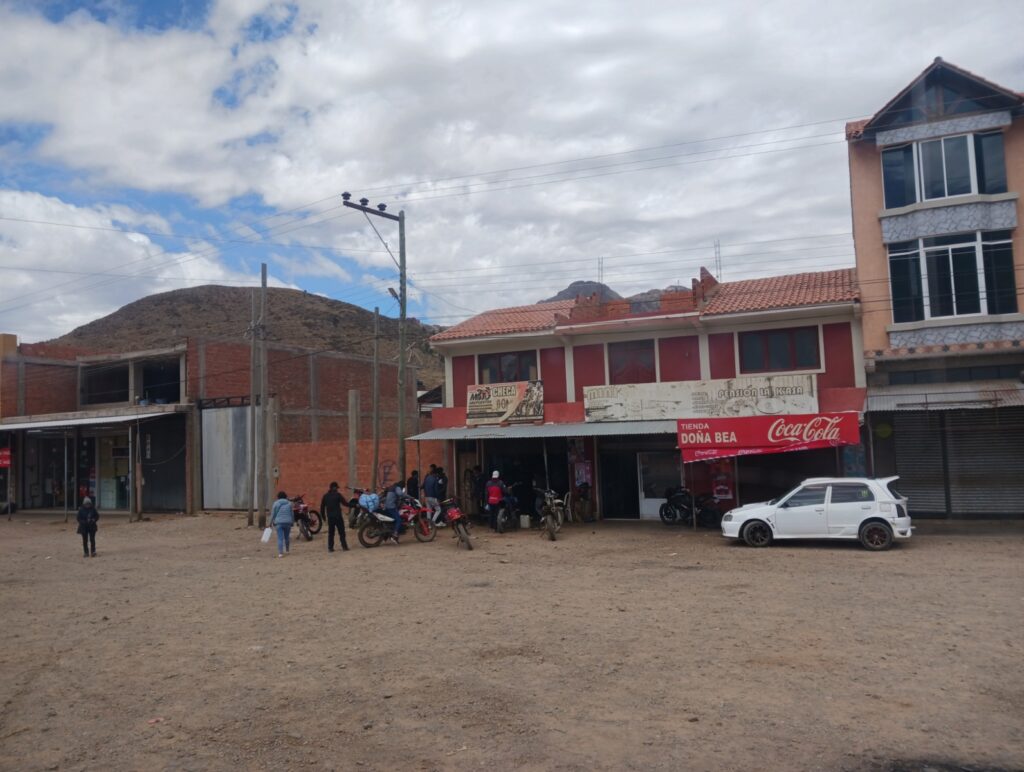
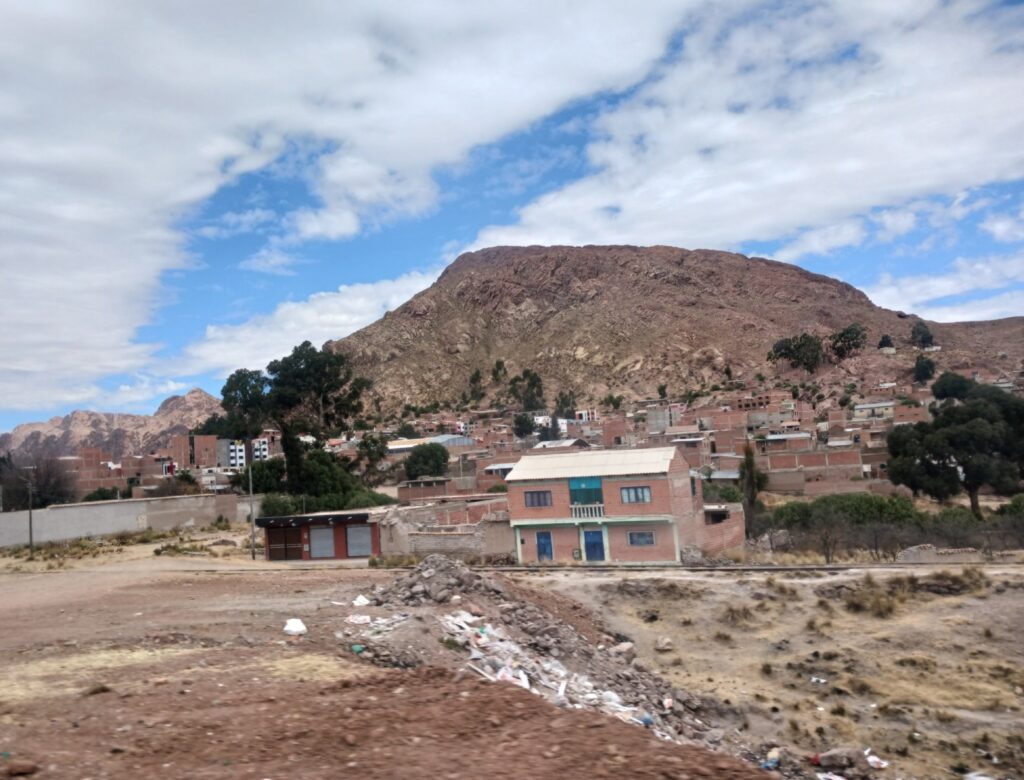
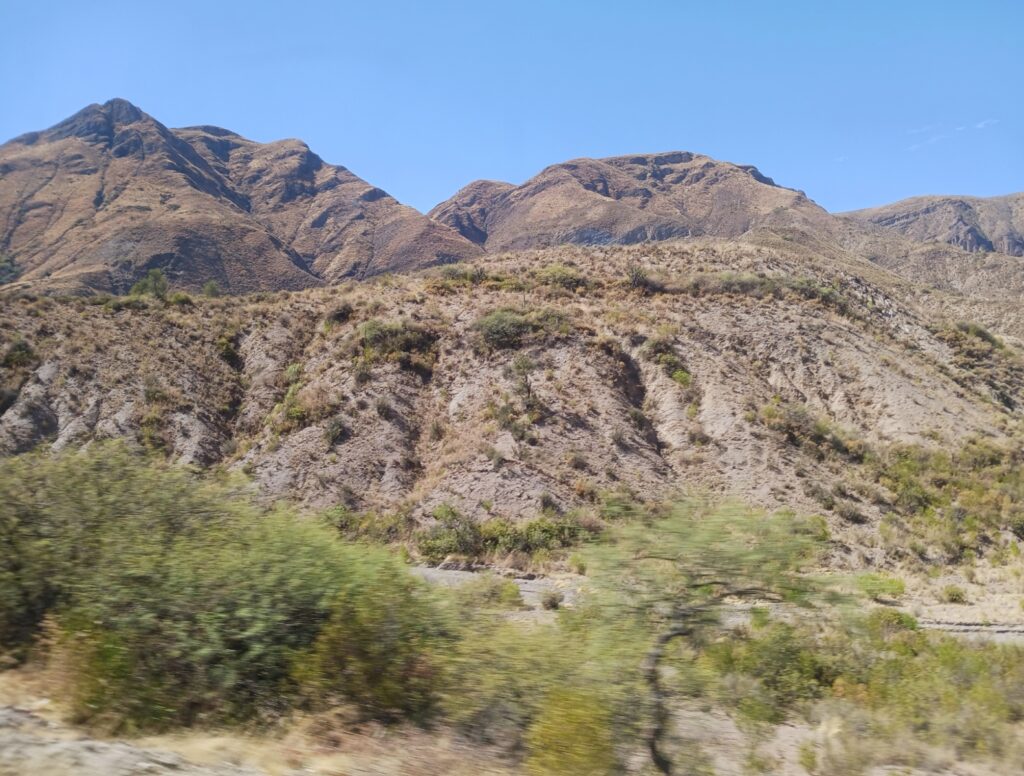
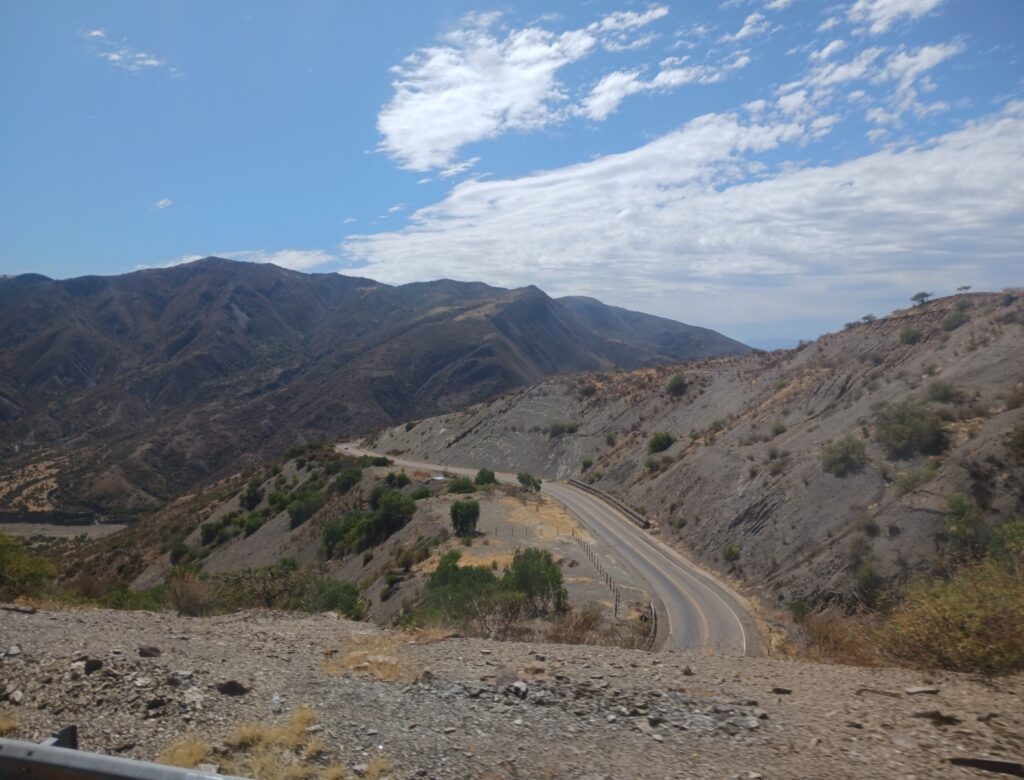
On the road, the landscapes are mostly mountainous. We finally arrive in Sucre at after 2:30 PM, far from the 3 hours originally promised by the bus company…
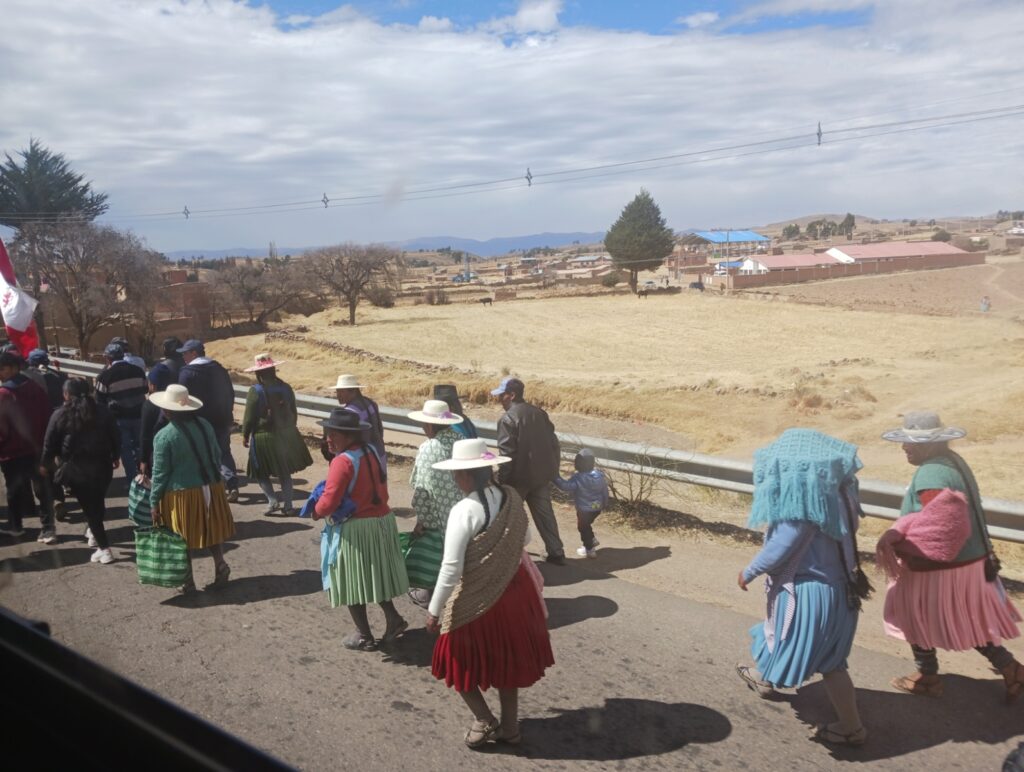
We walk to our guesthouse before going out to do some shopping.
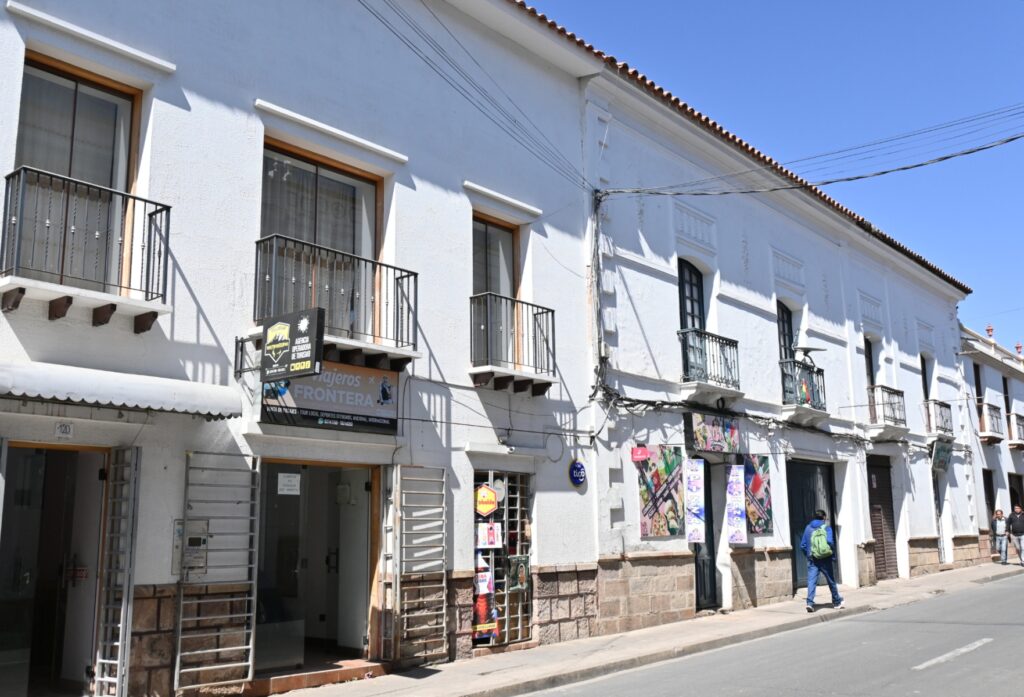
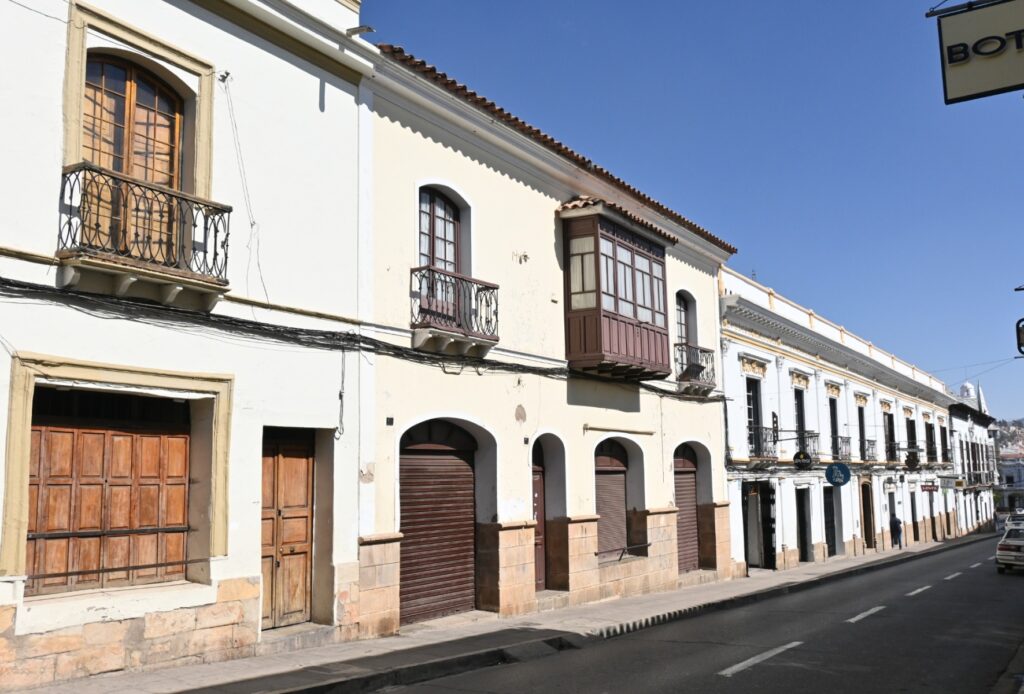
Day 8 and Day 9: We stroll around the city. It’s very beautiful. The buildings in the center are all painted white, which makes the city very bright.
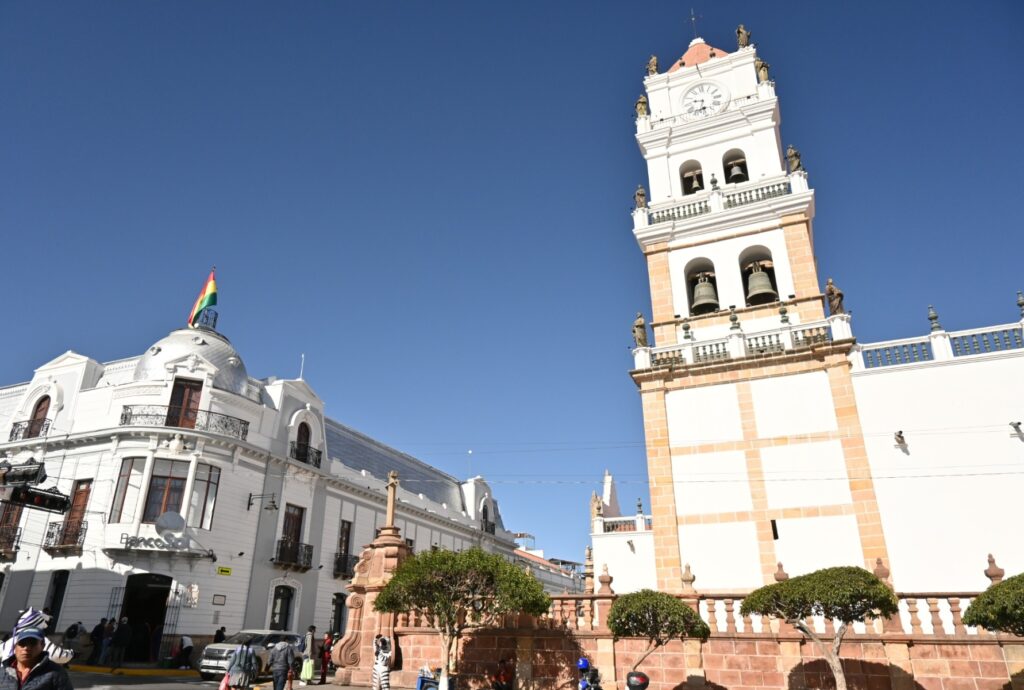
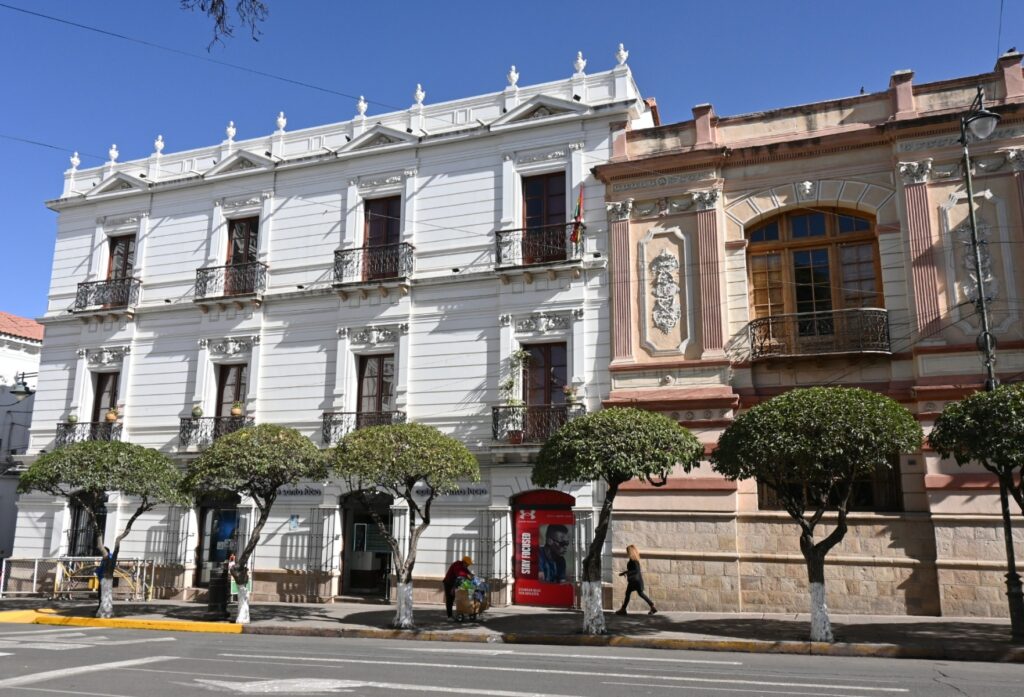
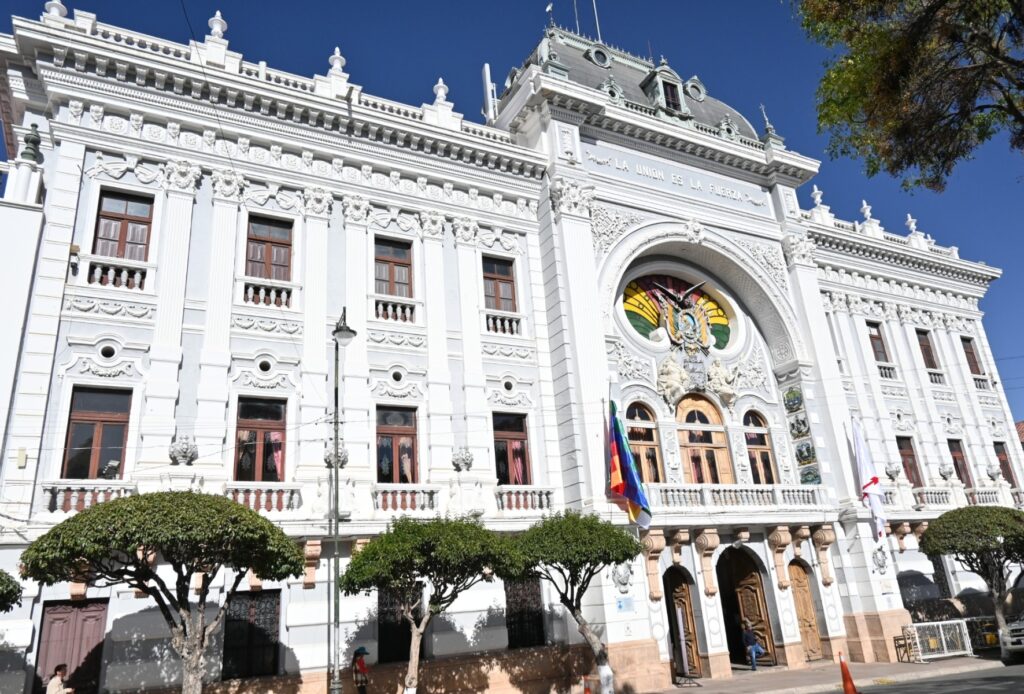
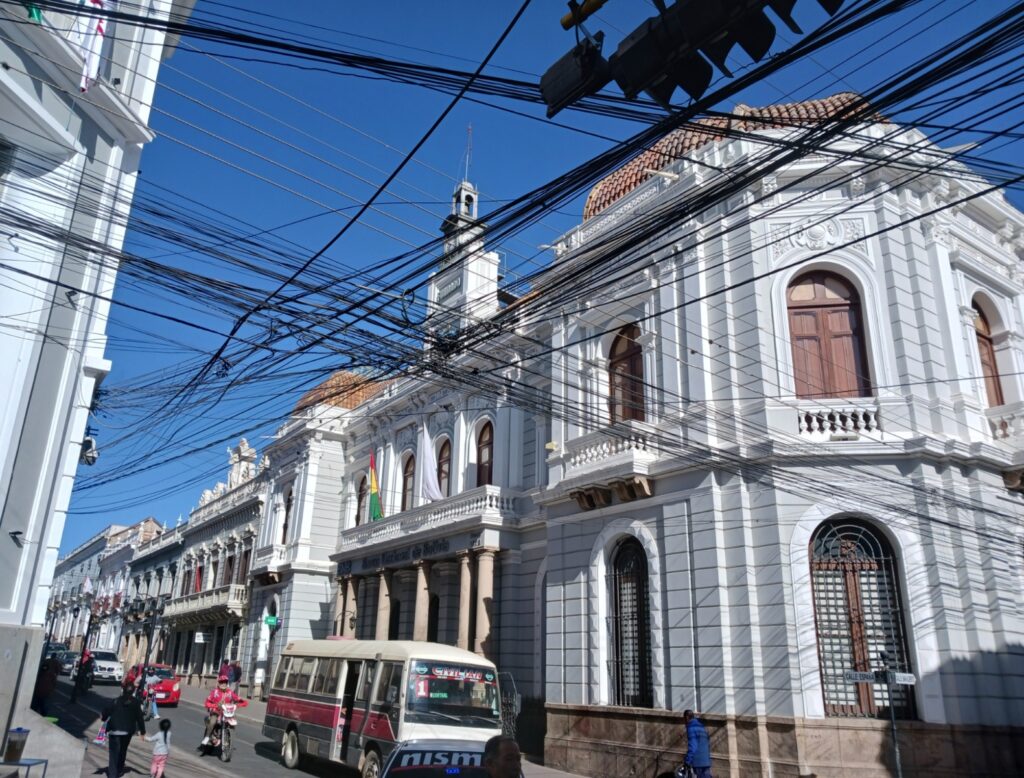
Several shops, cafés, and restaurants are also available for the more adventurous. We avoid sitting down at a restaurant: François’ food poisoning is still very much on our minds.
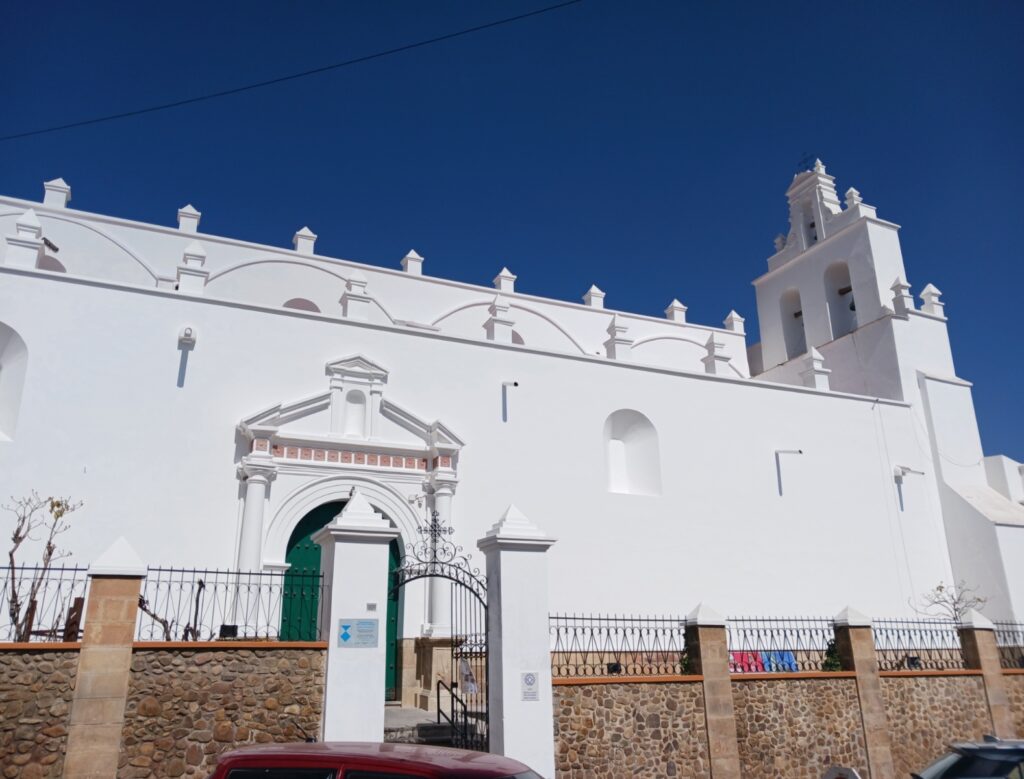
We visit the convent… The interior is also white. In the morning, the place serves as a primary and secondary school for nearly 500 young girls.
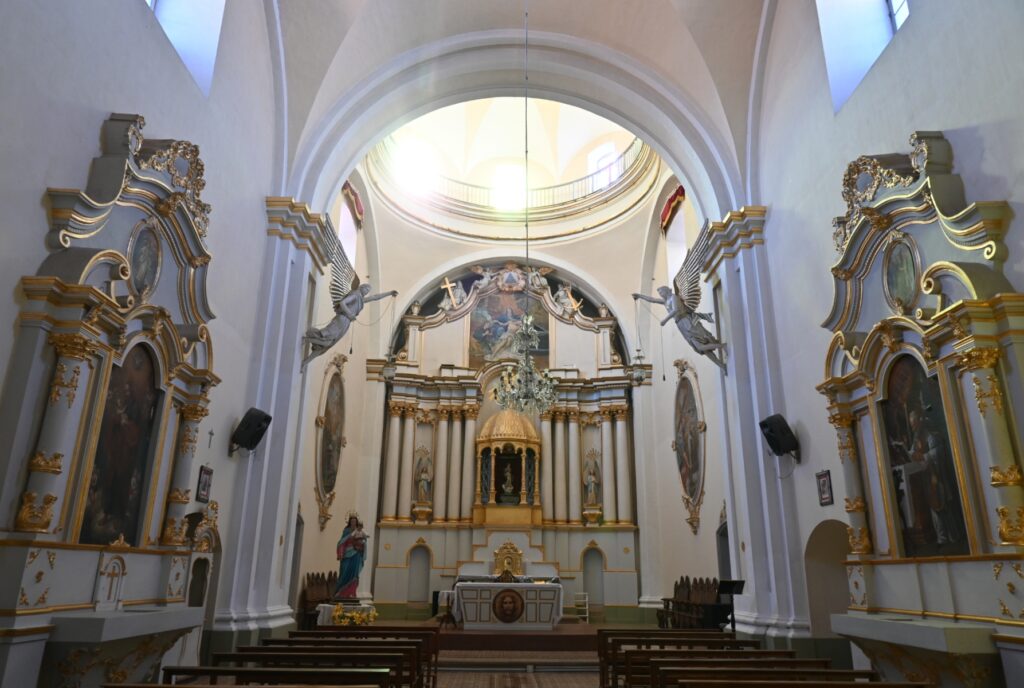

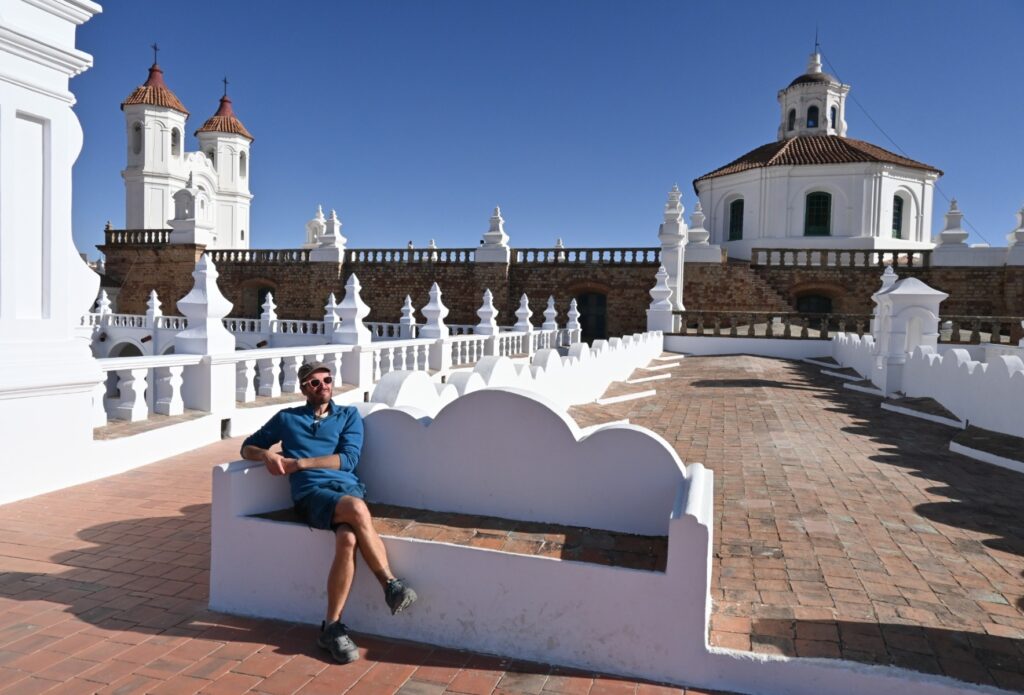
We visit the newly restored crypt and the church before heading up to the rooftops. From there, we have an elevated view of the entire city.

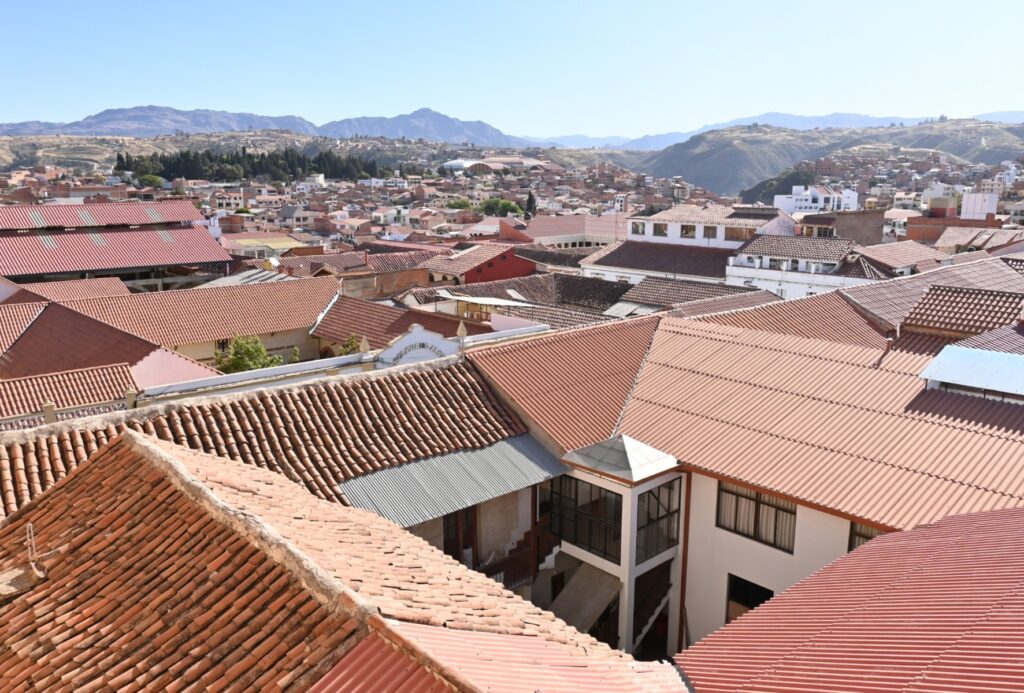
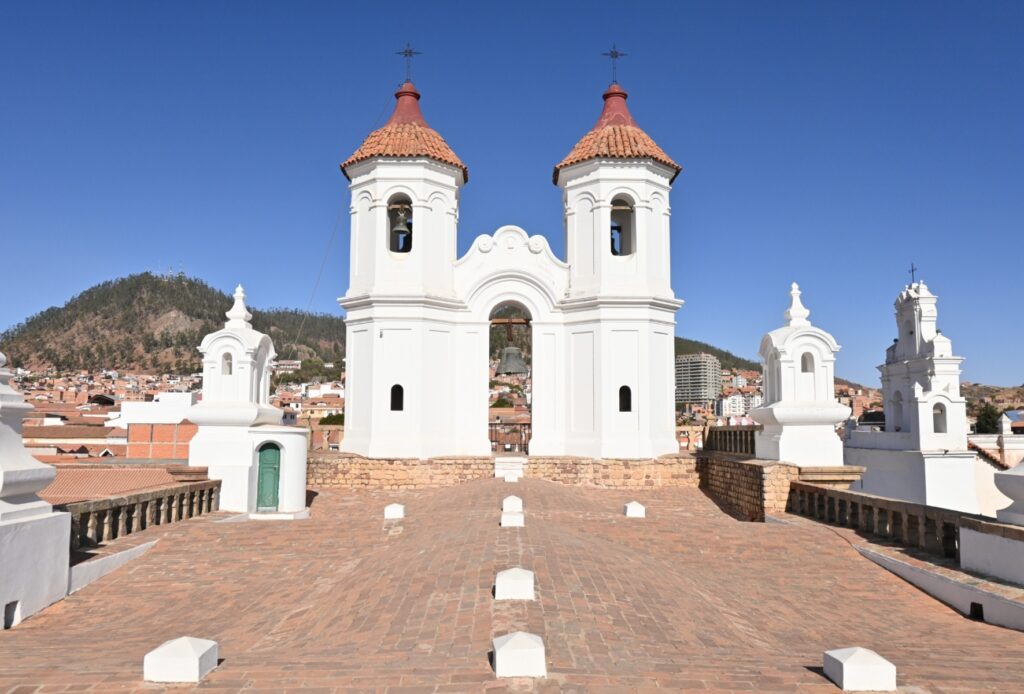
Day 10: We take a taxi to take us to Sucre’s airport.
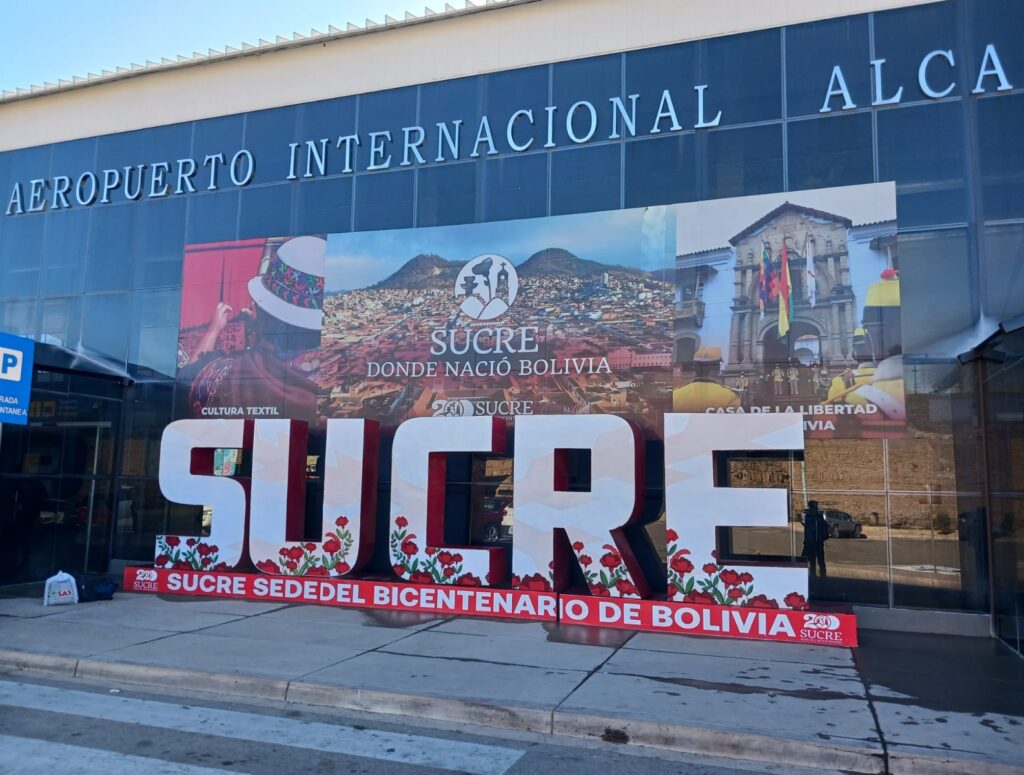
We have a one-hour flight to get to La Paz. (We preferred this mode of transportation over a 10-hour night bus…).
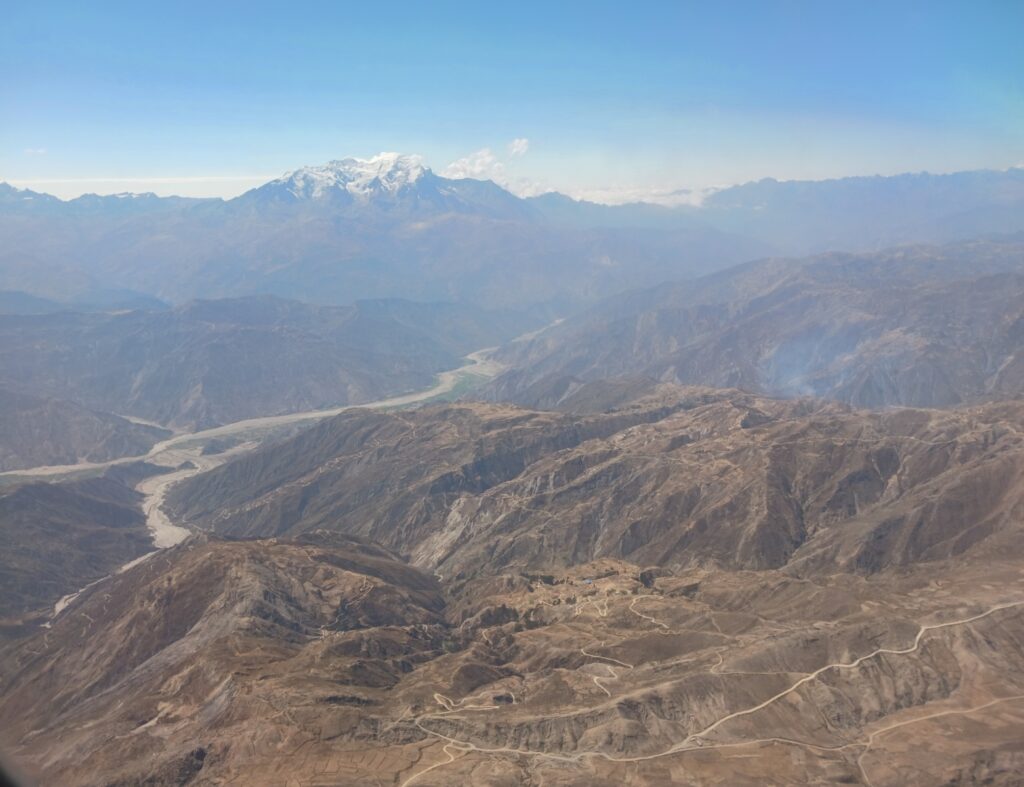
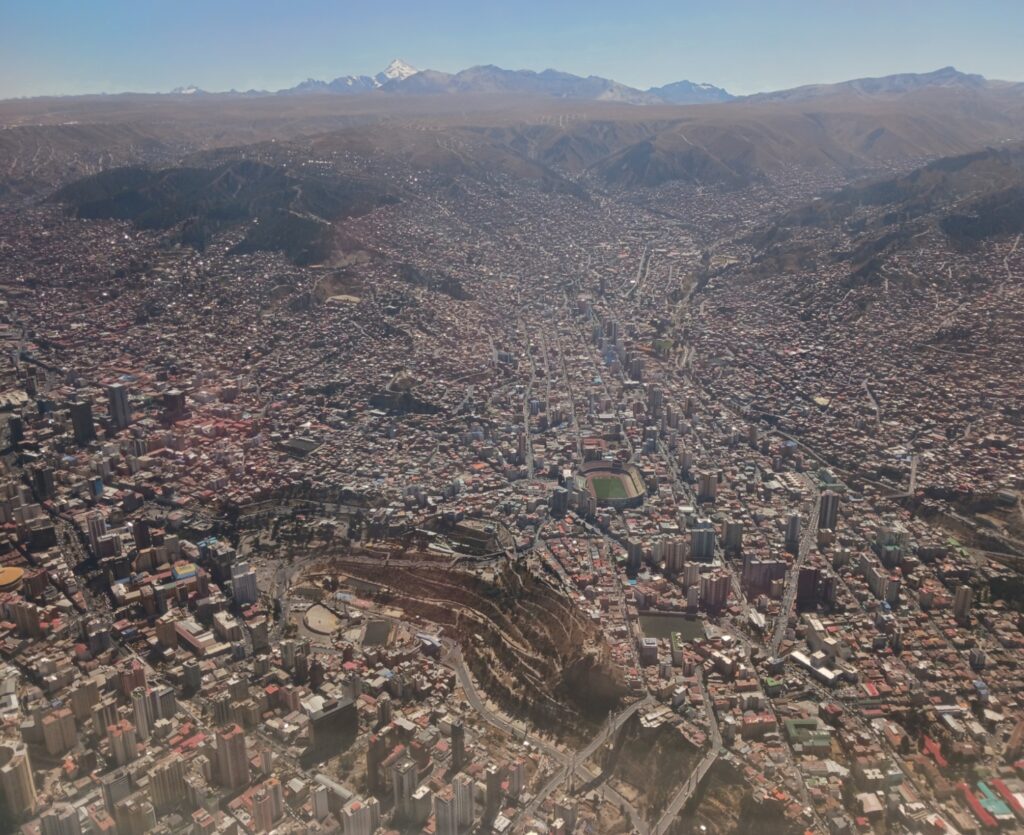
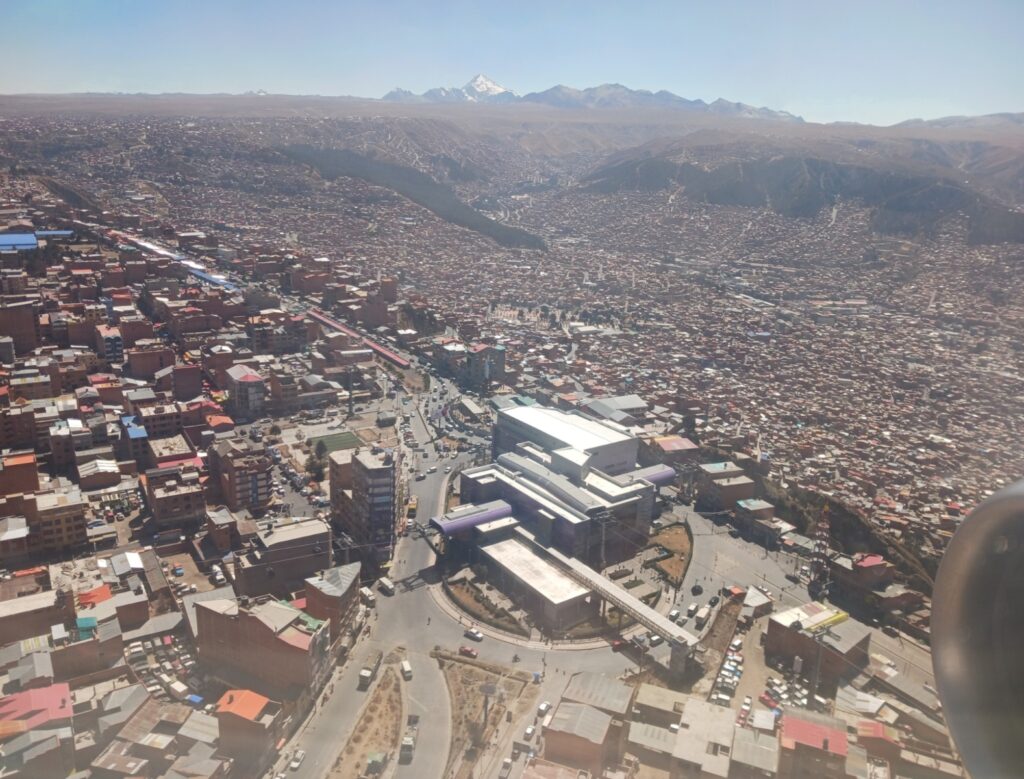
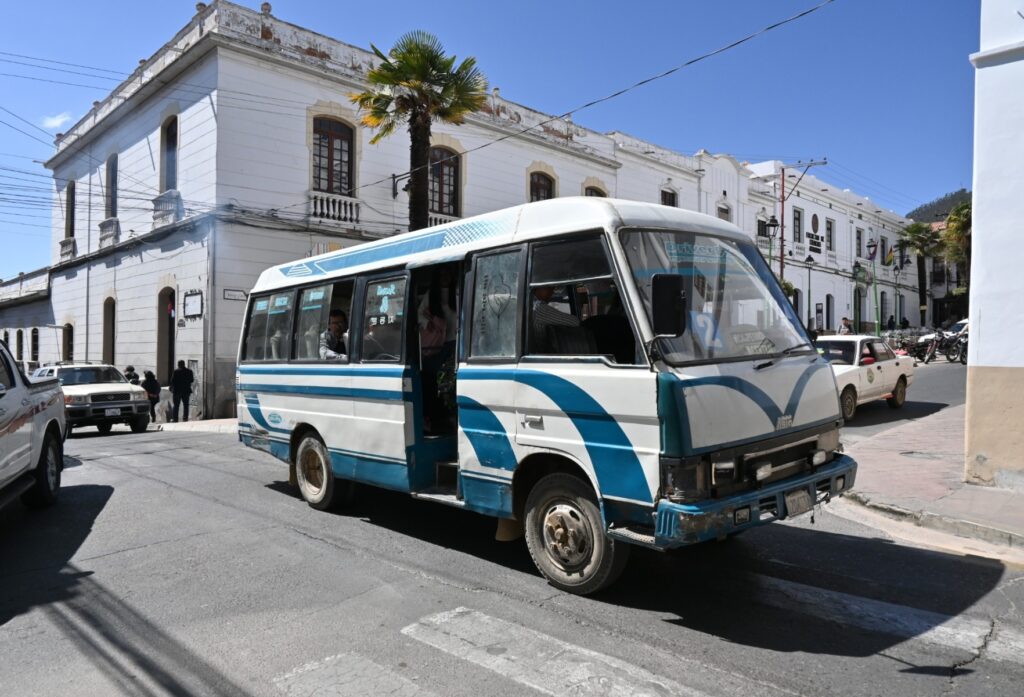
From the airport, we take a bus (much cheaper than a taxi). Well, ‘bus’ is a bit of an overstatement. Here, the buses are minivans, where people get on and off pretty much anywhere.
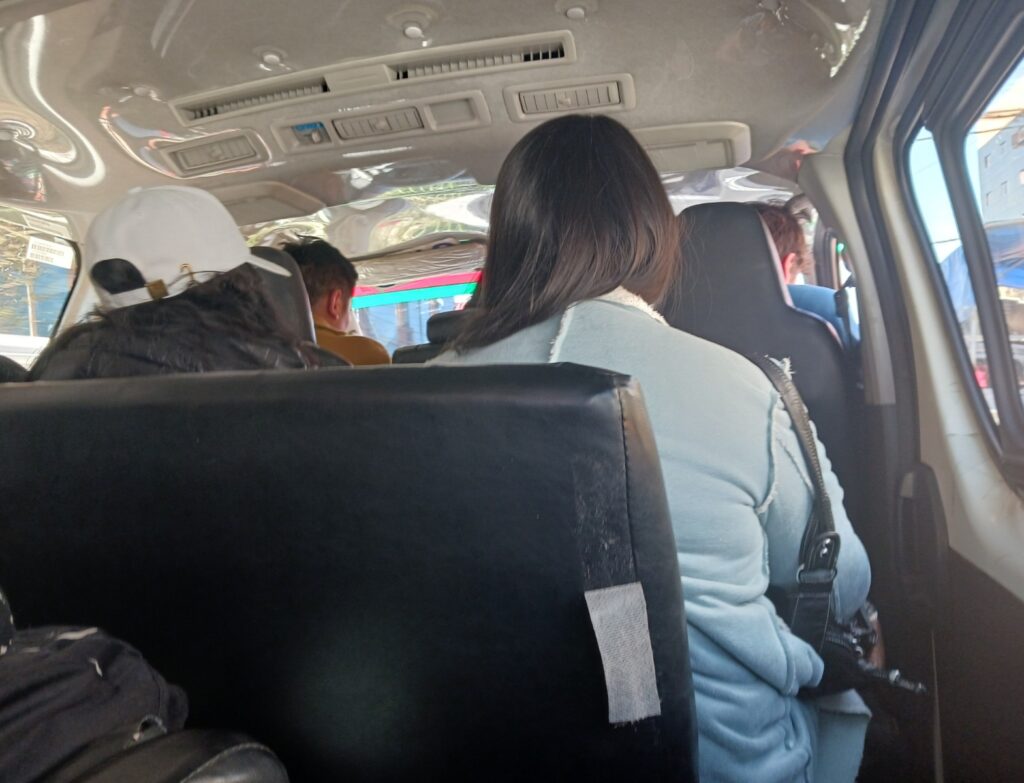
After 45 minutes on board, we get off and walk up the street that leads to our hotel.
We leave our bags there before heading out in search of food. Let’s not beat around the bush. The streets of La Paz are dirty, noisy, and smell awful. Buses are everywhere, making the noise unbearable with their honking. Their exhaust pipes spew clouds of black smoke (several vehicles haven’t seen a mechanic in ages) that choke us. Already, walking at 3,600 meters above sea level in the streets of a city built on the side of a mountain is challenging, but when you also have to fight against the CO2 from the cars, it becomes nearly impossible. As if that wasn’t enough, the streets reek of excrement. It’s no surprise, given that forcing a clearly poor population to pay to use the toilets doesn’t help the situation at all.
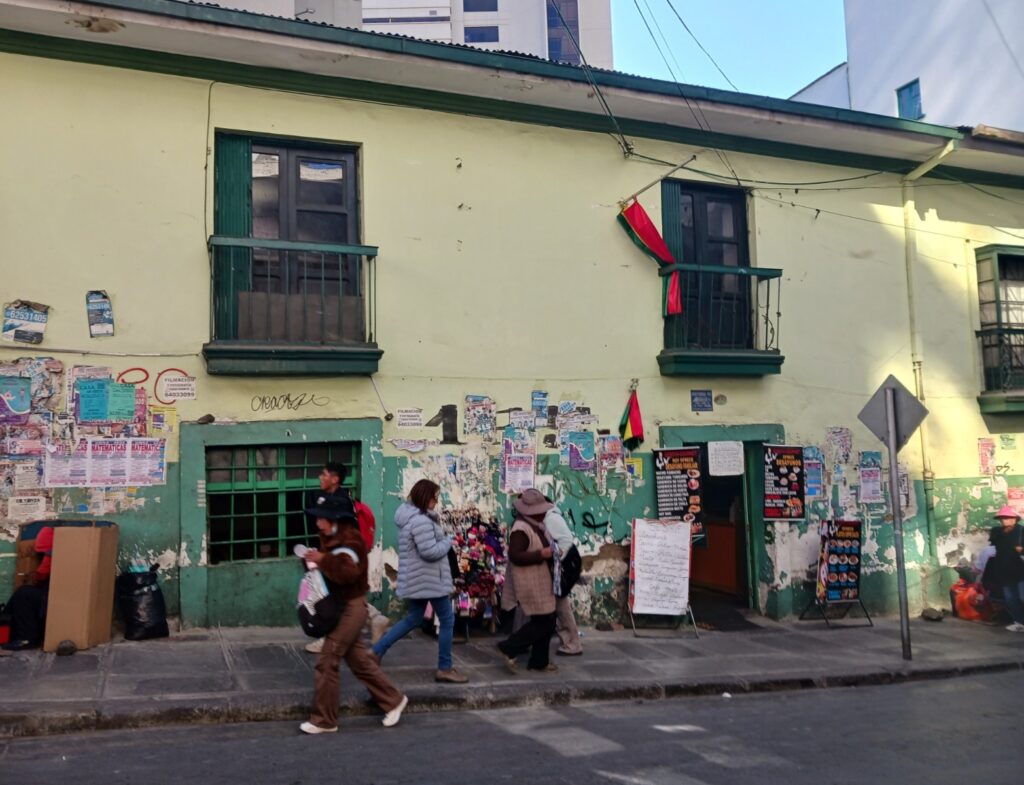
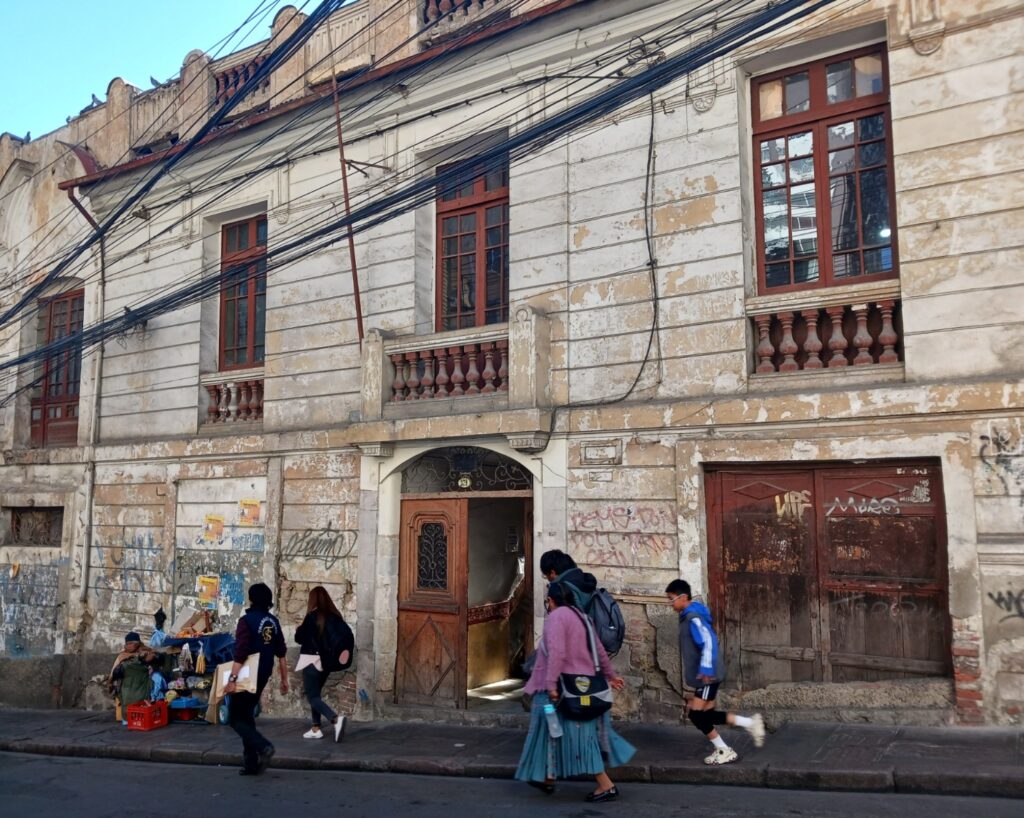
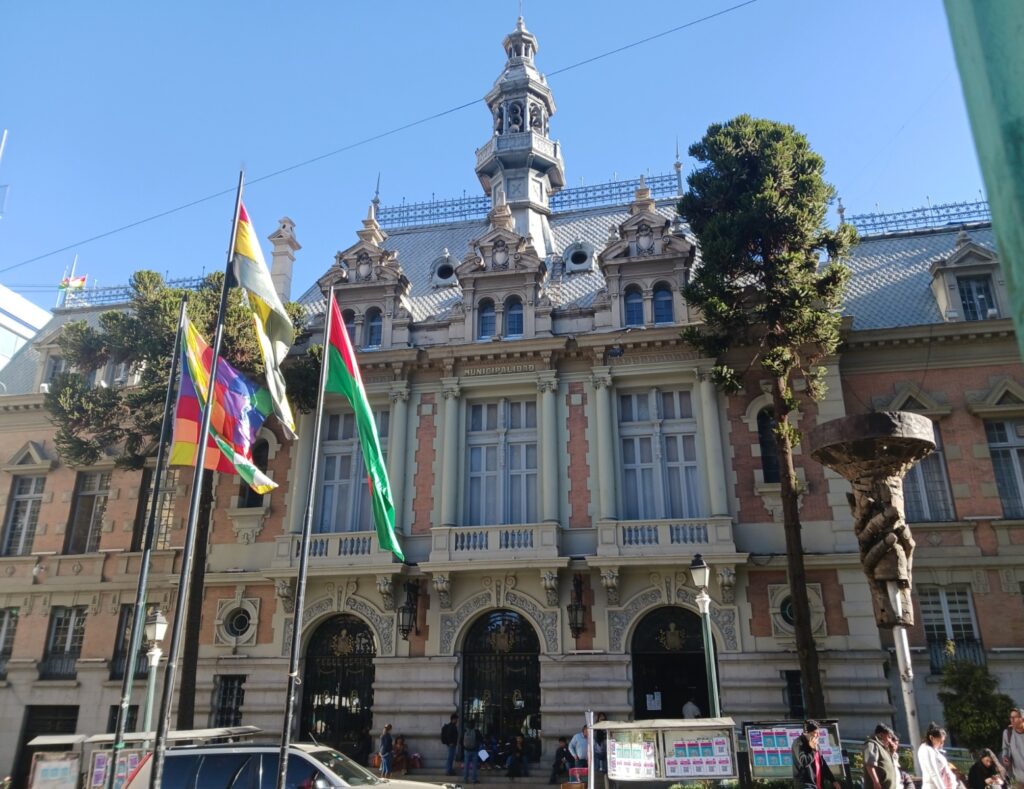
We knew that Bolivia wasn’t a rich country, but it’s in La Paz that we saw the full extent of this poverty. Homeless people in the streets, women begging, others rummaging through the trash. This is the first time we’ve seen all of this since our arrival in Bolivia. Several buildings are dilapidated or abandoned mid-construction.
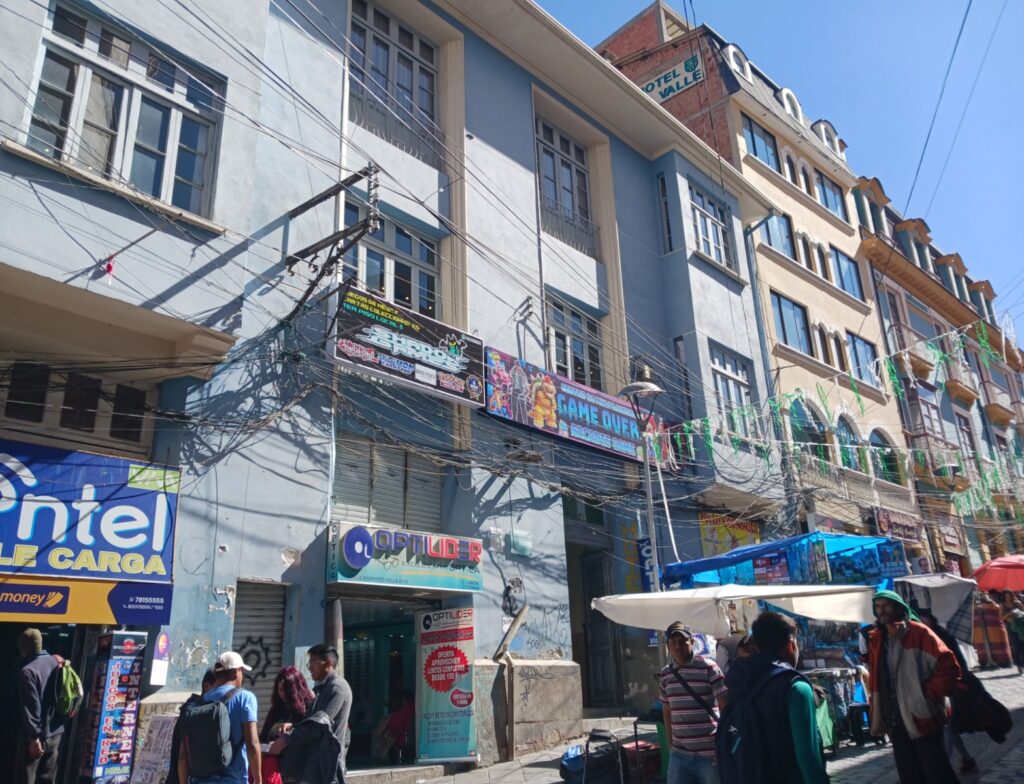
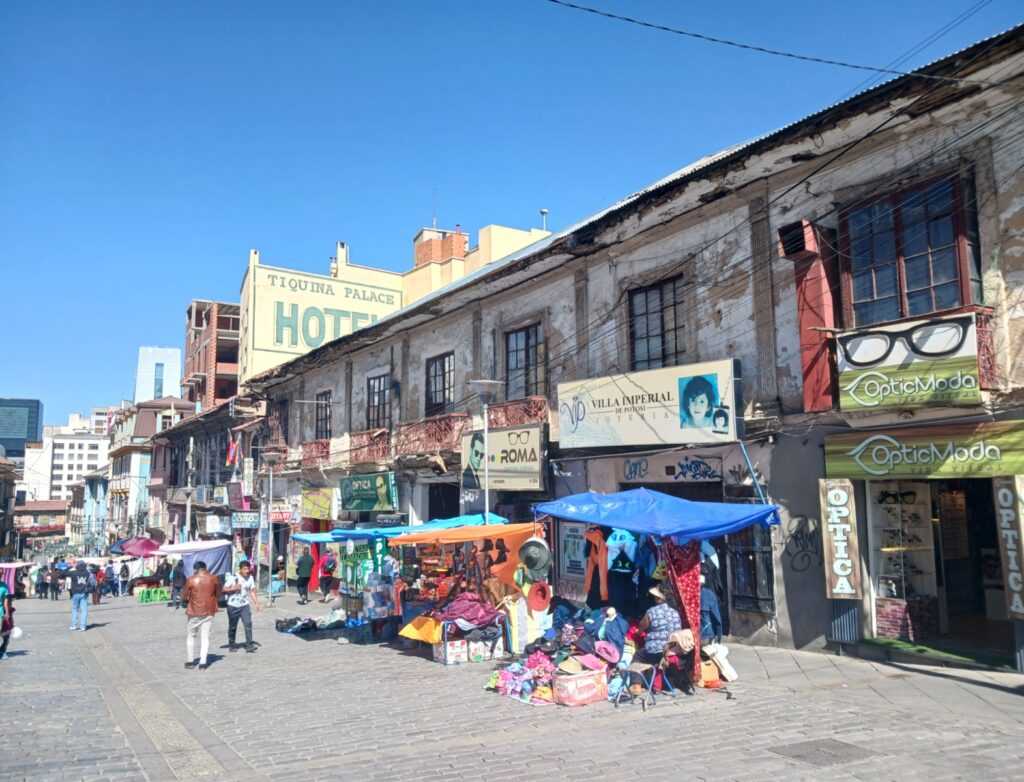
We finally find a grocery store. The bill is quite high for just a few packaged products and some water.
We return to the hotel where we spend the rest of the day.
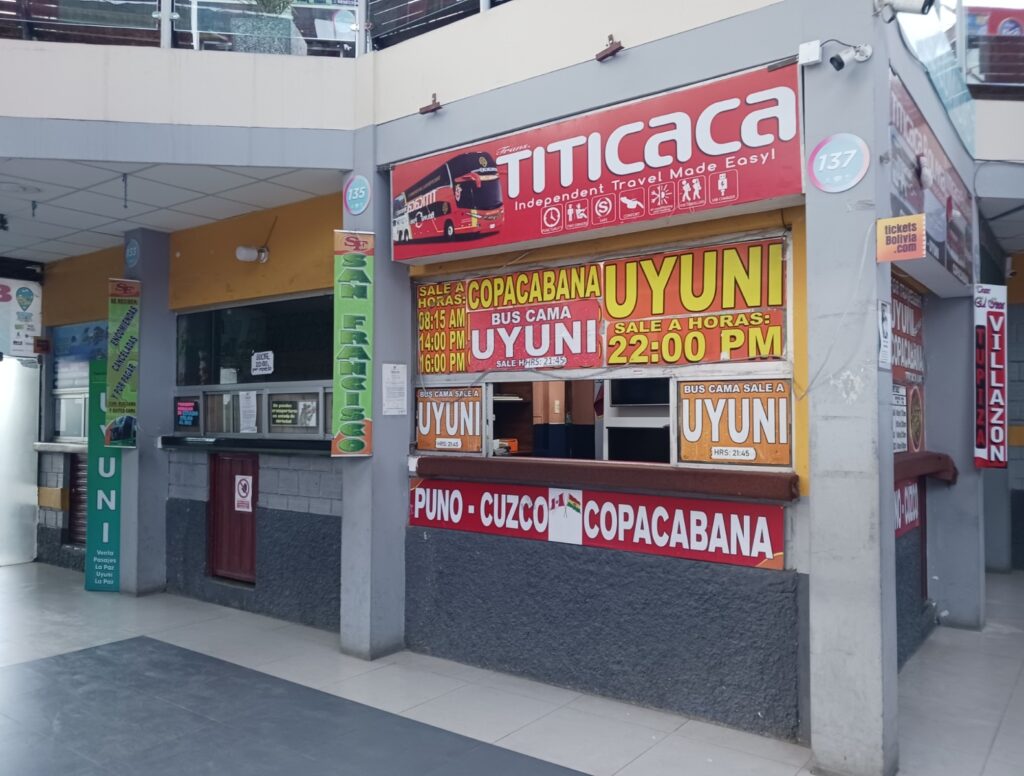
Day 11: We go to the bus terminal to buy our tickets to Copacabana, where we are going the next day. Like at all the other Bolivian terminals, it’s a bit of a mess. Dozens of agencies selling almost the same thing line up. Employees, in full ‘town crier’ mode, shout out destinations.
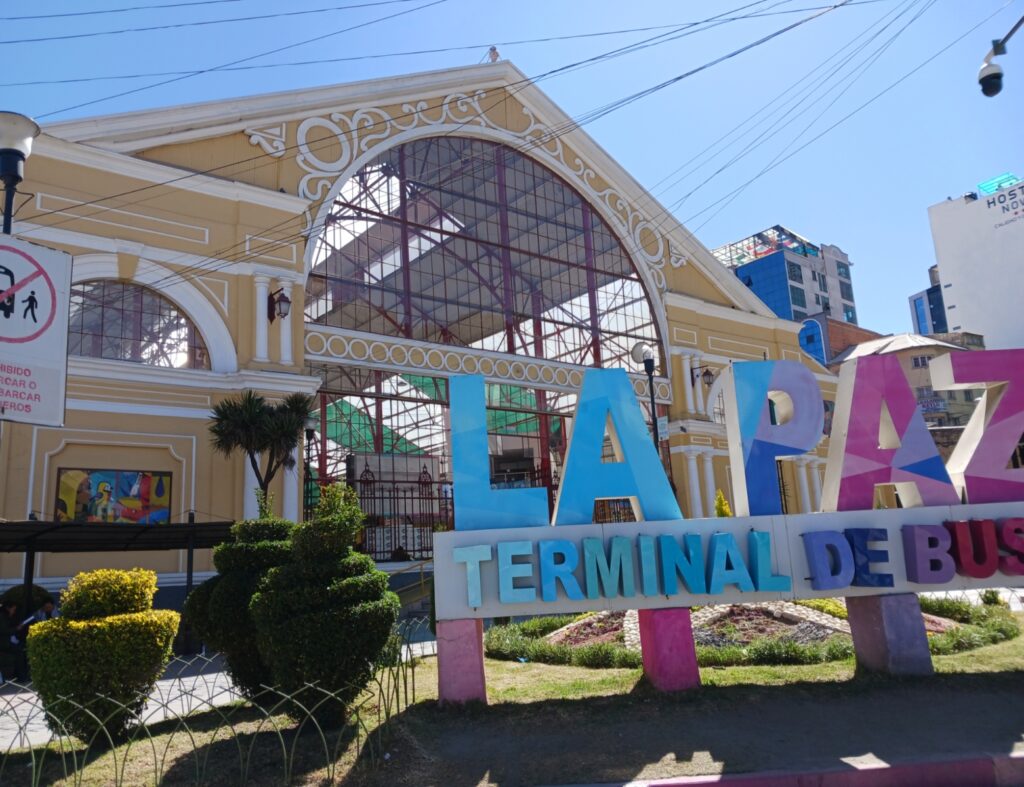
In La Paz, there are also homeless people begging and children selling candy. We arbitrarily choose the Titicaca company. She’s the only salesperson who smiled at us and gave us some attention. Since all the companies sell the same thing, we might as well go with the one that has good customer service.
We then do some scouting in the shops downtown. There’s no point in loading up for no reason. We’ll be back in La Paz in three days. That’s when we’ll stock up on cheap, tacky souvenirs.
Day 12: We take a 4-hour bus that takes us to Copacabana, on the shores of Lake Titicaca.
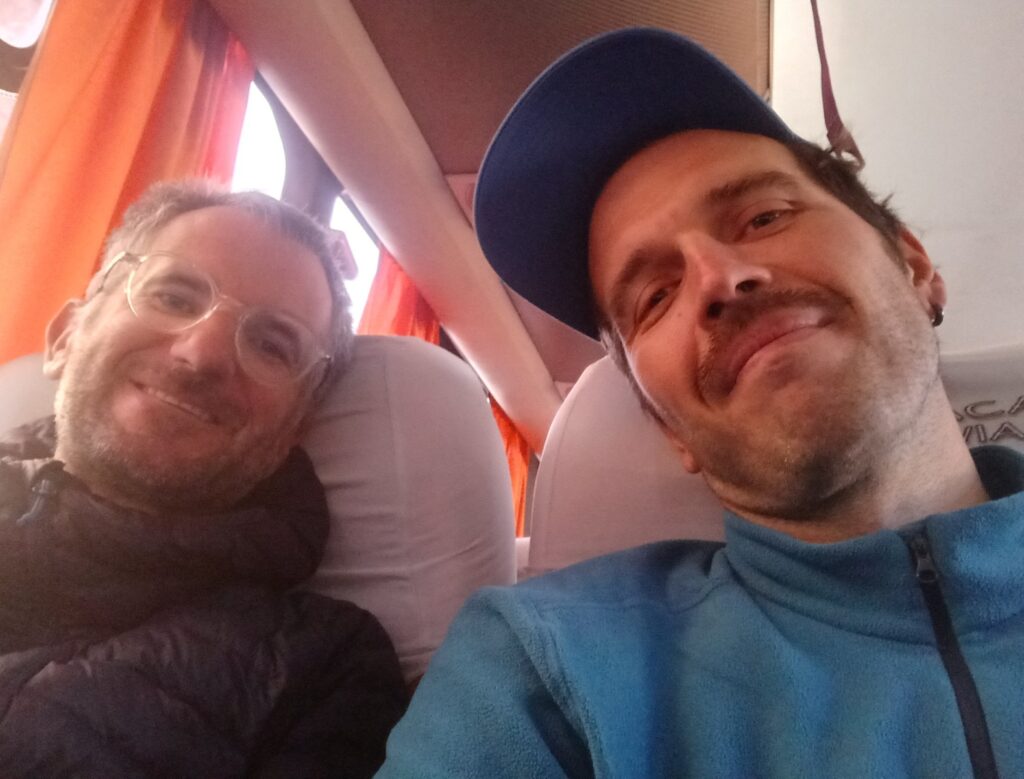
The journey goes smoothly. About 45 minutes before arriving, we have to get off the bus to cross the lake by boat.
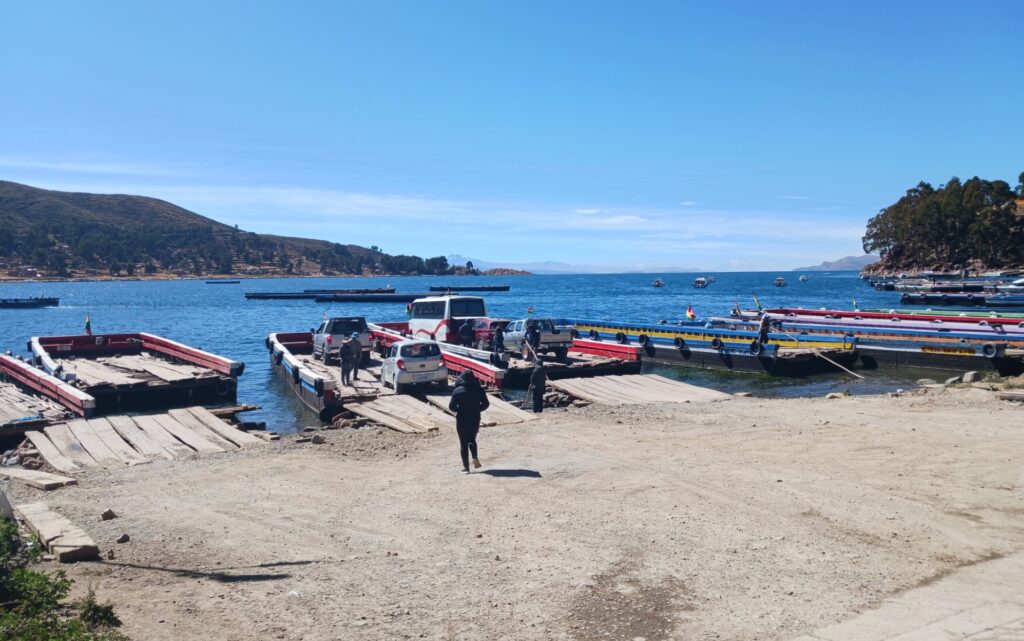
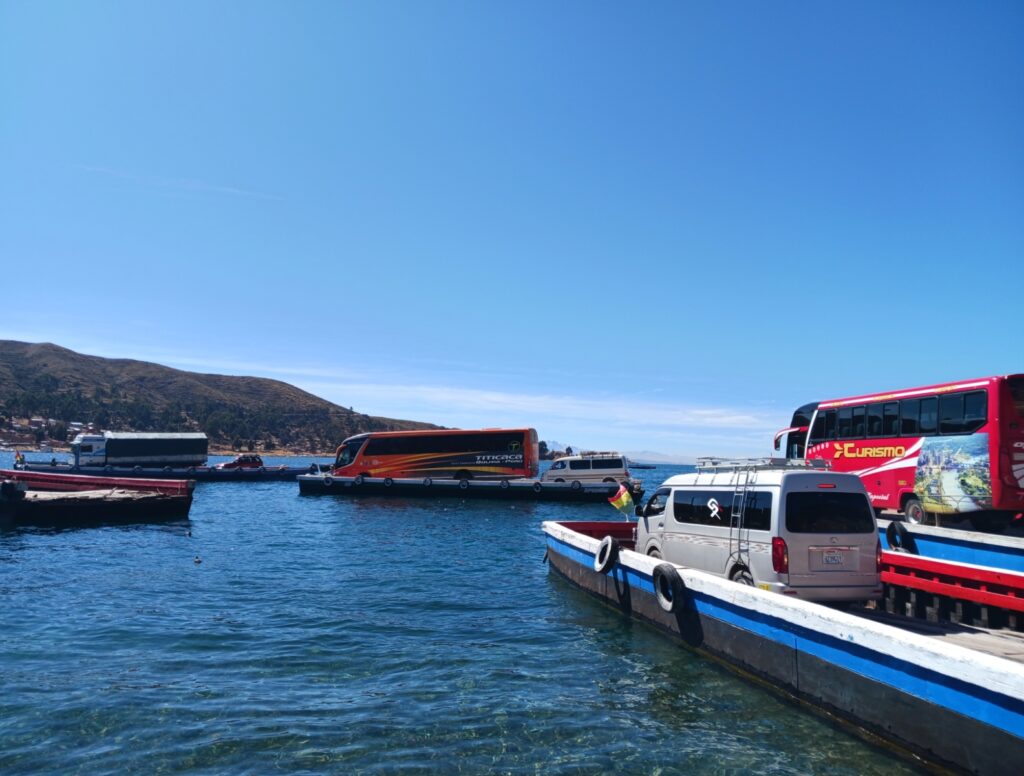
The bus drives onto a platform, and we get into a boat after paying the fees.

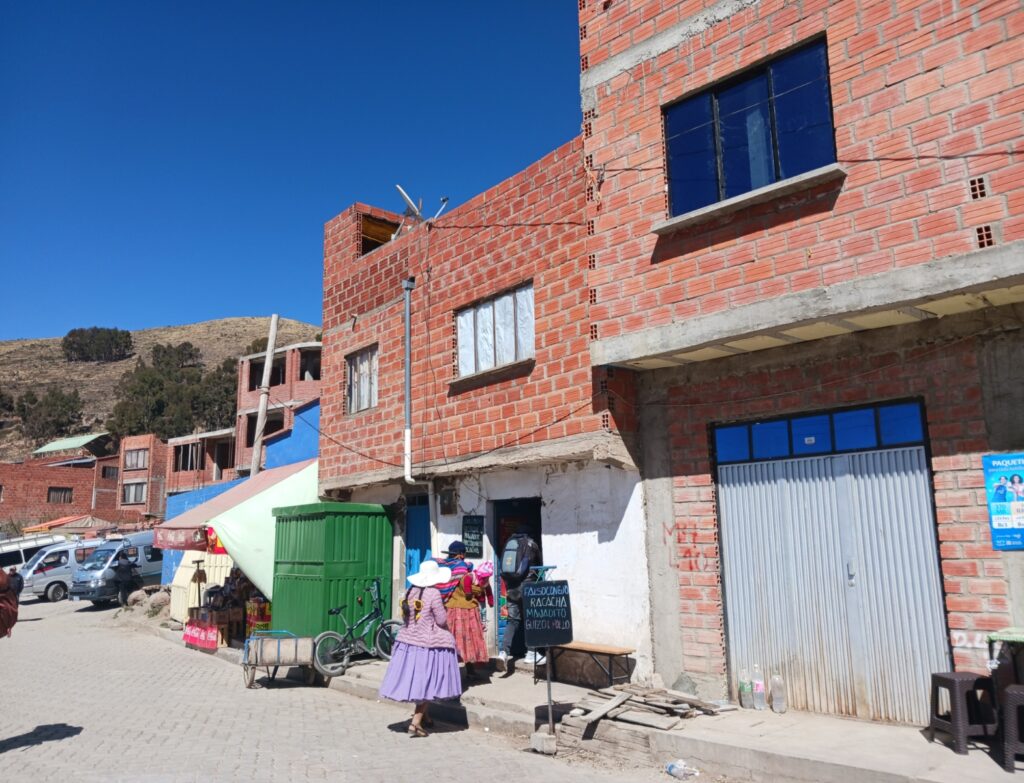
The road is quite beautiful and offers a stunning view of the world’s highest navigable lake.
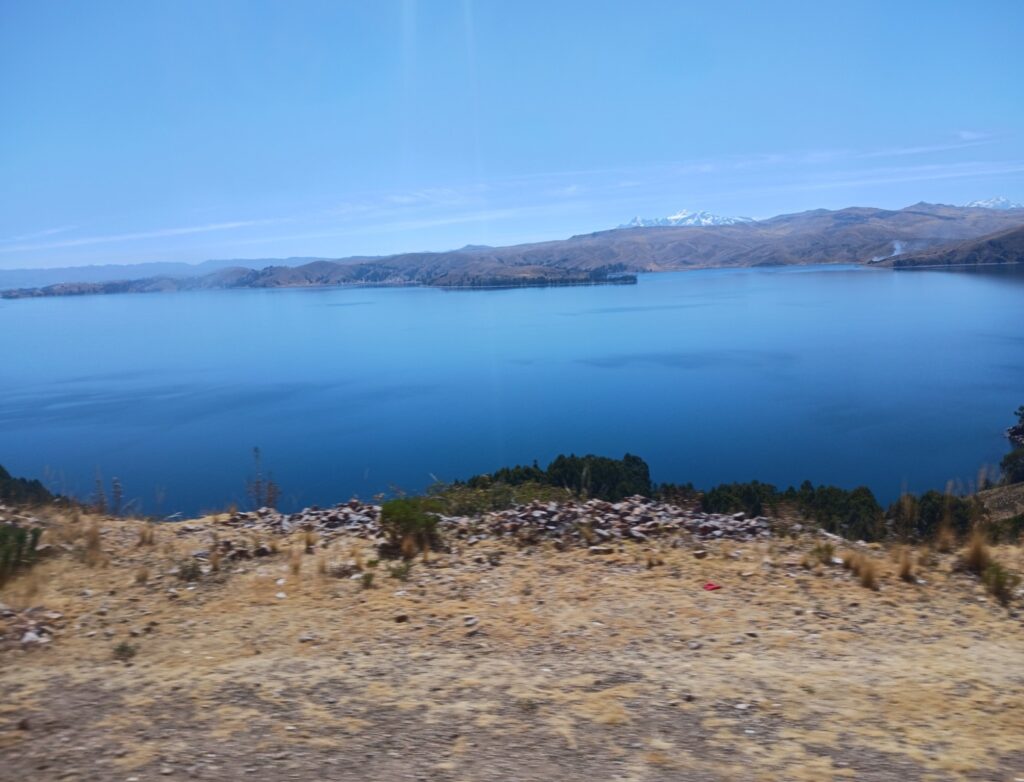
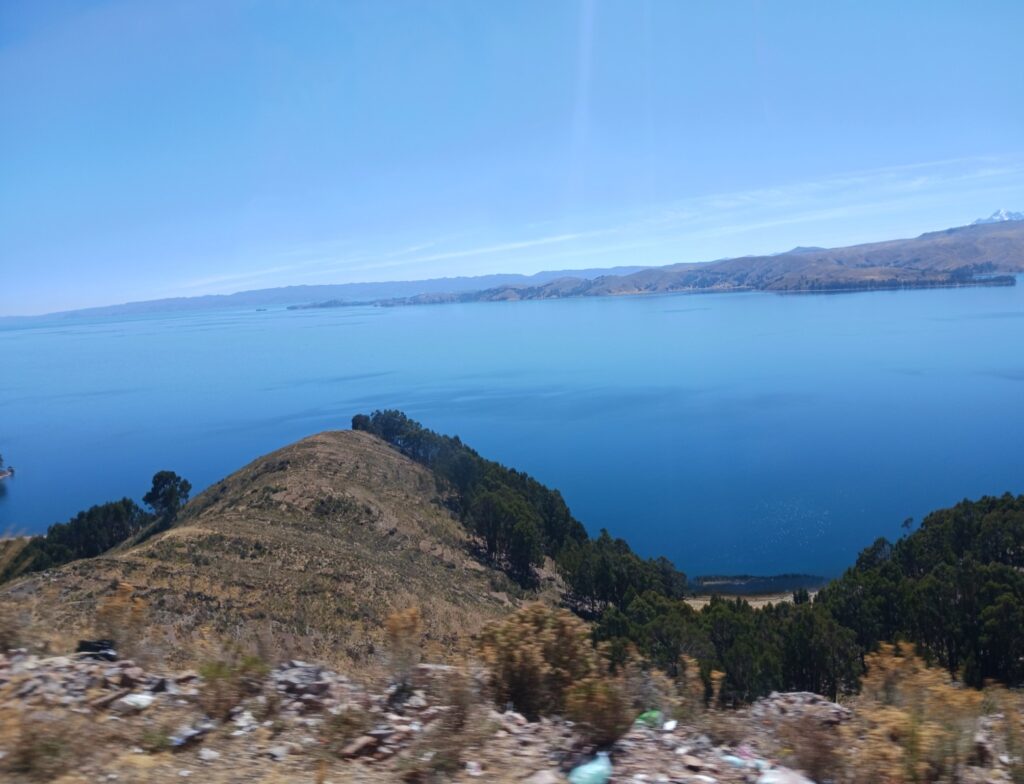
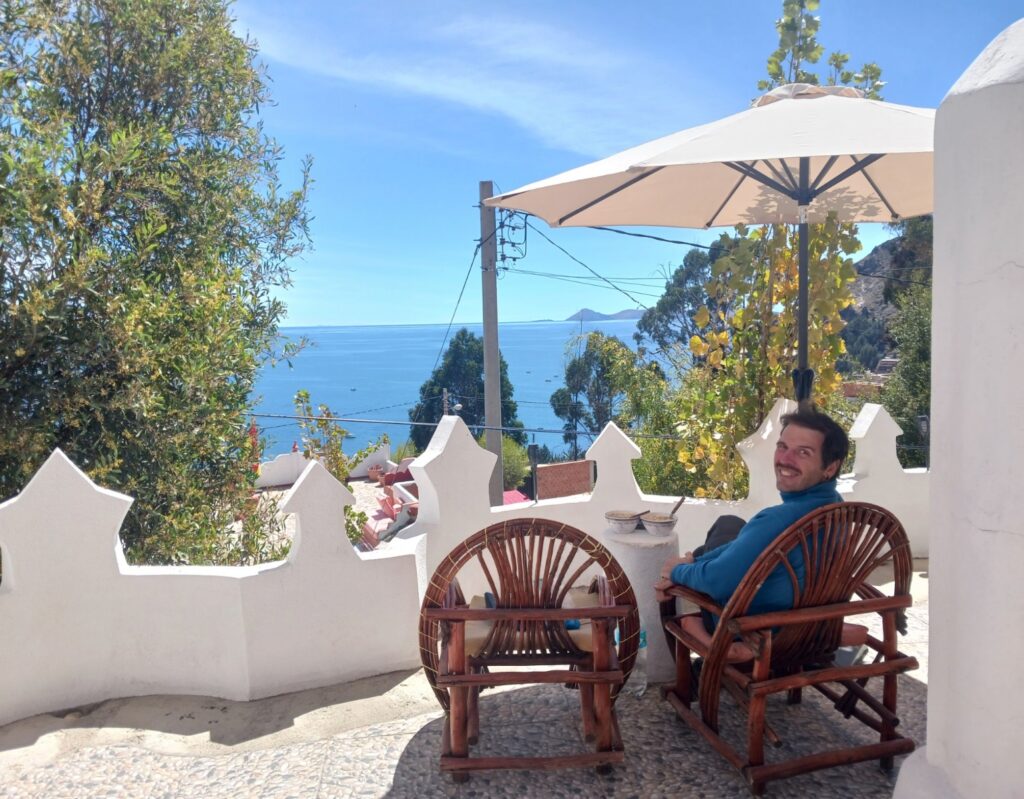
Upon arriving in Copacabana, we have lunch on the terrace, which offers a magnificent view of the lake. We spend the afternoon there.

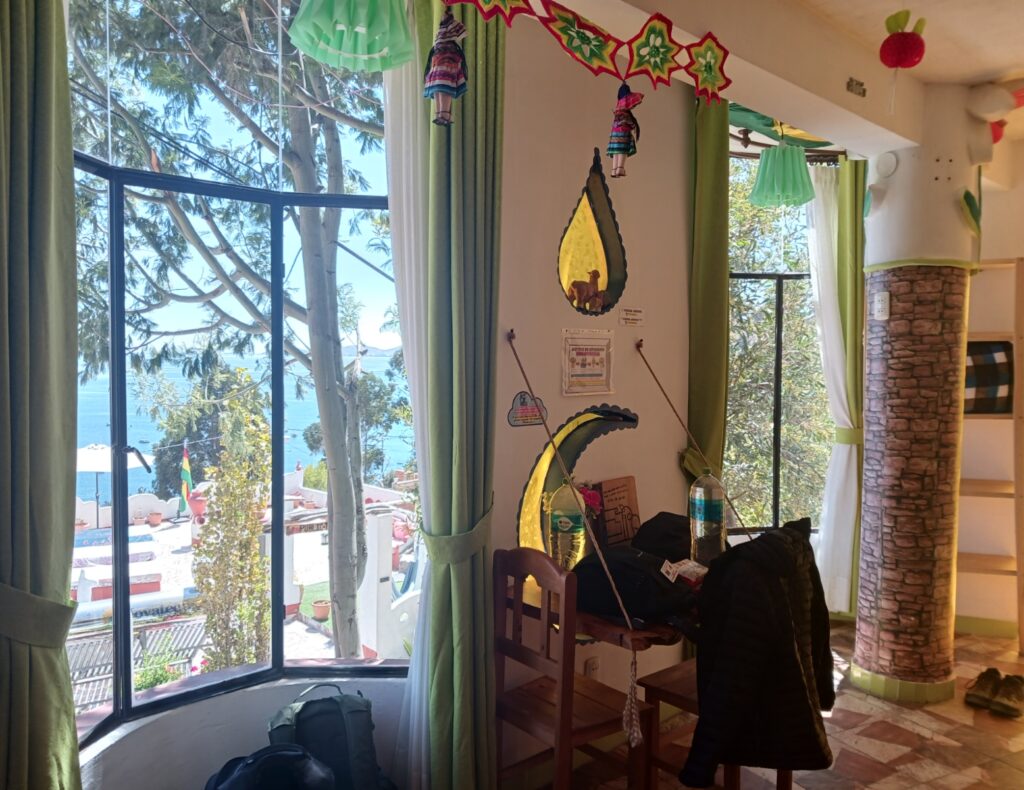
Day 13: We decided not to go to the Sun and Moon Islands on the lake, and for several reasons.
The first reason: the crossing takes 2 hours and is done in tiny boats. So, you have to account for 4 hours of boating in total on the same day.
The second reason: François gets seasick. Although Lake Titicaca is a lake, it is enormous. The wind can cause swells and waves, forcing the boats to navigate slowly and perpendicular to the waves. When we wake up, we see that the lake’s water is choppy, and the boats are struggling to move forward. So, there’s no point in even trying.
The last reason: there’s not much to see there. The photos we saw online didn’t convince us.
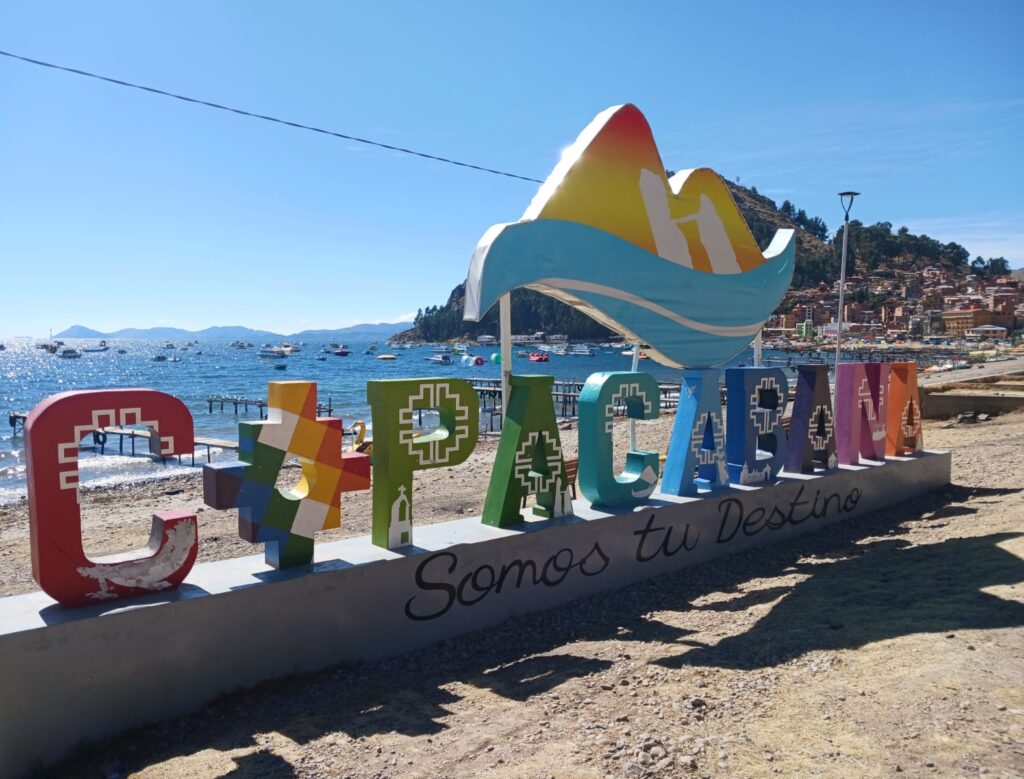
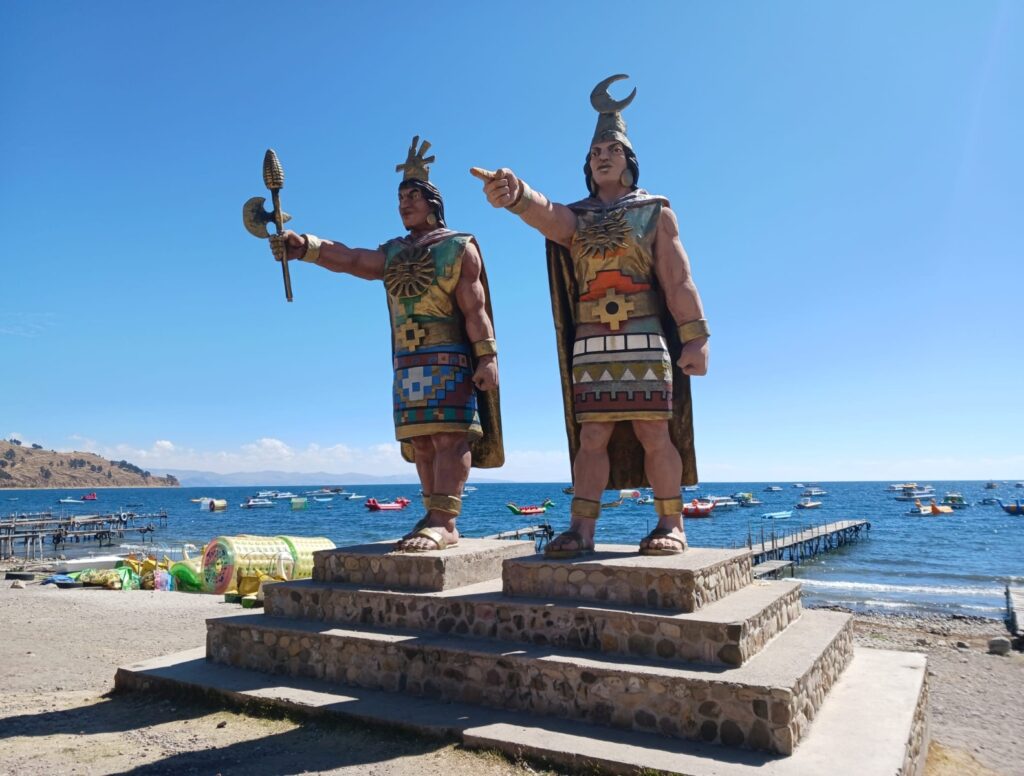
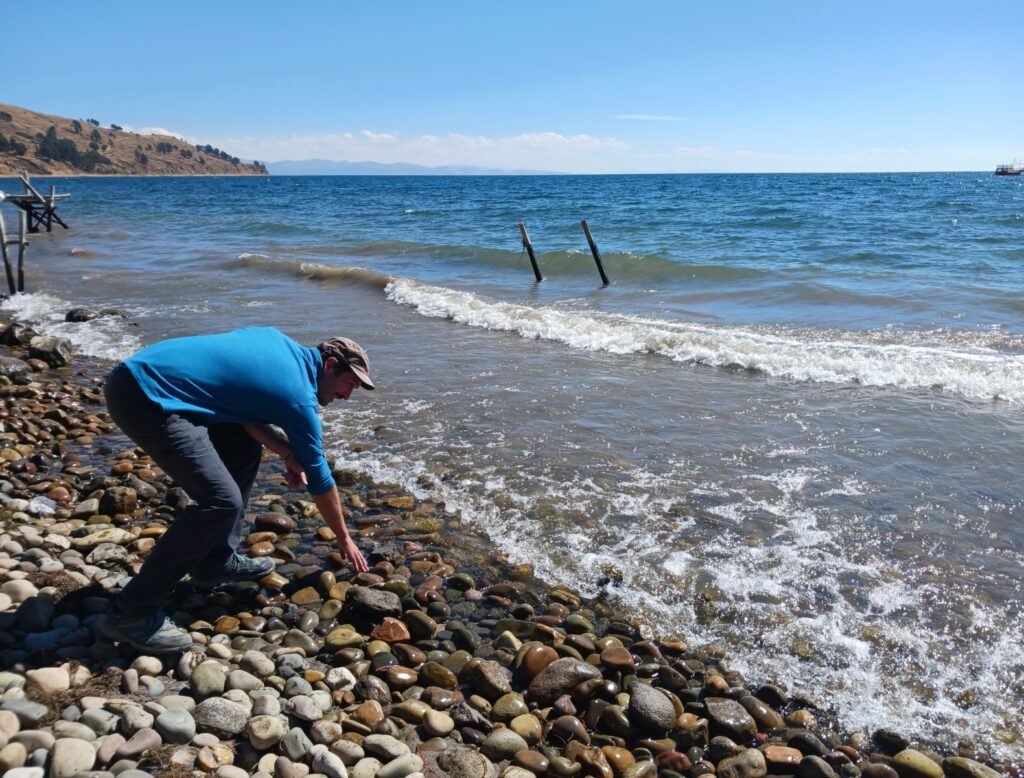
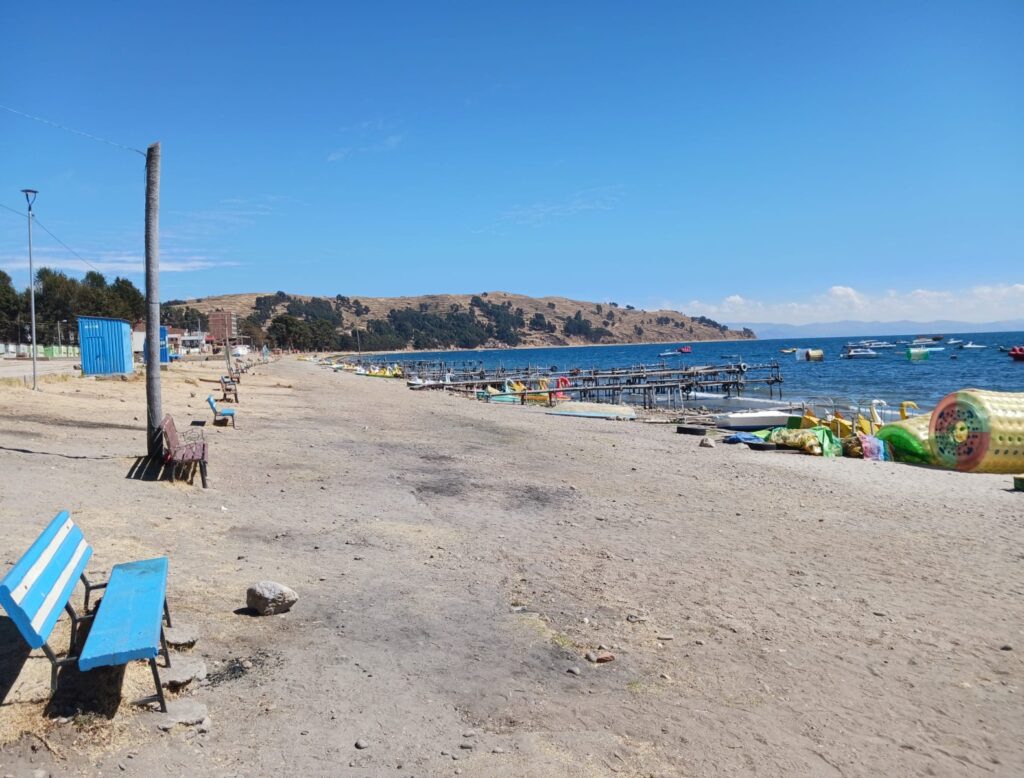
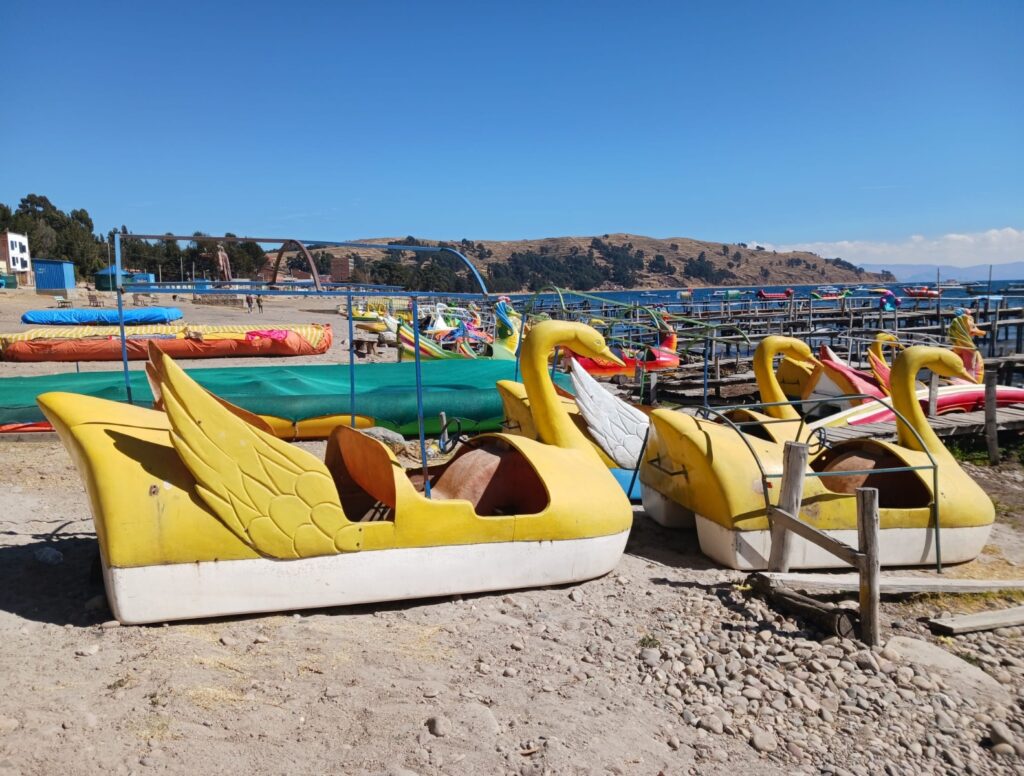
However, we go to the shore to touch the water. The site is very gloomy and has a Zombieland vibe. There are piers with broken planks, stranded boats, and rusted animal-shaped pedal boats scattered all over the shore.
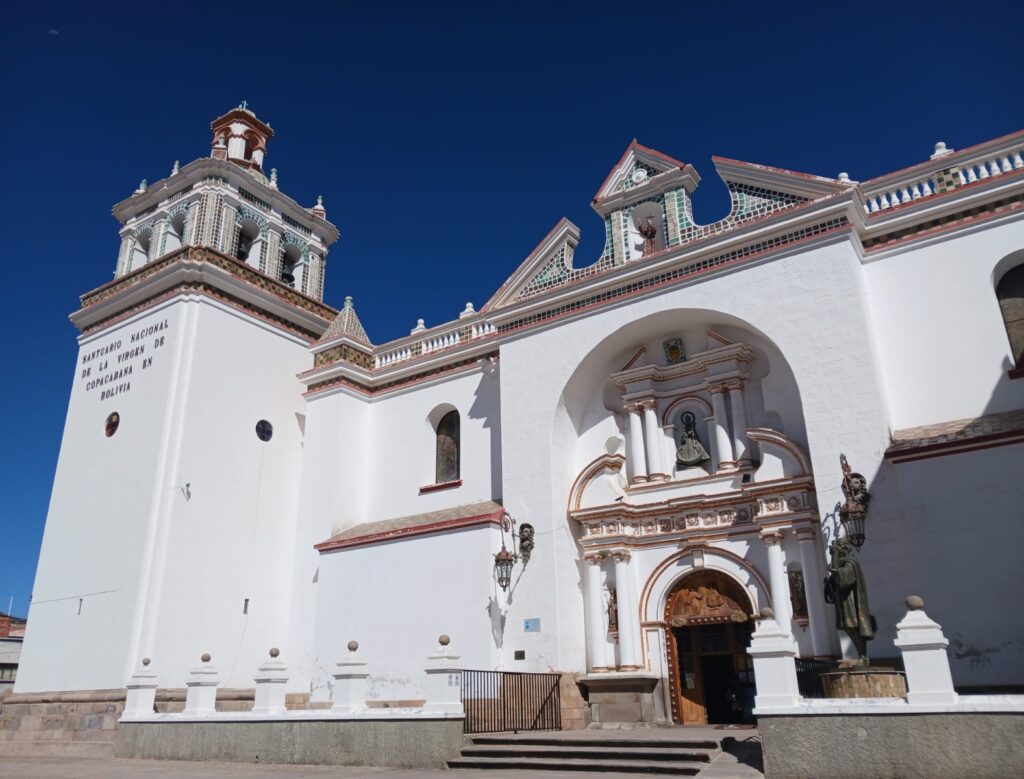
Next, we visit the Basilica of Our Lady of Copacabana—a dazzling white edifice whose opulence starkly contrasts with the surrounding poverty of the town.
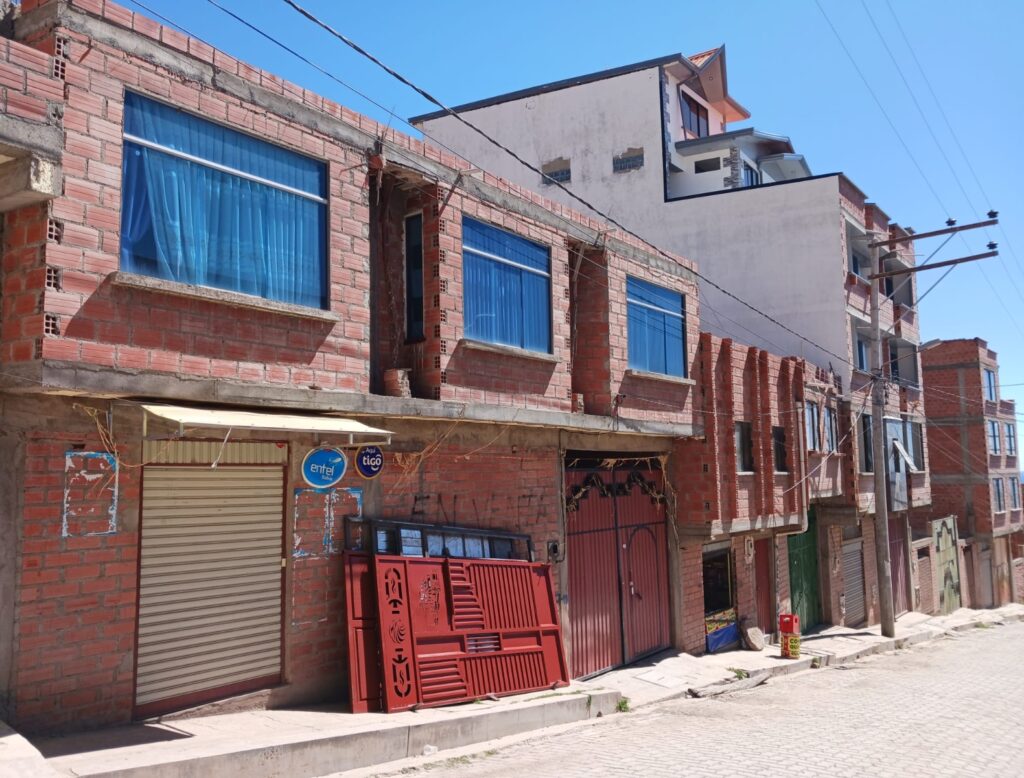
We are doing some shopping, carefully selecting our food before going back to enjoy the hotel terrace.
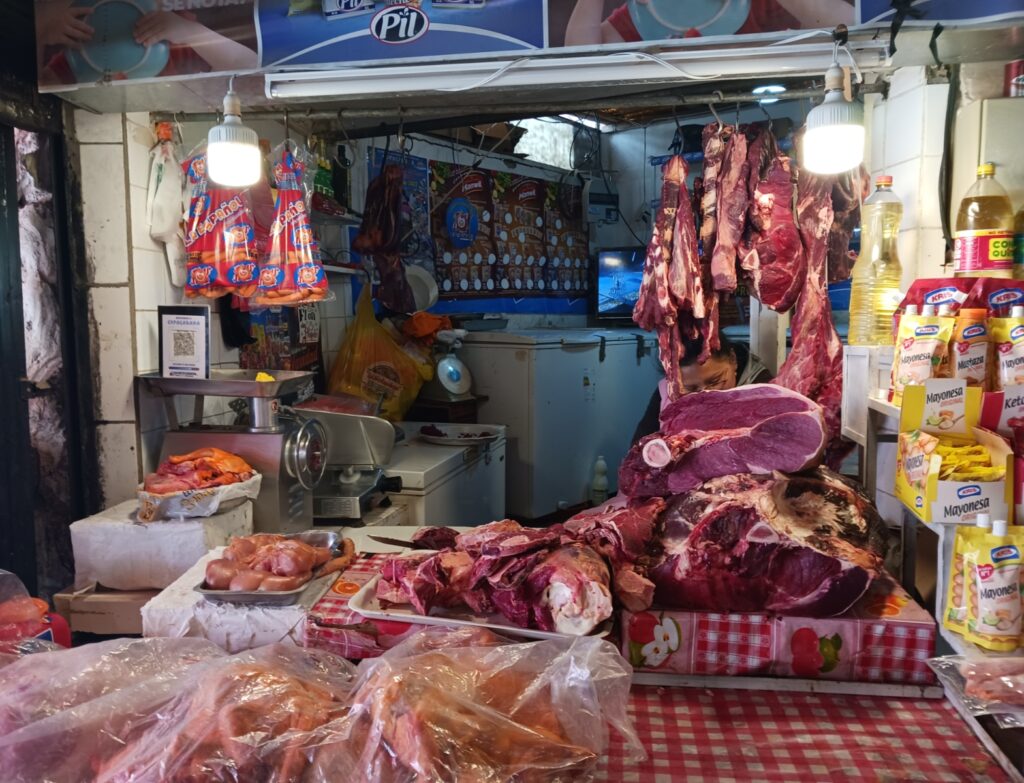
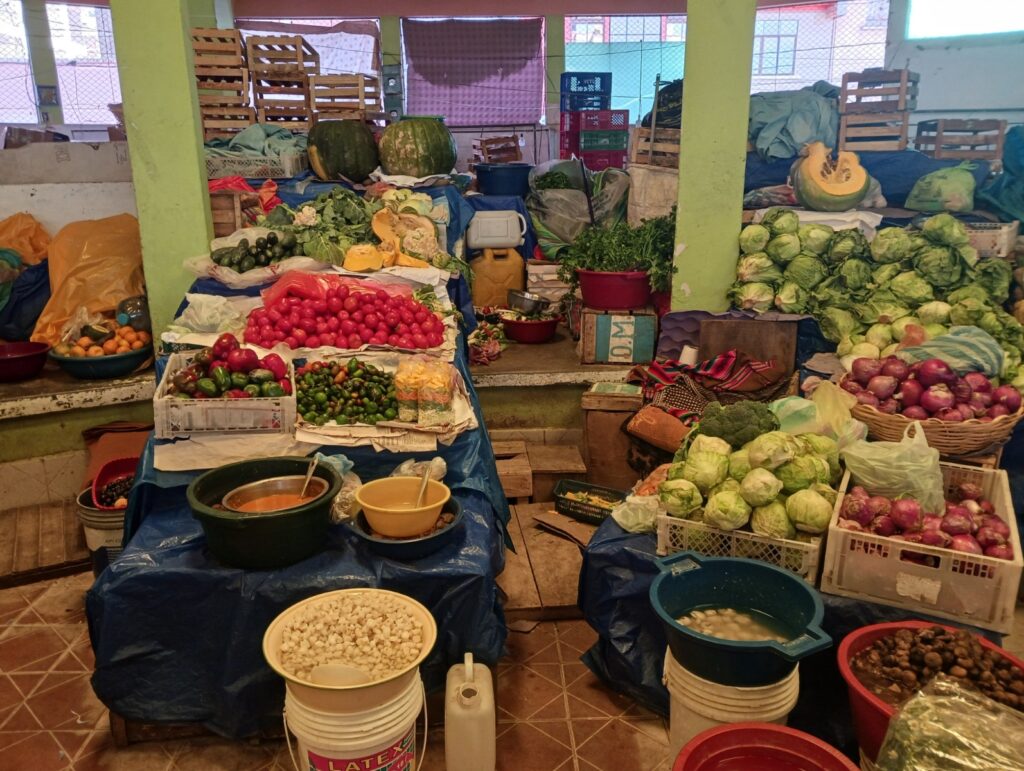
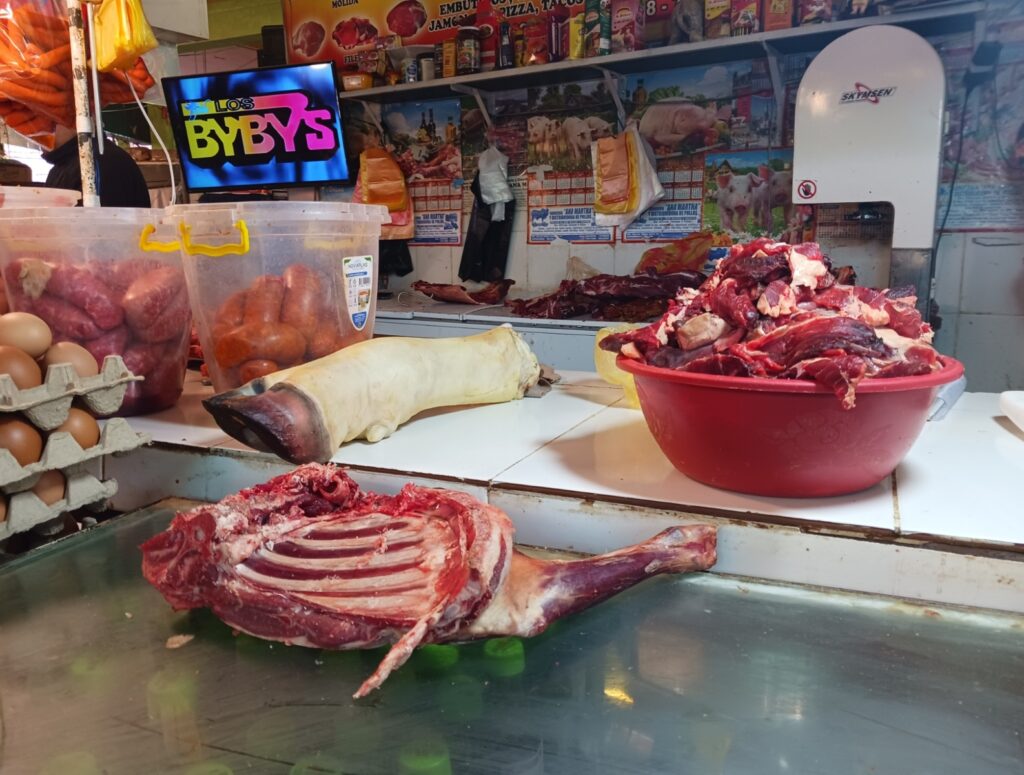
Day 14: We spend the morning on the hotel terrace. We take the bus at 1:30 PM to return to La Paz.
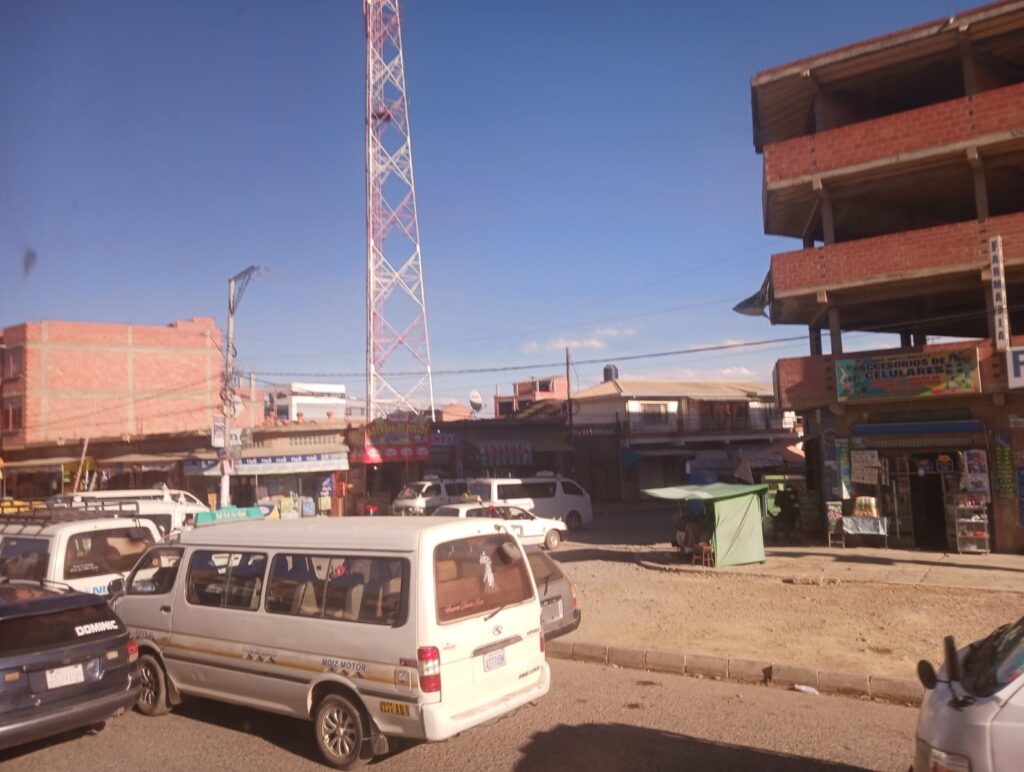
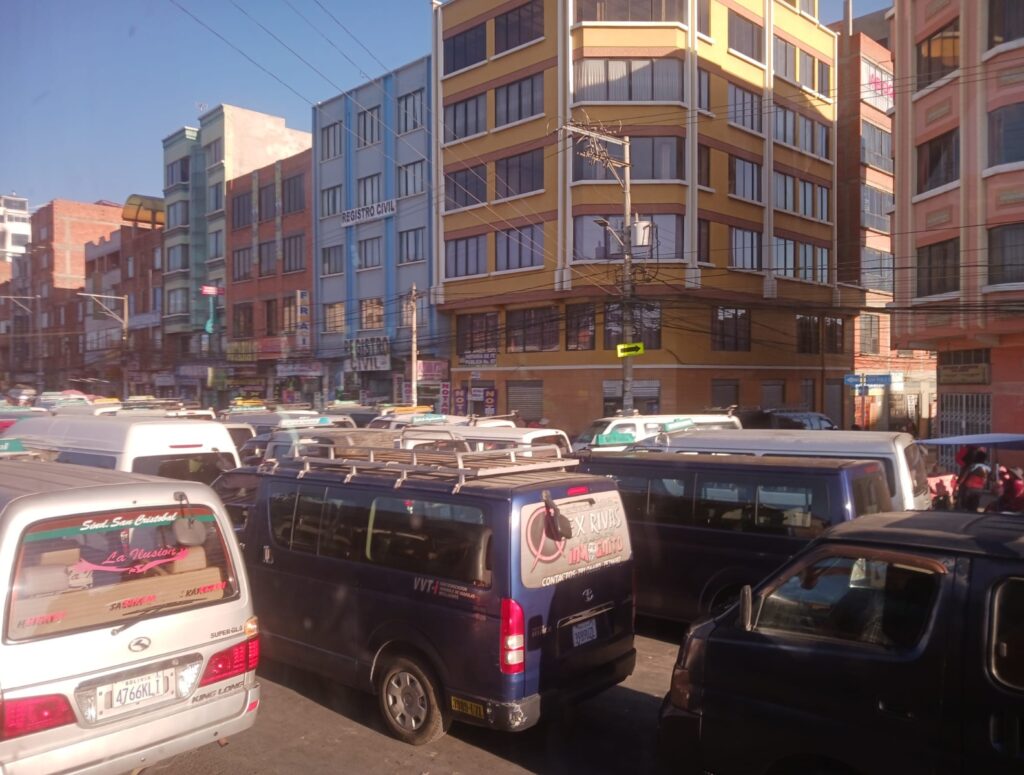
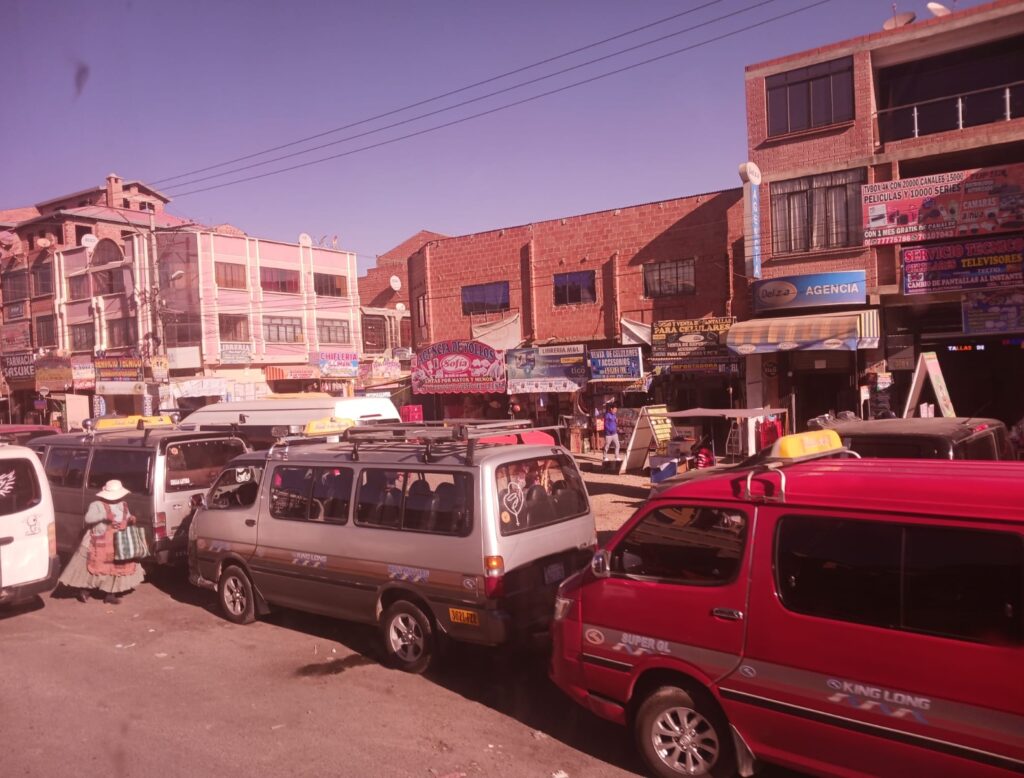
Day 15: We go out to do a few errands in the morning. In the afternoon, we stay in the touristy streets around the hotel and do some shopping.
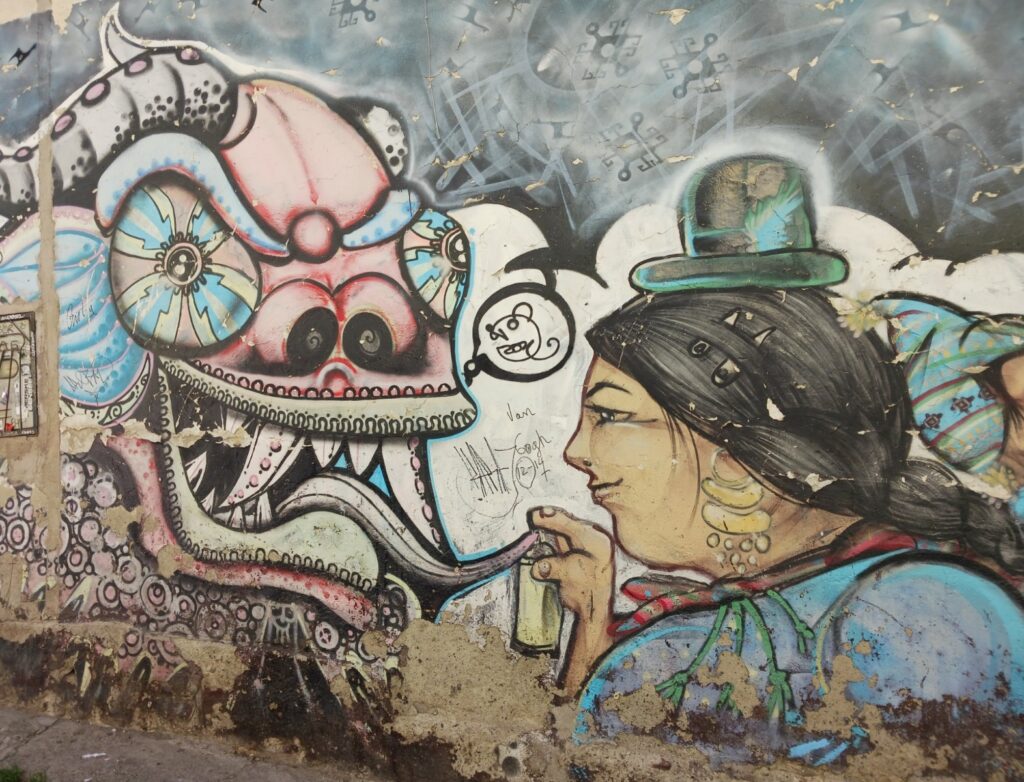
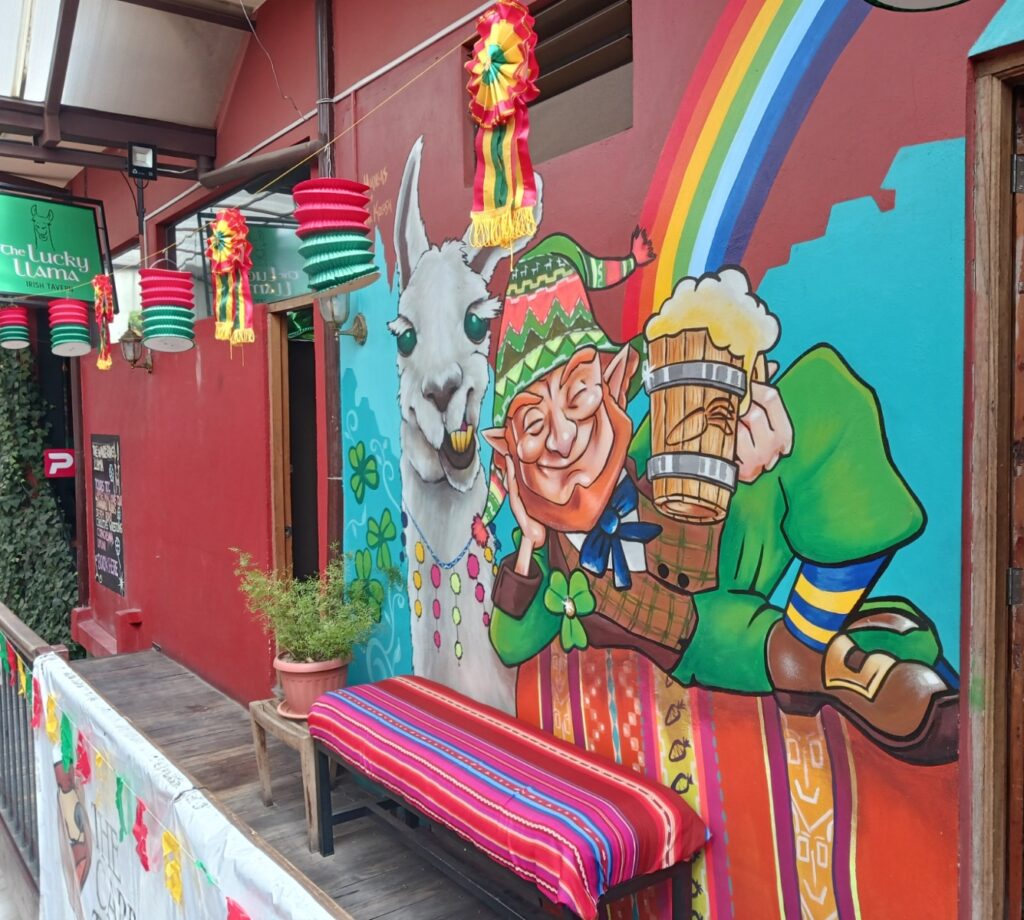
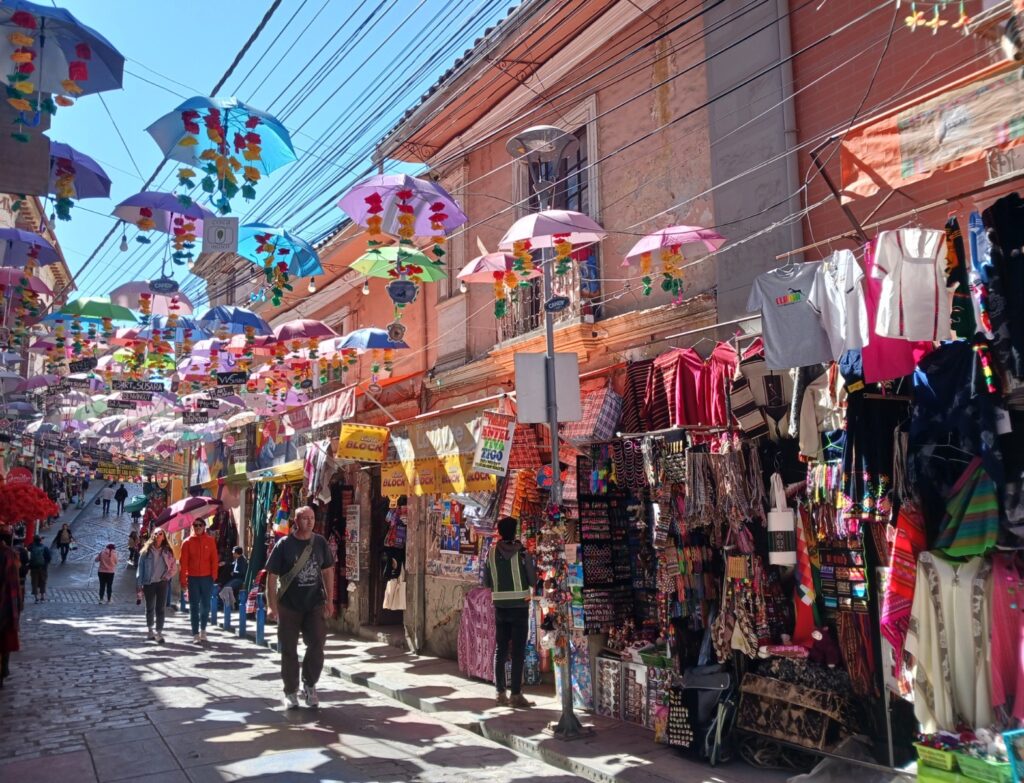
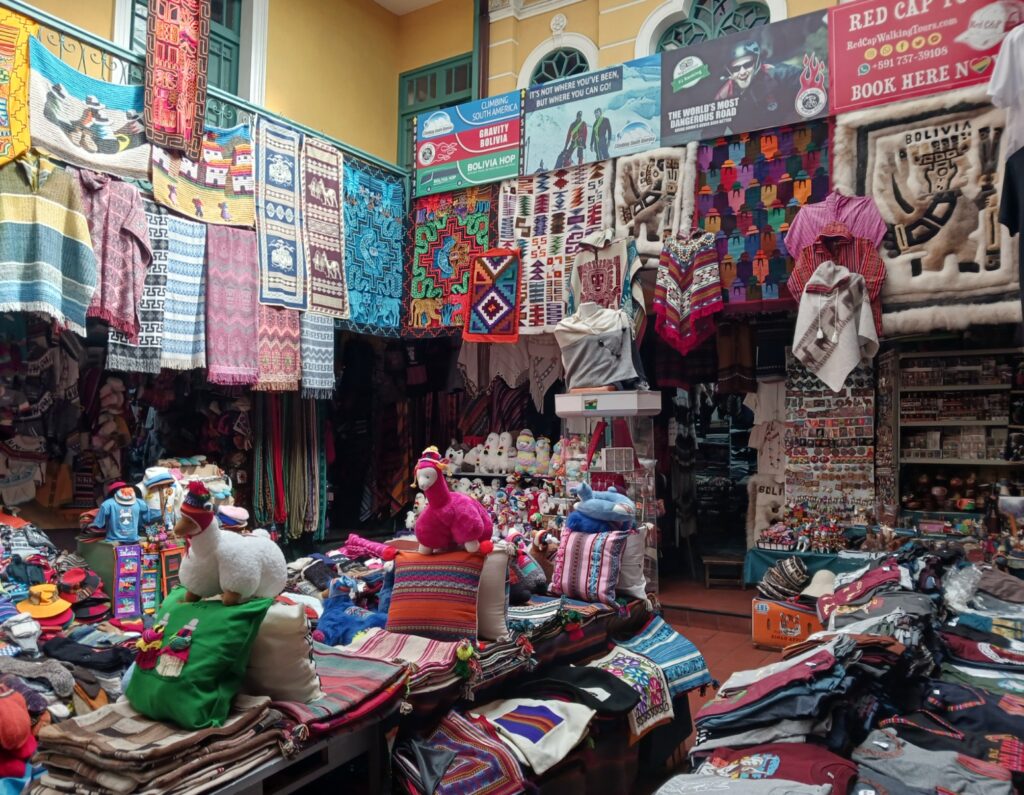
These will probably be the last ones of this trip.
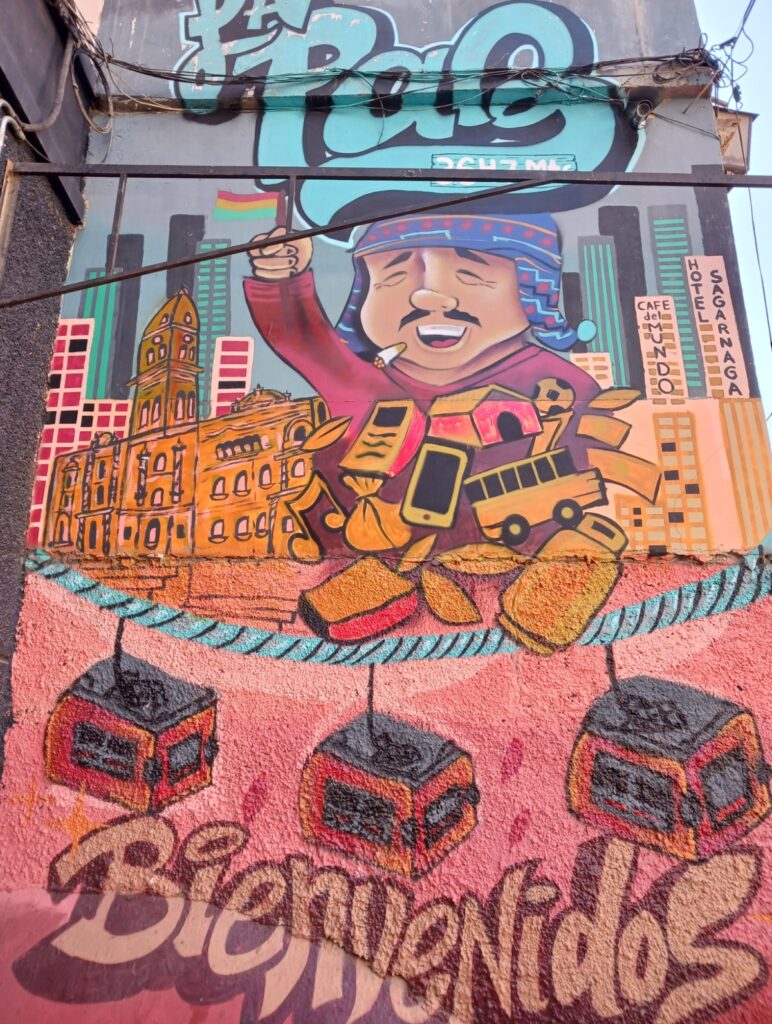
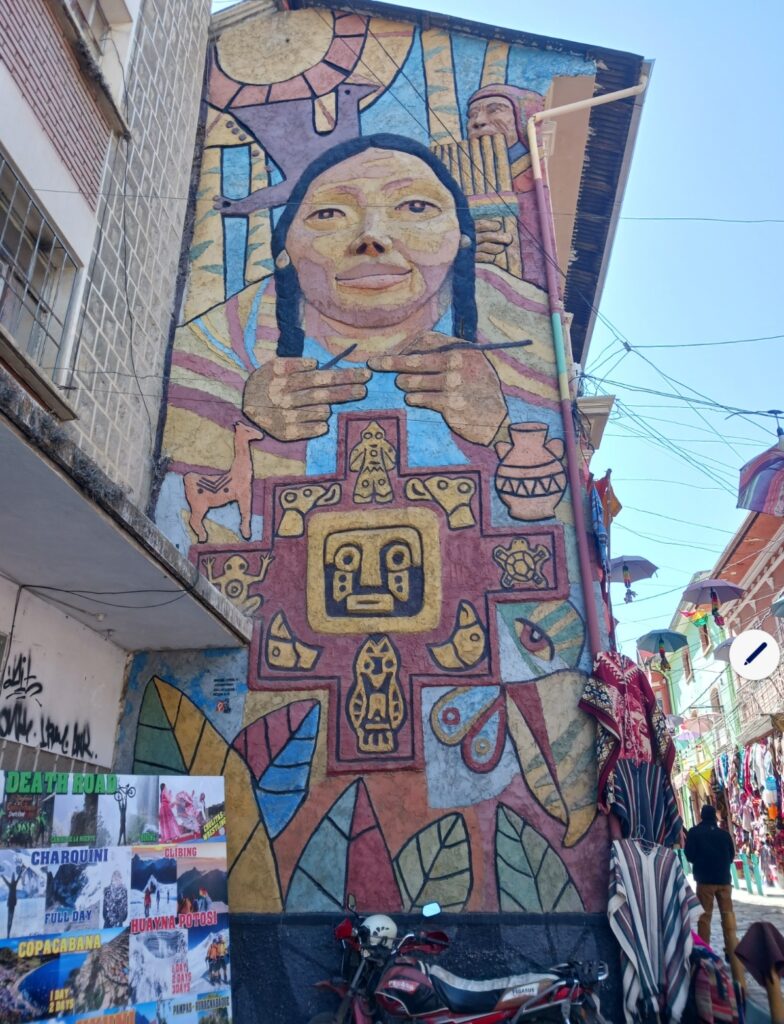
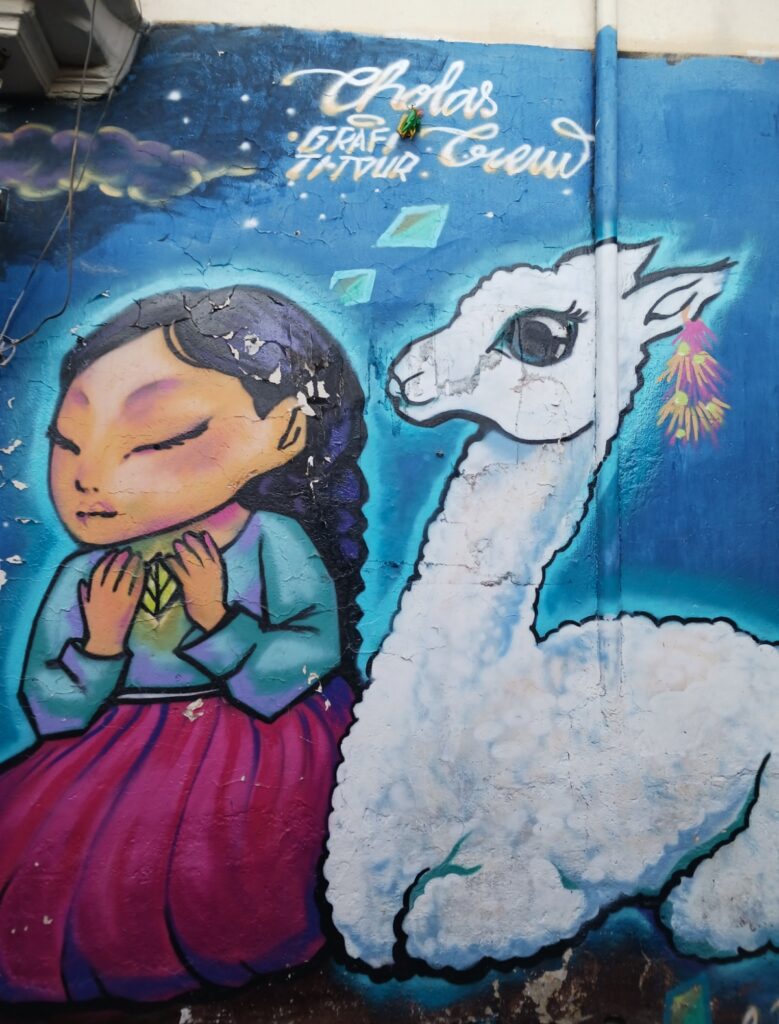
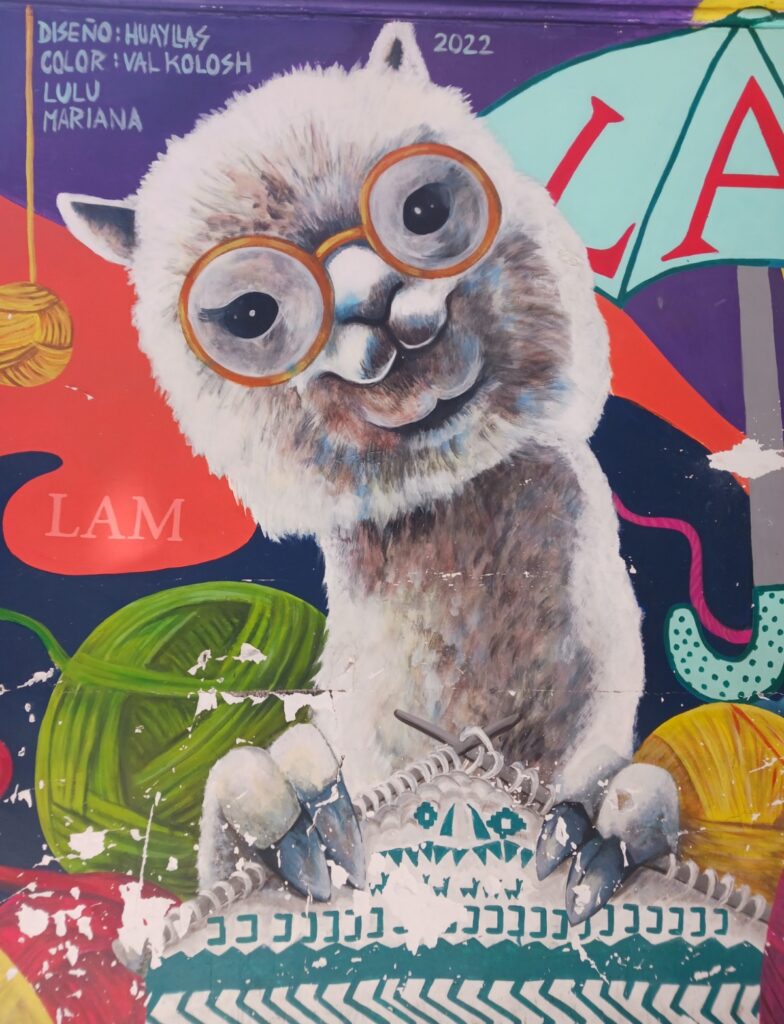
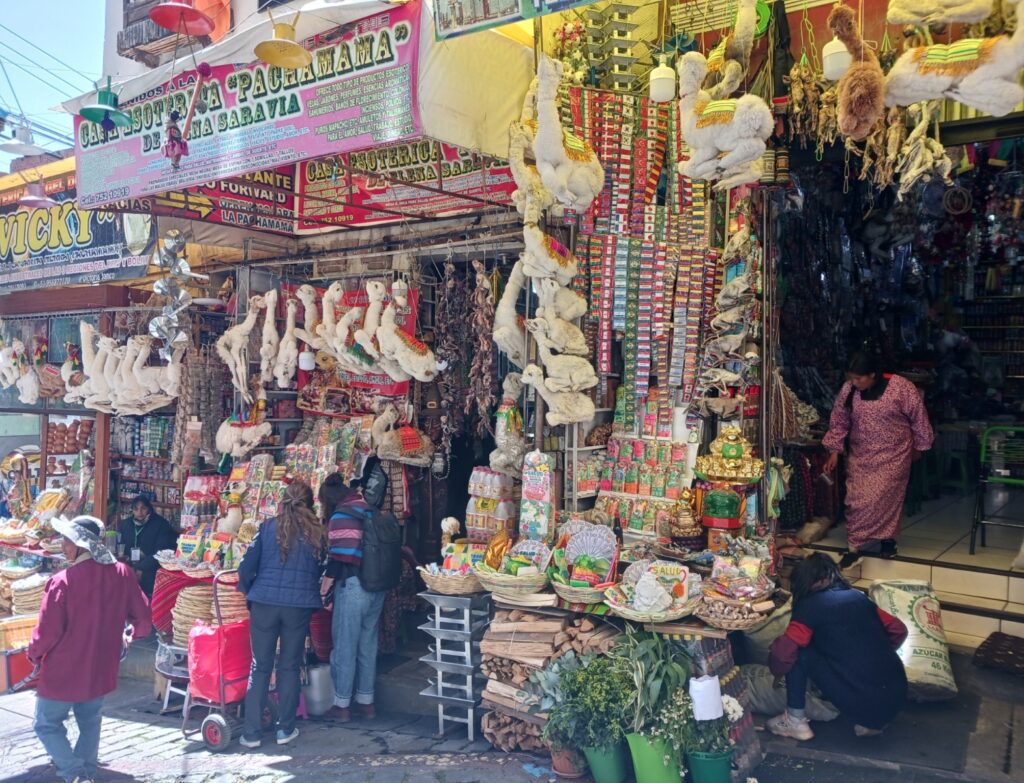
At the end of the street, we come across the Witch’s Market. Three shops sell plants, herbs, concoctions, talismans, and other charms to attract luck and love. It’s even possible to buy mummified llama fetuses to place in the foundations of your future home for good luck.
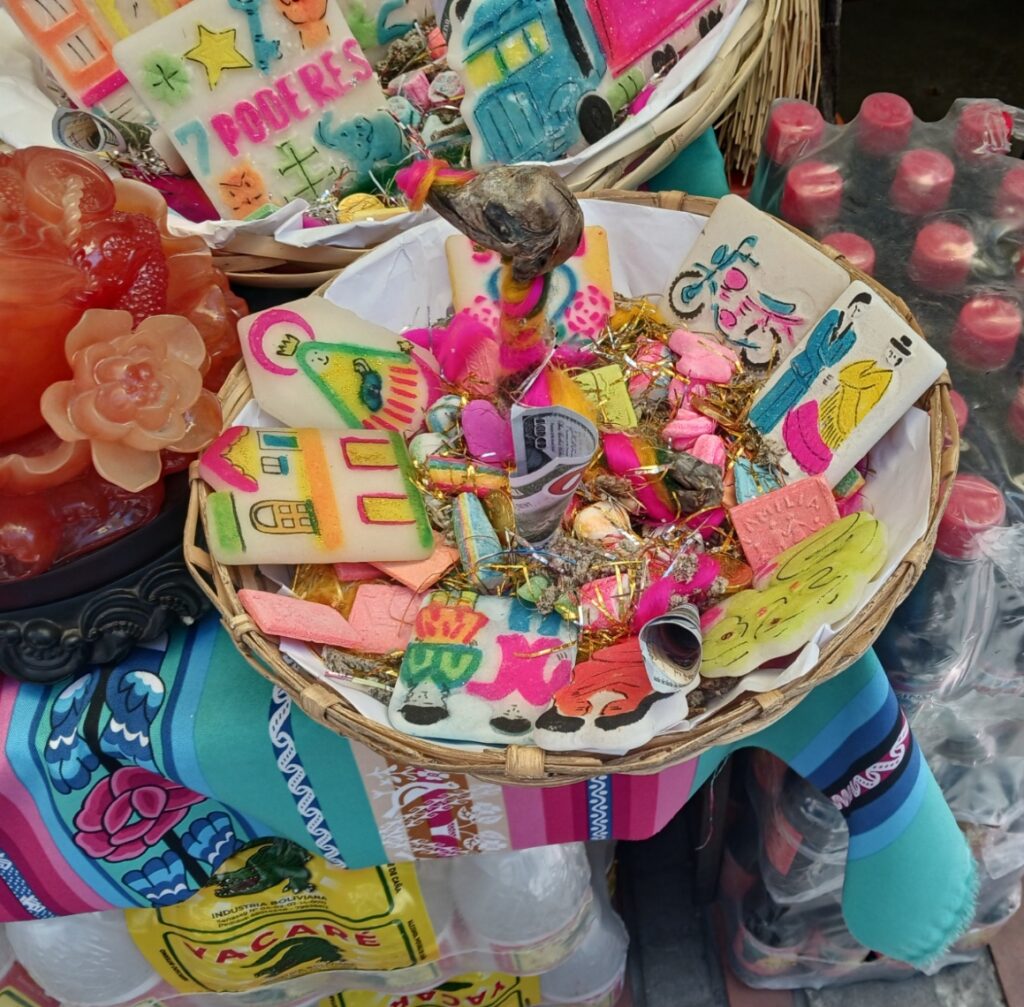
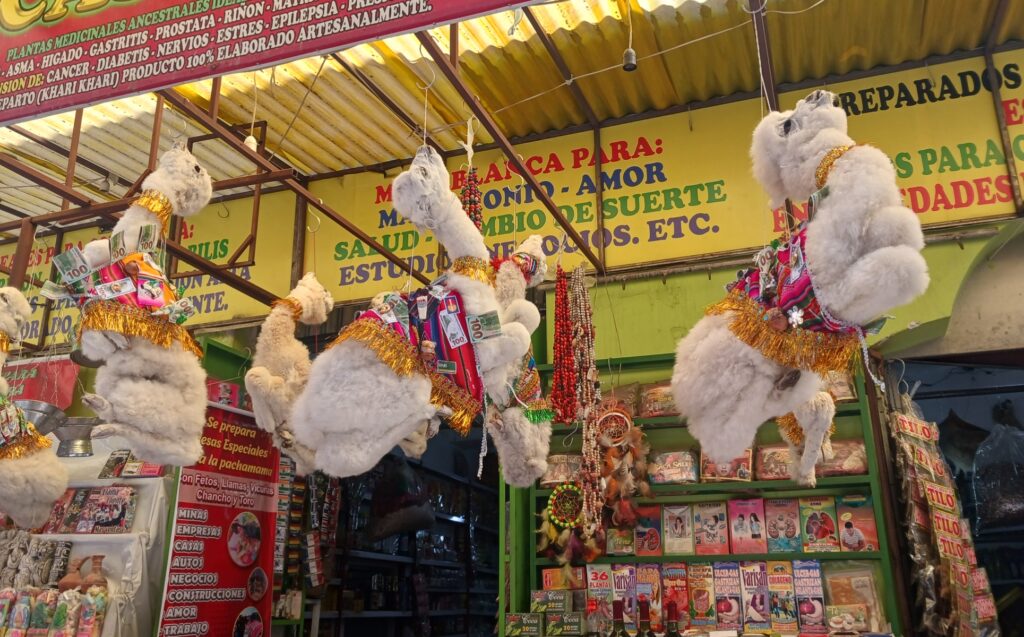
In the late afternoon, we try to rest, as a night flight awaits us. However, it’s not easy in a hotel where the walls are made of cardboard and there are ongoing construction works in the neighboring rooms.
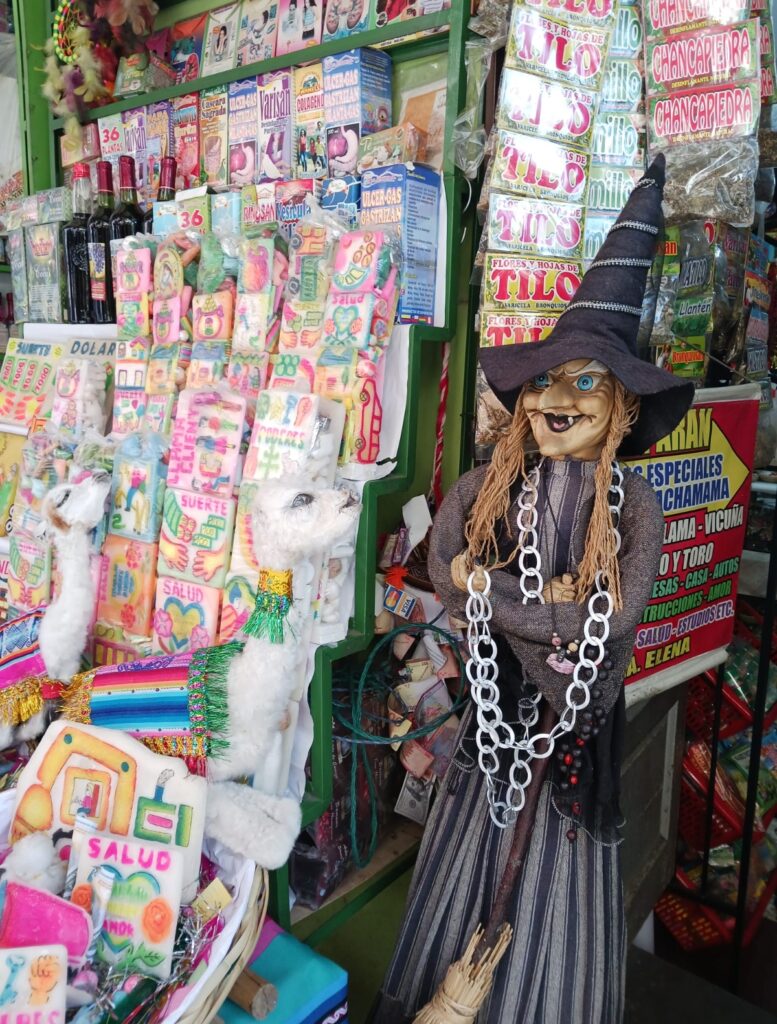
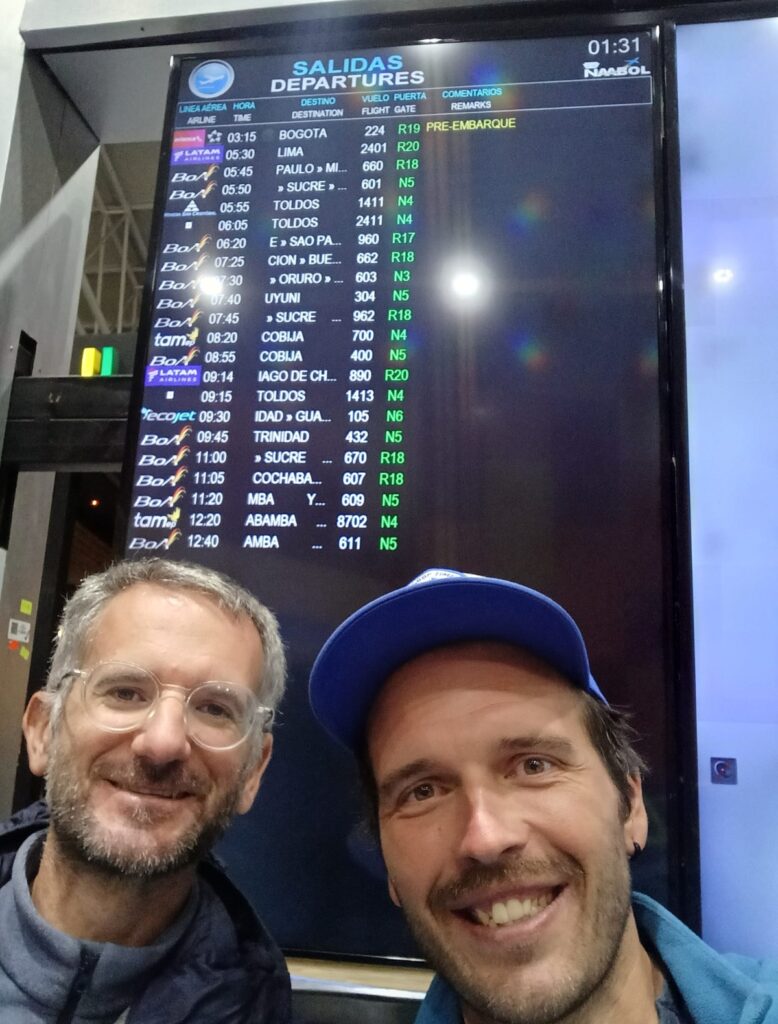
We leave the hotel by taxi at 12:45 AM. Our flight is scheduled for 3:15 AM (the only possible time to Bogotá). The advantage is that at this hour, customs and security are empty. The only novelty: the anti-drug canine unit, which systematically inspects all carry-on luggage on the boarding bridge. We’re definitely in South America!
It’s already the end of our stay in Bolivia. Next stop: Colombia, where we’ll have a layover before heading back to Europe.
Find all our articles on Bolivia: